
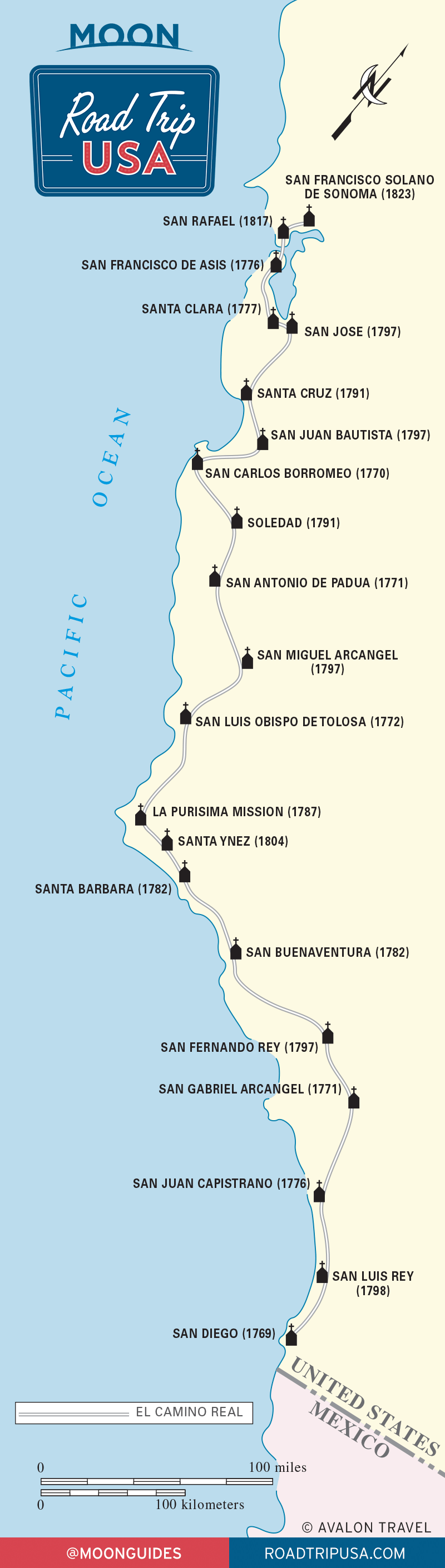
In the lexicon of global infrastructure, few names carry as much historical weight as “El Camino Real.” Translating to “The Royal Road” or “The King’s Highway,” it originally referred to the 600-mile commemorative route connecting the 21 Spanish missions in California. However, in the 21st century, El Camino Real—specifically the stretch designated as State Route 82—has evolved into something far more significant than a mere historical landmark. Today, it represents the physical and metaphorical backbone of the global technology industry.
Winding through the heart of Silicon Valley, from San Francisco through Palo Alto and down to San Jose, El Camino Real is the primary artery of the world’s most influential tech ecosystem. To understand what El Camino Real is in a modern context is to understand the intersection of physical infrastructure, software innovation, and the future of smart-city integration. This article explores how this historic road became the “Digital Camino,” serving as the testing ground for the hardware, software, and networking protocols that define our current era.
From Mission Path to Silicon Valley’s Physical Backbone
The transformation of El Camino Real from a dusty trail used by Franciscan friars into a multi-lane tech corridor is a case study in how infrastructure dictates the pace of technological adoption. As the mid-20th century saw the rise of the semiconductor industry, the proximity of Stanford University to El Camino Real created a gravitational pull for talent and capital.
The Geography of Innovation
El Camino Real acts as a physical “bus” in the architectural sense, connecting various nodes of innovation. If you trace the road on a map, you are essentially tracing the lineage of modern computing. To the west lies Stanford Research Park; to the east, the headquarters of legacy giants and disruptive startups alike. The density of tech firms along this route created a unique “agglomeration effect.” Tech professionals, engineers, and venture capitalists frequented the cafes and offices lining the road, leading to the serendipitous exchanges that fueled the early days of the Internet.
Infrastructure as a Catalyst for Growth
Beyond the social aspect, the physical infrastructure beneath El Camino Real underwent a silent revolution. As the world transitioned from analog to digital, the utility right-of-ways along this corridor became the primary conduits for high-capacity fiber optic cables. What was once a route for horse-drawn carriages became the literal path for the data packets that power the global web. The reliability of this physical layer provided the stability necessary for companies like Cisco and Juniper Networks to test and deploy the networking hardware that eventually scaled to connect the entire planet.
The Ecosystem of Hardware and Software Along the Royal Road
While many view technology as an abstract cloud-based concept, it is fundamentally anchored in physical locations. El Camino Real serves as the primary address for a staggering percentage of the companies that built the modern stack. From the silicon chips in our pockets to the algorithms that curate our social feeds, the development of these tools is inextricably linked to this corridor.
The Birthplace of Personal Computing and Beyond
In the 1970s and 80s, the offices flanking El Camino Real were the laboratories for the personal computer revolution. This was where the graphical user interface (GUI) was refined and where the first commercial networking protocols were stress-tested. The road connects the “HP Garage” ethos with the corporate campuses of today. It is a corridor where the transition from vacuum tubes to transistors to integrated circuits happened in real-time. Today, this hardware legacy continues as the road hosts R&D centers for everything from specialized AI accelerators to quantum computing components.
Cloud Infrastructure and Data Connectivity
As we moved into the era of the Cloud, the role of El Camino Real shifted from a center of manufacturing to a center of management and connectivity. The sheer volume of data centers located within a 10-mile radius of the road is unparalleled. These facilities require massive power grids and cooling systems—technical challenges that were solved through the collaborative engineering efforts of local municipalities and tech firms. This concentrated infrastructure ensures that the latency between the creators of software and the hardware it runs on is kept to an absolute minimum, allowing for the rapid iteration cycles that define the “move fast and break things” philosophy.
Smart Cities and the Future of Urban Tech Infrastructure
Looking forward, El Camino Real is poised to become the world’s most advanced “Smart Road.” As we transition toward autonomous vehicles, the Internet of Things (IoT), and sustainable urban planning, this corridor serves as a prototype for how technology can be integrated into the very fabric of human transit.
IoT and Autonomous Transit Systems
One of the most significant tech developments currently unfolding on El Camino Real is the integration of V2X (Vehicle-to-Everything) communication. Testing for autonomous vehicles (AVs) is a common sight along this route. Companies like Waymo and Zoox utilize the complex traffic patterns of El Camino—with its mix of high-speed sections, frequent intersections, and pedestrian crossings—to train their neural networks.
The road itself is becoming “intelligent.” Embedded sensors and smart traffic signals are being deployed to optimize traffic flow and reduce carbon emissions. These IoT devices collect real-time data, which is then processed using edge computing to make split-second decisions about signal timing. This makes El Camino Real not just a path for cars, but a live data stream that informs urban design software.
Sustainable Energy Grids and EV Integration
As the tech industry leads the shift toward electrification, El Camino Real has become a hub for EV infrastructure. The corridor boasts one of the highest densities of Level 3 fast-charging stations in the world. This is not just a convenience for drivers; it is a massive grid-management challenge. The software managing these stations must balance load demand with renewable energy supply, often using AI-driven predictive modeling to prevent grid strain. In this sense, El Camino Real is a laboratory for the “Smart Grid” technologies that will eventually be required in every major city globally.
The Virtual El Camino: Lessons in Tech Scalability
The concept of El Camino Real has transcended its physical boundaries to become a metaphor for how we build digital pathways. In the world of software architecture, developers often speak of a “Golden Path” or a “Royal Road”—a standardized, optimized route that allows for maximum efficiency and scalability.
Building Resilient Digital Pathways
Just as the physical El Camino Real was designed to be a reliable connection between disparate points, modern software developers aim to create “Digital El Caminos” through robust API integrations and standardized frameworks. The lesson of the physical road is that infrastructure must be modular and extensible. The companies that thrived along the Silicon Valley corridor were those that built platforms rather than isolated products. They understood that being part of a larger network—a digital highway—was more valuable than standing alone.
The Legacy of Standardized Protocols
The success of El Camino Real as a tech hub is largely due to the standardization of the technologies developed there. Whether it was the adoption of TCP/IP or the standardization of USB and Wi-Fi, the “King’s Highway” has always been a place where the industry comes together to agree on the rules of the road. This collaborative spirit, even among fierce competitors, is what allowed the tech industry to scale at such an unprecedented rate. The road serves as a reminder that without common standards and open communication protocols, innovation becomes fragmented and stalled.

Conclusion: The Road Ahead
What is El Camino Real? To a historian, it is a path of the past. To a commuter, it is a daily route. But to the technology professional, it is the most important 600 miles of pavement in the world. It is a living museum of the digital age and a blueprint for the future of human connectivity.
From the laying of the first fiber optic cables to the testing of the latest AI-driven autonomous shuttles, El Camino Real continues to be the primary laboratory for the tech industry. It proves that innovation requires more than just code; it requires a physical foundation, a supportive ecosystem, and a clear path forward. As we look toward the next frontier of technology—be it the metaverse, decentralized networks, or advanced robotics—the lessons learned on the “Royal Road” will continue to guide the way. El Camino Real is not just a road; it is the physical manifestation of the progress that defines our modern world.
aViewFromTheCave is a participant in the Amazon Services LLC Associates Program, an affiliate advertising program designed to provide a means for sites to earn advertising fees by advertising and linking to Amazon.com. Amazon, the Amazon logo, AmazonSupply, and the AmazonSupply logo are trademarks of Amazon.com, Inc. or its affiliates. As an Amazon Associate we earn affiliate commissions from qualifying purchases.