
Determining exactly how much of your income should be funneled into savings is one of the most critical decisions in personal finance. It is the bridge between your current lifestyle and your future security. However, the answer is rarely a single, static number. The ideal savings rate is a moving target, influenced by your age, your income level, your debt obligations, and your ultimate lifestyle goals.
In a world driven by consumerism, “saving” is often viewed as a sacrifice—a restriction on today’s enjoyment. In reality, saving is simply deferred consumption; it is the act of buying your future freedom. Whether you are just starting your career or are in the peak of your earning years, understanding the mechanics of saving is essential for navigating the complexities of the modern economy.
Establishing the Foundation: The 50/30/20 Rule and Beyond
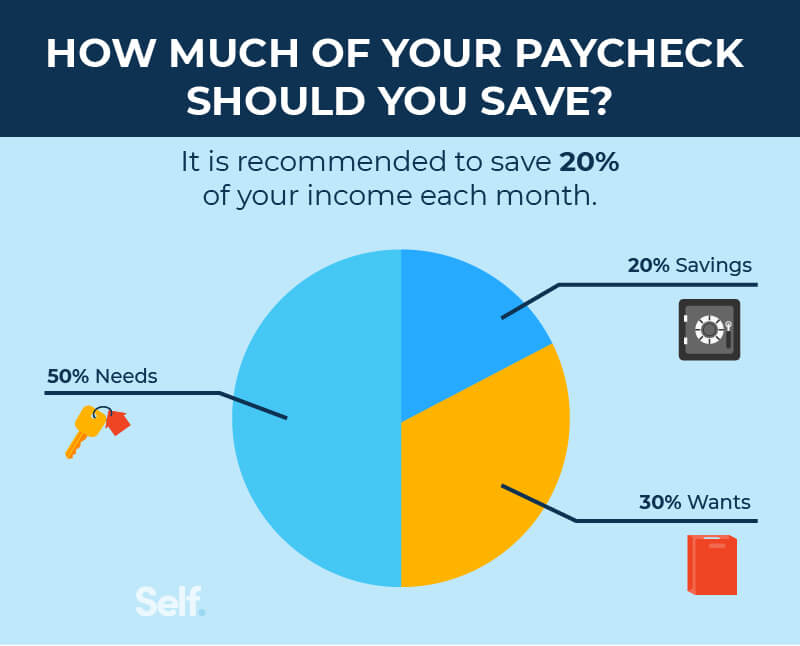
For those seeking a straightforward starting point, the 50/30/20 rule is the gold standard of personal budgeting. Popularized by Senator Elizabeth Warren, this framework provides a balanced approach to managing post-tax income. It categorizes spending into three distinct buckets, ensuring that your financial health is prioritized alongside your daily needs.
Defining Needs, Wants, and Savings
The 50/30/20 rule suggests allocating 50% of your income to “Needs.” These are non-negotiable expenses such as housing, utilities, groceries, transportation, and minimum debt payments. If your needs exceed 50%, it is a signal that your fixed costs—often housing—are too high relative to your income.
The next 30% is allocated to “Wants.” This includes dining out, travel, subscriptions, and hobbies. This category is vital because a budget that is too restrictive is rarely sustainable; allowing for enjoyment in the present prevents “frugality fatigue.”
The final 20%—the core of our discussion—is dedicated to “Savings.” This includes retirement contributions, emergency fund builds, and extra debt payments. By consistently hitting this 20% mark, most individuals can build a robust safety net and a respectable retirement nest egg over a 40-year career.
Adjusting the Ratios for High-Income and Low-Income Earners
While the 50/30/20 rule is an excellent benchmark, it is not a universal law. For those in high-cost-of-living areas or those with entry-level salaries, “Needs” might naturally consume 70% of their income. In these cases, the focus should be on “aggressive frugality” in the “Wants” category and finding ways to save even 5% or 10% to build the habit.
Conversely, high-income earners should aim to invert these ratios. If you are earning significantly above the median income, lifestyle creep—the tendency to increase spending as income rises—is your greatest enemy. For these individuals, a 30% or even 50% savings rate is achievable and recommended if the goal is early retirement or significant wealth accumulation. The more you save now, the more “options” you are purchasing for your future self.
The Essential First Step: The Emergency Fund
Before you can focus on long-term wealth or aggressive investing, you must secure your foundation. Saving is not just about the distant future; it is about surviving the immediate present when the unexpected occurs. This is the role of the emergency fund—a liquid pool of cash dedicated solely to unforeseen expenses.
Calculating Your Ideal Cash Cushion
The standard recommendation for an emergency fund is three to six months of essential living expenses. Note that this is based on expenses, not income. If you lose your job or face a medical emergency, you only need to cover your “Needs” (the 50% from our previous framework).
Determining whether you need three months or six months depends on your risk profile. If you have a stable government job, a low-cost mortgage, and no dependents, three months may suffice. However, if you are self-employed, work in a volatile industry like tech or media, or have children, a six-month cushion provides the necessary peace of mind. Some financial experts now even suggest a twelve-month fund in high-interest environments or during periods of economic recession to account for longer job-search durations.
Where to Store Your Emergency Cash
The goal of an emergency fund is liquidity and capital preservation, not high returns. You should never invest your emergency fund in the stock market, as a market downturn often coincides with economic layoffs—meaning you might be forced to sell your investments at a loss precisely when you need the cash.
Instead, utilize a High-Yield Savings Account (HYSA) or a Money Market Account (MMA). These accounts are typically FDIC-insured and offer interest rates significantly higher than traditional checking accounts. This ensures that while your money is safe and accessible, it is still working to combat the eroding effects of inflation.
Saving for Life Transitions: Milestones by the Decade
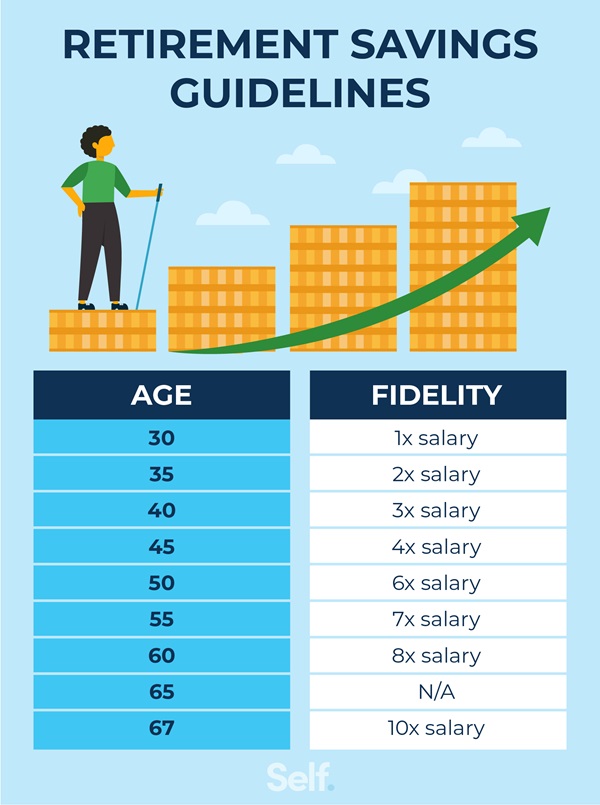
As you progress through life, the “how much” of saving shifts from building a safety net to funding a lifestyle. Using age-based benchmarks can help you determine if you are on track for a comfortable retirement. While these numbers can be intimidating, they serve as a North Star for financial planning.
Your 20s and 30s: The Power of Compounding
In your 20s, the most important factor isn’t the amount you save, but the time your money has to grow. Thanks to compound interest, a dollar saved in your 20s is worth significantly more than a dollar saved in your 40s. A common benchmark is to aim for having one times your annual salary saved by age 30.
By your 30s, your earning potential typically increases, but so do your responsibilities (mortgages, children, etc.). This is the decade to solidify your retirement strategy. Most experts suggest aiming for three times your annual salary by age 40. To reach this, you should ideally be saving 15% to 20% of your gross income specifically for retirement, moving beyond the basic emergency fund.
Your 40s and 50s: The Catch-Up and Peak Earning Years
The 40s and 50s are often the “peak earning years.” However, they are also the years where lifestyle creep is most dangerous. By age 50, a healthy target is to have six times your annual salary saved.
If you find yourself behind these benchmarks, your 50s offer a unique opportunity through “catch-up contributions.” The IRS allows individuals over age 50 to contribute extra funds to 401(k)s and IRAs beyond the standard limits. This is the time to pivot from “growth” to “preservation,” ensuring that your savings are protected as you approach the date when you will finally need to begin withdrawing them.
Strategic Allocation: Maximizing Every Dollar Saved
Once you know how much to save, the next question is where to put it. Not all savings are created equal. To maximize the efficiency of your money, you must understand the hierarchy of accounts and the tax implications of each.
Tax-Advantaged Retirement Accounts
The most efficient way to save is through tax-advantaged accounts. If your employer offers a 401(k) match, this is effectively a 100% return on your investment and should be your absolute priority.
Beyond the match, consider the differences between “Traditional” and “Roth” accounts. Traditional contributions are made pre-tax, reducing your taxable income today but requiring you to pay taxes when you withdraw the money in retirement. Roth contributions are made with after-tax dollars, meaning your withdrawals in retirement are entirely tax-free. Generally, if you expect to be in a higher tax bracket later in life, the Roth is the superior choice for your savings.
Balancing Liquid Savings with Market Investments
While retirement accounts are excellent for long-term goals, they are often locked away until age 59½. To maintain flexibility for mid-term goals—such as buying a home or starting a business—you must balance these with brokerage accounts.
A brokerage account does not offer the same tax breaks as an IRA, but it provides total liquidity. When deciding how much to put into a brokerage versus a retirement account, consider your “time horizon.” Money needed in less than five years should stay in cash (HYSA) or low-risk bonds. Money needed in ten years or more should be invested in diversified index funds to capture market growth.
Psychological Barriers to Saving and How to Overcome Them
Logic dictates that we should save, yet human psychology often works against us. We are hard-wired for “present bias,” valuing a small reward today over a larger reward in the future. To save effectively, you must build systems that bypass your own willpower.
Defeating Lifestyle Creep
Lifestyle creep is the phenomenon where your expenses rise in lockstep with your raises. To combat this, implement a “raise rule”: every time you receive a salary increase, immediately commit 50% of that increase to your savings or investments before you ever see it in your checking account. This allows you to improve your current lifestyle while simultaneously accelerating your path to financial independence.

The Power of Automation
The most successful savers are not those with the most willpower, but those with the best systems. Automation is the ultimate financial tool. Set up automatic transfers from your paycheck to your savings and investment accounts. By “paying yourself first,” you treat your savings like a mandatory bill. If the money is gone before you have a chance to spend it, you will naturally adjust your spending habits to fit the remaining balance.
In conclusion, “how much should I save” is a question that requires a multi-faceted answer. It begins with the 20% rule, is anchored by a 3-6 month emergency fund, and is optimized through tax-advantaged accounts and consistent benchmarks. Saving is not about deprivation; it is about discipline. By making intentional choices today, you ensure that your future self has the security, flexibility, and freedom to live life on your own terms.
aViewFromTheCave is a participant in the Amazon Services LLC Associates Program, an affiliate advertising program designed to provide a means for sites to earn advertising fees by advertising and linking to Amazon.com. Amazon, the Amazon logo, AmazonSupply, and the AmazonSupply logo are trademarks of Amazon.com, Inc. or its affiliates. As an Amazon Associate we earn affiliate commissions from qualifying purchases.