
For decades, the global financial system operated under the assumption that nature was an infinite resource and an “externality”—something outside the balance sheet that provided inputs for free and absorbed waste at no cost. However, a seismic shift is occurring in the world of high finance and corporate strategy. The concept of “ecosystem services” has moved from the fringes of environmental science into the heart of investment portfolios, risk management, and national accounting.
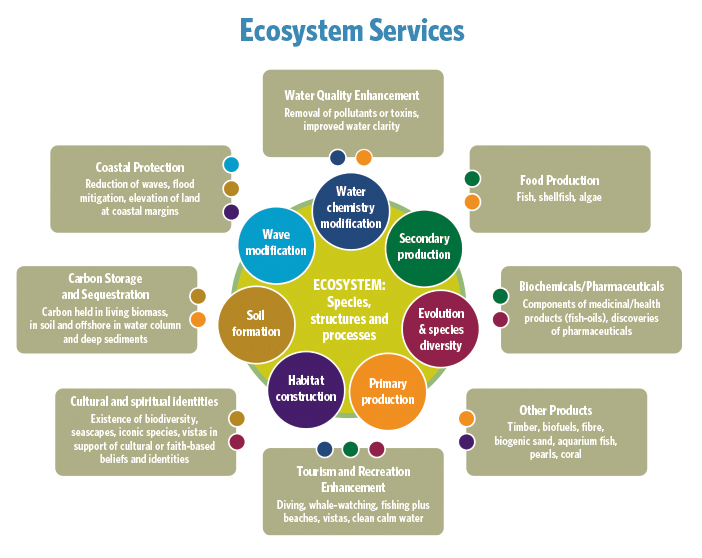
Ecosystem services are the myriad benefits that humans, and by extension our economies, derive from the natural environment. From the pollination of crops to the natural filtration of water and the sequestration of carbon, these services underpin approximately $44 trillion of economic value generation—more than half of the world’s total GDP. For the modern investor and business leader, understanding ecosystem services is no longer a matter of philanthropy; it is a fundamental requirement for financial literacy in the 21st century.
Defining Ecosystem Services through a Financial Lens
To integrate nature into a financial framework, we must first categorize the “dividends” it pays. In economic terms, ecosystems can be viewed as “natural capital”—the world’s stock of geology, soil, air, water, and all living things. Ecosystem services are the flow of value derived from this stock.
The Four Pillars: Provisioning, Regulating, Supporting, and Cultural Services
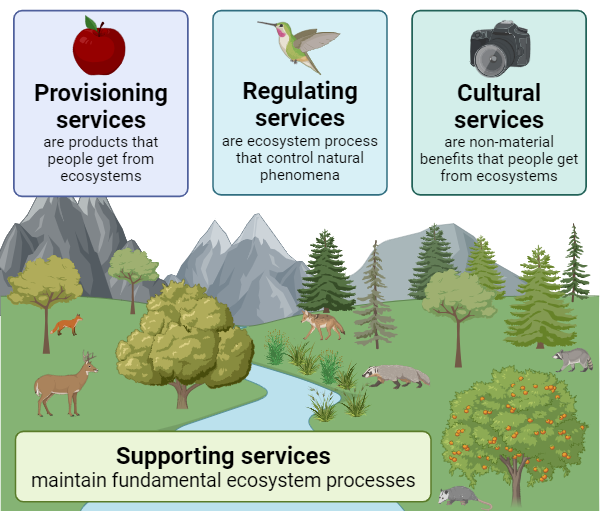
The Millennium Ecosystem Assessment categorizes these services into four distinct functional groups, each carrying specific implications for business operations and market stability:
- Provisioning Services: These are the material outputs from nature, such as food, fresh water, timber, and fiber. In the “Money” niche, these represent the primary sector’s raw materials. Disruptions here lead directly to commodity price volatility and supply chain inflation.
- Regulating Services: These are the benefits obtained from the regulation of ecosystem processes, including climate regulation, flood control, and water purification. For the insurance and real estate industries, these services act as natural infrastructure that mitigates the risk of catastrophic loss.
- Supporting Services: These are the foundational processes, such as soil formation and nutrient cycling, that allow all other ecosystem services to exist. While less visible, they represent the long-term viability of agricultural investments.
- Cultural Services: These include non-material benefits like recreation, tourism, and spiritual enrichment. This pillar is a multi-billion dollar driver for the global travel, hospitality, and wellness industries.
From “Free” to “Valuable”: The Shift in Economic Accounting
Traditionally, the “Gross Domestic Product” (GDP) of a nation fails to account for the depletion of natural assets. If a country cuts down all its forests for timber, its GDP rises, but its total wealth (natural capital) collapses. We are currently witnessing a transition toward “Green Accounting.” Central banks and international financial institutions are beginning to recognize that failing to value ecosystem services creates a “blind spot” in economic forecasting. By putting a price on these services, economists can better predict the long-term solvency of industries that rely on stable climates and fertile lands.
The Rise of Natural Capital and ESG Investing
As Environmental, Social, and Governance (ESG) criteria become standardized, “Nature” is emerging as the next frontier after “Carbon.” Investors are increasingly aware that climate change and biodiversity loss are two sides of the same financial coin.
Why Institutional Investors are Tracking Biodiversity
Institutional investors, including pension funds and sovereign wealth funds, are beginning to assess their “nature-related dependencies.” A beverage company, for instance, is fundamentally dependent on the ecosystem service of water filtration. If the local ecosystem fails to provide clean water, the company faces an existential capital expenditure (CAPEX) increase to build artificial filtration plants. Investors are now utilizing geospatial data and AI-driven analytics to map their portfolios against regions of high ecosystem degradation to avoid “stranded assets.”
The Taskforce on Nature-related Financial Disclosures (TNFD)
Following the success of the TCFD (Taskforce on Climate-related Financial Disclosures), the TNFD has emerged as a global framework for organizations to report and act on evolving nature-related risks. The goal is to support a shift in global financial flows away from nature-negative outcomes and toward nature-positive outcomes. For a business, compliance with TNFD isn’t just about transparency; it is about maintaining a lower cost of capital. Companies that can prove they are protecting the ecosystem services they depend on are increasingly viewed as lower-risk investments.
Monetizing the Environment: Markets for Ecosystem Services (MES)
One of the most exciting developments in business finance is the creation of formal markets where ecosystem services can be traded. This “financialization of nature” allows landholders to generate income not just from what they extract, but from what they preserve.
Carbon Credits and Offsetting Mechanisms
The most mature market for ecosystem services is the voluntary and compliance carbon markets. Here, the “service” being sold is climate regulation—specifically, the sequestration of carbon dioxide by forests, peatlands, and seagrasses. Companies looking to reach “Net Zero” purchase these credits to offset their unavoidable emissions. This has created a new revenue stream for landowners, turning conservation into a viable business model.
Biodiversity Net Gain and Water Quality Trading
Beyond carbon, new markets are emerging for “Biodiversity Net Gain” (BNG). In jurisdictions like the UK, developers are legally required to ensure that their projects leave the local environment in a better state than they found it. If they cannot achieve this on-site, they must purchase “biodiversity units” from landowners who have restored ecosystems elsewhere. Similarly, water quality trading allows industrial facilities to pay upstream farmers to reduce runoff (a regulating service) rather than investing in expensive end-of-pipe treatment technologies. These market-based instruments provide a more efficient allocation of capital toward environmental protection.
Risk Management: The Cost of Ecosystem Degradation
For CFOs and risk managers, the loss of ecosystem services represents a suite of “unpriced risks” that can hit the bottom line with little warning. These risks are generally categorized into physical, regulatory, and reputational categories.
Supply Chain Vulnerabilities and Physical Risks
Physical risks arise from the actual failure of an ecosystem to provide a service. A prime example is the decline of wild pollinators. If the ecosystem service of pollination fails, the global agricultural sector faces an estimated $235 billion to $577 billion in annual crop output at risk. For a diversified investment fund, this translates to systemic risk across food processing, retail, and even textiles (cotton).
Regulatory and Transition Risks for Modern Businesses
As governments move to meet global targets like the Kunming-Montreal Global Biodiversity Framework, new regulations are being drafted to protect ecosystem services. This includes “deforestation-free” supply chain laws in the EU, which prohibit the sale of products like soy, beef, and palm oil linked to forest degradation. Companies that fail to adapt face fines, litigation, and the loss of “social license to operate.” From a financial perspective, the “transition risk” involves the costs associated with moving toward nature-positive business models, such as switching to regenerative agriculture or circular manufacturing.

Future Outlook: Integrating Nature into the Global Balance Sheet
The ultimate goal of the “Money” sector’s engagement with ecosystem services is the full integration of nature into the global balance sheet. We are moving toward an era where “Natural Capital Accounting” will be as standard as traditional financial accounting.
The future of finance lies in “Nature-Positive” investing. This goes beyond simply minimizing harm; it involves directing capital into projects that actively restore ecosystem services, such as reforestation, wetland restoration, and sustainable ocean management. We are already seeing the emergence of “Blue Bonds” for ocean conservation and “Rhino Bonds” for wildlife protection—innovative financial products that link interest payments to verified environmental outcomes.
In conclusion, ecosystem services are the invisible engine of the global economy. As the scarcity of clean water, stable climates, and fertile soil increases, the value of these services will only rise. For the astute investor and the forward-thinking business leader, the ability to value, protect, and trade these services represents one of the greatest economic opportunities of our time. The message is clear: the economy is a wholly-owned subsidiary of the environment, and it is time we started managing it that way.
aViewFromTheCave is a participant in the Amazon Services LLC Associates Program, an affiliate advertising program designed to provide a means for sites to earn advertising fees by advertising and linking to Amazon.com. Amazon, the Amazon logo, AmazonSupply, and the AmazonSupply logo are trademarks of Amazon.com, Inc. or its affiliates. As an Amazon Associate we earn affiliate commissions from qualifying purchases.