
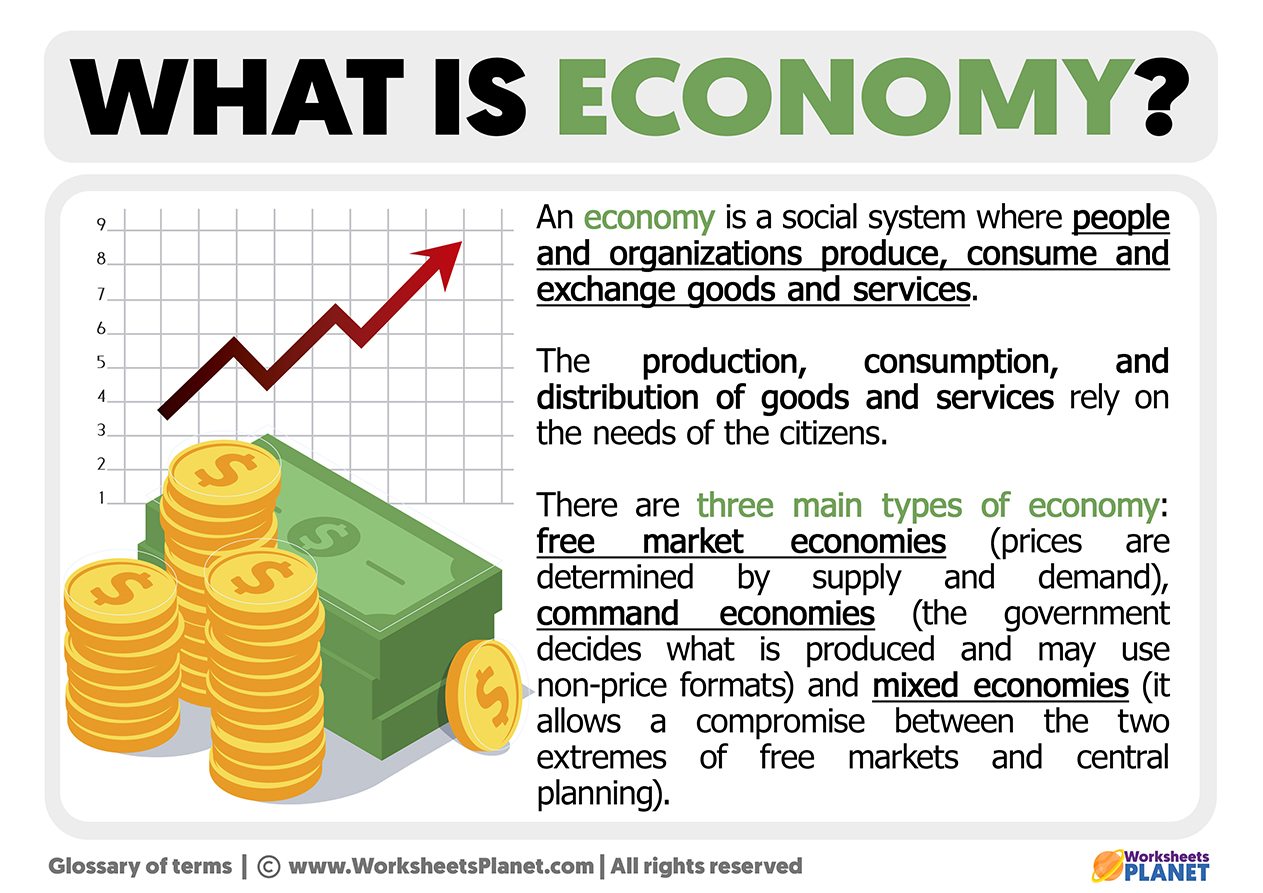
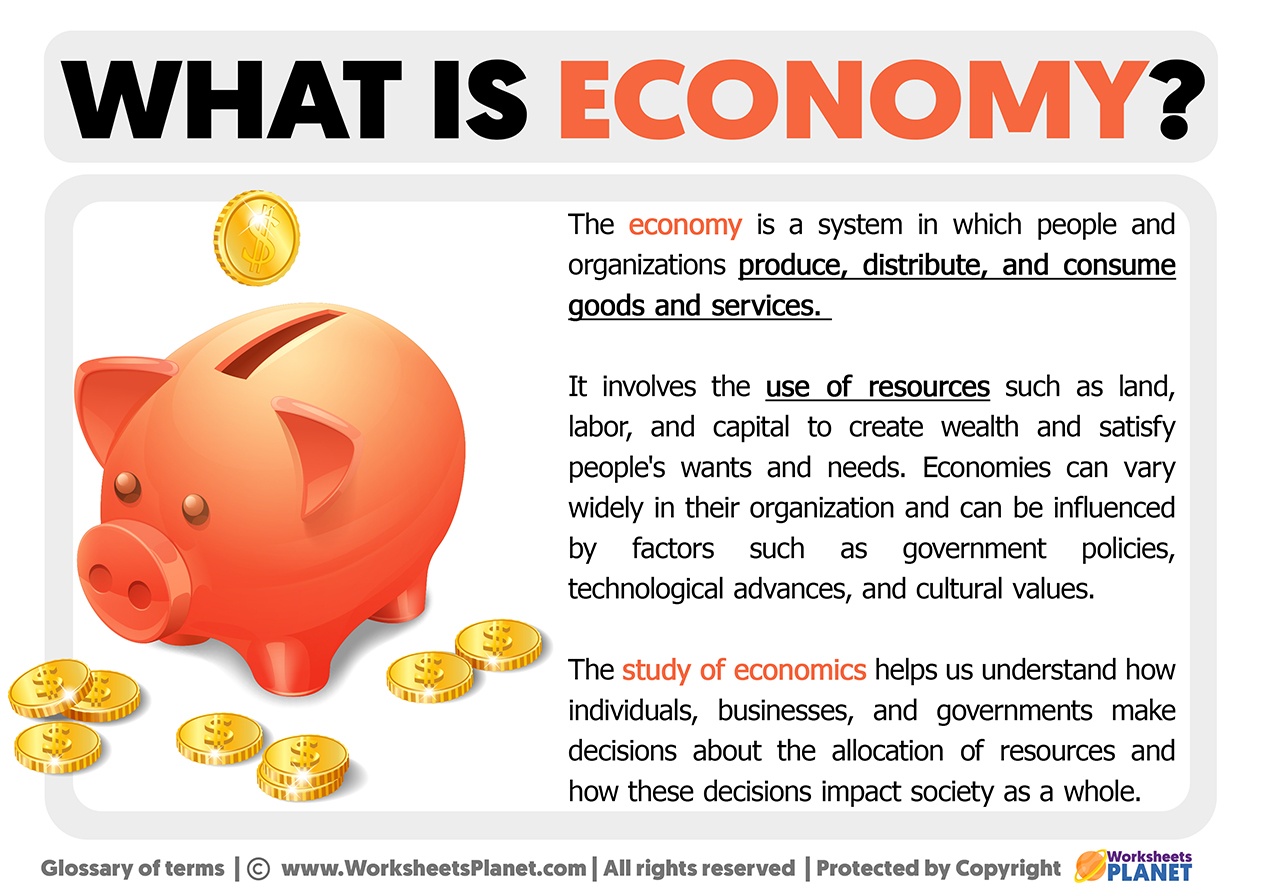
The term “economy” is a ubiquitous one, often discussed in news headlines, political debates, and casual conversations. Yet, for many, its precise meaning can remain somewhat elusive. At its core, an economy is a complex system that encompasses the production, distribution, and consumption of goods and services within a given geographical area, ranging from a small community to the entire world. Understanding what an economy means is fundamental to grasping how societies function, how wealth is generated and distributed, and how individuals and businesses make decisions that impact their financial well-being. This exploration will delve into the multifaceted nature of economies, examining their fundamental components, the different types that exist, and the key indicators used to measure their health and performance.
The Pillars of an Economy: Production, Distribution, and Consumption
At the most basic level, an economy is built upon three interconnected pillars: production, distribution, and consumption. These elements are in constant interplay, forming a circular flow of economic activity.
Production: The Creation of Value
Production refers to the process of transforming raw materials, labor, and capital into goods and services that satisfy human wants and needs. This is where value is created. Businesses, individuals, and governments all engage in production. For instance, a farmer produces food, a factory produces cars, a software company produces applications, and a government provides services like education and healthcare. The efficiency and innovation in production directly influence the quantity and quality of goods and services available to society.
Factors of Production
The creation of goods and services relies on a set of fundamental inputs known as the factors of production. These include:
- Land: This encompasses all natural resources, including not only the physical land itself but also water, minerals, forests, and other raw materials. The availability and accessibility of land and its resources are crucial for many production processes.
- Labor: This refers to the human effort, both physical and mental, that is contributed to the production process. The skills, education, and productivity of the workforce are vital determinants of economic output.
- Capital: This includes manufactured goods that are used to produce other goods and services. This can range from physical capital like machinery, buildings, and tools to financial capital, which represents the monetary resources used to invest in these physical assets and fund operations.
- Entrepreneurship: This is the ability and willingness to combine the other factors of production, take risks, and innovate to create new businesses and products. Entrepreneurs are the driving force behind much economic growth and dynamism, identifying opportunities and organizing resources to exploit them.
Distribution: Getting Goods and Services to Consumers
Once goods and services are produced, they must be distributed to those who wish to consume them. Distribution involves the mechanisms through which products and services reach their intended markets. This can include a wide array of activities, from wholesale and retail networks to transportation, logistics, and even digital delivery platforms.
Channels of Distribution
The pathways through which goods and services travel from producer to consumer are diverse and constantly evolving:
- Wholesalers and Retailers: Wholesalers purchase goods in large quantities from producers and sell them to retailers, who then sell them to individual consumers. This layer of intermediaries helps manage inventory and reach a broader customer base.
- Direct Sales: Some businesses bypass intermediaries and sell directly to consumers, often through their own stores, websites, or sales representatives. This can lead to cost savings and a more direct relationship with customers.
- E-commerce and Digital Platforms: The rise of the internet has revolutionized distribution, enabling businesses to sell products and services globally through online marketplaces and their own websites. Digital goods and services, such as software and streaming content, are distributed almost instantaneously.
- Transportation and Logistics: Efficient movement of goods is paramount. This involves various modes of transport like trucks, trains, ships, and airplanes, as well as sophisticated logistics management to optimize supply chains.
Consumption: The Ultimate Goal of Economic Activity
Consumption is the final stage in the economic process, where individuals, households, businesses, and governments use goods and services to satisfy their wants and needs. It is the demand for goods and services that ultimately drives production. Consumer spending is a significant component of most economies and a key indicator of economic health.
Types of Consumption
Consumption can be categorized in several ways:
- Household Consumption: This is the spending by individuals and families on goods and services for personal use, such as food, housing, clothing, entertainment, and healthcare.
- Government Consumption: This refers to spending by governments on public services like infrastructure, defense, education, and healthcare.
- Business Consumption (Investment): While often discussed separately, businesses also consume goods and services to facilitate further production. This includes purchasing machinery, raw materials, and professional services, which are essentially investments aimed at increasing future productive capacity.
Types of Economic Systems
The way these fundamental pillars of production, distribution, and consumption are organized and managed defines the type of economic system a society operates under. These systems vary significantly in terms of ownership of resources, decision-making processes, and the role of government.
Market Economies
In a market economy, economic decisions are primarily driven by the forces of supply and demand. Private individuals and businesses own most of the means of production, and their decisions about what to produce, how to produce it, and for whom are guided by the pursuit of profit and consumer preferences. The role of government is generally limited to enforcing contracts, protecting property rights, and ensuring a level playing field. Competition among businesses is a key feature, which theoretically leads to greater efficiency and innovation.
Key Characteristics of Market Economies:
- Private Ownership: Individuals and corporations own most of the resources and businesses.
- Consumer Sovereignty: Consumers’ choices and preferences dictate what goods and services are produced.
- Competition: Multiple firms vie for customers, driving prices down and quality up.
- Profit Motive: Businesses are motivated by the desire to generate profits.
- Limited Government Intervention: The government’s role is typically to set rules and regulations rather than directly manage economic activity.
Command Economies
In contrast to market economies, command economies are characterized by centralized control where the government makes most of the economic decisions. The state owns and controls the means of production, dictates what is produced, how it is produced, and how it is distributed. The aim is often to achieve specific social or political goals, such as equitable distribution of resources or rapid industrialization.
Key Characteristics of Command Economies:
- State Ownership: The government owns and controls most of the means of production.
- Central Planning: A central authority determines production levels, prices, and distribution.
- Limited Consumer Choice: Consumers have less influence on what is produced.
- Focus on Societal Goals: The economy may be geared towards fulfilling collective objectives rather than individual profit.
Mixed Economies
Most modern economies are actually mixed economies, blending elements of both market and command systems. While private ownership and market forces play a significant role, governments also intervene in the economy through various means. This intervention can include regulations, taxation, provision of public services (like education, healthcare, and infrastructure), and social welfare programs. The goal is to harness the efficiency of markets while addressing market failures, promoting social equity, and stabilizing the economy.
Examples of Government Intervention in Mixed Economies:
- Regulation: Governments set rules to protect consumers, workers, and the environment (e.g., food safety standards, minimum wage laws).
- Taxation: Governments collect taxes to fund public services and redistribute wealth.
- Public Goods and Services: Governments provide essential services that the private sector may not adequately supply (e.g., national defense, public parks).
- Monetary and Fiscal Policy: Governments use tools like interest rates and government spending to manage inflation, unemployment, and economic growth.
Measuring Economic Performance: Key Indicators
To understand the health and direction of an economy, economists and policymakers rely on a variety of indicators. These metrics provide snapshots of economic activity, allowing for analysis, forecasting, and informed decision-making.
Gross Domestic Product (GDP)
Perhaps the most widely cited economic indicator is Gross Domestic Product (GDP). GDP represents the total monetary value of all the finished goods and services produced within a country’s borders in a specific time period, typically a quarter or a year. It is a broad measure of a nation’s economic output.
Components of GDP:
GDP can be calculated using the expenditure approach, which sums up all spending:
- Consumption (C): Household spending on goods and services.
- Investment (I): Spending by businesses on capital goods, inventory, and new housing.
- Government Spending (G): Government expenditure on goods and services.
- Net Exports (NX): The difference between a country’s exports and imports (Exports – Imports).
The formula is: GDP = C + I + G + NX.
Inflation and Deflation
Inflation refers to a general increase in the prices of goods and services in an economy over a period of time, leading to a decline in the purchasing power of currency. Conversely, deflation is a general decrease in prices. Both can have significant economic consequences. Moderate inflation is often seen as a sign of a healthy, growing economy, but high inflation can erode savings and destabilize markets. Deflation can discourage spending and investment, potentially leading to economic stagnation.
Measuring Inflation:
- Consumer Price Index (CPI): The CPI measures the average change over time in the prices paid by urban consumers for a market basket of consumer goods and services.
Unemployment Rate
The unemployment rate is a crucial indicator of the health of the labor market. It is the percentage of the labor force that is jobless and actively seeking employment. A low unemployment rate generally signifies a strong economy with ample job opportunities, while a high rate suggests economic distress and underutilization of human capital.
Types of Unemployment:
- Frictional Unemployment: Temporary unemployment that occurs when people are in the process of transitioning between jobs.
- Structural Unemployment: Unemployment that arises from a mismatch between the skills of the workforce and the demands of employers, often due to technological changes or shifts in industry.
- Cyclical Unemployment: Unemployment that is related to the business cycle, increasing during economic downturns and decreasing during economic expansions.

Interest Rates
Interest rates are the cost of borrowing money or the reward for lending money. They are a fundamental tool used by central banks to manage the economy. Lower interest rates generally encourage borrowing and spending, stimulating economic activity, while higher interest rates tend to curb borrowing and inflation.
In conclusion, the meaning of “economy” is multifaceted, encompassing the intricate web of activities that govern how societies produce, distribute, and consume resources. Understanding its fundamental components, the diverse systems that shape it, and the indicators that measure its performance is essential for navigating the complexities of our interconnected financial world and making informed decisions that impact both individual prosperity and societal well-being.
aViewFromTheCave is a participant in the Amazon Services LLC Associates Program, an affiliate advertising program designed to provide a means for sites to earn advertising fees by advertising and linking to Amazon.com. Amazon, the Amazon logo, AmazonSupply, and the AmazonSupply logo are trademarks of Amazon.com, Inc. or its affiliates. As an Amazon Associate we earn affiliate commissions from qualifying purchases.