
In the intricate world of business finance, understanding a company’s true financial health goes far beyond merely looking at its stated profits. While accounting profits provide a crucial snapshot of a business’s revenue versus explicit costs, a deeper, more comprehensive metric is required to truly gauge its long-term viability and efficiency in resource allocation: economic profitability. This concept, rooted in economic theory, offers a powerful lens through which businesses can evaluate their performance against alternative opportunities, revealing whether they are truly creating value.
Beyond Accounting Profits: The Opportunity Cost
To grasp economic profitability, it’s essential to first differentiate it from its more commonly understood counterpart: accounting profit. While both are measures of financial success, they operate with different scopes and purposes.
Defining Accounting Profit
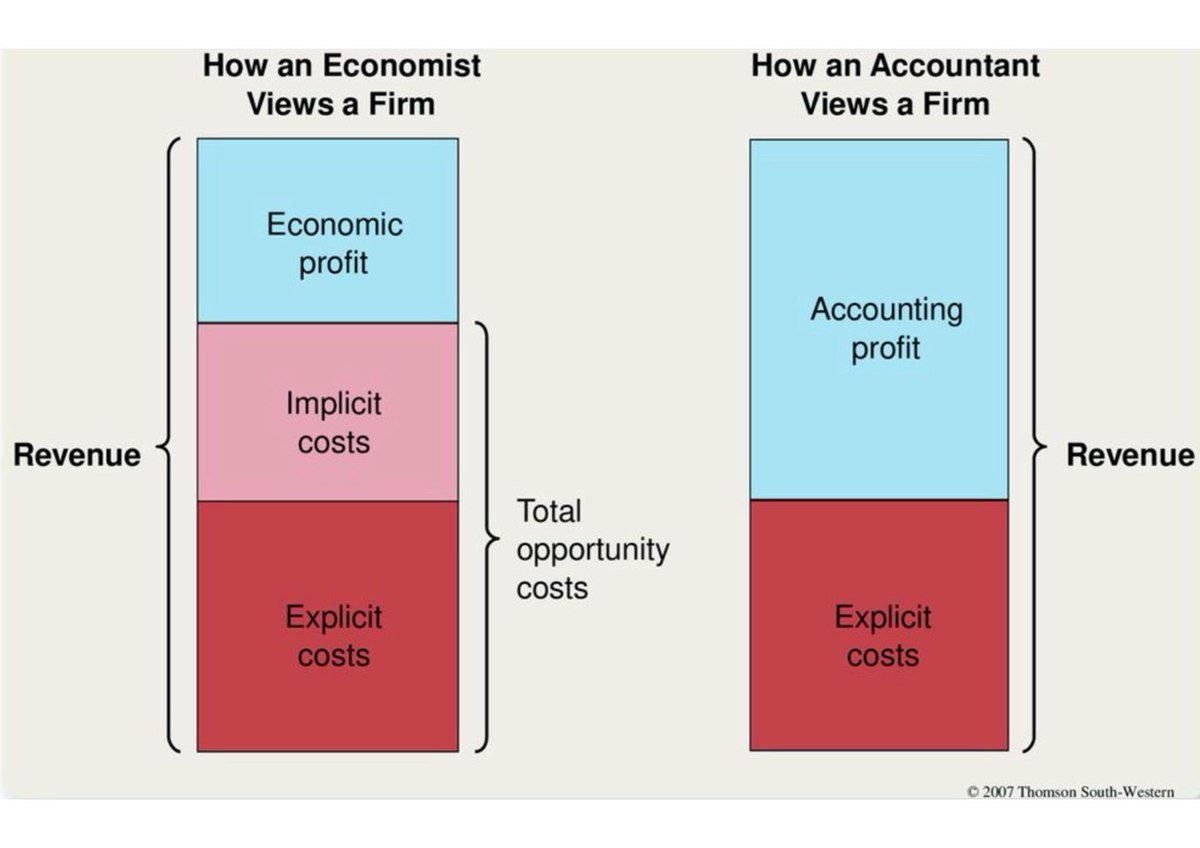
Accounting profit, often referred to as net income or net profit, is the revenue remaining after subtracting all explicit costs from total revenue. Explicit costs are tangible, out-of-pocket expenses that a business incurs, such as wages, rent, raw materials, utilities, interest on debt, and depreciation. This is the figure that appears on a company’s income statement and is widely used for financial reporting, tax purposes, and investor relations. It answers the question: “Did our revenues exceed our direct, measurable expenses?” For example, if a company generates $1,000,000 in revenue and has $700,000 in explicit costs, its accounting profit is $300,000.
The Core Concept of Economic Profit
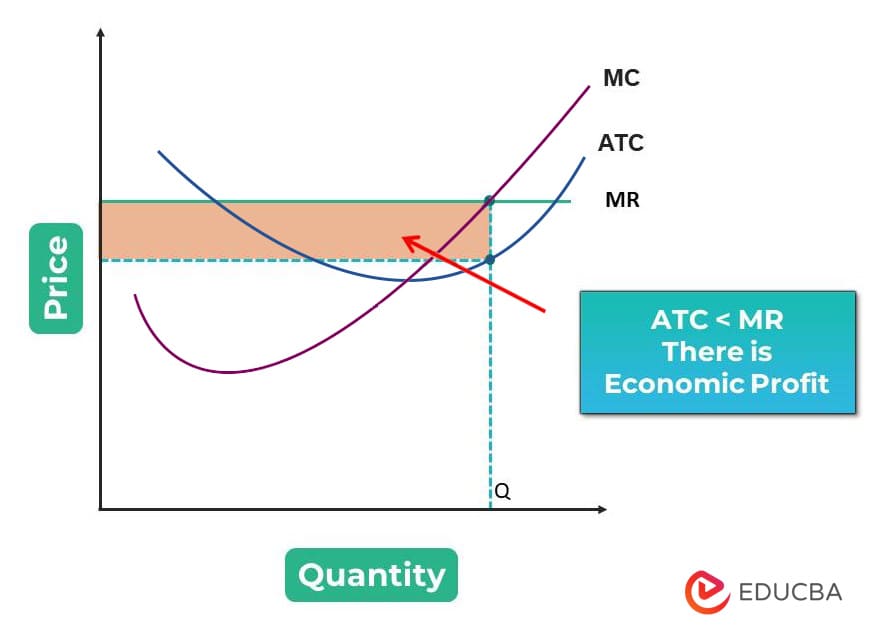
Economic profit, also known as abnormal profit or supernormal profit, takes the analysis a significant step further. It measures the difference between total revenue and all costs—both explicit and implicit. The critical addition here is the consideration of implicit costs, which are the opportunity costs of using resources owned by the firm that could have been employed in their next best alternative use. Economic profit essentially asks: “Are we making more money doing this than we could be making by doing the next best thing with the same resources?” If a business earns zero economic profit, it means it is earning just enough to cover all its explicit costs and compensate its owners for the capital and time they’ve invested, at a rate equivalent to what they could have earned in their best alternative endeavor. This is often referred to as a “normal profit.” Positive economic profit indicates that the business is earning more than this normal rate of return.
The Role of Opportunity Cost
At the heart of economic profitability lies the concept of opportunity cost. This is the value of the next best alternative that must be foregone when a decision is made. For a business, implicit costs frequently manifest as the opportunity cost of capital and the opportunity cost of the owner’s time and effort. For instance, if a business owner invests $500,000 of their own capital into their venture, the explicit cost might be zero (if they don’t take a loan and pay interest). However, an implicit cost exists: the return that $500,000 could have earned if invested in a safe, alternative asset (e.g., government bonds, a diversified stock portfolio, or another profitable business venture). Similarly, the time an entrepreneur dedicates to their business has an implicit cost, representing the salary or income they could have earned working for someone else or pursuing another entrepreneurial endeavor. Recognizing and quantifying these implicit costs is paramount to understanding economic profitability.
Calculating Economic Profitability
The calculation of economic profit is straightforward once all relevant costs, both explicit and implicit, have been identified.
The Formula Explained
The fundamental formula for economic profit is:
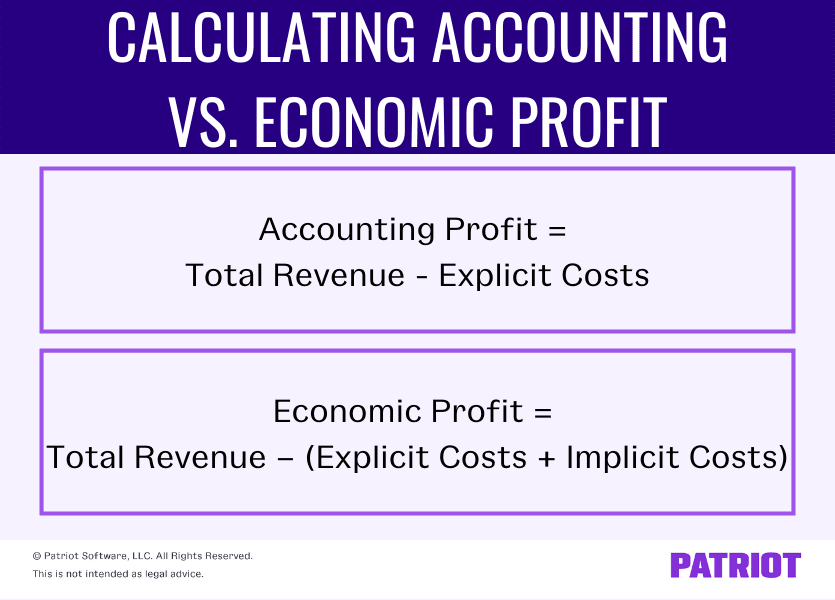
Economic Profit = Total Revenue – (Explicit Costs + Implicit Costs)
Alternatively, it can be expressed as:
Economic Profit = Accounting Profit – Implicit Costs
This second formulation highlights that economic profit is essentially the accounting profit adjusted downwards by the value of the foregone alternatives.
Identifying Implicit Costs
The most challenging aspect of calculating economic profit often lies in accurately identifying and quantifying implicit costs. These are not always clear-cut ledger entries.
- Opportunity Cost of Capital: This is the return that the capital invested in the business could have earned if it were invested elsewhere at a comparable risk level. If a business owner invests $1,000,000 and the market rate for similar-risk investments is 10% per year, the implicit cost of capital is $100,000 per year.
- Opportunity Cost of Owner’s Labor/Management: For sole proprietorships or owner-operated businesses, the owner’s salary might not be explicitly paid or might be set below market rates. The implicit cost here is the market salary the owner could command in an alternative employment opportunity, given their skills and experience.
- Opportunity Cost of Owned Assets: If a business uses its own building or equipment rather than renting it out, the implicit cost is the rent or lease income it could have generated by allowing others to use those assets.
Examples in Practice
Consider a small business owner who invests $200,000 of personal savings into a new boutique, foregoing a 5% annual return they could have earned from a diversified index fund. They also leave a corporate job that paid $80,000 annually.
In its first year, the boutique generates $300,000 in revenue and incurs $200,000 in explicit costs (inventory, rent, staff wages, utilities).
- Accounting Profit: $300,000 (Revenue) – $200,000 (Explicit Costs) = $100,000
- Implicit Costs:
- Opportunity cost of capital: $200,000 * 5% = $10,000
- Opportunity cost of owner’s labor: $80,000
- Total Implicit Costs: $10,000 + $80,000 = $90,000
- Economic Profit: $100,000 (Accounting Profit) – $90,000 (Implicit Costs) = $10,000
In this scenario, the business is economically profitable. While the owner’s accounting profit is $100,000, the economic profit of $10,000 indicates that the business is generating more value than what could have been achieved by simply investing their capital elsewhere and working for another employer.
Why Economic Profit Matters for Decision Making
Economic profitability is not merely an academic concept; it is a vital tool for strategic financial decision-making that can significantly impact a business’s long-term success and sustainability.
Resource Allocation and Investment Decisions
Businesses constantly face choices about where to allocate their finite resources—capital, labor, and time. Economic profit helps decision-makers determine whether a particular project, investment, or business unit is truly generating value above and beyond its next best alternative. If a project yields a positive economic profit, it signals that the resources are being used efficiently and effectively, creating wealth for the owners. Conversely, projects with zero or negative economic profit suggest that resources could be better deployed elsewhere, even if they show a positive accounting profit. This framework guides capital budgeting by ensuring that investments are made in ventures that genuinely add economic value.
Evaluating Business Strategies
Economic profit provides a more robust metric for evaluating the success of overarching business strategies. A strategy might lead to impressive sales growth and healthy accounting profits, but if the implicit costs associated with implementing that strategy are exceedingly high (e.g., demanding excessive owner time without commensurate returns, or requiring capital that could earn much higher returns elsewhere), the economic profit could be negligible or negative. This prompts businesses to critically assess whether their chosen path is the most value-maximizing one, encouraging adjustments to business models, product lines, or operational efficiencies.
Understanding True Value Creation
Ultimately, economic profit offers a clearer picture of true value creation. A business that consistently generates positive economic profit is demonstrably creating wealth for its owners and utilizing resources more effectively than alternative opportunities. This understanding is crucial for owners, investors, and stakeholders who seek to maximize their returns and ensure the efficient deployment of capital in the broader economy. It helps distinguish between merely profitable operations (accounting profit) and genuinely value-adding endeavors (economic profit).
Limitations and Nuances of Economic Profit
While incredibly insightful, economic profitability is not without its challenges and limitations. Understanding these nuances is key to applying the concept effectively.
Subjectivity of Opportunity Costs
One of the primary challenges in calculating economic profit is the inherent subjectivity in determining opportunity costs. The “next best alternative” can be difficult to define and quantify precisely. For instance, what is the exact market rate for an owner’s specialized labor, or the precise return on capital for a comparable risk profile? These estimations often require judgment and can vary based on market conditions, individual preferences, and available data, potentially leading to different economic profit figures depending on the assumptions made.
Short-term vs. Long-term Perspectives
Economic profit, like any financial metric, can be influenced by the time horizon. In the short term, a business might accept lower or even negative economic profits if it is building market share, investing heavily in research and development, or establishing a brand that is expected to yield substantial returns in the long run. Conversely, a business might show high economic profits in the short term due to temporary market inefficiencies that are not sustainable. Strategic decision-making must balance the immediate economic profit with long-term strategic objectives and potential future value creation.
Data Availability Challenges
For many smaller businesses or internal projects, readily available data to accurately calculate implicit costs might be scarce. Public companies have market rates for capital and often benchmarks for executive salaries, but for a private owner-operated business, establishing a fair market salary for the owner or the exact alternative return for their specific capital can require careful research and estimation, adding complexity to the calculation.
Integrating Economic Profit into Business Strategy
Despite its complexities, the framework of economic profitability offers a powerful analytical tool that, when integrated into strategic planning, can enhance decision-making and drive superior financial performance.
Strategic Pricing and Product Development
Understanding economic profit encourages businesses to price products and services not just to cover explicit costs and achieve an accounting profit, but also to generate a return that exceeds the opportunity cost of the capital and resources invested in that product line. This can lead to more robust pricing strategies and a focus on developing products that truly maximize economic value rather than just market share or revenue. It can also inform decisions to discontinue products or services that consistently yield negative economic profits.
Capital Budgeting and Project Selection
In capital budgeting, businesses use various methods like Net Present Value (NPV) or Internal Rate of Return (IRR) to evaluate projects. Integrating the concept of economic profit into these analyses ensures that the required rate of return (the discount rate in NPV, or the benchmark for IRR) implicitly accounts for the opportunity cost of capital. Projects should only be undertaken if they are expected to generate returns significantly above this hurdle rate, indicating a positive economic profit. This ensures that only value-accretive projects are approved.
Performance Measurement and Incentive Structures
Aligning management incentives with economic profit can be a highly effective way to encourage decisions that genuinely enhance shareholder wealth. If managers are evaluated and compensated based on their ability to generate positive economic profits (rather than just accounting profits or revenue growth), they are more likely to make decisions that efficiently allocate resources and maximize the return on invested capital, considering all explicit and implicit costs. This fosters a culture of true value creation throughout the organization.
In conclusion, economic profitability is a sophisticated yet indispensable financial metric that transcends the basic understanding of profits. By rigorously accounting for both explicit and implicit costs, particularly opportunity costs, businesses gain a clearer, more holistic view of their performance. This understanding empowers them to make more informed decisions regarding resource allocation, investment, strategy, and pricing, ultimately fostering sustainable growth and true wealth creation in a competitive financial landscape.
aViewFromTheCave is a participant in the Amazon Services LLC Associates Program, an affiliate advertising program designed to provide a means for sites to earn advertising fees by advertising and linking to Amazon.com. Amazon, the Amazon logo, AmazonSupply, and the AmazonSupply logo are trademarks of Amazon.com, Inc. or its affiliates. As an Amazon Associate we earn affiliate commissions from qualifying purchases.