
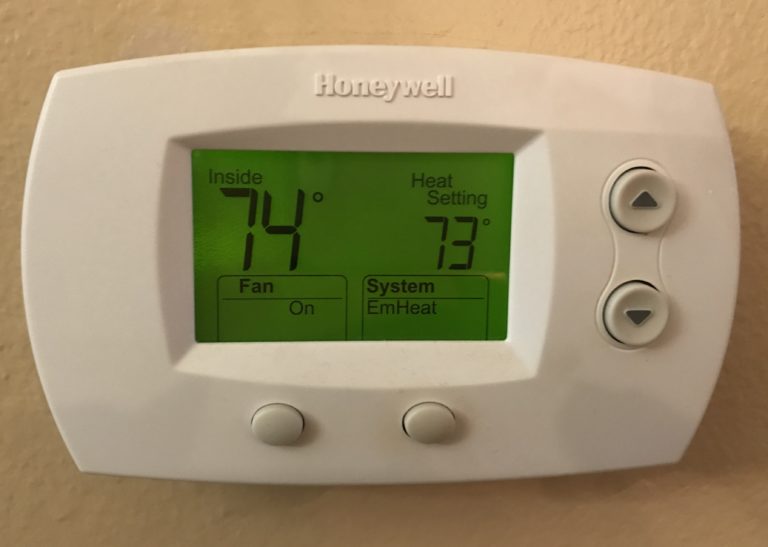
The “EM Heat” setting on a thermostat, often found alongside “Aux Heat,” is a critical yet frequently misunderstood function primarily associated with heat pump HVAC systems. Far from being a primary heating mode for everyday use, “EM Heat” (Emergency Heat) serves as a backup heating solution, engaging a specific, less efficient form of heating when the primary heat pump system struggles or fails. Understanding its purpose, how it operates, and when to use it is essential for optimal home comfort, energy efficiency, and system longevity, placing it firmly within the realm of home technology and gadget utilization.
Decoding the “EM Heat” Functionality
At its core, “EM Heat” refers to a mode that bypasses the heat pump’s standard operation and directly activates auxiliary heating elements, typically electric resistance coils. To fully grasp its function, it’s vital to understand the broader context of how modern HVAC systems, particularly those employing heat pumps, generate warmth.
The Basics of HVAC System Heating
Conventional furnaces, whether gas, oil, or electric, generate heat directly by burning fuel or converting electrical energy into heat through resistance. Heat pumps, however, operate differently. They don’t generate heat directly; instead, they transfer heat. In heating mode, a heat pump extracts heat from the outside air (even cold air contains thermal energy) and transfers it indoors. This process is remarkably energy-efficient, especially in milder climates, because it moves existing heat rather than creating it.
The Role of Auxiliary Heat and Emergency Heat
Heat pumps are highly efficient but have limitations. As outdoor temperatures drop significantly, the amount of heat available in the air diminishes, and the heat pump must work harder to extract it. Below a certain “balance point” (typically between 35-40°F or 2-4°C), the heat pump’s efficiency decreases, and it may not be able to adequately heat the home on its own. This is where supplementary heating comes into play.
Modern heat pump systems are almost always paired with a secondary heating source, commonly electric resistance heating elements, similar to those found in a toaster or an electric furnace. These elements provide “auxiliary heat” (AUX) or can be manually engaged as “emergency heat” (EM Heat).
EM Heat: A Specific Mode for Specific Situations
“EM Heat” is a distinct mode that forces the system to rely solely on these auxiliary heating elements. Unlike “Aux Heat,” which often cycles on automatically to assist the heat pump when needed, “EM Heat” completely deactivates the heat pump’s primary heating function. This distinction is crucial because the energy consumption of pure electric resistance heating is significantly higher than that of a heat pump.
Heat Pumps: The Core Technology
To appreciate the design philosophy behind EM Heat, one must first understand the primary technology it supports: the heat pump.
How Heat Pumps Work
A heat pump operates on the principle of refrigerant cycling, similar to a refrigerator or air conditioner. In heating mode, a special valve reverses the flow of refrigerant. The outdoor coil acts as an evaporator, absorbing heat from the ambient air. The warmed refrigerant then travels to the indoor coil, which acts as a condenser, releasing the absorbed heat into the home. A compressor manages the pressure and temperature of the refrigerant, facilitating the heat transfer process. This ingenious mechanism allows a heat pump to deliver several units of heat energy into a space for every unit of electrical energy it consumes, making it highly efficient.
Advantages of Heat Pumps
The primary advantage of heat pumps lies in their energy efficiency. By moving heat rather than generating it, they can achieve Coefficients of Performance (COPs) well above 1.0, meaning they can deliver more heating energy than the electrical energy they consume. This translates to lower operating costs, especially when compared to electric furnaces or older oil furnaces. They also offer the convenience of providing both heating and cooling from a single unit.
Limitations of Heat Pumps and the Need for Supplemental Heat
Despite their efficiency, heat pumps face challenges in extremely cold conditions. As outdoor temperatures drop, the temperature difference between the refrigerant and the ambient air decreases, making heat extraction more difficult and less efficient. Frost can also build up on the outdoor coil, requiring periodic defrost cycles that temporarily pause heating or even switch to cooling mode to melt the ice, further necessitating a backup heat source. This is precisely why auxiliary and emergency heat systems are integrated. They ensure consistent comfort even when the heat pump’s performance declines or fails.
Auxiliary Heat vs. Emergency Heat: Understanding the Nuances
While both auxiliary and emergency heat rely on the same resistive heating elements, their operational triggers and implications for energy consumption differ significantly.
Auxiliary Heat (AUX): Automatic Assistance
Auxiliary heat, often simply labeled “Aux Heat” on a thermostat, is designed to engage automatically when the heat pump alone cannot meet the thermostat’s set temperature.
When it engages
The thermostat’s intelligent control system monitors the indoor temperature and compares it to the set point. If the heat pump is running but the indoor temperature is falling or not rising quickly enough (e.g., during extremely cold weather or when rapidly raising the thermostat setting), the auxiliary heat elements will automatically activate. This usually occurs when the outdoor temperature drops below the system’s balance point, or during a defrost cycle where the heat pump is temporarily not providing heat. The heat pump continues to run concurrently with the auxiliary strips in this mode.
Efficiency considerations
While more efficient than emergency heat because the heat pump is still contributing, auxiliary heat is less efficient than the heat pump operating alone. The electrical resistance heating elements consume a significant amount of electricity, which can lead to a noticeable spike in energy bills if frequently used. Modern thermostats are designed to minimize auxiliary heat usage, primarily relying on the heat pump unless absolutely necessary.
Emergency Heat (EM Heat): Manual Override for Critical Situations

Emergency heat, or “EM Heat,” is a manual setting that completely overrides the heat pump. When you switch to EM Heat, the thermostat commands the system to only use the resistive heating elements.
When to use it
EM Heat should only be engaged in true emergency scenarios. This includes situations where:
- The heat pump is malfunctioning or has completely broken down (e.g., compressor failure, refrigerant leak, fan motor issues).
- The outdoor unit is completely frozen solid, beyond what a normal defrost cycle can handle.
- The outdoor ambient temperature is so low that the heat pump is operating extremely inefficiently or not at all (though auxiliary heat would typically handle this automatically).
It is not intended for everyday heating, for rapidly warming up a cold house, or as a substitute for a properly functioning heat pump during cold weather.
How it operates (pure resistive/electric strip heating)
When EM Heat is active, the heat pump’s outdoor unit is typically shut down. All heating demand is met by the electric resistance coils, which are usually located in the indoor air handler. These coils rapidly generate heat by converting electricity directly into thermal energy.
Energy consumption implications
This is the most critical difference: EM Heat is the least efficient heating method available in a heat pump system. Because electric resistance heating has a COP of 1.0 (meaning one unit of electrical energy produces one unit of heat), it costs significantly more to operate than a heat pump, which can achieve COPs of 2.0-4.0 or higher. Running EM Heat for extended periods can lead to alarmingly high electricity bills. Therefore, if your system is stuck on EM Heat or you find yourself needing to use it, it’s a strong indicator that professional HVAC service is required.
The Thermostat’s Role in Managing Both Modes
The thermostat acts as the central control hub. Smart thermostats, in particular, have sophisticated algorithms that manage the transition between heat pump operation and auxiliary heat engagement based on temperature differentials, outdoor temperature sensors, and performance monitoring. The EM Heat setting, however, is almost always a manual override, requiring direct user intervention to activate it, serving as a failsafe when the primary system is compromised.
Optimizing Your Heating System: Best Practices and Technical Considerations
Proper management of your HVAC system, especially concerning auxiliary and emergency heat, is key to both comfort and energy savings.
When to Use EM Heat (and When Not To)
As reiterated, EM Heat is an emergency-only feature. If you switch to EM Heat, consider it a temporary solution until a qualified technician can diagnose and repair the underlying issue with your heat pump. If your heat pump is working correctly, you should never need to manually select EM Heat, as the system’s automatic auxiliary heat should suffice during cold snaps. Overuse of EM Heat can lead to unnecessarily high energy bills and could mask a preventable system problem.
Regular Maintenance and Diagnostics
Preventative maintenance is paramount for heat pump systems. Annual check-ups by a certified HVAC technician ensure that the heat pump is operating efficiently, identify potential issues before they become critical, and verify the correct functioning of all heating modes, including auxiliary and emergency heat. Technicians can check refrigerant levels, clean coils, inspect electrical components, and test thermostat functionalities.
Smart Thermostats and EM Heat Management
Modern smart thermostats offer advanced control and insights. Many models can monitor auxiliary heat usage and even alert homeowners if it’s running excessively, which could indicate a heat pump problem. Some smart thermostats have “lockout” temperature settings that prevent the heat pump from running below certain extreme outdoor temperatures, forcing the system to rely solely on auxiliary heat in those conditions (though this is distinct from EM Heat, as it’s still automatic). Users can often review energy usage data through accompanying apps, providing transparency into when and how often auxiliary heat is being used, helping to identify potential inefficiencies.
Energy Efficiency and Operational Costs
The operational cost difference between heat pump heating, auxiliary heat, and emergency heat is substantial. Heat pumps, with their high COPs, offer the lowest operating costs. Auxiliary heat costs more because it supplements the heat pump with resistive heating. Emergency heat, being 100% resistive heating, is the most expensive. Understanding this cost hierarchy should strongly discourage the casual use of EM Heat and reinforce the importance of maintaining your heat pump in peak condition.
Troubleshooting Common Issues Related to EM Heat
Encountering issues with your heating system, especially if it relates to EM Heat, often signals a need for attention.
Why EM Heat Might Be Running Constantly
If you discover your system is running on EM Heat, and you didn’t manually select it (some older thermostats might default to it if an error occurs, though this is rare), or if you did select it and it’s running constantly:
- Heat Pump Malfunction: The most common reason. Your heat pump’s primary heating function might be broken. This could be due to a faulty compressor, low refrigerant, a fan motor issue, or a problem with the defrost cycle.
- Electrical Issues: Problems with the wiring, fuses, or circuit breakers affecting the heat pump’s outdoor unit could force reliance on the indoor electric strips.
- Thermostat Error: A misconfigured or malfunctioning thermostat could be incorrectly calling for EM Heat.
Thermostat Settings and Configuration
It’s crucial to ensure your thermostat is correctly configured for a heat pump system with auxiliary heat. Incorrect settings can lead to inefficient operation or unintended activation of emergency heat. Consult your thermostat’s manual for proper programming, especially settings related to the “changeover temperature” (the point at which auxiliary heat is allowed to engage) or “balance point.”

Professional Diagnosis vs. DIY Checks
While a quick check of your thermostat settings and circuit breakers is a reasonable first step, any persistent issue that forces you to use EM Heat warrants professional attention. HVAC systems are complex, involving refrigerants, high-voltage electricity, and intricate control boards. Attempting DIY repairs on a malfunctioning heat pump can be dangerous and may void warranties. A certified technician can accurately diagnose the problem, whether it’s with the heat pump itself, the auxiliary heating elements, or the thermostat, and implement the safest and most effective solution. Timely professional intervention will restore your system’s efficiency and prevent higher energy costs.
aViewFromTheCave is a participant in the Amazon Services LLC Associates Program, an affiliate advertising program designed to provide a means for sites to earn advertising fees by advertising and linking to Amazon.com. Amazon, the Amazon logo, AmazonSupply, and the AmazonSupply logo are trademarks of Amazon.com, Inc. or its affiliates. As an Amazon Associate we earn affiliate commissions from qualifying purchases.