
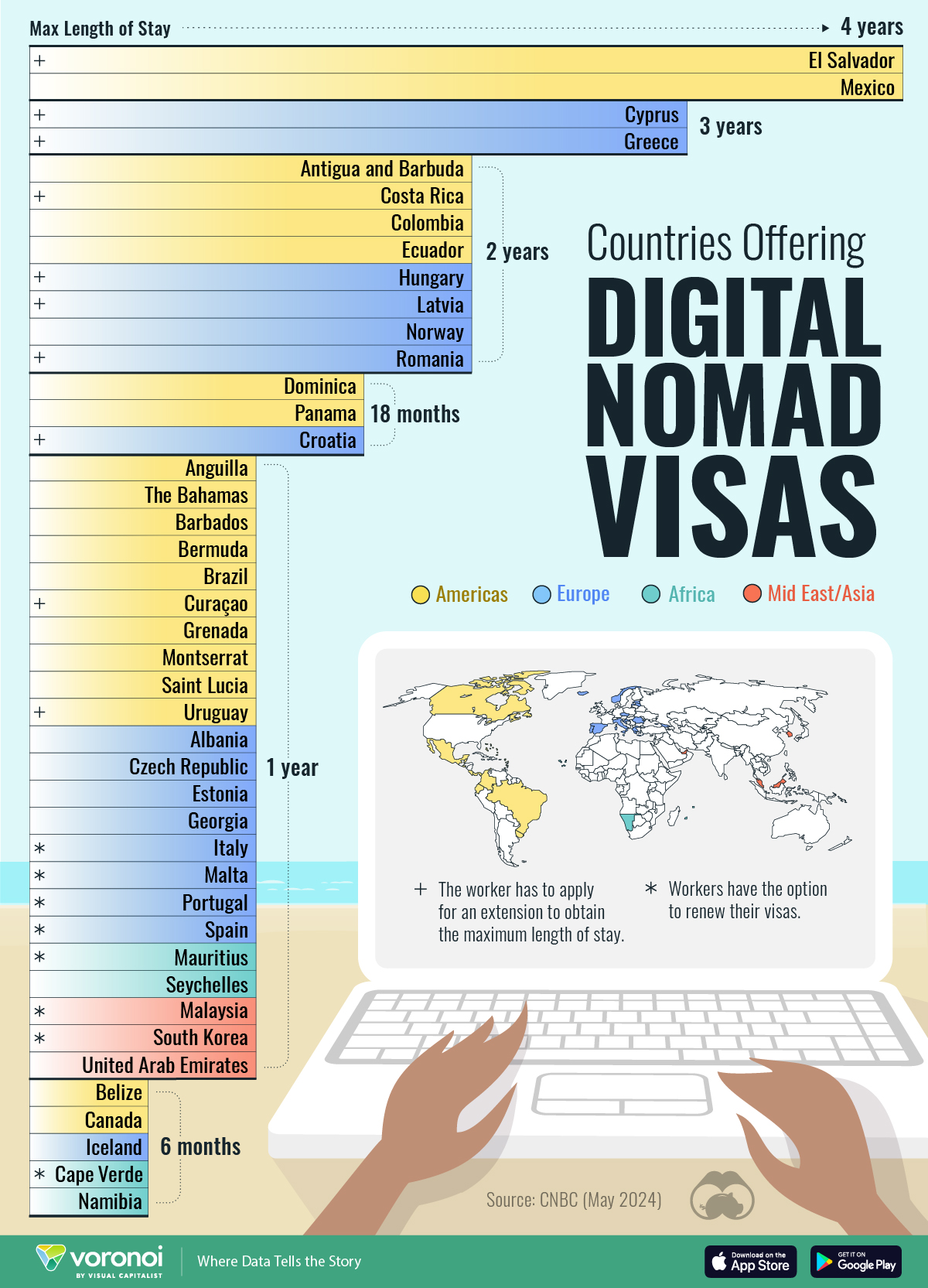
The rise of the digital nomad lifestyle, characterized by location-independent work powered by technology, has significantly reshaped global employment paradigms. As a direct response to this burgeoning trend, a novel immigration instrument has emerged: the digital nomad visa. Fundamentally, a digital nomad visa is a specific type of temporary residence permit that grants foreign remote workers, freelancers, or self-employed individuals the legal right to reside and work in a host country for a specified period, provided their income is derived from outside that country’s borders. This instrument is not merely a travel document; it’s a critical financial enabler, allowing individuals to legally leverage their online income streams in a new economic environment, profoundly impacting their personal finance, investment strategies, and the operational aspects of their online businesses.

The Financial Imperative Behind Digital Nomad Visas
The genesis of the digital nomad visa lies in a confluence of economic shifts and changing work philosophies. Countries recognize the immense financial potential in attracting high-earning, globally mobile professionals who spend their foreign-derived income within local economies without competing for local jobs. For individuals, these visas provide a legitimate pathway to optimize their personal finances by capitalizing on global cost-of-living differences and accessing diverse economic opportunities.
Evolving Work-Life Paradigms and Global Income Streams
Traditional employment structures, typically tethered to a physical office, have steadily eroded, accelerated by technological advancements and the remote work revolution. This shift has unlocked unprecedented freedom for individuals to earn an income from virtually anywhere, leading to the proliferation of global income streams. For many, the motivation to become a digital nomad is inherently financial: to reduce living expenses, increase discretionary income, or invest in diverse assets. A digital nomad visa legitimizes this financial strategy by providing the necessary legal framework. Without it, individuals attempting to work remotely while residing in a foreign country often operate in a legal gray area, risking fines, deportation, and the inability to establish a stable financial presence, such as opening local bank accounts or securing long-term leases—all crucial for sound personal finance management abroad.
The Legal Framework for Remote Earnings Abroad
Prior to the advent of these visas, digital nomads often entered countries on tourist visas, which strictly forbid engaging in any form of work, paid or unpaid. This created a precarious situation for those whose livelihoods depended on remote work. A digital nomad visa explicitly acknowledges and legalizes the act of earning money from external sources while residing within the host nation. This legal clarity offers significant financial advantages. It enables individuals to:
- Maintain tax compliance: While the exact tax implications vary, the visa often provides a clear status that helps in navigating international tax obligations, preventing double taxation, or clarifying income source jurisdiction.
- Access financial services: Legally recognized residence often facilitates opening local bank accounts, securing local credit, and accessing financial tools pertinent to managing cross-border transactions and investments.
- Plan long-term finances: With a secure legal status, digital nomads can confidently plan their financial future, including investments in property, local businesses, or long-term savings strategies, without the constant threat of legal instability. The visa transforms transient income into a stable base for wealth building.
Key Financial Requirements and Considerations
Securing a digital nomad visa is not merely a bureaucratic exercise; it involves demonstrating a robust financial capacity to support oneself without burdening the host country’s welfare system. Understanding and meeting these financial prerequisites is paramount for a successful application and a sustainable nomadic lifestyle.
Income Thresholds and Proof of Funds
A cornerstone of nearly every digital nomad visa program is the requirement to prove a stable, substantial income derived from sources outside the host country. These income thresholds vary significantly by nation, often ranging from €1,500 to €3,500 or more per month, sometimes with additional requirements for dependents. Applicants must typically provide bank statements, tax returns, employment contracts, client invoices, or other verifiable financial documentation to demonstrate consistent earnings over a specified period (e.g., the last 3-6 months). This financial vetting ensures that the applicant is self-sufficient and capable of contributing to the local economy through consumption rather than requiring social services. For freelancers and business owners, this often necessitates meticulous record-keeping and robust financial reporting.
Health Insurance and Local Financial Obligations
Beyond demonstrating sufficient income, applicants are almost universally required to secure comprehensive health insurance coverage for the duration of their stay. This is a critical financial safeguard, preventing potential healthcare costs from becoming a burden on the host country or leading to personal financial ruin. The cost of this insurance must be factored into the overall budget. Furthermore, successful applicants often face application fees, processing charges, and sometimes a security deposit, all of which represent initial financial outlays. It’s also important to consider potential local registration fees, social security contributions (if applicable), and other miscellaneous administrative costs that contribute to the overall financial commitment.
Tax Implications for Cross-Border Earners
One of the most complex financial considerations for digital nomads is navigating international tax laws. A digital nomad visa grants temporary residence, but it does not automatically exempt individuals from tax obligations in their home country or dictate their tax residency status. While some countries offering these visas provide tax incentives or temporary exemptions for foreign-derived income, others may require individuals to pay taxes on their worldwide income if they exceed a certain number of days in the country, potentially creating dual tax residency issues. Thorough research into bilateral tax treaties and seeking professional tax advice is indispensable. Mismanaging tax obligations can lead to severe financial penalties and legal repercussions, undermining the financial benefits of the digital nomad lifestyle. Careful financial planning regarding income sourcing, residency rules, and potential tax liabilities is crucial to avoid unforeseen financial drains.
Benefits and Economic Opportunities for Money-Minded Nomads
The digital nomad visa extends far beyond mere legal residency; it unlocks a spectrum of economic advantages and wealth-building opportunities for those strategically managing their finances and online businesses. These visas empower individuals to optimize their income, minimize expenses, and explore new avenues for financial growth.
Cost of Living Arbitrage and Wealth Building
Perhaps the most compelling financial draw of the digital nomad lifestyle, facilitated by these visas, is the ability to leverage cost-of-living arbitrage. By earning income in a high-wage economy (e.g., USD, EUR, GBP) and spending it in a country with a significantly lower cost of living, digital nomads can substantially increase their disposable income and savings rate. For example, an income that might barely cover rent and necessities in New York or London could afford a luxurious lifestyle in Lisbon, Bali, or Medellín. This increased financial flexibility allows for accelerated debt repayment, greater investment potential in diverse assets (stocks, real estate, cryptocurrency), or the funding of entrepreneurial ventures. The visa provides the stability needed to commit to these long-term financial strategies in a foreign setting.
Accessing New Markets and Business Growth
While digital nomad visas generally stipulate that income must come from outside the host country, the physical presence in a new region can inadvertently open doors to new business opportunities. Proximity to emerging markets, different consumer bases, and innovative local ecosystems can spark ideas for new products, services, or partnerships. Entrepreneurs might identify unmet needs, gain insights into new cultural preferences, or connect with a diverse talent pool. For example, a software developer might find local clients for side projects (if permitted under visa terms, usually through consulting for foreign entities), or a marketer might gain invaluable experience in a new demographic. This exposure to varied economic landscapes can lead to diversification of income streams and strategic expansion for online businesses, contributing directly to business finance growth.
Diversifying Income Sources and Financial Resilience
The nature of digital nomad work, often involving freelancing, remote contracts, or running an online business, naturally encourages a diversified approach to income generation. A digital nomad visa facilitates this by offering the stability to cultivate multiple income streams from various international clients or projects without constantly worrying about visa renewals or legal residency. This diversification builds financial resilience, reducing dependence on a single client or market and mitigating risk. Should one income source diminish, others can sustain the nomad’s financial well-being. Furthermore, the exposure to international markets can lead to an understanding of global economic trends, potentially informing investment decisions and further enhancing financial security. The ability to live in a new economic environment allows for real-time observation of market dynamics, which can be invaluable for personal investing and business strategy.
Navigating the Application Process with Financial Prudence
The application process for a digital nomad visa is a significant financial and administrative undertaking. Approaching it with meticulous financial planning and an understanding of the associated costs is crucial for a smooth transition and long-term financial stability abroad.
Essential Documentation and Fee Structures
Prospective digital nomads must compile a comprehensive dossier of financial documents to support their application. This typically includes bank statements, proof of consistent income (e.g., invoices, contracts, pay stubs), and possibly an audited financial report for business owners. These documents must often be translated and notarized, incurring additional costs. Beyond documenting financial eligibility, applicants will encounter various fees:
- Application Fees: These are non-refundable charges levied by the host country’s immigration department, varying widely from tens to hundreds of Euros/Dollars.
- Visa Processing Fees: Some countries have separate fees for processing the visa itself, distinct from the application.
- Legal/Consultancy Fees: Many applicants opt for immigration lawyers or specialized visa services to navigate the complexities, which represents a significant financial investment but can save time and prevent costly errors.
- Translation and Notarization Fees: As mentioned, these can add up, especially if many documents require official certification.
- Travel Costs for Application: Depending on the process, applicants may need to travel to an embassy or consulate in person.
Budgeting for these cumulative costs is essential before initiating the application, ensuring financial preparedness from the outset.
Planning for Long-Term Financial Stability Abroad
Beyond the initial application, a crucial aspect of financial prudence is planning for sustained financial stability in the host country. This involves estimating living expenses, which encompass rent, utilities, groceries, transportation, and discretionary spending, often requiring a buffer above the minimum income threshold. It also means considering currency exchange rate fluctuations, which can impact the real value of foreign-derived income over time. Establishing an emergency fund specifically for international living is highly advisable, covering at least 3-6 months of expenses. This fund serves as a critical safety net against unexpected financial setbacks, health emergencies, or sudden changes in income. A robust financial plan ensures that the move is not just temporary but can be sustained for the duration of the visa, and potentially beyond.
Leveraging Financial Tools for International Banking and Payments
Successful financial management as a digital nomad relies heavily on leveraging appropriate financial tools. Establishing international banking solutions is paramount. This includes exploring options for multi-currency bank accounts, which can reduce foreign transaction fees and simplify cross-border payments. Digital banking platforms and fintech solutions designed for international transactions (e.g., Wise, Revolut, Payoneer) can significantly lower costs associated with receiving foreign income and making local payments. It’s also wise to research credit card options with no foreign transaction fees and favorable exchange rates. Understanding how to efficiently transfer funds, manage budgets across different currencies, and track expenses using financial management apps are all vital skills for optimizing personal finance in a global context. These tools contribute to the overall financial efficiency and ease of managing an international, remote-based income stream.
aViewFromTheCave is a participant in the Amazon Services LLC Associates Program, an affiliate advertising program designed to provide a means for sites to earn advertising fees by advertising and linking to Amazon.com. Amazon, the Amazon logo, AmazonSupply, and the AmazonSupply logo are trademarks of Amazon.com, Inc. or its affiliates. As an Amazon Associate we earn affiliate commissions from qualifying purchases.