
In the intricate world of computing, the Central Processing Unit (CPU) and the Graphics Processing Unit (GPU) stand as two foundational pillars, each indispensable yet fundamentally distinct in their design, purpose, and operational methodologies. While both are processors, crucial for the functioning of any modern computer system, their architectural philosophies are tailored to address vastly different computational challenges. Understanding the nuanced differences between these two powerhouses is key to appreciating the capabilities of contemporary technology, from everyday smartphones to supercomputers and advanced AI systems. This article delves into the core distinctions, evolving roles, and complementary strengths of CPUs and GPUs, shedding light on why they are designed the way they are and how they collaborate to unlock unprecedented computational performance.
The Central Brain: Understanding the CPU
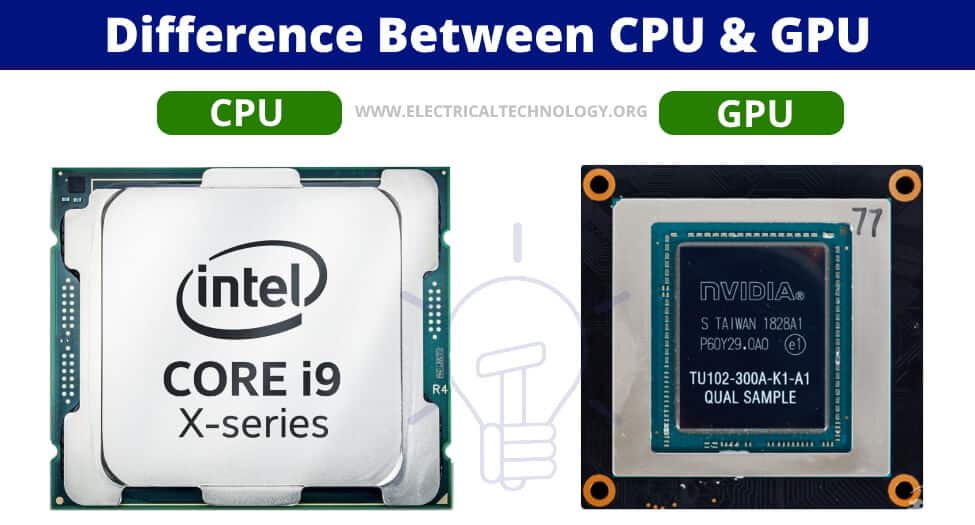
The CPU, often referred to as the “brain” of the computer, is a general-purpose processor designed to handle a wide array of tasks sequentially and efficiently. Its primary role is to execute instructions, perform calculations, and manage the flow of information for the entire system. From booting up your operating system to running applications, browsing the web, or crunching numbers in a spreadsheet, the CPU is at the heart of nearly every operation.
Architectural Philosophy: Serial Processing Mastery
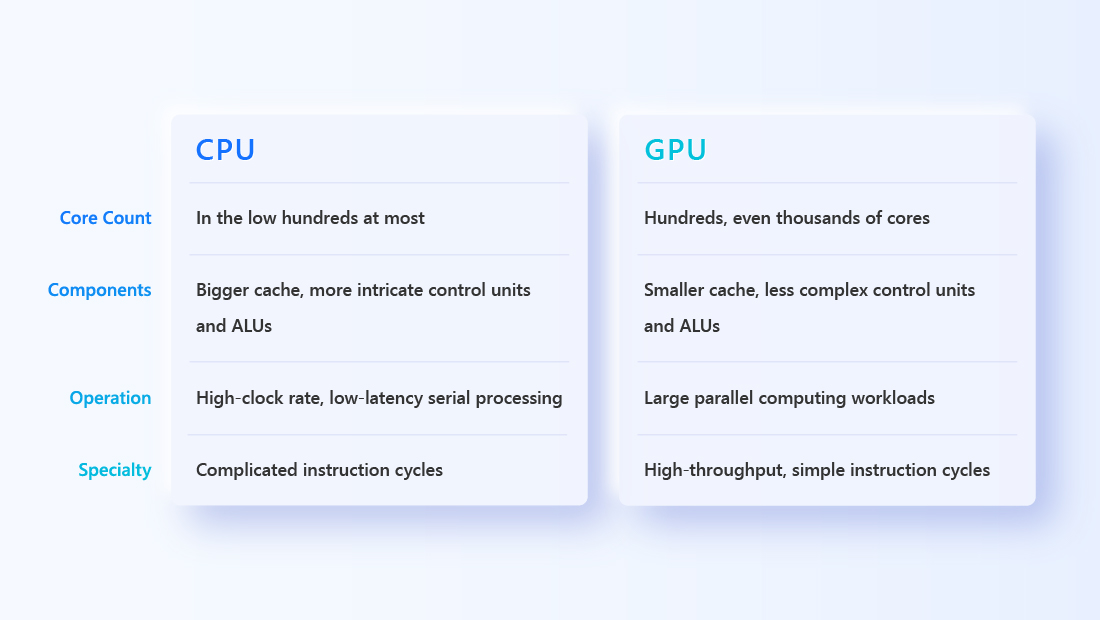
The design ethos behind a CPU emphasizes sophistication and versatility over raw parallel throughput. CPUs are optimized for serial processing, meaning they excel at executing a single stream of instructions very quickly. Each core within a CPU is powerful and capable of handling complex logic, branching, and a broad instruction set. This design allows for exceptional performance in tasks that require intricate decision-making, precise timing, and extensive memory access management. When an application needs to perform a series of dependent operations, where the output of one step is the input for the next, the CPU’s design shines. Its focus on low-latency execution and control flow makes it unparalleled for general computing tasks.
Core Functionality: General-Purpose Computing
CPUs are engineered to be highly adaptable. They perform arithmetic, logical, control, and input/output operations specified by the instructions in programs. This involves interpreting instructions from software, fetching data from memory, executing computations, and writing results back to memory. They manage system resources, handle interrupts, and orchestrate communication between various hardware components. A CPU’s strength lies in its ability to quickly switch between different tasks, ensuring that all parts of the system are running smoothly and responsively. Modern CPUs feature a modest number of highly sophisticated cores (typically 4 to 16, though high-end server CPUs can have many more), each capable of independently processing complex instructions. They also incorporate large caches to store frequently accessed data, minimizing latency when accessing main memory (RAM).
Key Metrics and Performance Indicators
When evaluating a CPU, several metrics come to the fore. Clock speed (measured in GHz) indicates how many cycles per second a core can execute, impacting single-thread performance. Core count signifies how many independent processing units are available, affecting multi-thread performance. Thread count, often double the core count due to technologies like Intel’s Hyper-Threading or AMD’s SMT, indicates how many simultaneous instruction streams the CPU can handle. Cache size (L1, L2, L3) is crucial for reducing memory access latency. Thermal Design Power (TDP) specifies the maximum amount of heat generated, guiding cooling solutions. These factors collectively determine a CPU’s overall processing prowess for general-purpose applications.
The Parallel Powerhouse: Understanding the GPU
The GPU, initially conceived as a specialized chip for accelerating graphics rendering, has evolved into a highly versatile parallel processor. While its origins lie in drawing pixels on a screen, its architecture, optimized for performing vast numbers of simple calculations simultaneously, has found profound applications far beyond graphics, particularly in scientific computing, data processing, and artificial intelligence.
Architectural Philosophy: Parallel Processing Prowess
In stark contrast to the CPU, the GPU is built for massive parallelism. Instead of a few powerful, general-purpose cores, a GPU comprises thousands of smaller, simpler cores (often called stream processors or CUDA cores/stream processors) designed to handle many calculations concurrently. Its design prioritizes throughput—the ability to process a large volume of data at once—over the latency of individual operations. This makes GPUs exceptionally efficient at tasks where the same operation needs to be applied to a large dataset independently, such as rendering millions of pixels, processing large matrices, or training neural networks. The architecture is characterized by a high number of arithmetic logic units (ALUs) and a memory hierarchy optimized for high bandwidth access to on-board video RAM (VRAM).
Core Functionality: Specialized and Concurrent Tasks
The primary function of a GPU remains accelerating graphics rendering. This involves tasks like shading, texturing, geometry processing, and rasterization, all of which require repeating similar calculations across millions of data points (pixels, vertices). However, the highly parallel nature of GPUs makes them ideal for any workload that can be broken down into many small, independent tasks. This capability has led to their widespread adoption in:
- Scientific simulations: From molecular dynamics to weather forecasting.
- Cryptocurrency mining: Executing cryptographic hash functions.
- Data analytics: Processing large datasets for insights.
- Artificial Intelligence and Machine Learning: Training complex neural networks, which involves massive matrix multiplications and computations that are perfectly suited for parallel execution.
GPUs often come with their own dedicated, high-speed memory (VRAM), which provides significantly higher bandwidth compared to system RAM, crucial for feeding data to its numerous cores efficiently.
Key Metrics and Performance Indicators
GPU performance is often measured by its stream processor/CUDA core count, indicating the number of parallel processing units. Clock speed (core clock and memory clock) also plays a role, though less dominant than in CPUs. Memory capacity (VRAM size, measured in GB) and memory bandwidth (how quickly data can be transferred to and from VRAM, measured in GB/s) are critical, especially for high-resolution rendering and large datasets in AI. Tensor Cores, specialized processing units introduced by NVIDIA, further accelerate AI workloads by performing matrix operations at higher efficiency. Thermal Design Power (TDP), similar to CPUs, indicates heat output and power consumption. These specifications directly impact a GPU’s ability to handle visually demanding applications and computationally intensive parallel tasks.
Fundamental Architectural Differences
While both CPUs and GPUs are complex integrated circuits, their internal architectures are optimized for fundamentally different types of computational problems.
Core Count and Design
The most striking difference lies in their core count and individual core capabilities.
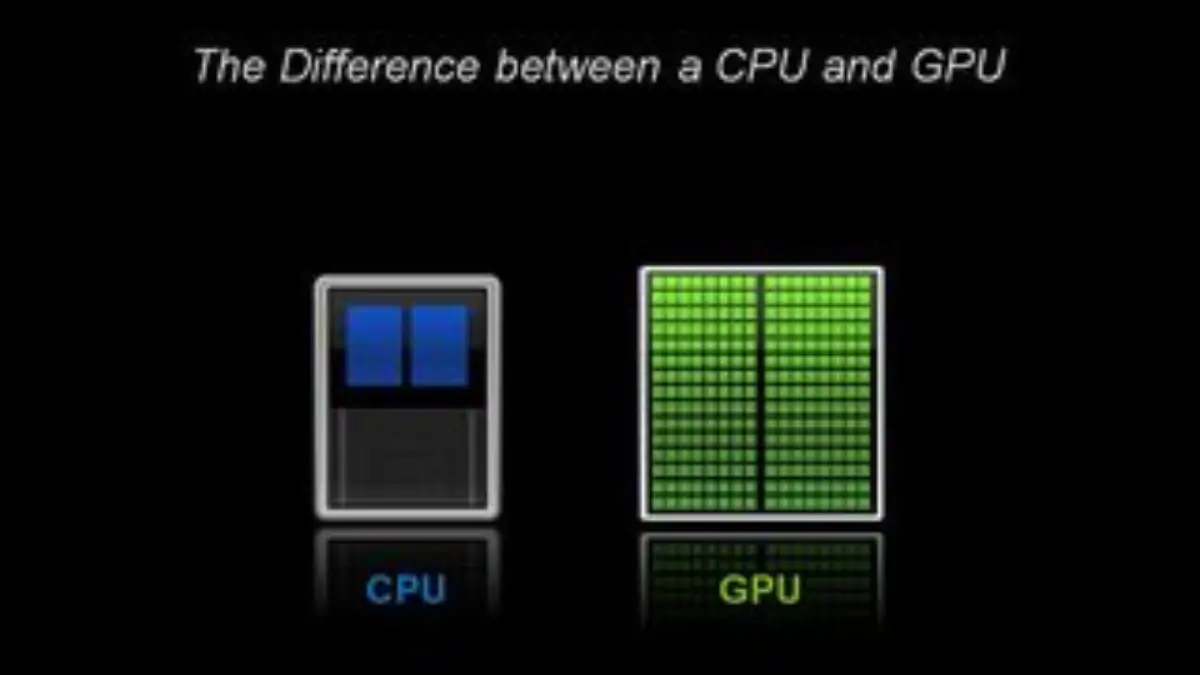
- CPU: Features a small number (e.g., 4-16) of powerful, complex cores. Each core is designed with extensive control logic, large caches, and branch prediction units, making it highly efficient at single-thread performance and managing diverse, serial workloads.
- GPU: Houses a massive number (e.g., hundreds to thousands) of smaller, simpler cores. These cores are less complex individually, with less control logic and smaller caches, but their sheer quantity allows for staggering parallel execution of simpler, repetitive tasks.
Instruction Sets and Processing Models
Their instruction sets and how they process tasks also diverge significantly.
- CPU: Uses a complex instruction set computing (CISC) or reduced instruction set computing (RISC) architecture, with a rich instruction set capable of handling diverse data types and complex operations. It focuses on sophisticated control flow and rapid context switching between disparate tasks.
- GPU: Employs a single instruction, multiple data (SIMD) processing model, where the same instruction is executed simultaneously on multiple data points. This model is highly efficient for tasks that involve applying identical operations across large datasets, minimizing overhead by reducing the need for complex control logic for each individual processing unit.
Memory Access and Bandwidth
Memory architecture is another critical differentiator.
- CPU: Relies on system RAM, accessed via the motherboard, often through sophisticated cache hierarchies (L1, L2, L3) to bridge the speed gap between the CPU and slower main memory. While fast, system RAM bandwidth is typically lower than dedicated GPU memory.
- GPU: Features its own dedicated, high-speed VRAM (e.g., GDDR5, GDDR6, HBM). This memory is directly connected to the GPU, providing significantly higher bandwidth to feed its thousands of cores with data quickly. The massive data throughput is essential for graphics rendering and parallel computing where vast amounts of data need to be processed simultaneously.
Evolving Roles and Complementary Strengths
Historically, the division of labor was clear: CPU for logic and general tasks, GPU for graphics. However, the rise of demanding applications and the sheer parallel processing power of GPUs have blurred these lines, leading to a more symbiotic relationship known as heterogeneous computing.
Traditional Computing and Gaming
In traditional desktop computing, the CPU manages the operating system, runs applications, and handles peripheral interactions. For gaming, the CPU processes game logic, AI, physics, and sends rendering instructions to the GPU. The GPU then takes these instructions and renders the complex 3D scenes, applies textures, lighting, and effects, displaying the final image on your screen. Both are critical; a powerful GPU can be bottlenecked by a weak CPU, and vice versa.
Scientific Computing and Data Processing
For scientific simulations, financial modeling, and big data analytics, GPUs have become invaluable. Their parallel architecture excels at the repetitive, data-intensive calculations inherent in these fields. CPUs often act as orchestrators, setting up tasks and managing data flow for the GPUs, which then perform the heavy lifting of the actual computation, significantly accelerating processing times compared to CPU-only solutions.
Artificial Intelligence and Machine Learning
The field of AI, particularly deep learning, has been revolutionized by GPUs. Training deep neural networks involves massive matrix multiplications and parallel computations that GPUs are uniquely designed to handle efficiently. Frameworks like TensorFlow and PyTorch heavily leverage GPU acceleration. While CPUs still manage the overall AI workflow, data preprocessing, and model deployment, GPUs are the workhorses for the computationally intensive training phases, enabling the development of increasingly sophisticated AI models.
The Rise of Heterogeneous Computing
Modern systems increasingly adopt heterogeneous computing, where CPUs and GPUs work in tandem, each handling tasks for which they are best suited. This approach maximizes overall system efficiency and performance. CPUs manage sequential, single-threaded tasks and overall system control, while GPUs are deployed for parallel, data-intensive computations. This collaborative model is present in everything from integrated graphics in laptops to supercomputers, and it is the foundation for future advancements in AI, scientific research, and immersive computing experiences.
Choosing the Right Processor for Your Needs
The “better” processor depends entirely on the intended application. A balanced understanding of CPU and GPU strengths is crucial when building or purchasing a computer system.
For Everyday Users and Business Professionals
For tasks like web browsing, email, word processing, video conferencing, and light photo editing, a capable CPU with integrated graphics is often sufficient. Modern integrated GPUs (found within the CPU package, e.g., Intel Iris Xe, AMD Radeon Graphics) can handle 4K video playback, multiple monitors, and even some casual gaming, making dedicated GPUs unnecessary for most general-purpose users. A CPU with good single-core performance will ensure a snappy and responsive user experience for these common applications.
For Gamers and Content Creators
Gamers and content creators (video editors, 3D modelers, graphic designers) will benefit immensely from a powerful discrete GPU. High-end gaming requires a GPU capable of rendering complex scenes at high frame rates and resolutions. Content creation software often leverages GPU acceleration for tasks like video encoding, rendering 3D models, and applying visual effects. While a good CPU is still essential to prevent bottlenecks, the GPU is the primary performance driver in these scenarios. A balance between a strong CPU and a strong GPU is usually recommended for optimal performance.
For Researchers and AI Developers
For scientific researchers, data scientists, and AI developers working with large datasets and complex models, powerful GPUs are often the most critical component. Multiple high-end GPUs are common in workstations and servers dedicated to deep learning training or high-performance computing clusters. The CPU will still be needed to manage the system and orchestrate the tasks, but the vast majority of the computational workload will be offloaded to the GPUs. For these specialized applications, the number and type of GPUs often dictate the system’s overall effectiveness more than the CPU.
In conclusion, while both the CPU and GPU are vital components that process information, they do so with fundamentally different architectural philosophies. The CPU, with its few powerful cores, excels at general-purpose, serial processing, acting as the system’s central intelligent orchestrator. The GPU, with its thousands of simpler cores, is a parallel processing powerhouse, optimized for simultaneous execution of numerous identical tasks. This distinction is not about one being “superior” to the other, but rather about specialized roles that, when combined effectively, unlock the full potential of modern computing across an ever-expanding range of applications.
aViewFromTheCave is a participant in the Amazon Services LLC Associates Program, an affiliate advertising program designed to provide a means for sites to earn advertising fees by advertising and linking to Amazon.com. Amazon, the Amazon logo, AmazonSupply, and the AmazonSupply logo are trademarks of Amazon.com, Inc. or its affiliates. As an Amazon Associate we earn affiliate commissions from qualifying purchases.