
In the contemporary workplace and the broader landscape of health informatics, the 10-panel drug test stands as a cornerstone of safety and compliance. However, from a technical perspective, these tests are far more than simple chemical reactions; they are sophisticated diagnostic tools that leverage advanced biochemistry and digital data management to provide accurate profiles of substance use. As technology evolves, the precision of these screenings has increased, moving from rudimentary “yes/no” indicators to complex analytical processes that can identify specific molecular structures.
Understanding what is detected in a 10-panel drug test requires an exploration of the underlying laboratory technology, the chemical identifiers involved, and the digital systems that ensure the integrity of the results. This article explores the technological architecture of drug screening, the specific substances identified, and the future of digital integration in workplace safety.

The Core Science: Laboratory Analysis and Detection Windows
To understand what a 10-panel test detects, one must first understand the methodology used to identify chemical compounds within a biological sample. Modern drug testing relies on a two-tiered technological approach designed to balance speed with forensic-grade accuracy.
Immunoassay Screening vs. GC-MS Confirmation
The initial phase of a 10-panel drug test typically utilizes Immunoassay (IA) technology. This is a biochemical test that measures the presence or concentration of a macromolecule or a small molecule through the use of an antibody. In the context of drug testing, the technology looks for “cross-reactivity.” If a drug is present, it binds to specific antibodies, triggering a signal—often a color change or a fluorescent marker—that is read by an automated scanner.
While IA is fast and cost-effective, it is the first line of defense. If a sample returns a “presumptive positive,” it moves to the second, more rigorous technical stage: Gas Chromatography-Mass Spectrometry (GC-MS) or Liquid Chromatography-Tandem Mass Spectrometry (LC-MS/MS). These technologies represent the “gold standard” in analytical chemistry. They break down the sample at a molecular level, allowing technicians to identify the unique “fingerprint” of a substance. This level of technical precision eliminates false positives caused by over-the-counter medications or food items.
Digital Sensitivity and Cut-off Levels
A critical technological component of the 10-panel test is the “cut-off level.” This is a pre-determined concentration of a drug or its metabolite in the sample, measured in nanograms per milliliter (ng/mL). Laboratory software is programmed to ignore traces below these levels to account for passive exposure or environmental contamination. The technology must be finely tuned; too sensitive, and the test yields too many false positives; not sensitive enough, and it misses actual substance abuse. Modern digital lab equipment allows for the adjustment of these thresholds based on the specific requirements of a high-security industry or a standard corporate environment.
The “10 Panels”: A Technical Breakdown of Chemical Identifiers
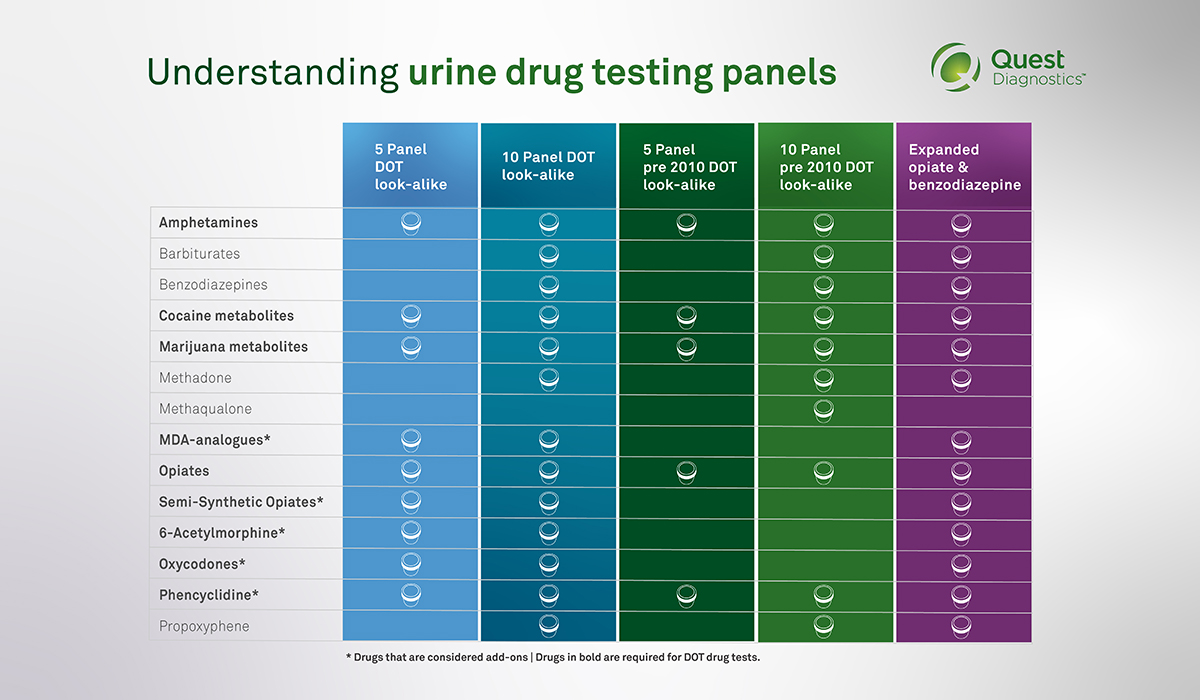
The term “10-panel” refers to the ten distinct categories of substances the test is designed to detect. From a technical standpoint, the test is looking for metabolites—the chemical byproducts created after the body processes a drug—rather than the drug itself, as metabolites often stay in the system significantly longer.
Standard SAMHSA-5 Substances
The 10-panel test includes the original “SAMHSA-5,” the standard set by the Substance Abuse and Mental Health Services Administration. The technology identifies:
- Amphetamines: Including methamphetamine and MDMA (Ecstasy).
- Cocaine Metabolites: Specifically benzoylecgonine.
- Marijuana (THC): Detecting the THC-COOH metabolite.
- Opiates: Identifying codeine, morphine, and often 6-acetylmorphine (heroin).
- Phencyclidine (PCP): A dissociative drug that remains a staple of standard panels.
Extended Panels for Modern Synthetic Threats
The “10-panel” configuration extends beyond the basics to include five additional categories that reflect modern pharmaceutical trends and synthetic drug availability:
- Benzodiazepines: Detection of tranquilizers like Xanax or Valium.
- Barbiturates: Identifying sedative-hypnotics.
- Methadone: A synthetic opioid often tested separately from standard opiates.
- Propoxyphene: Though less common today, it remains a standard panel in many legacy testing kits.
- Methaqualone: Identifying Quaaludes, which, despite decreased street prevalence, remains a requirement in comprehensive panels to monitor for specialized substance use.
Technologically, the challenge lies in the fact that many of these substances, particularly benzodiazepines and opioids, have hundreds of analogs. Advanced laboratory software must be constantly updated with new chemical signatures to ensure that synthetic versions of these drugs do not bypass the detection algorithms.

Digital Integration in Workplace Safety and Compliance
As we move further into the digital age, the “test” itself is only one part of the ecosystem. The data generated by a 10-panel drug test is now integrated into broader Human Resources (HR) and safety tech stacks, creating a seamless flow of information from the laboratory to the decision-makers.
E-Chain of Custody and Blockchain Security
One of the most significant technological advancements in drug testing is the Electronic Chain of Custody (eCCF). Historically, the “paper trail” for a drug test was prone to human error and tampering. Today, digital systems track a sample from the moment of collection to the final disposal. Each step is timestamped and logged in a secure database.
There is an increasing move toward using blockchain technology for these records. By creating an immutable ledger of the testing process, companies can guarantee the integrity of the results. For high-stakes industries like aerospace or nuclear energy, this digital security is as important as the chemical analysis itself, providing a forensic-grade audit trail that is defensible in court.
AI and Predictive Analytics in Behavioral Health
Innovative tech firms are now using the data from drug testing programs to feed into AI-driven predictive models. By anonymizing and aggregating 10-panel test results across an industry or region, AI can identify trends in substance abuse. This allows companies to proactively implement Employee Assistance Programs (EAPs) or safety training before an incident occurs. Rather than being a purely punitive tool, the technology transforms the drug test into a data point for comprehensive workplace wellness and risk management.
Emerging Trends in Testing Technology
The 10-panel drug test is not a static technology. We are currently witnessing a shift toward more non-invasive and real-time detection methods that promise to replace or augment traditional urinalysis.
From Urine to Rapid Saliva and Hair Follicle Tech
While urine remains the standard for the 10-panel test due to its balance of cost and detection window, hair follicle testing is becoming a tech-heavy alternative. Hair testing uses sophisticated extraction techniques to identify drug use over a 90-day period. The technology involves dissolving the hair shaft and using LC-MS/MS to detect trapped metabolites.
On the other end of the spectrum, Oral Fluid (Saliva) testing technology is gaining ground for “point-of-collection” testing. New digital readers can analyze a saliva swab on-site and provide results in minutes. This tech is particularly useful for roadside testing or post-accident investigations where “recent use” (within the last few hours) is the critical metric, something that traditional 10-panel urine tests struggle to pinpoint with precision.
Wearable Tech and Real-Time Monitoring
The future of “detection” may move away from periodic testing toward continuous monitoring. Wearable biosensors are being developed that can detect the physiological signatures of intoxication or the presence of certain metabolites in sweat. While not yet a replacement for the 10-panel lab test, these gadgets represent a new frontier in digital health security. They offer the potential for real-time alerts in high-risk environments, such as heavy machinery operation, where the lag time of a laboratory test could be the difference between safety and catastrophe.
Conclusion
The 10-panel drug test is a sophisticated intersection of organic chemistry, analytical hardware, and digital data management. By identifying a broad spectrum of substances—from traditional stimulants to modern prescription sedatives—it provides a comprehensive overview of an individual’s chemical profile. However, the true value of the test lies in the technology that powers it: the GC-MS machines that ensure accuracy, the eCCF systems that ensure integrity, and the emerging AI tools that turn raw results into actionable safety insights.
As workplace technology continues to advance, the 10-panel test will likely become even more integrated into the digital infrastructure of corporations. Whether through more sensitive detection limits or the adoption of blockchain-verified results, the goal remains the same: leveraging technology to create a safer, more transparent, and more accountable professional environment. Understanding the tech behind the test is essential for any modern professional or organization navigating the complexities of 21st-century compliance.
aViewFromTheCave is a participant in the Amazon Services LLC Associates Program, an affiliate advertising program designed to provide a means for sites to earn advertising fees by advertising and linking to Amazon.com. Amazon, the Amazon logo, AmazonSupply, and the AmazonSupply logo are trademarks of Amazon.com, Inc. or its affiliates. As an Amazon Associate we earn affiliate commissions from qualifying purchases.