
In an increasingly technologically driven world, the term “engineering job” is frequently heard, yet its full scope and profound implications are often misunderstood. Far from being a monolithic profession, engineering encompasses a vast constellation of disciplines, each dedicated to applying scientific principles and mathematical rigor to design, build, maintain, and improve systems, structures, machines, materials, and processes. At its heart, an engineering job is about problem-solving, innovation, and bringing tangible solutions to complex challenges, thereby continuously shaping and advancing our technological landscape.
An engineer’s work is the invisible force behind virtually every modern convenience and technological marvel we encounter daily. From the smartphones in our pockets and the smart grids powering our cities to the advanced medical devices saving lives and the software applications streamlining global communication, engineers are the architects of the future. This article delves into the core essence of engineering, exploring its diverse fields, the essential skills required, and the immense impact engineers have on technological progress.

The Core Essence of Engineering: Problem-Solving Through Innovation
At its fundamental level, an engineering job is synonymous with problem-solving. Engineers are trained to identify inefficiencies, conceptualize improvements, and develop robust, practical solutions that address real-world needs. This process is inherently iterative, demanding creativity, analytical thinking, and a steadfast commitment to innovation. It’s a career path that thrives on challenges, where each new obstacle presents an opportunity to devise a more efficient, sustainable, or groundbreaking solution.
Defining the Engineering Mindset
The engineering mindset is characterized by a unique blend of critical thinking, analytical prowess, and a systematic approach to complex problems. It’s not enough to merely understand how something works; an engineer must grasp why it works, how it can fail, and how it can be improved or designed from scratch. This involves:
- Analytical Thinking: Breaking down complex problems into manageable components to understand their underlying principles.
- Systems Thinking: Understanding how different parts of a system interact and how changes in one area can affect others.
- Creativity and Innovation: Developing novel solutions and thinking outside the box, often pushing the boundaries of what is currently possible.
- Attention to Detail: Ensuring precision and accuracy in designs, calculations, and implementations to guarantee safety, functionality, and efficiency.
- Logical Reasoning: Applying scientific and mathematical principles to inform decisions and predict outcomes.
This mindset is crucial because engineering solutions must not only be effective but also safe, reliable, cost-effective, and often environmentally sound. It requires a pragmatic approach, balancing theoretical ideals with practical constraints and real-world limitations.
From Concept to Reality: The Engineering Lifecycle
Every engineering job, regardless of its specific discipline, typically follows a structured lifecycle that transforms abstract ideas into tangible realities. This lifecycle often includes:
- Problem Identification and Definition: Clearly understanding the need or problem to be solved, including stakeholder requirements and constraints.
- Research and Analysis: Gathering information, studying existing solutions, performing feasibility studies, and conducting simulations.
- Design and Prototyping: Developing conceptual designs, creating detailed blueprints, CAD models, software architectures, or schematics, and building prototypes or minimum viable products (MVPs).
- Testing and Validation: Rigorously testing prototypes or systems against specifications, identifying flaws, and iterating on designs based on feedback.
- Implementation and Deployment: Overseeing the manufacturing, construction, installation, or deployment of the final solution.
- Maintenance and Optimization: Ensuring the long-term functionality, performance, and improvement of the engineered system throughout its lifespan.
Engineers are involved at every stage, using specialized tools, software, and methodologies pertinent to their field. This comprehensive process underscores the multifaceted nature of an engineering job, requiring a diverse skill set that extends beyond purely technical knowledge.
Diverse Fields, Unified Purpose: Types of Engineering Jobs
The umbrella term “engineering” covers an incredibly diverse range of specializations, each contributing uniquely to the technological landscape. While their day-to-day tasks may differ significantly, all engineering jobs share the common goal of applying scientific and mathematical principles to solve practical problems and innovate.
Software and Computer Engineering: Powering the Digital World
Software engineers design, develop, test, and maintain software applications, operating systems, and networks. They write code, create algorithms, manage databases, and ensure the seamless functionality of digital platforms. Computer engineers, a closely related field, focus more on the hardware-software interface, designing computer systems, processors, memory modules, and input/output devices. These roles are at the forefront of the digital revolution, creating everything from mobile apps and AI systems to cybersecurity solutions and cloud infrastructure.
- Key Technologies: Programming languages (Python, Java, C++, JavaScript), cloud platforms (AWS, Azure, GCP), data structures, algorithms, operating systems, networking protocols, AI/ML frameworks.
- Impact: Enables all digital communication, automation, data processing, and artificial intelligence, fundamental to almost every industry.
Electrical and Electronics Engineering: The Backbone of Modern Devices
Electrical engineers deal with the design, development, and maintenance of electrical systems and components, including power generation, transmission, and distribution. Electronics engineers focus on smaller-scale electronic circuits and devices, like microprocessors, sensors, communication systems, and integrated circuits. Their work underpins virtually all modern technology, from consumer electronics and telecommunications to automotive systems and renewable energy.
- Key Technologies: Circuit design, microcontrollers, signal processing, power electronics, RF communication, embedded systems, PCB design tools.
- Impact: Powers and controls all electronic devices, drives telecommunications, energy infrastructure, and contributes heavily to IoT and smart technologies.
Mechanical and Aerospace Engineering: Shaping the Physical World
Mechanical engineers design, analyze, manufacture, and maintain mechanical systems. This includes everything from engines, machinery, and robotics to heating and cooling systems and manufacturing processes. Aerospace engineers specialize in the design and development of aircraft, spacecraft, satellites, and related systems. Both fields require a deep understanding of physics, materials science, and fluid dynamics, often utilizing advanced CAD (Computer-Aided Design) and simulation tools.
- Key Technologies: CAD/CAM software, finite element analysis (FEA), fluid dynamics, thermodynamics, robotics, materials science, propulsion systems.
- Impact: Drives transportation (automotive, aviation, space exploration), manufacturing, robotics, and energy systems.
Civil and Environmental Engineering: Building and Sustaining Our Infrastructure
Civil engineers are responsible for the design, construction, and maintenance of public and private infrastructure, such as roads, bridges, buildings, airports, dams, and water systems. Environmental engineers focus on protecting human health and the environment, designing solutions for waste management, pollution control, water and air quality, and sustainable resource management. Their work is critical for public safety, urban development, and ecological sustainability.
- Key Technologies: GIS, structural analysis software, project management tools, hydrological modeling, environmental impact assessments.
- Impact: Forms the physical backbone of society, ensures public safety, manages natural resources, and mitigates environmental challenges.
Chemical and Materials Engineering: Transforming Substances and Structures
Chemical engineers apply principles of chemistry, physics, and biology to design processes and operate plants that transform raw materials into valuable products, ranging from pharmaceuticals and fuels to plastics and food products. Materials engineers focus on the discovery, development, and application of new materials with specific properties, critical for advancements in aerospace, electronics, biomedicine, and sustainable energy.
- Key Technologies: Process simulation software, lab analysis techniques, nanotechnology, polymer science, metallurgy.
- Impact: Drives innovation in manufacturing, pharmaceuticals, energy storage, and the development of advanced composites and smart materials.
Essential Skills and Technologies for Modern Engineers
Beyond the specialized knowledge of their chosen field, successful engineers possess a core set of skills and competencies that enable them to thrive in a rapidly evolving technological landscape.
Technical Proficiency: Tools, Languages, and Methodologies
A strong grasp of technical tools and methodologies is non-negotiable. This includes:
- Programming Languages: For software engineers, proficiency in multiple languages is key; for others, scripting languages (e.g., Python for data analysis, MATLAB for simulations) are invaluable.
- Specialized Software: CAD (Computer-Aided Design), CAE (Computer-Aided Engineering), CAM (Computer-Aided Manufacturing) tools, simulation software, project management software, and industry-specific analytics platforms.
- Data Analysis and Visualization: The ability to collect, process, and interpret large datasets to inform decisions and identify trends.
- Understanding of Cloud Computing: For many disciplines, familiarity with cloud services (SaaS, PaaS, IaaS) and distributed systems is becoming increasingly important.
- Cybersecurity Basics: Awareness of security principles and best practices, especially for engineers developing connected devices or software.
Critical Thinking and Problem-Solving
As discussed, problem-solving is the bedrock of engineering. This requires:
- Analytical Rigor: The ability to dissect problems, identify root causes, and evaluate potential solutions objectively.
- Creativity: Thinking innovatively to devise novel approaches and overcome technical hurdles.
- Decision-Making: Making informed choices based on data, analysis, and an understanding of risks and trade-offs.
Collaboration and Communication
Engineering projects are rarely solitary endeavors. Engineers often work in interdisciplinary teams, collaborating with other engineers, designers, project managers, clients, and stakeholders. Effective communication is vital for:
- Technical Documentation: Clearly articulating designs, specifications, and procedures.
- Presentations: Explaining complex technical concepts to both technical and non-technical audiences.
- Teamwork: Contributing effectively to group projects, sharing knowledge, and resolving conflicts.
- Active Listening: Understanding requirements, feedback, and constraints from colleagues and clients.
Continuous Learning and Adaptability
The technological landscape is constantly shifting. New tools, methodologies, and scientific discoveries emerge with remarkable speed. A successful engineer must be committed to lifelong learning, embracing new technologies and adapting their skill set to remain relevant and effective. This involves:
- Staying Current: Following industry trends, reading technical journals, and attending conferences.
- Upskilling: Learning new programming languages, software tools, or specialized techniques.
- Resilience: Adapting to setbacks, learning from failures, and iterating on solutions.
The Impact of Engineering: Driving Technological Progress
The collective work of engineers forms the bedrock of modern technological progress. Every breakthrough, from the internet to space exploration, owes its existence to the ingenuity and persistence of engineers.
Innovating Across Industries
Engineers are not confined to a single sector; their expertise is pivotal across virtually all industries:
- Healthcare: Designing medical devices, imaging systems, prosthetics, and drug delivery systems. Biomedical engineers are at the forefront of improving diagnostics and treatments.
- Energy: Developing renewable energy sources (solar, wind), designing efficient power grids, and exploring new energy storage solutions.
- Transportation: Creating autonomous vehicles, high-speed rail, advanced aerospace systems, and smart traffic management.
- Agriculture: Developing precision farming technologies, automated machinery, and sustainable resource management systems.
- Entertainment: Building sophisticated gaming engines, virtual reality platforms, and special effects technologies.
Shaping the Future: AI, IoT, and Beyond
Engineers are key players in shaping emerging technologies that promise to redefine our future. They are building the algorithms for artificial intelligence, designing the interconnected sensors for the Internet of Things (IoT), developing advanced robotics, pioneering quantum computing, and advancing biotechnology. Their work directly influences how we will live, work, and interact with the world in the coming decades, addressing grand challenges like climate change, global health, and sustainable development.
Navigating a Career in Engineering
A career in engineering is dynamic, challenging, and immensely rewarding, offering opportunities for continuous learning and significant impact.
Education and Specialization
Most engineering jobs require a bachelor’s degree in an accredited engineering program, which provides a strong foundation in mathematics, science, and fundamental engineering principles. Many engineers pursue master’s degrees or doctorates to specialize in particular areas or to advance into research and development roles. Certifications and professional licenses (e.g., Professional Engineer or PE license) are also crucial for certain fields, particularly those involving public safety.

Career Growth and Opportunities
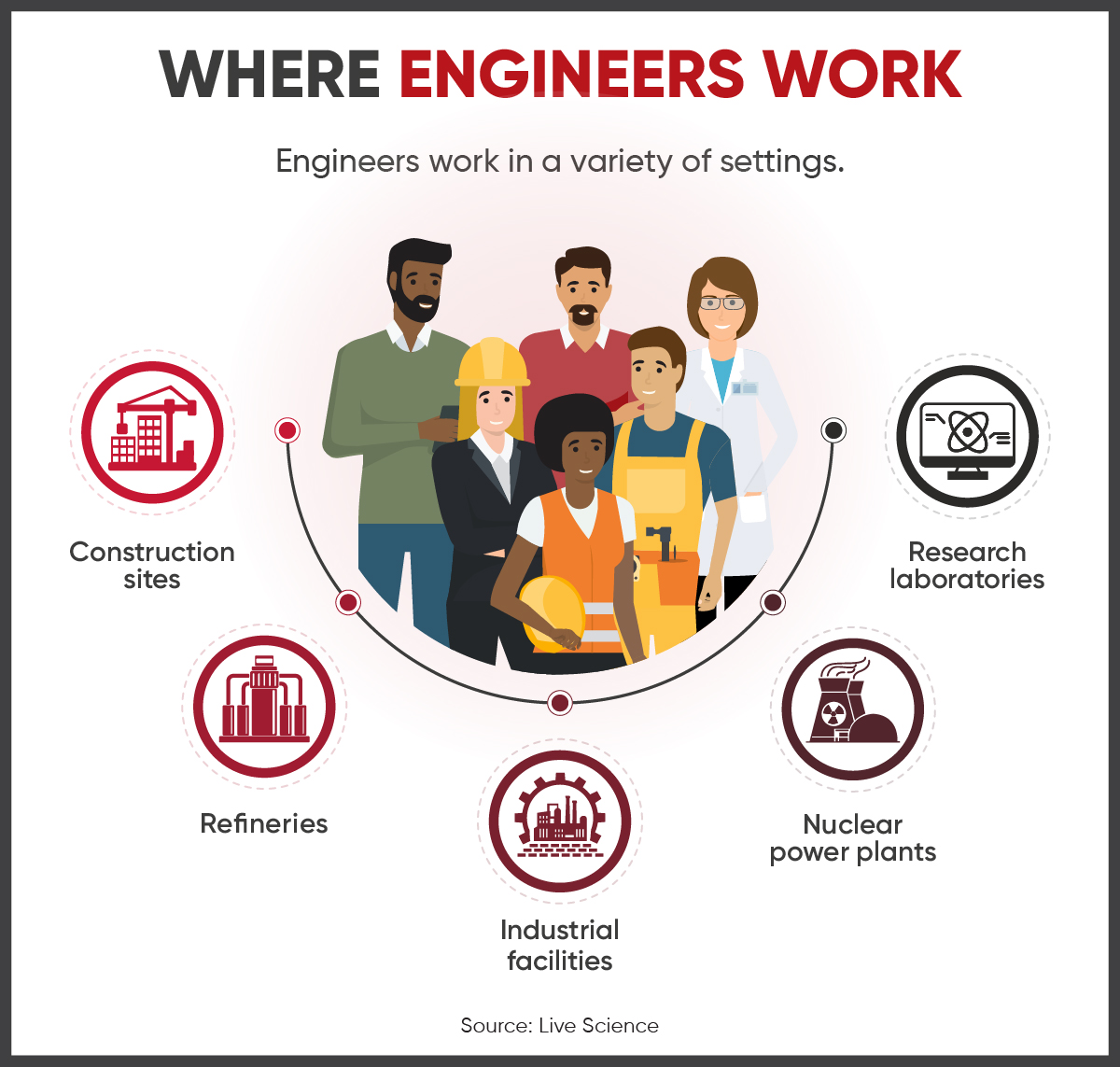
The engineering field offers diverse career paths, from individual contributor roles focused on deep technical expertise to leadership positions managing large teams and complex projects. Engineers can work in various settings, including large corporations, startups, government agencies, research institutions, and consulting firms. Opportunities for specialization, interdisciplinary work, and global collaboration are abundant, reflecting the interconnected nature of modern technology.
In conclusion, an engineering job is far more than a technical occupation; it is a calling for those who are driven to solve problems, innovate, and contribute meaningfully to the advancement of human civilization. It is a profession that demands intellectual rigor, creativity, and a relentless pursuit of excellence, ultimately building the technological infrastructure that defines our present and shapes our future.
aViewFromTheCave is a participant in the Amazon Services LLC Associates Program, an affiliate advertising program designed to provide a means for sites to earn advertising fees by advertising and linking to Amazon.com. Amazon, the Amazon logo, AmazonSupply, and the AmazonSupply logo are trademarks of Amazon.com, Inc. or its affiliates. As an Amazon Associate we earn affiliate commissions from qualifying purchases.