
In an era defined by rapid technological advancement and relentless innovation, the terms “design” and “manufacture” stand as two pillars supporting the entire edifice of modern industry. Far from being distinct, isolated processes, they represent a deeply interconnected and synergistic relationship—a continuous loop that transforms abstract ideas into tangible realities, and ultimately, into the tools and technologies that shape our world. From the sleekest smartphone to the most intricate biomedical device, every piece of technology we interact with is a testament to the powerful collaboration between visionary design and precise manufacturing. Understanding this interplay is crucial, not just for engineers and product developers, but for anyone seeking to grasp the fundamental mechanics of how our technological landscape is continuously shaped and evolved.

The Synergistic Core of Technological Innovation
At its heart, technology is about solving problems and creating new possibilities. This dual mission is precisely where design and manufacture converge, forming the essential engine of innovation. They are not merely sequential steps in a production line but rather an integrated ecosystem where each informs and refines the other, pushing the boundaries of what is conceivable and achievable.
Defining Design in the Tech Landscape
In the context of technology, “design” is far more encompassing than mere aesthetics. It is the comprehensive process of envisioning, conceptualizing, and detailing a product, system, or service to meet specific requirements and user needs. This involves a multi-faceted approach:
- User Experience (UX) and User Interface (UI) Design: Focusing on how users interact with a digital product or service, ensuring it is intuitive, efficient, and enjoyable. For hardware, this translates to ergonomics and ease of physical interaction.
- Product Architecture and System Design: Laying out the fundamental structure and components of a product, be it software or hardware, ensuring scalability, robustness, and maintainability. This includes determining power sources, connectivity options, and computational logic.
- Hardware Design: The meticulous process of creating the physical form of devices, including circuit board layouts, component integration, casing aesthetics, and material selection, all optimized for performance and durability.
- Industrial Design: Bridging engineering with art, industrial designers focus on the aesthetic form and ergonomic functionality of physical products, considering user interaction, brand identity, and manufacturing feasibility.
Effective design in tech anticipates future trends, identifies unmet needs, and translates complex technical capabilities into usable, desirable solutions. It’s a creative problem-solving discipline that establishes the “what” and the “how” before a single component is physically produced.
Unpacking Manufacture in the Digital Age
“Manufacture,” particularly in the tech sector, has evolved dramatically beyond traditional assembly lines. It is the systematic process of converting raw materials and components into finished products using various processes, machinery, and labor. In the digital age, this process is increasingly sophisticated, driven by automation and smart technologies:
- Advanced Manufacturing: This umbrella term covers techniques like CNC machining, additive manufacturing (3D printing), robotics, and precision engineering, allowing for the creation of complex geometries and highly customized products with unprecedented accuracy.
- Automation and Robotics: Robots perform repetitive, high-precision, or hazardous tasks, enhancing efficiency, consistency, and safety in production lines for everything from microchips to electric vehicle components.
- Internet of Things (IoT) in Production: Sensors embedded throughout factories collect real-time data on machinery performance, material flow, and product quality, enabling predictive maintenance, dynamic adjustments, and optimized resource utilization—the core tenets of Industry 4.0.
- Supply Chain Integration: Modern manufacturing relies on a globally interconnected supply chain, where components are sourced, assembled, and distributed with sophisticated logistical planning and digital tracking to ensure efficiency and resilience.
Manufacturing brings designs to life, ensuring that the visionary concepts are translated into mass-producible, high-quality, and cost-effective physical products. It’s where the blueprint meets the real world, often requiring innovative solutions to production challenges.
The Design Phase: Crafting the Future
The design phase is where the initial spark of an idea is systematically refined and developed into a comprehensive plan for creation. It is a journey of exploration, iteration, and precise specification, critical for laying a solid foundation for successful manufacturing.
Ideation and Concept Generation
Every great tech product begins with an idea. This initial stage involves:
- Problem Identification and Market Research: Understanding user pain points, market gaps, and emerging technological opportunities. This might involve extensive user interviews, competitor analysis, and trend forecasting.
- Brainstorming and Concept Development: Generating a wide range of potential solutions, from radical innovations to incremental improvements. This often involves cross-functional teams bringing diverse perspectives.
- Feasibility Studies and Requirements Gathering: Assessing the technical, financial, and operational viability of concepts. This stage defines the core functionalities, performance criteria, and user specifications that the product must meet. What sensors will it need? What computing power? What connectivity standards?
The goal here is to narrow down the vast field of possibilities to a focused, viable concept that addresses a genuine need and aligns with technological capabilities.
Prototyping and Iteration
Once a core concept is established, it moves into prototyping, a crucial stage for testing and refining the design:
- Minimum Viable Products (MVPs): Building simplified versions of a product with just enough features to satisfy early adopters and provide feedback for future development. This is particularly common in software and app development.
- Rapid Prototyping and 3D Printing: For hardware, this involves quickly creating physical models or functional components using technologies like 3D printing, CNC machining, or laser cutting. These prototypes allow designers to test ergonomics, fit, form, and basic functionality.
- Testing and Feedback Loops: Prototypes are rigorously tested by potential users and engineers. The feedback gathered is then used to iterate on the design, addressing flaws, improving usability, and enhancing features. This agile approach ensures that the final product is user-centric and robust.
This iterative cycle of build-test-learn is fundamental to refining designs, catching errors early, and ensuring the final product meets expectations before significant manufacturing investment.
Tools and Technologies in Modern Design
The modern designer is equipped with an array of powerful tools that accelerate and enhance the design process:
- CAD/CAM Software: Computer-Aided Design (CAD) allows for precise 2D and 3D modeling of products, while Computer-Aided Manufacturing (CAM) translates these designs into instructions for manufacturing machinery.
- Simulation Software: Engineers use simulation tools to predict product performance under various conditions, test structural integrity, thermal properties, and electronic behavior without building physical prototypes, saving time and resources.
- AI-powered Design Tools: Emerging AI algorithms can generate design variations based on specified parameters, optimize component layouts, or even assist in material selection, significantly speeding up the design exploration phase.
- Collaborative Platforms: Cloud-based platforms enable geographically dispersed design teams to work together in real-time, sharing models, feedback, and managing versions efficiently.
These tools allow for unparalleled precision, speed, and complexity in design, enabling the creation of devices and systems that were once impossible.
The Manufacturing Phase: Bringing Designs to Life
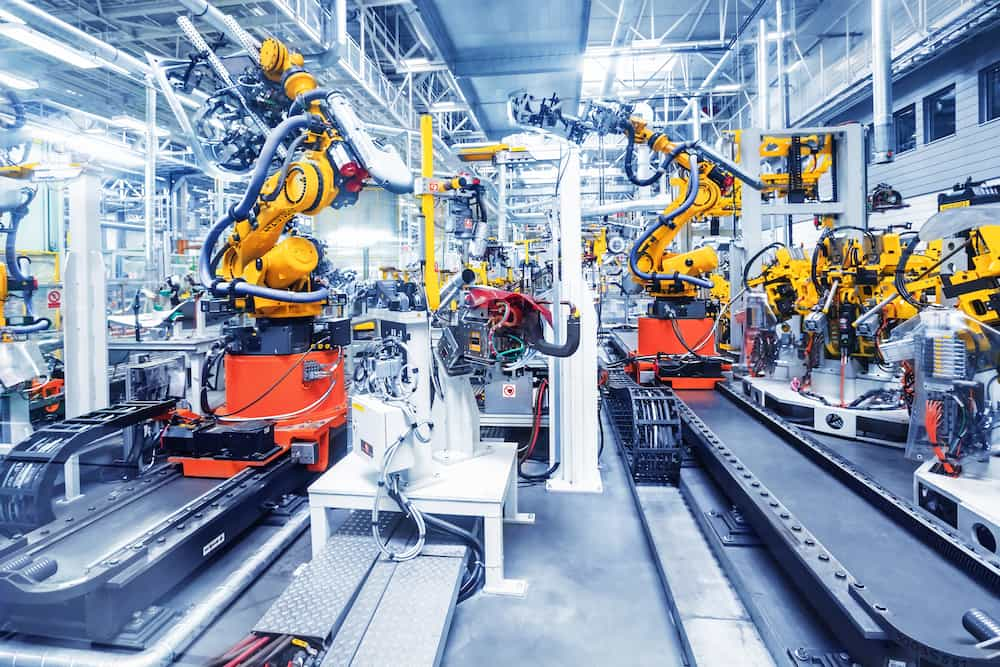
With a robust and validated design in hand, the focus shifts to manufacturing—the intricate process of transforming blueprints into fully functional products, often at scale. This phase demands meticulous planning, advanced technology, and rigorous quality control.
From Concept to Production Line
Translating a perfected design into mass production involves a complex series of steps:
- Supply Chain Management: Identifying, sourcing, and managing relationships with suppliers for raw materials, components (e.g., semiconductors, sensors, displays), and sub-assemblies. This requires careful consideration of cost, quality, lead times, and geopolitical risks.
- Material Selection and Procurement: Choosing the right materials for each component based on performance requirements, cost-effectiveness, environmental impact, and manufacturability.
- Process Planning and Tooling: Designing the manufacturing process itself, including the sequence of operations, required machinery (tooling, molds, fixtures), and assembly instructions.
- Quality Control and Testing Protocols: Establishing checkpoints and tests at various stages of production to ensure components meet specifications and the final product functions as intended. This might include automated optical inspection (AOI), functional testing, and environmental stress testing.
This stage is about orchestrating a highly complex logistical and technical operation to deliver consistency and volume.
Advanced Manufacturing Techniques
Modern manufacturing utilizes sophisticated techniques to achieve high precision, efficiency, and customization:
- Robotics and Automation: Industrial robots perform tasks such as welding, painting, assembly, material handling, and quality inspection with unwavering precision and speed, reducing human error and increasing throughput.
- Industry 4.0 Principles (Smart Factories): Integrating cyber-physical systems, IoT, and AI into manufacturing. This leads to smart factories where machines communicate with each other, optimize their own performance, and predict maintenance needs, leading to highly flexible and efficient production lines.
- Additive Manufacturing (3D Printing): Building products layer by layer from digital designs, enabling the creation of highly complex geometries, customized parts, and rapid prototyping with various materials (plastics, metals, ceramics). This is revolutionizing sectors like aerospace, medical devices, and consumer electronics.
- Lean Manufacturing: A methodology focused on minimizing waste in manufacturing processes without sacrificing productivity. This includes just-in-time inventory, continuous improvement (Kaizen), and waste reduction in all forms.
These techniques allow for unprecedented control over the production process, enabling faster innovation cycles and higher product quality.
Challenges and Solutions in Tech Manufacturing
Manufacturing technology products comes with a unique set of challenges:
- Scalability: Rapidly scaling production from prototypes to millions of units while maintaining quality and cost efficiency. This often requires significant capital investment and process optimization.
- Cost Efficiency: Balancing advanced manufacturing techniques with cost constraints, especially in highly competitive markets. Automation and lean principles are key solutions.
- Sustainability: Reducing the environmental footprint of manufacturing through energy-efficient processes, waste reduction, material recycling, and ethical sourcing. Circular economy principles are becoming increasingly important.
- Global Supply Chain Complexities: Managing a vast network of international suppliers, navigating tariffs, geopolitical instability, and logistics challenges. Diversification and resilient supply chain strategies are crucial.
- Cybersecurity in Production: Protecting intellectual property, operational data, and automated systems from cyber threats, which can disrupt production or compromise sensitive information.
Addressing these challenges requires continuous innovation, strategic planning, and a deep understanding of global market dynamics.
The Interplay: Bridging Design and Manufacturing for Success
The true power lies not in design or manufacture alone, but in their seamless integration. A design is only as good as its manufacturability, and manufacturing is only efficient if the design is optimized for it.
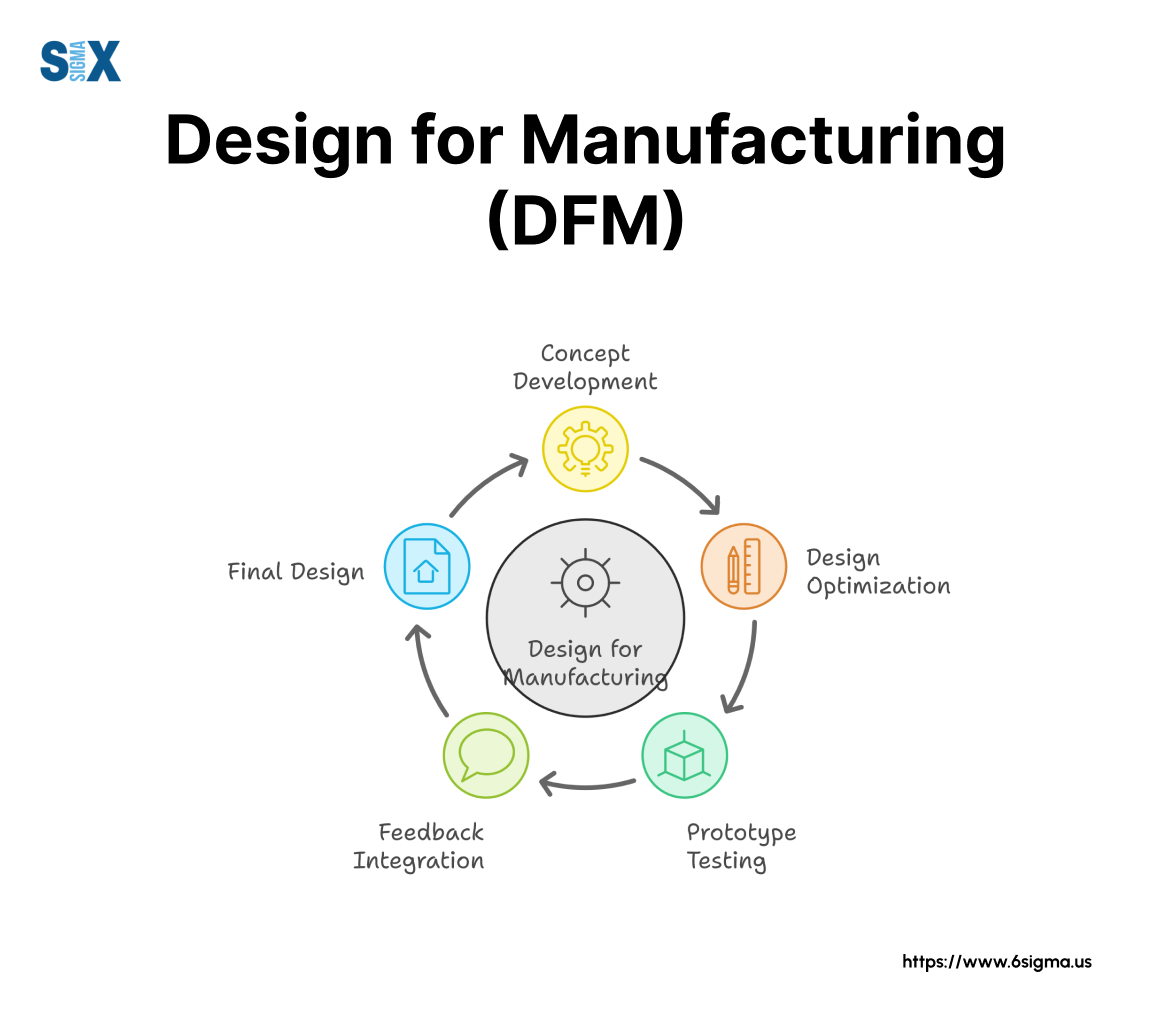
Design for Manufacturability (DFM)
DFM is a critical approach that emphasizes designing products in a way that simplifies and optimizes their manufacturing process. This proactive strategy involves:
- Simplification: Reducing the number of parts, standardizing components, and using common materials to streamline assembly and reduce inventory costs.
- Process Optimization: Designing parts that are easy to fabricate, assemble, and test using standard manufacturing techniques, avoiding complex or proprietary methods where possible.
- Cost Reduction: Making choices during design that minimize material waste, labor hours, and tooling expenses without compromising quality or performance. For example, designing a casing that can be injection molded in two parts instead of four.
- Quality Improvement: Designing components with tolerances and features that are robust enough to withstand manufacturing variations and environmental stresses, leading to fewer defects.
By considering manufacturing constraints and capabilities early in the design phase, companies can drastically reduce production costs, accelerate time-to-market, and improve overall product quality.
Feedback Loops and Continuous Improvement
The relationship between design and manufacture is not linear but cyclical. Data and insights gathered during manufacturing are invaluable for informing future design iterations:
- Manufacturing Data Analytics: Analyzing production line data (e.g., defect rates, assembly times, material usage) to identify areas for design improvement. For instance, high failure rates of a specific component during assembly might prompt a redesign for easier integration.
- Post-Production Feedback: Information from field returns, customer complaints, and maintenance logs can highlight design flaws that only become apparent after a product is in widespread use.
- Iterative Design-Manufacturing Cycles: Modern agile development methodologies extend to hardware, where initial designs are quickly manufactured as prototypes, tested, and refined based on real-world performance and manufacturing insights, leading to continuous improvement.
This ongoing dialogue ensures that designs are not static but evolve based on practical manufacturing realities and user experiences.
The Future of Design and Manufacture: AI, Automation, and Sustainability
The trajectory of design and manufacture is pointing towards even deeper integration and intelligence, driven by emerging technologies:
- Generative Design: AI algorithms will increasingly autonomously generate optimal designs based on user-defined parameters (materials, loads, cost targets), exploring thousands of permutations faster than human designers.
- Lights-Out Manufacturing and Fully Automated Factories: Advances in robotics, AI, and sensor technology will enable factories to operate with minimal or no human intervention for extended periods, maximizing efficiency and safety.
- Personalized and On-Demand Production: 3D printing and flexible manufacturing systems will allow for the mass customization of products and localized, on-demand production, reducing inventory and waste.
- Circular Economy Principles: Design and manufacturing will increasingly focus on creating products that are durable, repairable, recyclable, and made from sustainable or recycled materials, minimizing environmental impact throughout the product lifecycle.
The symbiotic relationship between design and manufacture is the bedrock of technological progress. As we look to the future, this dynamic interplay, empowered by AI, advanced automation, and a commitment to sustainability, will continue to unlock new possibilities, transforming how we envision, create, and interact with the technologies that define our world.
aViewFromTheCave is a participant in the Amazon Services LLC Associates Program, an affiliate advertising program designed to provide a means for sites to earn advertising fees by advertising and linking to Amazon.com. Amazon, the Amazon logo, AmazonSupply, and the AmazonSupply logo are trademarks of Amazon.com, Inc. or its affiliates. As an Amazon Associate we earn affiliate commissions from qualifying purchases.