
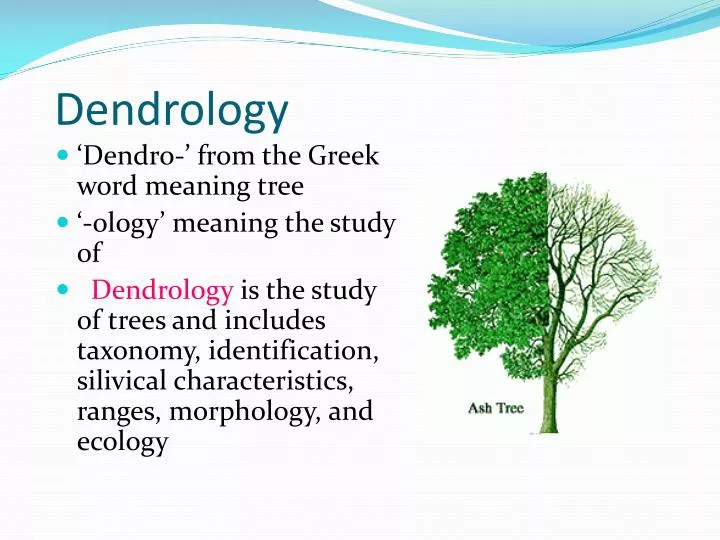
Traditionally, if you asked a scientist “what is dendrology,” they would describe it as the branch of botany concerned with the study of woody plants—specifically trees, shrubs, and lianas. For centuries, this was a manual discipline involving field guides, physical measurements, and taxonomic classification based on leaf patterns and bark texture. However, in the contemporary landscape, dendrology has undergone a radical digital transformation.
Today, dendrology is as much a field of data science and hardware engineering as it is a biological study. It has become a sophisticated intersection of computer vision, remote sensing, and the Internet of Things (IoT). As we navigate an era of climate volatility and rapid urbanization, the “tech-stack” of dendrology has become our most vital tool for monitoring the planet’s green infrastructure.

Decoding Dendrology: From Manual Identification to Machine Learning
The foundational pillar of dendrology is identification. Historically, this required years of specialized training. Today, identification has been democratized and accelerated through the application of advanced software and Artificial Intelligence (AI).
Computer Vision and Neural Networks in Species Recognition
The most visible shift in modern dendrology is the rise of AI-driven identification tools. Modern software utilizes convolutional neural networks (CNNs) to analyze the visual characteristics of trees with a precision that often rivals human experts. By processing millions of images, these algorithms can identify a species based on a single photo of a leaf, fruit, or even a section of bark.
For the professional dendrologist, this tech means that field surveys that once took weeks can now be completed in days. Apps and enterprise-level software integrated with global databases allow for real-time verification of species, reducing the margin of human error and creating a standardized digital record of biodiversity.
The Shift from Taxonomy to Data Science
Modern dendrology is no longer just about naming a tree; it is about quantifying it. Digital dendrometers and specialized software now allow scientists to record growth rates, carbon sequestration levels, and water usage in granular detail. This transition transforms a forest into a massive dataset. By treating individual trees as data points, researchers can use predictive analytics to determine how a specific forest ecosystem will react to environmental stressors over the next fifty years.
Precision Forestry: The Tech Stack Behind Modern Tree Mapping
Mapping and inventory management are critical components of dendrology. In the past, this involved physical tagging and manual surveying. The modern tech-driven approach utilizes “Precision Forestry,” a methodology that leverages hardware and software to manage individual trees with surgical accuracy.
LiDAR and 3D Canopy Modeling
Light Detection and Ranging (LiDAR) has revolutionized how we understand forest structures. By emitting laser pulses from drones or aircraft and measuring the time it takes for them to bounce back, dendrologists can create high-resolution 3D maps of entire forest canopies.
This technology allows for the measurement of tree height, crown volume, and biomass without ever touching the plant. In urban environments, LiDAR helps city planners understand how the “urban forest” affects heat islands and energy consumption. The ability to create a “digital twin” of a tree or a forest allows for simulations and stress testing that were previously impossible.
Satellite Imagery and Hyperspectral Remote Sensing
While LiDAR provides the structure, hyperspectral imaging provides the chemistry. Modern dendrology utilizes satellite-based sensors that see far beyond the visible spectrum. By analyzing the light reflectance of tree leaves, these sensors can detect chemical changes in the foliage.
This tech allows dendrologists to identify a pest infestation or a nutrient deficiency from space before any physical symptoms are visible to the naked eye. This proactive monitoring is essential for maintaining large-scale timber assets and protected ecological zones, ensuring that interventions can be targeted and efficient.
Smart Dendrology: IoT and the “Internet of Trees”
The integration of the Internet of Things (IoT) into the natural world has given rise to what many call the “Internet of Trees.” This involves embedding sensors directly into the environment to gain a continuous stream of physiological data.
Sensor Integration for Real-Time Health Monitoring
Modern dendrology utilizes a variety of IoT devices to monitor tree health in real-time. Sap flow sensors measure the movement of water through the xylem, while soil moisture probes and ambient weather stations provide context for the tree’s performance.
These devices are often connected via LoRaWAN (Long Range Wide Area Network) or cellular links, transmitting data to a central cloud platform. This allows dendrologists to monitor the “pulse” of a forest from thousands of miles away. If a tree’s sap flow drops below a certain threshold, an automated alert can be triggered, allowing for immediate investigation.
Big Data and Predictive Modeling for Forest Longevity
The massive volume of data generated by IoT sensors and remote sensing requires advanced “Big Data” architectures. Dendrological software now incorporates predictive modeling to forecast forest growth patterns and mortality rates.
By feeding historical data, current sensor readings, and climate forecasts into machine learning models, scientists can predict which species are most likely to thrive in changing conditions. This “smart” approach to dendrology is crucial for reforestation efforts, ensuring that the trees planted today are technologically vetted for the climate of tomorrow.
Digital Security and Ethical Considerations in Environmental Data
As dendrology becomes increasingly digital, it also becomes vulnerable to the same risks that plague other tech sectors. The data generated by modern tree science is highly valuable, not only for conservation but also for commercial and geopolitical reasons.
Protecting Sensitive Bio-Data from Cyber Threats
High-resolution maps of rare or endangered species can inadvertently become roadmaps for illegal loggers or poachers. Therefore, securing dendrological data is a growing concern within the tech community. Encryption, secure cloud storage, and strict access controls are now mandatory for organizations managing sensitive environmental datasets.
Furthermore, the integrity of the data is paramount. If a sensor network is compromised and reports false health data, it could lead to unnecessary interventions or the failure to act during a real crisis. Digital security in dendrology is no longer an afterthought; it is a fundamental requirement.
Open Source vs. Proprietary Dendrological Software
The tech community is currently debating the merits of open-source versus proprietary software in dendrology. Open-source platforms encourage global collaboration and transparency, which is vital for international climate goals. On the other hand, proprietary software often offers more robust support and specialized tools for commercial forestry.
The choice of platform influences how data is shared and who has access to the latest identification algorithms. As we move forward, the development of interoperable data standards will be essential to ensure that different “Smart Forest” systems can communicate and share insights effectively.
The Future of the Discipline
So, what is dendrology in the context of the 21st century? It is a high-tech discipline that bridges the gap between the organic world and the digital one. It is no longer a niche hobby for those who love the outdoors; it is a critical pillar of environmental technology.
Through the use of AI, LiDAR, IoT, and secure data management, dendrology provides us with the insights needed to protect and manage our most valuable natural assets. As our software becomes more intelligent and our sensors more sensitive, our understanding of trees will continue to deepen, proving that the future of the forest is inextricably linked to the future of technology.
aViewFromTheCave is a participant in the Amazon Services LLC Associates Program, an affiliate advertising program designed to provide a means for sites to earn advertising fees by advertising and linking to Amazon.com. Amazon, the Amazon logo, AmazonSupply, and the AmazonSupply logo are trademarks of Amazon.com, Inc. or its affiliates. As an Amazon Associate we earn affiliate commissions from qualifying purchases.