
The Daruma doll, a ubiquitous symbol of perseverance and good fortune in Japan, offers a profound framework for understanding core principles in branding, strategy, and corporate identity. Far from being merely a traditional toy, the Daruma embodies a philosophy of commitment, resilience, and the relentless pursuit of goals that resonates deeply within the realm of brand development and management. Understanding “what is Daruma” from a branding perspective reveals powerful insights into building enduring identities and fostering strategic success.
The Daruma Doll: A Symbol of Enduring Brand Values
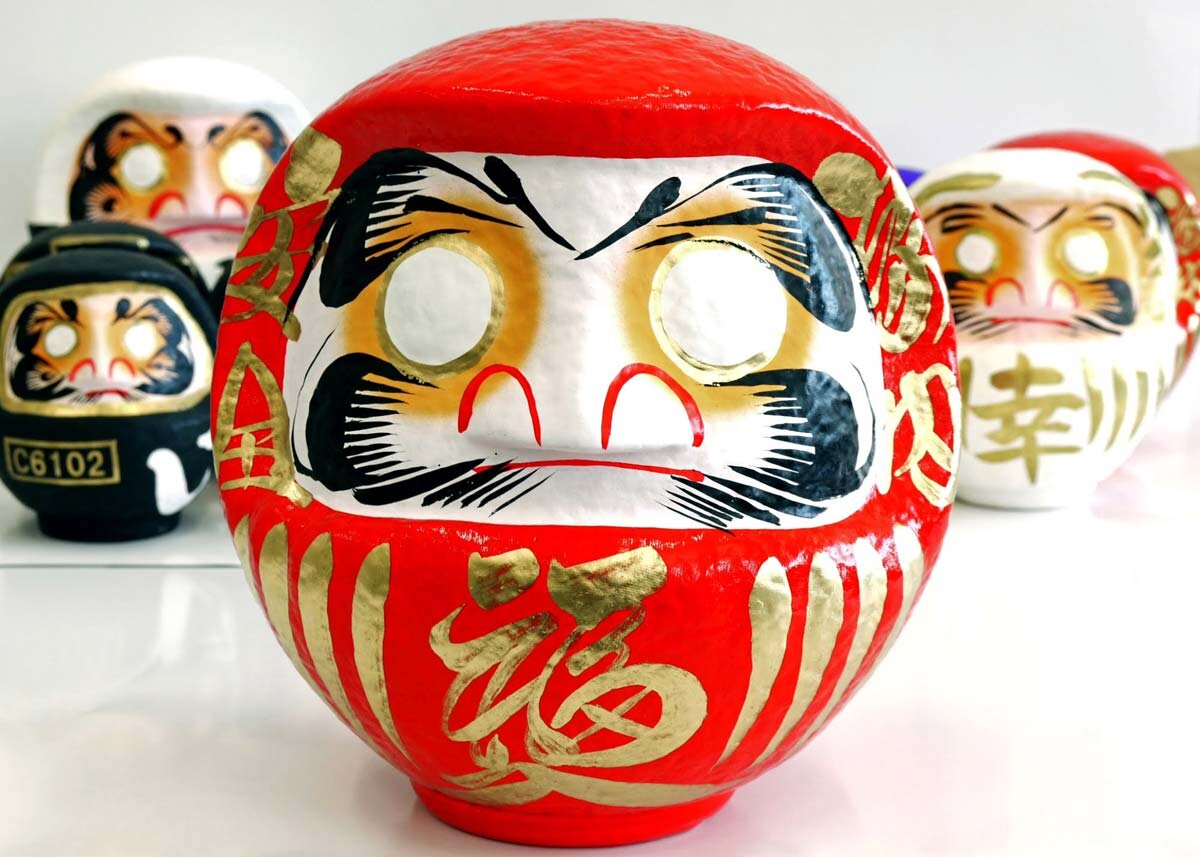
At its core, a Daruma doll is a hollow, round, papier-mâché doll representing Bodhidharma, the founder of Zen Buddhism. Its design is characterized by a weighted base that allows it to right itself when pushed over, symbolizing resilience and the ability to “fall seven times, stand up eight.” This inherent characteristic, combined with its unique ritualistic use, makes the Daruma a potent metaphor for brand strategy.

Origins and Cultural Significance as a Branding Foundation
While its origins are rooted in religious figures, the modern Daruma’s significance has expanded to encompass broader secular aspirations for success. People purchase Daruma dolls to make a wish or set a goal. They paint one eye upon setting the objective, and only paint the second eye when the goal is achieved. This ritual is not just about luck; it’s a public commitment, a constant visual reminder, and a tangible representation of an ongoing strategic endeavor.
For a brand, this translates into establishing a clear mission (the initial wish), a visible commitment to that mission (painting the first eye), and a disciplined process toward achieving it. The brand’s values, its purpose, and its promise become the “wish” it commits to, and the Daruma serves as a cultural proof point for the power of such focused dedication.
Visual Identity and Recognition: The Daruma’s Iconic Design
The Daruma’s visual identity is strikingly simple yet immediately recognizable. Its vibrant red color, fierce facial expression (often without pupils), and lack of arms or legs contribute to its unique aesthetic. This strong, consistent visual presence is a fundamental lesson for any brand.
A successful brand, much like the Daruma, needs an unmistakable visual language that conveys its essence instantaneously. Whether it’s a logo, a specific color palette, or a distinct typeface, these design elements are critical in establishing brand recognition and recall. The Daruma’s design communicates its purpose—strength, determination, and resilience—without words. Similarly, effective brand design communicates values and promises to the target audience, forging an immediate connection and facilitating memorability in a crowded marketplace. This isn’t just about aesthetics; it’s about strategic design that reinforces the brand’s core message.
Core Principles: Perseverance and Goal Attainment as Brand Strategy
The most profound brand lesson from the Daruma is its unwavering focus on perseverance and goal attainment. The act of painting the second eye only upon success underscores the journey and the effort required. It teaches that achieving significant objectives is rarely a linear path; it demands sustained effort, adaptation, and an unshakeable belief in the desired outcome.
In brand strategy, this translates to the iterative process of brand building. Market conditions change, consumer preferences evolve, and competitive landscapes shift. A brand must have the Daruma’s resilience, continually adapting its messaging, products, and services while staying true to its foundational vision. The “goal” for a brand might be market leadership, customer loyalty, or a specific societal impact. The Daruma reminds us that reaching these goals requires not just initial enthusiasm, but consistent, disciplined action and the fortitude to overcome inevitable obstacles.
Daruma’s Philosophy in Personal Branding
The principles embodied by the Daruma doll are exceptionally relevant to personal branding, offering a structured approach to self-definition, commitment, and sustained professional growth. Just as an individual or company seeks to establish a recognizable and respected identity, the Daruma provides a tangible method for anchoring that journey.
Defining Your Brand’s “Wish”: Clarity of Purpose
Before a Daruma’s eye can be painted, a clear, specific wish or goal must be articulated. In personal branding, this translates to defining one’s unique value proposition. What is your expertise? What problem do you solve? What unique perspective do you bring? What impact do you aim to make? This initial clarity is paramount. Without a well-defined “wish,” personal branding efforts lack direction and impact.
This involves introspection: understanding your strengths, passions, and the audience you wish to serve. Your “wish” becomes your personal brand statement, guiding all subsequent professional decisions, content creation, and networking efforts. It’s the North Star that prevents your personal brand from drifting aimlessly in a sea of generic professional identities.
The Art of Focused Commitment: Consistent Brand Messaging
Once the “wish” is defined and the first eye painted, the Daruma serves as a constant, visible reminder of one’s commitment. For personal branding, this translates into consistent brand messaging and behavior. Every interaction, every piece of content, every professional decision should align with your defined personal brand.
This means consistently showcasing your expertise, embodying your values, and delivering on your unique promise across all platforms—from LinkedIn profiles and personal websites to professional interactions and public speaking engagements. The consistency builds trust and reinforces your personal brand identity, making it easier for your target audience to understand who you are and what you stand for. It’s the daily, disciplined effort that eventually leads to the achievement of your personal branding “wish.”
Resiliency in the Face of Setbacks: Adapting and Evolving Your Personal Brand
The Daruma’s ability to right itself after being pushed over is a powerful lesson in resilience, a non-negotiable trait for personal branding success. The journey of building a personal brand is rarely smooth. There will be rejections, criticisms, missed opportunities, and moments of self-doubt.
A Daruma-inspired approach means embracing these setbacks not as failures, but as opportunities for learning and adaptation. Did a presentation fall flat? Analyze the feedback. Was a networking event unproductive? Refine your approach. The goal remains, but the path to achieve it may require adjustments. This continuous loop of action, feedback, and adaptation strengthens your personal brand, demonstrating professionalism, tenacity, and a growth mindset. It’s about maintaining your core identity while being flexible enough to navigate the inevitable challenges and come back stronger.
Corporate Identity and Daruma-Inspired Strategy
Beyond personal branding, the Daruma’s philosophy offers invaluable lessons for corporate identity and strategic management, particularly in fostering a culture of purpose-driven achievement and resilient brand building.
Integrating Daruma Principles into Company Culture
A company’s identity is not just its logo; it’s the sum of its values, its people, its processes, and its collective goals. By integrating Daruma principles, organizations can cultivate a culture of commitment and perseverance. This starts by clearly articulating the company’s “wish”—its mission, vision, and strategic objectives—and ensuring every employee understands their role in painting that first “eye.”
This can manifest in goal-setting rituals, where departments or teams set ambitious but achievable objectives, visually track progress, and celebrate milestones (like painting the second eye). Such practices foster a shared sense of purpose, accountability, and collective responsibility. A company culture imbued with Daruma’s spirit encourages employees to embrace challenges, learn from failures, and collectively strive towards the organization’s strategic goals, ultimately strengthening the corporate identity from within.
Marketing the Journey, Not Just the Destination
Many brands focus solely on celebrating their final achievements. While important, the Daruma teaches us the power of the journey itself. The unpainted eye serves as a constant reminder of the ongoing effort, the work in progress. For a corporate brand, this translates into a marketing strategy that also highlights perseverance, innovation cycles, and the dedication involved in reaching milestones.
This approach builds authenticity and deepens customer connection. When a brand shares its challenges, its learning curves, and its tenacious efforts, it becomes more relatable and human. It’s about demonstrating the commitment to quality, the relentless pursuit of customer satisfaction, or the dedication to sustainability, rather than just announcing the end product or achievement. This narrative of perseverance resonates deeply with consumers who appreciate transparency and genuine effort, thereby enriching the corporate identity and enhancing brand loyalty.
Crafting a Recognizable Brand Narrative
The Daruma’s narrative is simple yet powerful: set a goal, commit, persevere, achieve. A strong corporate identity leverages a similar clear, compelling narrative. What is your brand’s story? What challenges have you overcome? What values drive your actions? How do you empower your customers to achieve their own “wishes”?
By framing the brand’s journey through a Daruma-inspired lens, companies can create a narrative that is both inspiring and aspirational. This involves consistently communicating the brand’s purpose, its commitment to its stakeholders, and its resilience in the face of market shifts. A well-crafted brand narrative, continually reinforced through all communication channels, allows the corporate identity to become more than just a name or a logo; it becomes a symbol of reliability, ambition, and enduring success, much like the Daruma itself.
From Ancient Tradition to Modern Marketing Tool
The Daruma’s journey from an ancient Japanese tradition to a widely recognized symbol of aspiration underscores its potent applicability in contemporary brand and marketing strategies. Its simplicity belies a profound depth, making it an ideal model for effective communication and brand building.
Leveraging Cultural Symbolism for Global Brand Appeal
The Daruma doll, while culturally specific to Japan, embodies universal themes of goal-setting, hard work, and resilience. These themes transcend cultural boundaries, making Daruma’s symbolism inherently appealing on a global scale. Brands can learn from this by identifying universal human values that resonate with their target audience, regardless of geographical location.
By associating with such universally understood concepts, brands can craft messages that achieve broader acceptance and deeper emotional connection. It’s about tapping into collective human experiences rather than narrowly focusing on specific cultural niches. The Daruma shows how a symbol, when imbued with a powerful, relatable meaning, can achieve widespread recognition and appreciation, serving as a powerful, non-verbal ambassador for its underlying philosophy.
Design Elements and Brand Messaging: Less is More
The Daruma’s minimalist design and direct messaging (“fall seven times, stand up eight”) highlight the power of clarity and conciseness in brand communication. In an information-saturated world, brands often struggle to cut through the noise. The Daruma offers a lesson in impactful simplicity.
Effective brand design and messaging should be clear, memorable, and immediately convey the brand’s core promise. Overly complex logos, convoluted taglines, or diluted visual identities fail to capture attention or build recall. The Daruma’s bold colors and distinct features ensure it stands out, and its ritualistic use provides a clear, actionable narrative. Brands that adopt a “less is more” approach, focusing on distinct design elements and unambiguous messaging, are more likely to create a lasting impression and build a strong, recognizable identity.
Global Appeal and Adaptation: The Daruma’s Brand Versatility
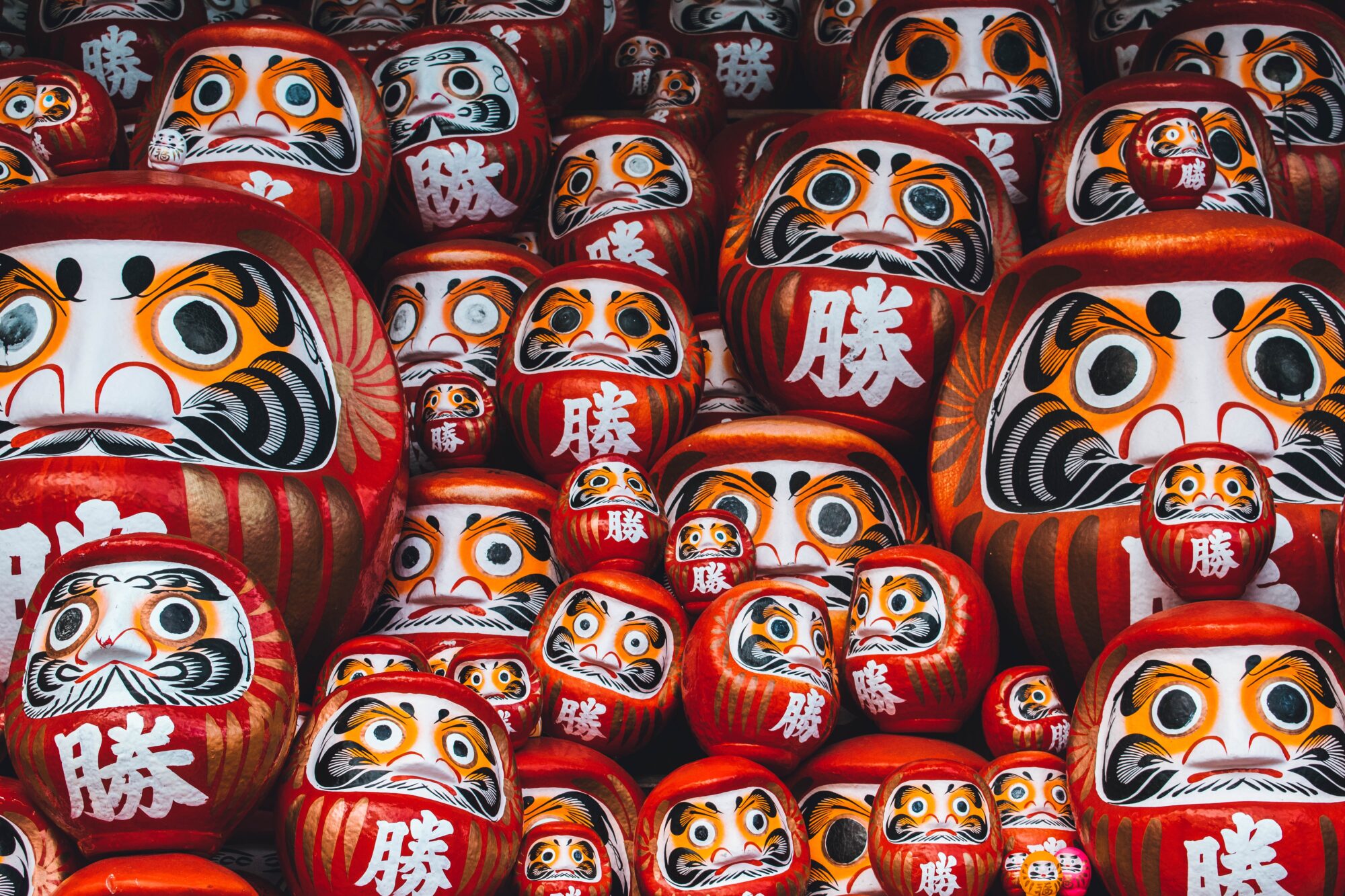
The Daruma’s adaptability is another key lesson for brands. While its core meaning remains consistent, Daruma dolls are often customized with different colors or designs to represent specific wishes (e.g., gold for wealth, white for purity). This versatility allows the symbol to be adapted to various contexts while retaining its fundamental significance.
For modern brands, this means developing a core identity that is strong and consistent, yet flexible enough to adapt to different markets, product lines, or consumer segments without losing its essence. A brand’s visual identity, tone of voice, and marketing strategies may need subtle adjustments for different audiences, but its underlying values and mission should remain immutable. The Daruma demonstrates how a powerful symbol can maintain its integrity while embracing diverse manifestations, a critical strategy for brands aiming for global reach and lasting relevance.
aViewFromTheCave is a participant in the Amazon Services LLC Associates Program, an affiliate advertising program designed to provide a means for sites to earn advertising fees by advertising and linking to Amazon.com. Amazon, the Amazon logo, AmazonSupply, and the AmazonSupply logo are trademarks of Amazon.com, Inc. or its affiliates. As an Amazon Associate we earn affiliate commissions from qualifying purchases.