
In the dynamic landscape of audio broadcasting, Digital Audio Broadcasting (DAB) radio represents a significant technological leap from its analogue predecessors. Far more than just a new way to listen to music and talk shows, DAB is a digital communication standard designed to deliver a superior, more robust, and more versatile radio experience. Understanding DAB requires delving into its underlying technology, its operational principles, and its place within the broader evolution of digital media. It’s a system built on efficiency, spectral economy, and enhanced user features, fundamentally reshaping how content is delivered over the airwaves.

The Evolution of Radio Technology
The journey from early wireless telegraphy to modern digital broadcasting is a testament to continuous innovation in communication technology. For decades, Frequency Modulation (FM) and Amplitude Modulation (AM) radio dominated the airwaves, serving as the primary means of mass communication and entertainment. While groundbreaking in their time, these analogue technologies inherently faced limitations that spurred the search for digital alternatives.
From Analogue to Digital
Analogue radio, particularly FM, offered relatively good sound quality for its era, but it was susceptible to interference, signal degradation, and a limited number of available frequencies. Static, fading, and the need to manually tune to a precise frequency were common user experiences. The scarcity of spectrum meant that the number of stations in any given area was finite, leading to congestion and often a compromise on content diversity.
The advent of digital technology across various sectors — from telecommunications to television broadcasting — naturally led engineers to explore its application in radio. Digitalization promised not only to overcome the inherent weaknesses of analogue transmission but also to introduce entirely new capabilities. By converting audio signals into a stream of binary data, digital radio could offer greater resilience against noise, more efficient use of spectrum, and the capacity to carry supplementary data. This shift was not merely an upgrade but a fundamental re-architecture of the broadcasting paradigm, paving the way for systems like DAB.
The Promise of Digital Audio Broadcasting
The vision behind DAB, conceived in the late 1980s and formalized by the Eureka 147 project in Europe, was to create a robust, high-quality digital radio standard. Its primary aims were threefold: to deliver CD-quality audio (though practical implementations often vary), to offer a wider choice of stations, and to provide auxiliary data services alongside the audio. The technology was designed from the ground up to be more spectrally efficient, allowing multiple radio stations to share a single frequency block, known as a “multiplex.” This multiplexing capability was a game-changer, addressing the spectral congestion issues that plagued analogue broadcasting and opening the door for a much richer and more diverse radio landscape. The promise of DAB was a future where radio was clearer, more reliable, and more informative, ultimately enhancing the listener’s engagement.
Understanding DAB Technology
DAB operates on principles distinctly different from analogue radio, leveraging sophisticated digital signal processing techniques to transmit audio and data. Its core strength lies in its ability to bundle multiple services into a single transmission, improving spectral efficiency and enabling a richer user experience.
How DAB Works: Multiplexes and Encoders
At the heart of DAB technology is the concept of a “multiplex.” Unlike analogue radio, where each station occupies a unique frequency, DAB groups several radio stations and data services together into a single digital stream. This stream is then transmitted on one broad frequency block. A typical DAB multiplex can carry anywhere from 6 to 10 or more radio services, depending on the audio quality and data rate allocated to each.
The process begins with source coding. Audio signals from individual radio stations are compressed using a low-bitrate audio codec, initially Musicam (MPEG-1 Audio Layer II), which was later succeeded by AAC+ (Advanced Audio Coding Plus) in DAB+. This compression is crucial for fitting multiple services into the available bandwidth. Once compressed, these digital audio streams, along with any associated data (like station name, program information, or news headlines), are multiplexed together. This combined data stream is then subjected to complex error correction coding, which adds redundancy to the signal. This redundancy is vital because it allows DAB receivers to reconstruct the original data even if parts of the signal are lost or corrupted due during transmission or reception, significantly improving resilience to interference and fading compared to analogue systems. Finally, the coded and modulated signal is transmitted using Orthogonal Frequency-Division Multiplexing (OFDM). OFDM is a robust modulation scheme particularly well-suited for broadcasting in challenging environments, as it divides the signal into many narrow sub-carriers, making it less vulnerable to multipath interference (where signals bounce off objects and arrive at the receiver at different times).
Key Technical Advantages
DAB offers several technical advantages over traditional analogue broadcasting:
- Spectral Efficiency: Multiplexing allows more radio stations to be broadcast within the same frequency space, freeing up spectrum and fostering greater diversity of content.
- Robustness: Advanced error correction and OFDM modulation make DAB signals more resilient to interference, multi-path distortion, and noise. Listeners experience fewer dropouts and clearer reception in areas where analogue signals might struggle.
- Data Services: Beyond audio, DAB can carry a wealth of supplementary data. This includes Electronic Program Guides (EPG), scrolling text (Dynamic Label Segment or DLS) displaying song titles, artist information, news headlines, and even traffic updates. This transforms radio from a purely audio medium into a more interactive and informative platform.
- Consistent Quality: While not always CD quality in practice due to bitrate allocation, DAB offers consistent digital audio quality across its coverage area. There’s no gradual degradation with increasing distance or interference; the signal is either received cleanly or not at all, a “cliff-edge” effect characteristic of digital broadcasting.
- Automated Tuning: DAB receivers automatically scan for available multiplexes and list stations by name, eliminating the need for manual frequency tuning and simplifying the user experience.
DAB vs. DAB+: A Technical Leap
While the original DAB standard was a significant step, technological evolution led to the introduction of DAB+. Launched in the mid-2000s, DAB+ is an enhanced version that utilizes the AAC+ audio codec. AAC+ is a more efficient compression algorithm than the original Musicam (MPEG-1 Audio Layer II) codec used by standard DAB. This increased efficiency means that for the same bitrate, AAC+ can deliver higher audio quality, or, conversely, it can deliver the same audio quality at a significantly lower bitrate.
The practical implications of DAB+ are substantial:
- Higher Audio Quality: With AAC+, broadcasters can deliver superior sound fidelity compared to standard DAB at comparable bitrates.
- More Stations: Alternatively, the improved compression allows for more radio stations to be carried within a single multiplex without sacrificing audio quality, further increasing spectral efficiency and choice.
- Lower Bandwidth Requirements: Broadcasters can achieve desired audio quality with less bandwidth, potentially reducing transmission costs or freeing up capacity for other data services.
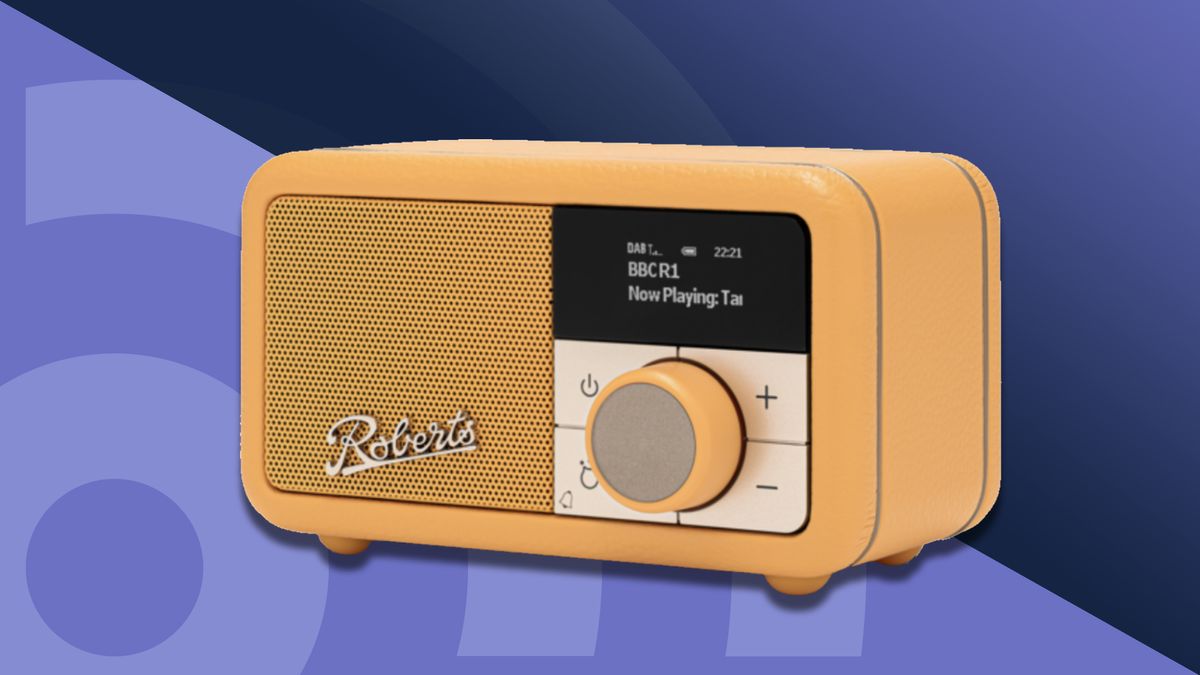
Most modern DAB radios are “DAB+ compatible,” meaning they can receive both original DAB and DAB+ broadcasts. This backward compatibility has been crucial for a smooth transition and ensures that newer receivers can access the expanded services and improved quality offered by DAB+.
The User Experience and Practical Implications
For the end-user, the shift to DAB radio brings a host of tangible improvements and new features that enhance the listening experience beyond what analogue radio could offer. These benefits stem directly from the underlying digital technology.
Enhanced Audio Fidelity
One of the most touted advantages of DAB is its potential for superior audio quality. While “CD quality” was the initial aspiration, practical implementations vary depending on the bitrate allocated by broadcasters to individual stations. Nevertheless, even at lower bitrates, DAB generally offers clearer, crisper sound than FM, free from the hiss, crackle, and static common in analogue transmissions. The digital nature means that if the signal is received, the sound quality is consistent and unblemished, creating a more pleasant and immersive listening environment, particularly for music. This improved fidelity is especially noticeable in areas with weak FM signals where analogue sound often degrades significantly.
Broader Station Choice
The multiplexing capability of DAB is a game-changer for content diversity. By allowing multiple stations to share a single frequency block, DAB dramatically increases the number of available radio services. Listeners gain access to a wider array of national, regional, and specialized stations that might not have had analogue spectrum available. This means more options across genres, niche interests, and languages, catering to a broader audience and enriching the overall radio landscape. Discovering new content becomes easier with stations listed by name rather than frequency.
Advanced Features and Data Services
Beyond audio, DAB’s digital architecture enables a suite of advanced features and data services that transform the listener’s interaction with radio:
- Dynamic Label Segment (DLS): This scrolling text feature displays real-time information such as song titles, artist names, program details, news headlines, and traffic updates directly on the radio’s display. It adds a layer of contextual information that was previously unavailable on analogue radio.
- Electronic Program Guide (EPG): Similar to EPGs on digital televisions, DAB radios can display schedules for upcoming programs across various stations, allowing listeners to browse and plan their listening.
- Service Following: Some advanced receivers can automatically switch to a different frequency or multiplex carrying the same service if the current signal becomes too weak, ensuring continuous listening without manual intervention.
- Emergency Broadcasting: DAB platforms can be designed to carry emergency alerts and public safety information, providing a robust channel for critical communications during crises.
These features make DAB radios more than just simple audio receivers; they become interactive information hubs, providing a richer and more informed listening experience.
Coverage and Signal Reliability
The robustness of DAB signals, thanks to error correction and OFDM, means more reliable reception in many areas. Urban environments, often plagued by multipath interference from tall buildings, can see improved reception with DAB where FM might struggle. The digital signal offers a distinct “on or off” reception quality; unlike FM where sound gradually degrades, DAB maintains clarity until the signal strength drops below a critical threshold, at which point it cuts out. While this “cliff-edge” effect can be jarring, it often means that where a signal is present, it is consistently clear. The expansion of DAB transmitter networks continues to improve coverage, making digital radio accessible to an ever-growing proportion of the population.
Challenges and Future Outlook
Despite its technological advantages and widespread adoption, DAB radio navigates a complex ecosystem of competing technologies and evolving user preferences. Its future depends on continued technological refinement, infrastructure investment, and its ability to adapt alongside other digital platforms.
The Digital Switchover Debate
For many years, the debate around a “digital switchover” – phasing out analogue FM/AM broadcasts entirely in favor of DAB – has been a central theme in digital radio discussions. While some countries have actively pursued or completed this transition (e.g., Norway), others have adopted a more gradual, co-existence approach. The arguments for a switchover often cite the spectral efficiency of DAB, the potential for greater service choice, and the overall modernization of broadcasting infrastructure. However, challenges include the widespread presence of analogue radios, particularly in cars, and ensuring universal DAB coverage comparable to FM. The financial implications for broadcasters and consumers also play a significant role. The trend now appears to be towards a hybrid model where DAB coexists with FM for an extended period, allowing market forces and consumer adoption to drive the transition organically rather than through a mandated cutoff.
Coexistence with Other Platforms (Internet Radio, FM)
DAB’s position in the media landscape is further complicated by the rise of internet radio and podcasting. Internet radio offers an even greater choice of stations from around the globe, often with higher audio quality (depending on bandwidth) and on-demand content. Many modern devices, including smartphones and smart speakers, integrate internet radio seamlessly. This presents both a challenge and an opportunity for DAB. While internet radio requires an internet connection, DAB offers free, over-the-air reception, making it ideal for mobile listening without data charges and for robustness during network outages.
The future of radio is likely multi-platform, with consumers choosing the best option for their needs at any given time. DAB will continue to serve as a strong terrestrial digital broadcast platform, especially in cars and for listeners seeking simplicity and reliability without relying on internet connectivity. Its robustness and free-to-air nature provide a valuable complement to internet-based streaming services, particularly in situations where mobile data is expensive, unreliable, or unavailable.
Ongoing Development and Adaptation
The technology behind DAB is not static. The shift to DAB+ demonstrated a clear commitment to improving efficiency and quality. Further developments could include enhanced data services, more efficient codecs, and tighter integration with other smart technologies. As consumer electronics evolve, so too will DAB receivers, potentially offering more intuitive interfaces, seamless integration with other smart home devices, and advanced features. The continuous drive for innovation ensures that DAB remains a relevant and vital component of the broadcast technology ecosystem, adapting to new demands and continuing to deliver an enriched radio experience in an increasingly digital world.
aViewFromTheCave is a participant in the Amazon Services LLC Associates Program, an affiliate advertising program designed to provide a means for sites to earn advertising fees by advertising and linking to Amazon.com. Amazon, the Amazon logo, AmazonSupply, and the AmazonSupply logo are trademarks of Amazon.com, Inc. or its affiliates. As an Amazon Associate we earn affiliate commissions from qualifying purchases.