
The quest for volume and length when dealing with thin hair presents a unique challenge, one that leading hair extension brands have increasingly focused on addressing through sophisticated product design and targeted marketing. For individuals with finer strands, the selection of hair extensions isn’t merely about adding hair; it’s about choosing a brand that understands the delicate balance required to enhance volume without causing damage or looking unnatural. This demands a critical look at brand innovations in attachment methods, hair quality, and the overall brand promise of seamless integration and scalp health.
The Brand Imperative: Designing for Delicate Strands
Brands operating in the hair extension market for thin hair face a distinct set of design parameters. Unlike clients with thick, robust hair that can support heavier extensions, individuals with thin hair require solutions that are ultra-lightweight, discreet, and gentle on the natural hair follicle. This necessitates innovation in attachment technology and material selection, areas where successful brands distinguish themselves.
Attachment Methods: A Brand’s Commitment to Non-Damage
The choice of attachment method is paramount for thin hair, directly reflecting a brand’s understanding of its delicate target audience. Brands renowned for their efficacy in this niche often specialize in methods that distribute weight evenly and avoid excessive tension on individual strands.
- Tape-In Extensions: Many top brands champion tape-ins for thin hair due to their lightweight nature and broad attachment area. The wefts are typically thin, about 1-1.5 inches wide, and come with a medical-grade adhesive strip. When applied correctly, sandwiching a thin section of natural hair between two wefts, the weight is dispersed, minimizing strain. Brands that excel here invest heavily in proprietary adhesive formulas that are strong enough for secure hold but gentle enough for easy removal without residue or damage. Their marketing often highlights the “invisible” nature and quick application, appealing to the desire for a low-impact solution.
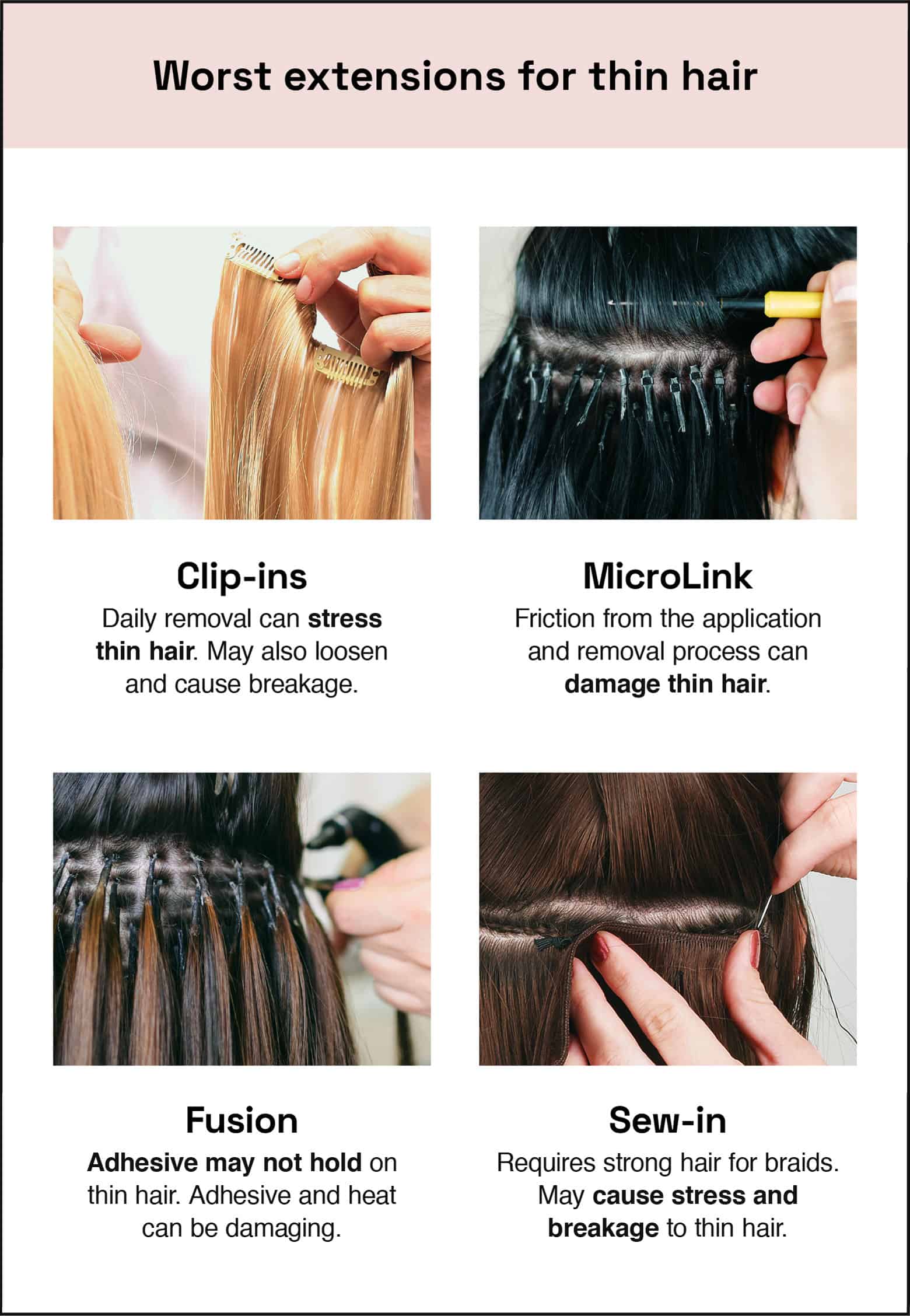
- Micro-Link/I-Tip Extensions: Some brands offer micro-links, often referred to as I-Tips, as a viable option. These involve individual strands of extension hair that are pulled through a small silicone-lined bead and clamped onto sections of the natural hair. For thin hair, the key is the size and material of the bead. Brands that prioritize scalp health offer micro-beads that are notably smaller and feature silicone lining to prevent hair breakage and slippage. The strategic placement of these individual strands by skilled stylists, often trained by the brands themselves, is critical to ensuring discretion and comfort.
- Clip-In Extensions (Temporary Volume Solutions): While often seen as a general-purpose option, specific brands have refined clip-in extensions for thin hair. These brands utilize smaller, lighter clips with silicone backing to prevent slipping and minimize stress on the natural hair. The hair density per weft is often reduced to avoid a bulky appearance, making them ideal for temporary volume enhancement without the commitment or potential strain of semi-permanent options. Their brand messaging emphasizes versatility and ease of use, making them an accessible entry point for those exploring extensions.
- Weft Extensions (Hand-Tied/Invisible Wefts): Hand-tied wefts are another increasingly popular offering from premium brands. These wefts are extremely thin and flexible, making them ideal for creating volume without bulk. Brands often pair hand-tied wefts with attachment methods like the “invisible bead” or “barely there” methods, where tiny sections of natural hair are beaded and the wefts are sewn onto these beads. This design philosophy focuses on minimal points of contact with the natural hair and maximal comfort, aligning perfectly with the needs of thin hair.
Hair Quality: The Cornerstone of Brand Credibility
Beyond the attachment method, the quality of the hair itself is a critical differentiator for brands catering to thin hair. Premium brands understand that synthetic or low-grade human hair can appear coarse, synthetic, or visibly different from fine natural hair, making blending nearly impossible.
- 100% Remy Human Hair: The gold standard for extensions is Remy human hair, meaning all the cuticles are intact and aligned in the same direction. Brands specializing in extensions for thin hair exclusively use Remy hair, as this ensures a natural look, minimizes tangling, and allows the hair to be styled, washed, and treated just like natural hair. This commitment to quality builds significant brand trust.
- Single Donor Hair: Some high-end brands go a step further by sourcing single-donor Remy hair. This ensures absolute consistency in texture and color, which is crucial for achieving a seamless blend with thin hair that might otherwise highlight discrepancies. While pricier, the value proposition from these brands is often centered on unparalleled naturalness and longevity.
- Density and Texture Matching: Brands that truly understand thin hair offer extensions in various densities and textures to allow for precise matching. This means not just straight, wavy, or curly, but also fine, medium, or coarse textures to ensure the extension hair perfectly mimics the client’s own. This meticulous attention to detail is a hallmark of brands committed to genuine integration.
Cultivating Brand Trust Through Expertise and Education
Successful brands in the thin hair extension market don’t just sell products; they sell solutions backed by expertise. Their brand strategy often includes comprehensive education for both stylists and consumers, fostering a sense of trust and competence.

Stylist Training and Certification Programs
Leading extension brands understand that the quality of application is as crucial as the quality of the product, especially for delicate hair. Many invest heavily in rigorous certification programs for stylists, teaching not only the correct application techniques but also how to assess hair types, recommend appropriate extensions, and provide optimal aftercare advice specifically for thin hair clients. Brands often highlight their certified stylists on their websites, creating a network of trusted professionals and elevating their brand reputation.
Consumer Education and Transparency
Brands also engage directly with consumers through educational content. This includes detailed guides on choosing the right extensions for thin hair, proper maintenance routines, and common pitfalls to avoid. Transparency about sourcing, product composition, and expected lifespan helps manage client expectations and builds confidence. For example, brands might publish “do’s and don’ts” guides for washing, styling, and brushing extensions to prevent damage to natural thin hair, reinforcing their position as knowledgeable authorities.
Aftercare Product Lines
A significant part of a brand’s offering for thin hair extension users often includes a specialized line of aftercare products. These shampoos, conditioners, and styling aids are formulated to be gentle on extension bonds and on the natural hair, prolonging the life of the extensions and maintaining scalp health. By offering a complete ecosystem of products, brands ensure compatibility and demonstrate a holistic approach to hair care, further solidifying their brand loyalty.
The Brand Investment: Cost, Value, and Longevity
While the initial cost of high-quality extensions designed for thin hair can be higher, savvy brands position this as an investment in appearance, self-confidence, and long-term hair health. The “best” extensions are often those that offer superior value over their lifespan, minimizing damage and requiring fewer costly salon visits for repairs or reapplication.
Understanding Cost vs. Value Proposition
Brands articulate their value proposition by emphasizing the durability, reusability, and natural look of their extensions. For thin hair, investing in methods like tape-ins or hand-tied wefts from reputable brands, which are gentle and can last for several months with proper maintenance, often proves more cost-effective in the long run than cheaper alternatives that might cause damage or require frequent replacement. A brand’s commitment to quality ensures that the extension hair itself can be reused across several applications, further enhancing its value.

Protecting Your Brand Investment: Maintenance and Care
Brands empower clients to protect their investment by providing clear, actionable advice on maintenance. This includes recommending specific brushes, heat protectants, and sleeping routines designed to prevent tangles and undue stress on the bonds and natural hair. By guiding clients through the proper care protocols, brands foster a sense of shared responsibility for the longevity and beauty of the extensions, ensuring customer satisfaction and repeat business.
In conclusion, the best hair extensions for thin hair are not merely products; they are comprehensive solutions offered by brands deeply attuned to the unique physiological and aesthetic needs of this demographic. Through innovative design, unwavering commitment to quality hair, robust educational programs, and a clear value proposition, leading brands empower individuals with thin hair to achieve the volume and length they desire with confidence and care.
aViewFromTheCave is a participant in the Amazon Services LLC Associates Program, an affiliate advertising program designed to provide a means for sites to earn advertising fees by advertising and linking to Amazon.com. Amazon, the Amazon logo, AmazonSupply, and the AmazonSupply logo are trademarks of Amazon.com, Inc. or its affiliates. As an Amazon Associate we earn affiliate commissions from qualifying purchases.