
In the dynamic world of technology, where software development forms the backbone of innovation, understanding the underlying principles that govern code quality is paramount. As we delve into the vast landscape of software, it’s crucial to acknowledge that not all code is created equal. Some code is elegant, efficient, and easy to manage, while other code can become a tangled mess, prone to errors and a nightmare to maintain. This is where the concept of cyclomatic complexity emerges as a vital metric for developers and project managers alike.
At its core, cyclomatic complexity is a quantitative measure of the number of linearly independent paths through a program’s source code. Think of it as a way to map out all the possible routes a program can take from its beginning to its end, considering all the decision points and branching logic. The higher the cyclomatic complexity, the more paths exist, and generally, the more complex the code becomes. This complexity isn’t just an abstract academic notion; it has tangible implications for software development, impacting everything from bug detection and testing efficiency to maintainability and overall project cost.

The Foundations of Cyclomatic Complexity: Mapping Code’s Labyrinth
To truly grasp what cyclomatic complexity is, we need to understand its origins and how it’s calculated. Developed by Thomas J. McCabe Sr. in 1976, this metric was designed to provide a more objective way to assess the complexity of computer programs. McCabe’s insight was that the structural complexity of code, particularly the control flow, could be directly linked to the difficulty of understanding, testing, and maintaining that code.
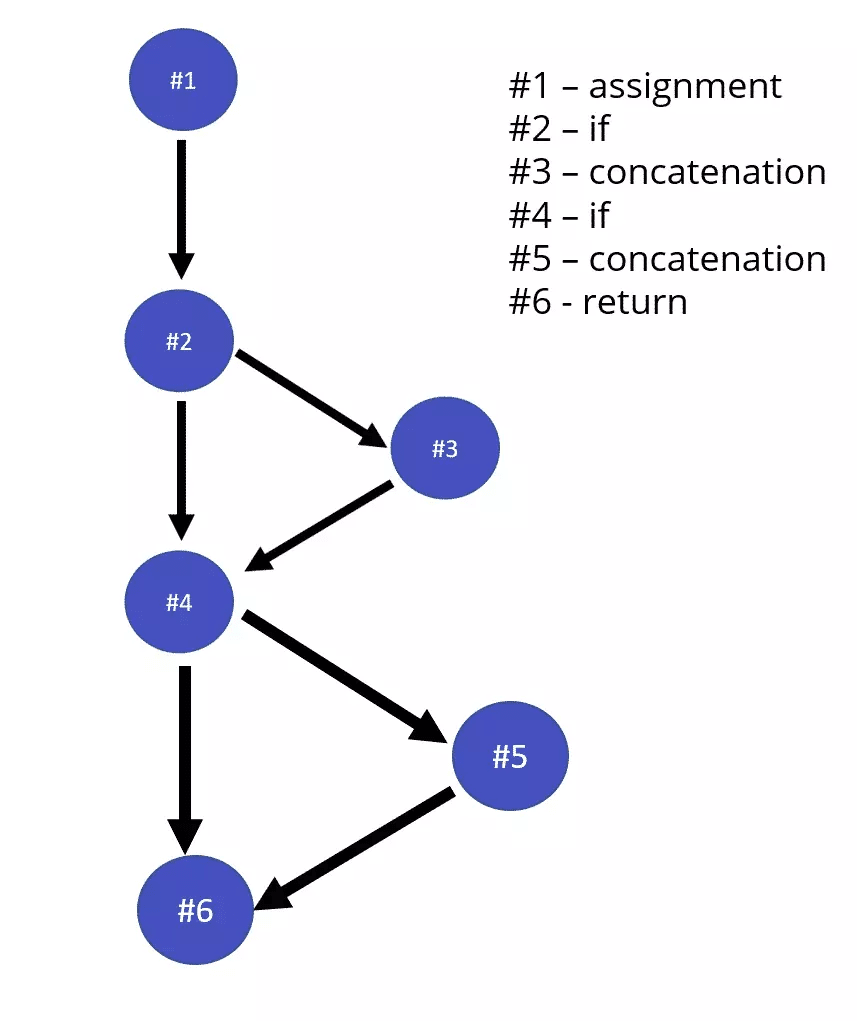
The calculation of cyclomatic complexity is based on the control flow graph (CFG) of a program. A CFG is a graphical representation of all the paths that might be executed through a program. Each node in the graph represents a basic block of code (a sequence of instructions with no branches in or out, except at the beginning and end), and the edges represent the possible transfers of control between these blocks.
The formula for calculating cyclomatic complexity (often denoted as V(G) for a graph G) is remarkably simple:
V(G) = E – N + 2P
Where:
- E is the number of edges in the control flow graph.
- N is the number of nodes in the control flow graph.
- P is the number of connected components (typically, P=1 for a single program or function).
However, a more intuitive way to think about it, and one that is often used in practice for a single program or function, is by counting the number of decision points within the code and adding one. Decision points are constructs that introduce branching, such as:
ifstatementswhileloopsforloopscasestatements inswitchstatements- Boolean operators like
&&and||(each instance can introduce a potential branch) catchblocks in exception handling
For instance, a simple sequential block of code with no conditional statements would have a cyclomatic complexity of 1. This represents the single, linear path through that code. As soon as you introduce an if statement, you create two potential paths: one where the condition is true and one where it is false. This increases the complexity by 1, making the cyclomatic complexity 2.
Deeper Dive: Decision Points and Path Enumeration
Let’s illustrate with a practical example. Consider a simple function that determines if a number is positive, negative, or zero:
def check_number(num):
  if num > 0: # Decision point 1
    return "Positive"
  elif num < 0: # Decision point 2
    return "Negative"
  else:
    return "Zero"
In this function, we have two if/elif statements, which are decision points. Following the simplified rule of counting decision points and adding one:
if num > 0: 1 decision pointelif num < 0: 1 decision point
Total decision points = 2.
Cyclomatic Complexity = 2 + 1 = 3.
This means there are three distinct paths through this function:
num > 0is true.num > 0is false, andnum < 0is true.num > 0is false, andnum < 0is false (meaningnumis zero).
The higher the cyclomatic complexity, the more paths you need to test to ensure adequate coverage. For our check_number function with a complexity of 3, we would need at least three test cases to cover all possible paths: one for a positive number, one for a negative number, and one for zero.
The Significance of Cyclomatic Complexity: Why It Matters
Understanding how to calculate cyclomatic complexity is only the first step. The real value lies in comprehending why this metric is so important in the software development lifecycle. Its implications touch upon several key aspects of building robust and maintainable software, resonating with professionals in Tech, and even influencing aspects of Brand and Money management.

1. Enhancing Software Quality and Reliability
The most direct impact of high cyclomatic complexity is on software quality. Code with many decision paths is inherently more prone to bugs. Each path represents a scenario that must be correctly handled by the code. When complexity increases, so does the probability that a developer might overlook a specific edge case or fail to account for a particular combination of conditions.
- Bug Detection: Higher complexity directly correlates with a higher likelihood of defects. Thoroughly testing a function with a cyclomatic complexity of 10 is significantly more challenging than testing one with a complexity of 2. Developers often use cyclomatic complexity as a guide for setting test coverage targets. A common recommendation is to aim for a cyclomatic complexity of 10 or less for individual methods or functions. When complexity exceeds this threshold, it signals a potential problem area that warrants closer examination and rigorous testing.
- Test Case Generation: As demonstrated, each increase in cyclomatic complexity demands more test cases to achieve thorough coverage. Automating the generation of test cases based on cyclomatic complexity can streamline the testing process. For teams focused on Technology Trends and delivering innovative solutions quickly, efficient testing is a competitive advantage.
2. Improving Maintainability and Readability
The complexity of code directly affects how easy it is for developers to understand, modify, and debug.
- Readability: Code with low cyclomatic complexity is generally easier to read and comprehend. Developers can quickly follow the logical flow and understand the program’s intent. Conversely, highly complex code can be like navigating a dense jungle, making it difficult for new team members to onboard or for existing members to revisit their own code after some time.
- Maintainability: When code is easy to understand, it’s also easier to maintain. Modifications, bug fixes, and feature additions become less risky and time-consuming. High cyclomatic complexity can lead to “spaghetti code,” where changes in one part of the system have unforeseen ripple effects in other, seemingly unrelated parts. This increases development costs and slows down the pace of innovation. In the context of Brand building, delivering a stable and reliable product is crucial for reputation. Frequent bugs due to complex code can severely damage a brand’s perception.
3. Impact on Development Costs and Project Management
The ripple effects of cyclomatic complexity extend to the financial and logistical aspects of software development.
- Development Time: Complex code takes longer to write, debug, and test. This directly translates into higher development costs. Projects with a high degree of cyclomatic complexity are more likely to suffer from scope creep and schedule delays.
- Resource Allocation: Project managers can use cyclomatic complexity as a tool to identify high-risk areas within a project. This allows for more informed resource allocation, ensuring that experienced developers or additional testing efforts are directed towards the most complex and potentially problematic modules. For Money management in business, controlling development costs and predicting timelines are essential for profitability and investor confidence.
- Technical Debt: High cyclomatic complexity is a significant contributor to technical debt. This is the cost incurred when developers choose easy, but not optimal, solutions now, which will require rework later. Refactoring complex code to reduce its cyclomatic complexity is an investment in the long-term health and cost-effectiveness of the software.
Strategies for Managing Cyclomatic Complexity
Recognizing high cyclomatic complexity is the first step; actively managing and reducing it is the next. Fortunately, several well-established strategies can help developers write cleaner, more manageable code.
1. Refactoring and Simplification Techniques
Refactoring involves restructuring existing computer code without changing its external behavior. When dealing with high cyclomatic complexity, specific refactoring techniques are invaluable.
- Extract Method: This is perhaps the most common and effective technique. If a block of code within a function is responsible for a specific piece of logic, it can be extracted into a separate, smaller function. This reduces the complexity of the original function and promotes code reusability. For example, if our
check_numberfunction had more complex logic within eachifblock, we could extract that logic into dedicated helper functions. - Replace Conditional with Polymorphism: In object-oriented programming, when you have a series of
if/else ifstatements that behave differently based on an object’s type, polymorphism offers a cleaner alternative. You can create separate classes for each type and implement the behavior in a common interface or abstract class. - Introduce Guard Clauses: Instead of deeply nested
ifstatements, guard clauses can simplify logic by checking for invalid conditions at the beginning of a function and exiting early. This reduces nesting depth and improves readability.
2. Architectural and Design Considerations
While refactoring addresses existing code, good architectural and design practices can prevent high cyclomatic complexity from emerging in the first place.
- Single Responsibility Principle (SRP): This principle states that a module or class should have only one reason to change. By adhering to SRP, you naturally create smaller, more focused units of code, which tend to have lower cyclomatic complexity.
- Modular Design: Breaking down a large system into smaller, independent modules makes each module easier to understand, test, and maintain. Each module can then focus on a specific functionality, reducing the internal complexity of its components.
- Domain-Driven Design (DDD): For complex business domains, DDD can help create a clear separation of concerns and model the business logic in a way that is understandable and manageable. This often leads to simpler code structures for individual components.
3. Leveraging Development Tools and Best Practices
Modern development environments offer tools that can automatically calculate and visualize cyclomatic complexity, helping developers identify problem areas proactively.
- Static Analysis Tools: Tools like SonarQube, ESLint (for JavaScript), Pylint (for Python), and others can be integrated into development workflows to analyze code for various quality metrics, including cyclomatic complexity. These tools can flag functions or methods that exceed predefined complexity thresholds.
- Code Reviews: Regular code reviews are an excellent opportunity for team members to identify and discuss code that might have excessive cyclomatic complexity. Peer feedback can highlight areas that are difficult to understand or test.
- Establish Coding Standards: Implementing and enforcing coding standards that include guidelines for managing complexity can ensure consistency across the development team.
Conclusion: Embracing Simplicity for Robust Technology
Cyclomatic complexity, while a technical metric, has far-reaching implications that extend beyond the lines of code. It’s a powerful indicator of software health, directly influencing the reliability, maintainability, and cost-effectiveness of any technology project. For businesses focused on Technology Trends, the ability to deliver high-quality, adaptable software quickly is paramount. By understanding and actively managing cyclomatic complexity, development teams can build more robust applications, reduce technical debt, and ultimately, deliver greater value.
Whether you’re a seasoned developer, a project manager overseeing a large-scale software initiative, or a business owner concerned with the efficiency of your tech investments, recognizing the importance of low cyclomatic complexity is key. It’s an investment in clarity, predictability, and the long-term success of your software. By embracing simplicity in code, we pave the way for more innovative and sustainable technological advancements.
aViewFromTheCave is a participant in the Amazon Services LLC Associates Program, an affiliate advertising program designed to provide a means for sites to earn advertising fees by advertising and linking to Amazon.com. Amazon, the Amazon logo, AmazonSupply, and the AmazonSupply logo are trademarks of Amazon.com, Inc. or its affiliates. As an Amazon Associate we earn affiliate commissions from qualifying purchases.