
Navigating the landscape of automotive financing requires a keen eye on the macroeconomic environment. As of mid-2024, the automotive lending market remains influenced by broader monetary policies set by the Federal Reserve, which has maintained a “higher for longer” interest rate stance to combat persistent inflationary pressures. For consumers looking to drive home a new or used vehicle, understanding the current interest rate environment is the first step toward avoiding predatory lending and securing a manageable monthly payment.
The Current State of Automotive Interest Rates
To understand why your loan offer might look different today than it did three years ago, you must first look at the Federal Funds Rate. When the central bank increases borrowing costs to stabilize the economy, commercial banks and credit unions pass those costs down to consumers. Consequently, auto loan rates are currently elevated compared to the historic lows seen during the pandemic era.

New Car Financing Trends
For individuals with excellent credit scores, new car loan rates typically hover between 6.5% and 8.5%. However, this is a broad average. Those who fall into the “super-prime” category—typically individuals with credit scores above 780—can occasionally find promotional financing from captive lenders (the financing arms of automakers). These manufacturers often subsidize interest rates to move inventory, meaning you might find 2.9% or 3.9% rates on specific models, regardless of the broader economic climate.
Used Car Financing Realities
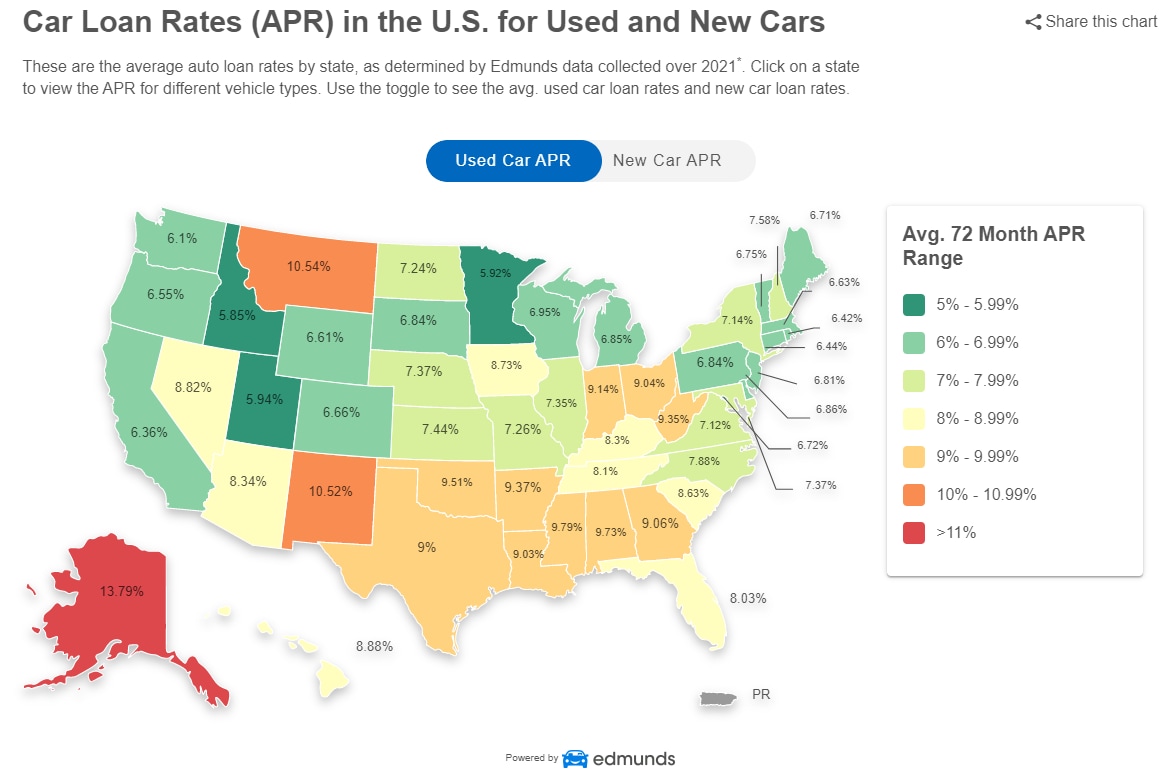
Used car loans remain significantly more expensive than their new car counterparts. Because used vehicles represent a higher risk for lenders—given that depreciation is harder to forecast and the mechanical condition of the asset is less certain—interest rates for pre-owned vehicles usually range from 9% to 14%. If you are looking at a vehicle that is more than five years old, do not be surprised to see rates exceeding 15%, as these are often categorized by lenders as “high-risk” or “long-term” loans.
Factors That Influence Your Personal Interest Rate
While macroeconomic data sets the floor for interest rates, your personal financial profile determines the ceiling. Lenders use a proprietary formula to assess the likelihood of default, and several variables can shift your specific APR significantly.
The Role of Credit Scores
Your FICO score is arguably the most important factor in the lending process. Lenders break borrowers down into tiers:
- Super-Prime (781–850): Access to the most competitive market rates and exclusive manufacturer incentives.
- Prime (661–780): Generally solid, but you may see a 1% to 2% difference in rates compared to the top tier.
- Non-Prime (601–660): You will encounter higher interest rates, often requiring a larger down payment to compensate for the perceived risk.
- Subprime (Below 600): Financing will be available, but likely at double-digit interest rates that can significantly inflate the total cost of ownership.
Loan-to-Value (LTV) Ratios
Lenders evaluate the Loan-to-Value ratio, which compares the amount you are borrowing to the appraised value of the car. If you are financing 100% of the vehicle’s cost, including taxes and registration fees, the LTV is high, which increases lender risk. Conversely, if you make a substantial down payment, your LTV ratio decreases, which often grants you leverage to negotiate a lower interest rate.

Debt-to-Income (DTI) Ratio
Even with a high credit score, a lender may increase your interest rate—or deny the loan entirely—if your Debt-to-Income ratio is too high. If your existing monthly obligations, such as rent, student loans, and credit card payments, already consume a large portion of your gross income, the bank views you as a “stretched” borrower. A lower DTI ratio demonstrates financial discipline, making you a safer bet for the lender and potentially securing you a lower APR.
Strategies to Secure Lower Rates
Securing a favorable interest rate is not a passive activity. By taking proactive steps before visiting a dealership, you can shift the power dynamic in your favor.
The Importance of Pre-Approval
Never walk into a dealership without a pre-approval letter from your local bank or credit union. A pre-approval acts as a “cash” offer; it tells the dealer that you already have an established floor for your financing. When the dealership’s Finance and Insurance (F&I) manager attempts to upsell you on a loan with a higher interest rate, you can counter by showing your existing offer. If the dealer wants your business, they will be forced to match or beat the rate you secured on your own.
The Refinancing Option
Many consumers mistakenly believe that the interest rate they sign for at the dealership is the rate they are stuck with for the life of the loan. This is incorrect. If you find yourself in a high-interest loan because of a tight timeline or low credit score, you can work to improve your credit over the next six to twelve months. Once your score improves, you can apply to refinance your auto loan with a different lender. Lowering your rate by just 2% can save you hundreds, or even thousands, of dollars over the remaining term of the loan.
Choosing the Term Length Wisely
There is a temptation to choose a 72-month or 84-month loan to lower the monthly payment. While this makes the vehicle more affordable on a monthly basis, it is a dangerous trap for two reasons:
- Higher Interest: Longer terms almost always carry higher interest rates because the lender is exposed to market risks for a longer duration.
- Negative Equity: Cars depreciate rapidly. If you stretch a loan over 84 months, you will likely find yourself “underwater”—meaning you owe more on the car than it is worth—for the majority of the loan term. This limits your ability to trade in or sell the vehicle without incurring a significant financial loss.
The Future Outlook: When Will Rates Drop?
Predicting the interest rate cycle is notoriously difficult, but market analysts generally believe that we are approaching a plateau in the Federal Funds Rate. While no one expects a return to the near-zero rates of 2020, there is a general consensus that as inflation cools, the Federal Reserve will eventually begin a series of incremental rate cuts.
If you are currently in the market for a car, the best advice is to focus on what you can control. Rather than waiting for an economic shift that may take years to materialize, focus on cleaning up your credit report, saving for a larger down payment, and shopping for the best financing terms across multiple institutions.
Shopping Comparison Checklist
To ensure you aren’t overpaying, follow this simple procedure:
- Check your credit: Use free tools to see where you stand.
- Get two credit union quotes: Credit unions often offer lower rates than large national banks.
- Talk to the dealer: See if they can beat the lowest rate you have found.
- Run the numbers: Use an online calculator to see how a 1% difference in interest affects the total interest paid over the life of the loan.
By remaining informed and disciplined, you can navigate the current high-interest-rate environment without jeopardizing your long-term financial health. The key is to treat the auto loan as a separate product from the vehicle itself; buy the car from the dealer, but shop for your money like a savvy investor.
aViewFromTheCave is a participant in the Amazon Services LLC Associates Program, an affiliate advertising program designed to provide a means for sites to earn advertising fees by advertising and linking to Amazon.com. Amazon, the Amazon logo, AmazonSupply, and the AmazonSupply logo are trademarks of Amazon.com, Inc. or its affiliates. As an Amazon Associate we earn affiliate commissions from qualifying purchases.