
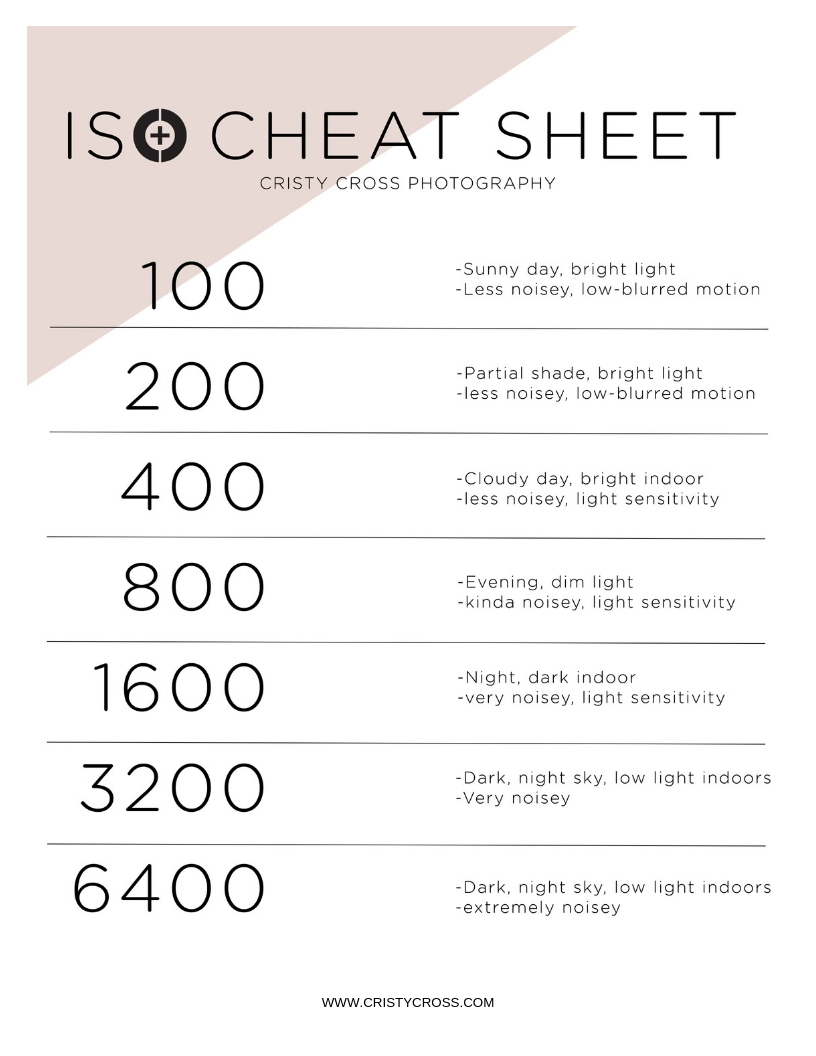
In the landscape of modern digital imaging, the technical complexity of capturing a single frame is often overshadowed by the convenience of automated software. However, for those looking to master the hardware at their fingertips, understanding ISO is a fundamental requirement. Along with shutter speed and aperture, ISO forms the “Exposure Triangle”—the trifecta of manual controls that dictate how a camera interacts with light. In technical terms, ISO represents the sensitivity of the camera’s digital sensor to the light hitting it.
Originally derived from the International Organization for Standardization, the term ISO was carried over from the era of film photography. In the analog days, ISO (or ASA) referred to the chemical sensitivity of the film stock. Today, in the digital realm, ISO refers to the gain or amplification applied to the electrical signal generated by the camera’s image sensor. As we delve deeper into the mechanics of digital photography, it becomes clear that ISO is not just a setting for brightness, but a critical tool for managing signal-to-noise ratios and image fidelity.
The Mechanics of ISO: How Digital Sensors Interpret Light
To understand ISO, one must first understand how a digital sensor functions. A camera sensor is comprised of millions of light-sensitive “photosites” or pixels. When you press the shutter button, these photosites capture photons and convert them into electrical charges. These charges are then converted into digital data by an analog-to-digital converter (ADC).
From Film to Digital: The Evolution of Sensitivity
In film photography, ISO was a fixed physical property. If you wanted a higher sensitivity for low-light environments, you had to physically swap out the roll of film for one with larger silver halide grains. In the digital age, the sensor’s physical sensitivity remains constant. When you “increase” the ISO on a digital camera, you are not actually making the sensor more sensitive to light; rather, you are applying an electronic gain to the signal captured by the photodiodes.
This is akin to turning up the volume on a radio. If the signal is weak, increasing the volume makes it louder, but it also increases the background hiss. In digital imaging, this “hiss” manifests as visual noise—speckles of grain and color inaccuracies that can degrade the quality of an image.
The Signal-to-Noise Ratio: Understanding the Tech Behind the Grain
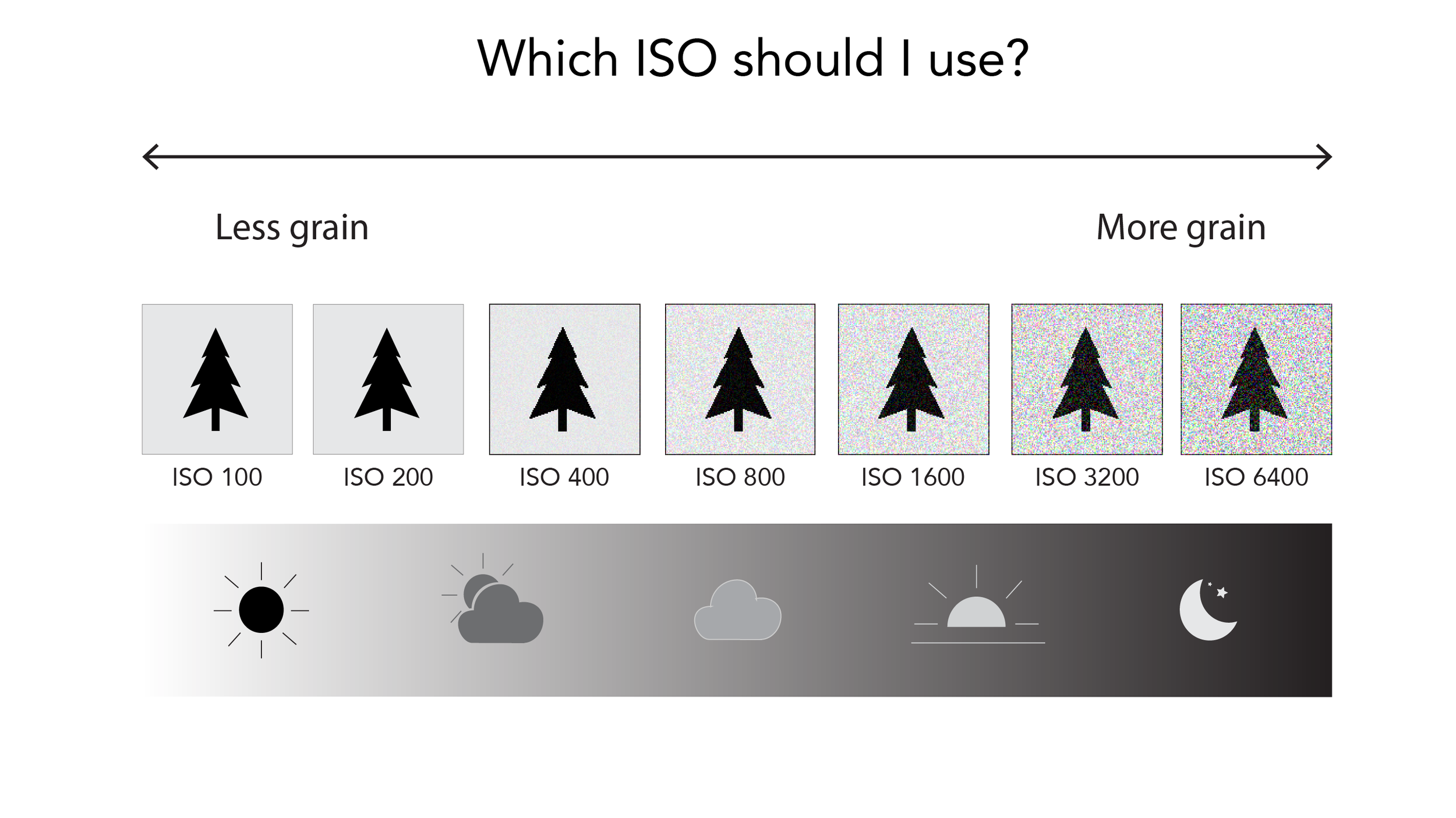
The primary challenge of high ISO settings is the Signal-to-Noise Ratio (SNR). Every electronic circuit generates a small amount of background interference, known as the “noise floor.” When you shoot at a “Base ISO”—typically ISO 100 or 200—the signal (the light from the scene) is much stronger than the noise floor, resulting in a clean, crisp image.
As you increase the ISO to 3200, 6400, or higher, you are amplifying both the signal and the underlying electronic noise. This results in two types of digital noise:
- Luminance Noise: Grain-like patterns that look like sand or salt-and-pepper textures.
- Chromatic Noise: Unnatural color artifacts, often appearing as purple or green splotches in dark areas of the frame.
Balancing the Exposure Triangle: ISO, Shutter Speed, and Aperture
ISO does not exist in a vacuum. It is a functional component of exposure that allows a photographer or videographer to maintain a specific aesthetic when shutter speed and aperture are constrained by environmental factors or creative intent.
The Trade-offs of High ISO
Technological advancements in sensor manufacturing have significantly pushed the boundaries of what is considered “usable” ISO. Full-frame sensors, which possess larger physical pixels, generally handle high ISO settings much better than the smaller sensors found in smartphones or micro four-thirds cameras. This is because larger pixels can collect more photons, providing a stronger base signal before amplification is required.
However, even with professional-grade gear, increasing ISO comes with a cost beyond just noise. As ISO increases, the dynamic range—the ability of the sensor to capture details in both the deepest shadows and the brightest highlights—begins to shrink. This is why high-ISO images often appear “flat” or lack the rich tonal transitions found in images shot at Base ISO.
When Tech Overrides Light: Pushing the Sensor
There are scenarios where high ISO is not just a choice, but a necessity. In sports photography or wildlife documentation, a fast shutter speed (often 1/1000s or faster) is required to freeze motion. If the environment is not brightly lit, the only way to achieve a proper exposure without blurring the subject is to increase the ISO. Modern professional cameras are now designed with “high-gain” architectures that allow for relatively clean images even at ISO 12,800, allowing tech-savvy creators to capture moments that were physically impossible to document just a decade ago.
The Future of ISO: AI-Driven Noise Reduction and Computational Photography
We are currently witnessing a paradigm shift in how ISO is handled, moving away from pure hardware amplification toward sophisticated software algorithms and Artificial Intelligence.
Software vs. Hardware: The Shift in Image Processing
In the past, the “in-camera” JPEG engine was responsible for noise reduction, often resulting in “mushy” textures where the software over-smoothed the image to hide grain. Today, AI-powered post-processing tools like Adobe’s AI Denoise and Topaz Photo AI utilize neural networks trained on millions of images to distinguish between actual detail and digital noise. These tools can effectively “clean” a high-ISO image, reconstructing lost textures and removing chromatic aberrations with surgical precision.
This software-heavy approach is the backbone of smartphone photography. Because smartphone sensors are tiny, they inherently produce high levels of noise. To combat this, mobile devices use computational photography—stacking multiple exposures and using machine learning to average out noise—effectively simulating a much higher ISO performance than the hardware should allow.
Dual Native ISO: A Game Changer for Video and Pro-Grade Sensors
One of the most significant hardware innovations in recent years is “Dual Native ISO” technology. Found primarily in high-end cinema cameras and professional mirrorless bodies (such as those from Sony and Panasonic), this technology utilizes two distinct analog circuits for each pixel.
Instead of having one base sensitivity that gets noisier as it is pushed, the sensor has two “sweet spots.” For example, a camera might have a native ISO of 800 for bright conditions and a second native ISO of 3200 for low light. When the camera switches to the second circuit, the noise floor is reset, allowing for exceptionally clean high-ISO performance. This is a massive leap for tech enthusiasts and professionals who need to maintain cinematic quality in unpredictable lighting.
Optimizing Your Digital Workflow: Best Practices
To get the most out of your camera’s technology, it is essential to understand the specific limitations and capabilities of your sensor.
Knowing Your Camera’s Native ISO
Every digital sensor has a “Native ISO,” which is the setting where the hardware produces the highest dynamic range and the lowest noise. For most cameras, this is ISO 100. Using “Extended ISO” settings (like ISO 50 or ISO 102,400) usually involves software-based adjustments that can actually reduce the quality of your RAW files. Professionals strive to stay as close to the native ISO as possible to ensure the digital file has the most “latitude” for editing.

Post-Processing Strategies for High ISO Images
When you are forced to shoot at high ISO, the workflow moves from the field to the computer. Shooting in a RAW format is non-negotiable for high-tech imaging. RAW files contain the unprocessed data from the sensor, allowing you to use advanced desktop processors to handle noise reduction rather than relying on the camera’s limited mobile processor.
Techniques such as “Exposing to the Right” (ETTR) can also help. This involves intentionally overexposing the image slightly (without clipping the highlights) to capture more data in the shadows. When you bring the exposure down in post-processing, the noise in the shadows is compressed, resulting in a cleaner final image than if you had shot at a lower ISO and tried to “pull” the shadows up.
ISO is far more than a simple brightness slider. It is a complex interaction between light, silicon, and electricity. As camera technology continues to evolve, the line between hardware sensitivity and software enhancement will continue to blur, allowing us to see and record the world in increasingly challenging conditions. Understanding the technical foundations of ISO allows you to push your equipment to its absolute limit, ensuring that the only thing limiting your output is your creativity, not your gear.
aViewFromTheCave is a participant in the Amazon Services LLC Associates Program, an affiliate advertising program designed to provide a means for sites to earn advertising fees by advertising and linking to Amazon.com. Amazon, the Amazon logo, AmazonSupply, and the AmazonSupply logo are trademarks of Amazon.com, Inc. or its affiliates. As an Amazon Associate we earn affiliate commissions from qualifying purchases.