
When you walk into an auto parts store to purchase a new battery for your vehicle, you may notice an additional fee on your receipt that wasn’t prominently displayed on the shelf tag. This is known as a “core charge.” While it may initially feel like an unexpected tax or a hidden surcharge, the core charge is actually a sophisticated financial instrument designed to facilitate a circular economy. In the world of personal and business finance, understanding the core charge is essential for managing maintenance costs and maximizing the value of your automotive investments.
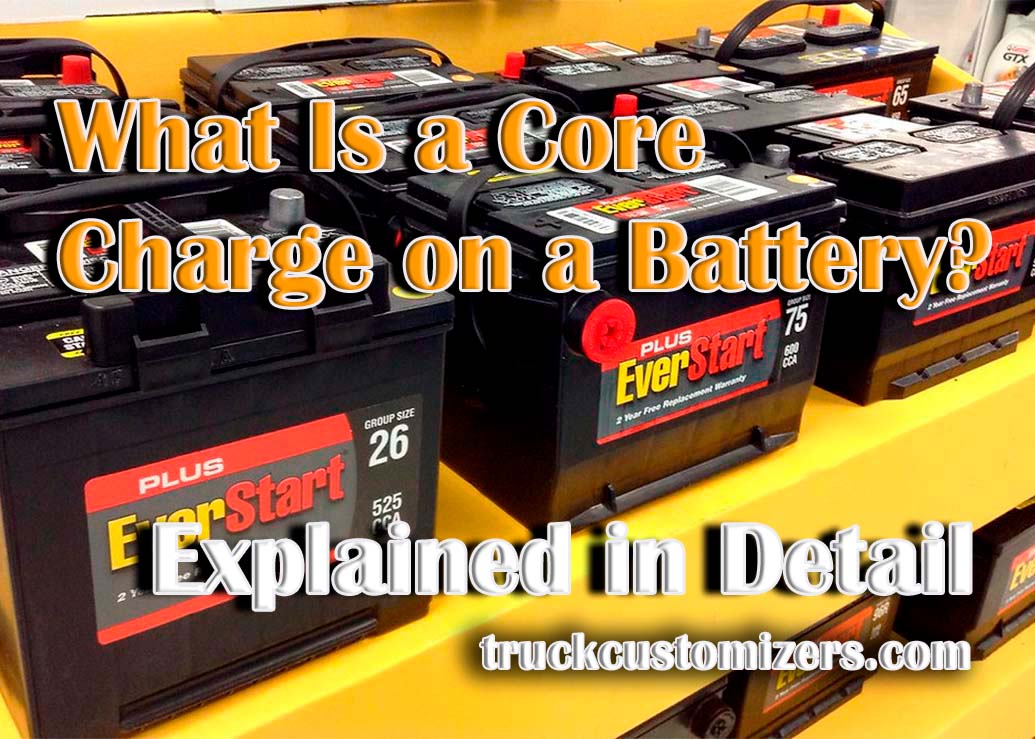
A core charge is essentially a form of a deposit-refund system. It ensures that the valuable raw materials inside a spent battery—primarily lead and plastic—are returned to the manufacturing cycle rather than ending up in a landfill. From a financial perspective, the core charge serves as an incentive for consumers to participate in a massive, global recycling network that keeps the costs of new batteries relatively stable.
The Economics of the Core Charge: A Deposit-Refund System
To understand the core charge, one must first understand the concept of a “core.” In the automotive industry, a “core” is the old, used part that is replaced by a new or remanufactured one. For batteries, the core is the depleted unit that can no longer hold a sufficient charge to power a vehicle.
Defining the “Core” as an Asset
In financial terms, your old battery is not “trash”; it is an asset with intrinsic commodity value. Lead-acid batteries are among the most recycled products in the world, with a recycling rate often exceeding 99% in developed economies. The lead plates inside the battery can be melted down and reused indefinitely without losing their chemical properties. Therefore, the “core” represents a valuable input for manufacturers. The core charge is the dollar value assigned to that asset at the point of sale.
The Transaction Lifecycle
The financial lifecycle of a core charge follows a predictable path. When you buy a new battery, the retailer adds the core charge (typically ranging from $15 to $50) to the purchase price. This serves as a security deposit. If you bring back your old battery at the time of purchase, the retailer simply “swaps” the core, and the charge is waived. If you do not have the old battery with you, you pay the charge upfront. Upon returning the old battery later—with a valid receipt—the retailer refunds the core charge to your original form of payment.
Why It’s Not a Sales Tax
It is a common misconception that the core charge is a government tax. While some states have mandatory “battery fees” that are non-refundable and go toward environmental funds, the core charge is a private-sector financial mechanism. It is a reversible transaction. Unlike a tax, which is a one-way transfer of wealth to the state, the core charge is a temporary hold on your capital that is returned upon the fulfillment of a specific action: returning the old unit.
Why the Core Charge Exists: Protecting the Bottom Line and the Environment
The financial logic behind core charges extends beyond simple recycling; it is a strategy for price stabilization and supply chain efficiency. By mandating a core charge, manufacturers and retailers can predict their supply of raw materials with high accuracy.
Material Recovery Value
The price of lead is a major component of a battery’s total cost. If battery manufacturers had to rely solely on newly mined lead, the price of batteries would fluctuate wildly based on global mining outputs and geopolitical stability. By incentivizing the return of old batteries, manufacturers create a “closed-loop” supply chain. This recovered lead is significantly cheaper to process than ore, which keeps the retail price of new batteries lower for the end consumer.
Regulatory Mandates and Liability
From a corporate finance perspective, core charges also serve as a risk management tool. Many jurisdictions have strict environmental regulations regarding the disposal of hazardous materials like lead and sulfuric acid. If a retailer sells a battery and that battery is illegally dumped, the retailer could face significant legal liability or fines. The core charge acts as a financial motivator that ensures the hazardous materials are returned to a controlled, professional environment, thereby mitigating environmental and legal risks for the business.
Reducing Manufacturing Costs
Remanufacturing is a multi-billion dollar industry. While automotive batteries are usually recycled for parts, other components like alternators and starters are often rebuilt. In these cases, the core charge ensures that the “housing” or “casing” of the part is returned, saving the company the cost of casting new metal. For batteries, the savings come from the plastic casings and the high-density lead, which are diverted back into production, reducing the overhead of the manufacturing facility.
Managing Your Personal Finance: Navigating Core Charges at Retail

For the savvy consumer, managing the core charge is a matter of basic financial diligence. Failing to reclaim a core charge is effectively leaving money on the table, often equivalent to a 10% to 20% “penalty” on the total cost of the battery.
Upfront Costs vs. Effective Costs
When budgeting for a vehicle repair, you must distinguish between the “sticker price” and the “effective cost.” If a battery is listed at $150 with a $20 core charge, your immediate cash outlay will be $170 plus tax. If you fail to return the old battery, your effective cost remains $170. However, if you return the core, your effective cost drops back to $150. In the context of personal finance, this $20 return represents a significant “rebate” that should be factored into any price comparison between retailers.
Documentation and Receipts
The most common reason consumers lose their core charge refund is poor record-keeping. Most major retailers require the original purchase receipt to process a core refund if the return happens after the initial transaction. From a financial management standpoint, it is wise to keep a digital scan or a physical copy of the receipt in your glove box or a dedicated maintenance folder. Some retailers can look up the transaction via a phone number or loyalty card, but relying on a physical or digital receipt is the most secure way to ensure your capital is returned.
Time Limits and Policies
While many national chains have generous return windows for cores (often 30 to 90 days), some smaller independent shops may have stricter timelines. Understanding the “return policy” of your core deposit is just as important as understanding the warranty on the battery itself. If you miss the window, the retailer may have already cleared their books for that period, making it difficult or impossible to get your cash back.
The “Core” Market: How Business Finance Drives Battery Value
In the B2B (business-to-business) sector, core charges are handled with even greater scrutiny. For fleet managers and automotive repair shops, the management of cores is a significant part of their operational accounting.
Lead-Acid Commodities
Large-scale operations that manage hundreds of vehicles view battery cores as a commodity. They do not just return one core for one new battery; they often sell “scrap” batteries in bulk to core buyers or recyclers. In this scenario, if the market price for lead is high, the scrap value of the battery might actually exceed the core charge offered by the retailer. Business owners must decide whether to reclaim the core charge from the store or sell the core to a specialized metal recycler for a potentially higher profit.
Supply Chain Circularity
The core charge is the gold standard for “circularity” in business finance. It creates a self-sustaining loop where the waste of the consumer becomes the raw material of the producer. For businesses, this reduces the “volatility risk” associated with raw material procurement. When a company can source 80% of its materials from returned cores, it is far less vulnerable to global trade wars or shipping disruptions that affect the mining industry.
Commercial vs. Individual Accounts
Commercial accounts at auto parts stores often handle core charges differently than individual retail customers. Many “pro” accounts operate on a “core exchange” basis where the core charges are tracked on a ledger. This allows the shop to pick up new batteries and return the old ones in batches at the end of the month, optimizing cash flow and reducing the administrative burden of individual refund transactions.
Maximizing Your Refund: Practical Tips for Every Consumer
To ensure you are getting the best financial outcome when dealing with battery core charges, a few strategic steps can make the process seamless and profitable.
Cross-Brand Returns
A common question is whether you can return a Brand A battery to get a core refund on a Brand B battery. In almost all cases, the answer is yes. Retailers are not looking for the exact same brand or model; they are looking for the “unit.” As long as you are returning a lead-acid automotive battery, it should satisfy the core requirement for the new one you purchased, regardless of the brand. This allows you to shop for the best deal on a new battery without worrying about the brand of the old one in your trunk.
Dealing with Damaged Cores
Financially speaking, a core is usually accepted regardless of its internal condition. Whether the battery simply died of old age or has a dead cell, it still holds the same amount of lead. However, if the plastic casing is cracked and leaking acid, some retailers may refuse it due to safety and hazardous material handling protocols. In this case, you may lose the core charge. To protect your investment, always transport old batteries in a sturdy plastic bin to prevent damage and leaks.

The Opportunity Cost of Negligence
Finally, consider the opportunity cost. A $20 core charge might seem small, but in the context of a $150 purchase, it is a 13.3% return on a simple 10-minute task. In the world of investing, a 13% guaranteed return is nearly unheard of. By simply dropping off your old battery during your next errand run, you are performing a high-yield financial action that benefits both your wallet and the broader economy.
In conclusion, the core charge is far more than a simple fee; it is a vital component of the financial and environmental ecosystem of the automotive industry. By treating the core charge as a refundable deposit and the old battery as a valuable asset, consumers and businesses alike can reduce their total cost of ownership while supporting a sustainable, circular economy. Understanding these financial mechanics ensures that you never pay more than necessary for the power your vehicle needs.
aViewFromTheCave is a participant in the Amazon Services LLC Associates Program, an affiliate advertising program designed to provide a means for sites to earn advertising fees by advertising and linking to Amazon.com. Amazon, the Amazon logo, AmazonSupply, and the AmazonSupply logo are trademarks of Amazon.com, Inc. or its affiliates. As an Amazon Associate we earn affiliate commissions from qualifying purchases.