
Navigating the complexities of health insurance often feels like learning a new language. Among the most misunderstood concepts in the insurance industry is “Coordination of Benefits” (COB). For individuals holding multiple insurance policies—such as a primary plan through an employer and a secondary plan through a spouse’s employer—understanding COB is essential to ensuring medical bills are paid correctly and preventing unexpected out-of-pocket expenses.
At its core, Coordination of Benefits is a system designed to prevent the duplication of payments when a person is covered by more than one health insurance plan. Without this mechanism, a claimant could theoretically receive payouts from two different insurers for the same medical service, exceeding the total cost of the care. COB rules establish a hierarchy, determining which plan pays first and which plan pays second, ensuring the total reimbursement does not exceed 100% of the allowable medical expenses.
How the Coordination of Benefits Process Functions
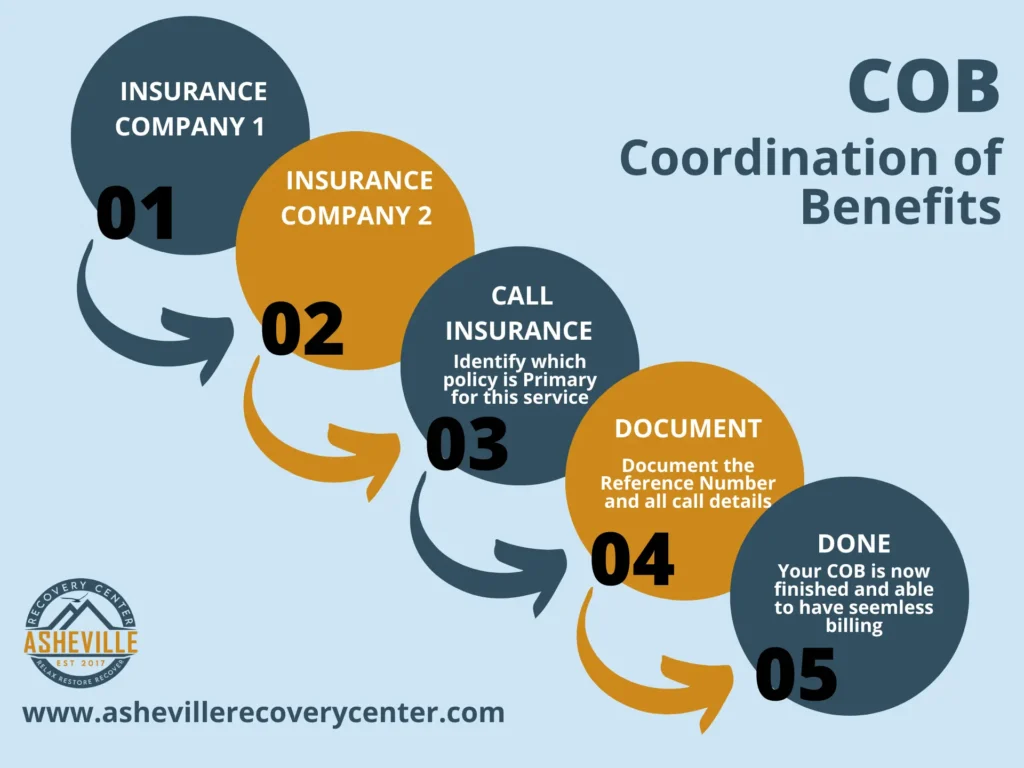
The primary objective of COB is to establish an orderly “payment chain.” When you receive medical treatment, the provider typically submits the claim to your primary insurance carrier first. Once that carrier processes the claim and pays its portion, you are left with a remaining balance—often consisting of deductibles, copayments, or coinsurance. This is where the secondary insurance comes into play.
Determining the Primary vs. Secondary Payer
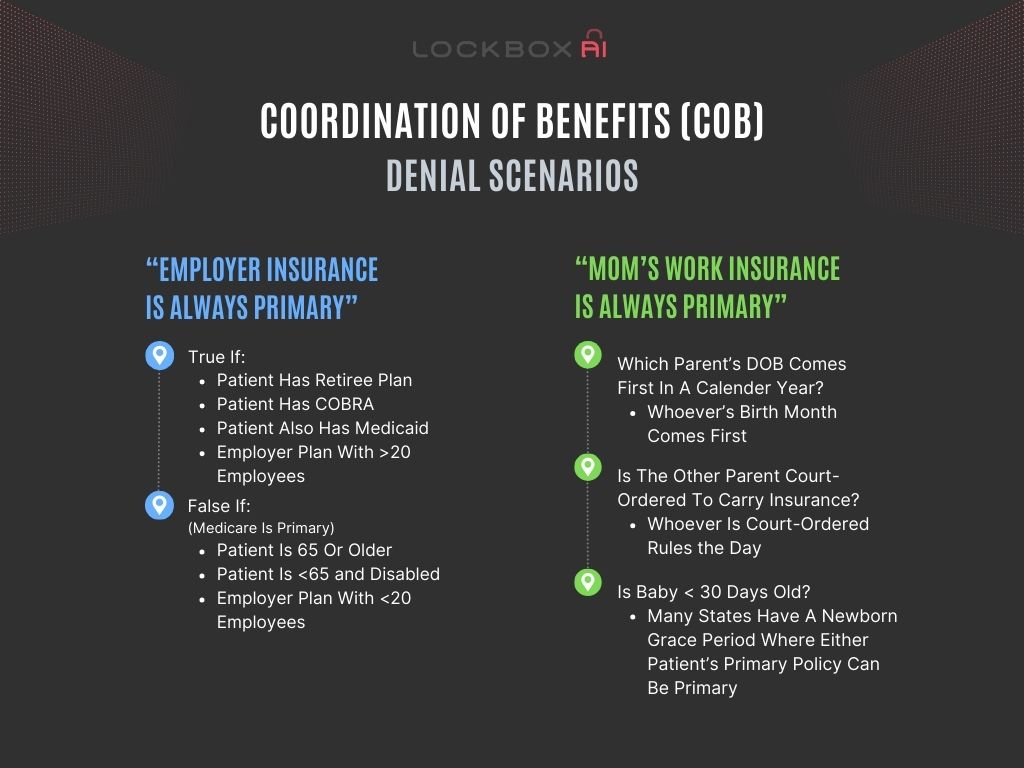
Insurance companies follow a standardized set of rules, often guided by the National Association of Insurance Commissioners (NAIC), to determine the “Order of Benefit Determination.”
- The Subscriber Rule: If you are covered by a plan as an employee and also as a dependent on your spouse’s plan, your own employer’s plan is generally primary.
- The Dependent Child Rule: Often known as the “Birthday Rule,” this dictates that for children covered by both parents, the plan belonging to the parent whose birthday (month and day) falls earlier in the calendar year is primary.
- Active vs. Retired Status: If one policy is provided by a current employer and the other by a former employer (such as a retirement plan), the active employee plan almost always takes precedence as the primary payer.
The Claim Submission Cycle
Once the primary insurer has adjudicated the claim, they issue an Explanation of Benefits (EOB). This document details what the insurance covered, what was applied to your deductible, and what the patient is responsible for paying. You must then submit this EOB to your secondary insurance provider. The secondary plan will review the claim to see if they can cover any or all of the remaining balance, up to the limit of their specific policy coverage.
The Financial Implications of Improper COB Management
Neglecting to coordinate your benefits properly can lead to significant financial headaches. Many patients assume that having two insurance plans guarantees that 100% of their medical bills will be covered, but this is a common misconception. Coordination of Benefits is not an automatic “zero-balance” pass; it is a regulatory framework to prevent overpayment.
Avoiding “Double Dipping” and Fraud
Insurance companies are strictly prohibited from paying out more than the total cost of the service provided. If both insurers were to pay the full amount for a surgery, the patient would be profiting from a medical event, which is considered insurance fraud. COB ensures that the insurance industry maintains actuarial integrity.
Why Claims Get Denied
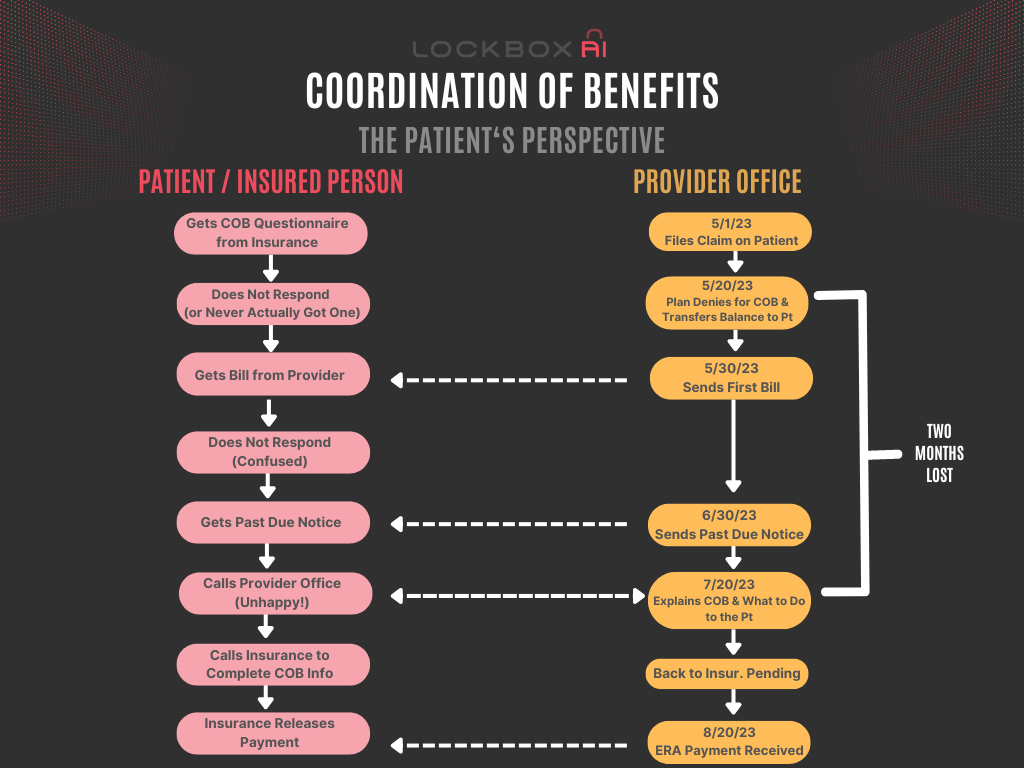
One of the most common reasons for claim denials in a multi-insurance household is a failure to update COB information with the insurance carriers. If your primary insurer is unaware that you have secondary coverage, or if your secondary insurer does not have a record of your primary EOB, they may flag the claim for “coordination error.” This results in a denial or a request for additional documentation, which can delay your reimbursement or payment to the provider by weeks or even months.
Best Practices for Managing Your Coverage
Managing dual coverage requires proactive communication. You cannot assume that insurance companies will automatically talk to one another or share information about your benefits status. You are the essential link between these entities.
Keep Your Insurance Providers Informed
Every time your coverage status changes—such as when you start a new job, get married, or lose a secondary policy—you must notify all involved insurance carriers. Call the customer service number on the back of your insurance card and explicitly state that you have “other coverage.” Ask them to update their records to reflect whether they are the primary or secondary payer.
Understand Your “Out-of-Pocket” Potential
Having two insurance plans does not necessarily mean your out-of-pocket costs will disappear. If your primary insurance has a high deductible, your secondary insurance might pick up part of that cost, but only if the service is covered under their specific benefit schedule. Furthermore, if your secondary plan is an HMO or PPO, you must ensure that your doctor or hospital is “in-network” for both plans. If you see a provider who is out-of-network for your secondary plan, that carrier may refuse to pay anything toward the secondary balance, leaving you responsible for the full amount.
Review Your Explanation of Benefits (EOB) Carefully
Never ignore an EOB. When you receive one, check to see if the insurance company correctly identified the other plan as secondary. If you see a note saying “COB information missing” or “Information required,” contact your insurer immediately. Providing the missing information via their member portal or customer service line can resolve the issue before it escalates to a collections notice from your healthcare provider.
Strategic Financial Planning with Multiple Plans
For families navigating complex medical situations—such as ongoing treatments, chronic illnesses, or high-cost surgeries—coordination of benefits can be a strategic asset. When utilized correctly, it acts as a financial safety net, lowering the burden of coinsurance and helping families stay within their total financial limits.
Coordinating with Flexible Spending Accounts (FSAs) and HSAs
In addition to traditional insurance, many employees use Health Savings Accounts (HSAs) or Flexible Spending Accounts (FSAs) to cover medical expenses. These accounts can be used to pay for the “remaining balance” left over after your primary and secondary insurance have processed the claim. Because COB ensures that the insurance companies have paid their maximum allowable amount, you can use your tax-advantaged savings accounts to cover the residual deductible or copayment without violating IRS or insurance regulations.
The Role of Technology in COB
Modern insurance management has been simplified by digital portals and centralized databases. Many insurance companies now participate in industry-wide databases that track primary/secondary coverage status. While this has reduced the manual burden on the patient, it does not absolve you of the responsibility to verify your data. Utilizing your insurance provider’s mobile app to confirm that your coordination of benefits status is set to “Active” is a best practice for any tech-savvy consumer.
Ultimately, the Coordination of Benefits process is a vital component of the healthcare ecosystem. It maintains the balance between insurance accessibility and financial sustainability for both the insurer and the insured. By staying informed, keeping your records updated, and proactively communicating with your benefits administrators, you can navigate dual-coverage scenarios with confidence, ensuring that your financial resources are protected while you focus on what truly matters: your health.
aViewFromTheCave is a participant in the Amazon Services LLC Associates Program, an affiliate advertising program designed to provide a means for sites to earn advertising fees by advertising and linking to Amazon.com. Amazon, the Amazon logo, AmazonSupply, and the AmazonSupply logo are trademarks of Amazon.com, Inc. or its affiliates. As an Amazon Associate we earn affiliate commissions from qualifying purchases.