
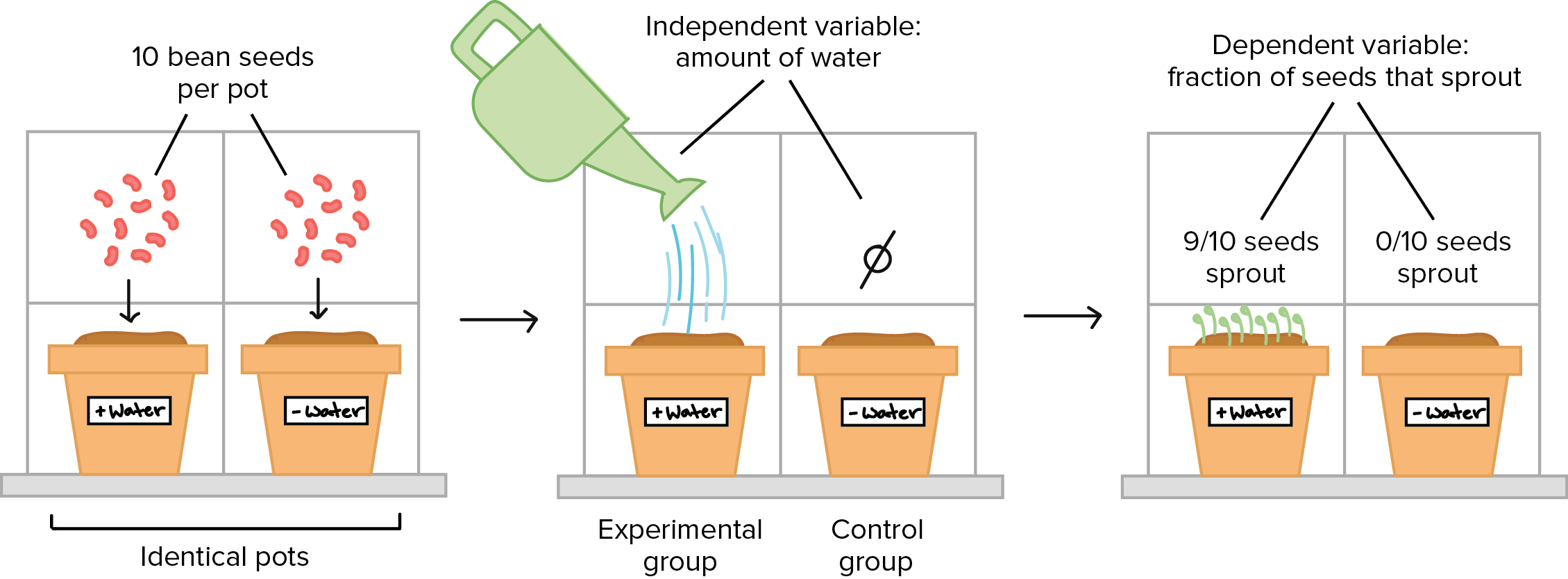
The concept of “control” lies at the very heart of scientific inquiry and technological advancement. Far from being a mere operational detail, control is a fundamental principle that underpins our ability to understand, predict, and manipulate the world around us. In science, control often refers to the meticulous management of variables in an experiment to isolate cause and effect. However, when viewed through the lens of technology, “control in science” expands to encompass the sophisticated mathematical, computational, and engineering principles that enable systems to behave predictably, autonomously, and optimally. It is the invisible hand guiding everything from the precise movements of a robotic arm to the stable flight of an aircraft, and the intelligent management of an energy grid. This article delves into the scientific underpinnings of control and its indispensable role as the engine of modern technology and automation.

The Foundational Science of Control Systems
At its core, the science of control is about understanding dynamic systems and designing mechanisms to influence their behavior. This field, often referred to as control theory or cybernetics, draws heavily from mathematics, physics, and computer science to create robust and efficient systems.
From Theoretical Concepts to Engineering Principles
The journey of control from theoretical concepts to tangible engineering principles began with early scientific observations and mathematical formulations. Pioneers like James Watt, whose centrifugal governor regulated steam engine speed, provided early practical examples. However, it was the 20th century that saw the formalization of control theory. Norbert Wiener coined “cybernetics” in the 1940s, defining it as the scientific study of control and communication in animals and machines. This interdisciplinary field brought together concepts from biology, psychology, engineering, and mathematics, emphasizing feedback loops as a universal mechanism for self-regulation.
Modern control theory is built upon a rich tapestry of mathematical tools, including differential equations, linear algebra, calculus of variations, and optimization theory. These tools allow scientists and engineers to model system dynamics, analyze their stability, and design controllers that achieve desired performance objectives. For instance, understanding the physics of motion (Newtonian mechanics) combined with mathematical modeling allows engineers to design control systems for aerospace vehicles, ensuring stability and precise trajectory. The transition from abstract mathematical models to practical engineering solutions is a testament to the power of scientific control.
Key Elements of a Control System
Every control system, regardless of its complexity, shares fundamental scientific and engineering components that work in concert to achieve a specific outcome. Understanding these elements is crucial to appreciating how control manifests in technology.
-
Controlled Process (Plant): This is the system or device whose behavior needs to be managed. It could be a robotic arm, a chemical reactor, a vehicle, or a heating system. Scientific understanding of the plant’s dynamics (e.g., its physical properties, chemical reactions) is paramount.
-
Sensors: These devices measure the actual output or state of the controlled process. Sensors convert physical quantities (e.g., temperature, position, velocity, pressure) into signals that the controller can interpret. The accuracy and responsiveness of sensors are critical, embodying principles from physics and electrical engineering.
-
Controller: This is the “brain” of the system, responsible for comparing the measured output with the desired input (setpoint) and generating an appropriate control signal. Controllers are often implemented as microprocessors running sophisticated software algorithms. The design of the controller algorithm is where much of the scientific control theory is applied, determining how the system responds to deviations and disturbances.
-
Actuators: These devices receive the control signal from the controller and convert it into a physical action that influences the controlled process. Examples include motors, valves, pumps, and heaters. Actuators embody principles of mechanical and electrical engineering, translating digital commands into physical force or energy.
Open-Loop vs. Closed-Loop Control
A fundamental scientific distinction in control systems is between open-loop and closed-loop (or feedback) control. This distinction highlights different levels of sophistication and responsiveness, directly impacting technological capabilities.
-
Open-Loop Control: In an open-loop system, the control action is independent of the system’s output. The controller simply executes a pre-programmed sequence of actions without monitoring whether the desired outcome is achieved. An example is a toaster, which heats for a set time regardless of how dark the toast gets. While simpler and cheaper, open-loop systems are less precise, susceptible to disturbances, and cannot adapt to changing conditions. Scientific understanding helps predict the expected outcome, but there’s no real-time adjustment.
-
Closed-Loop (Feedback) Control: This is where the power of control truly shines. In a closed-loop system, the output of the controlled process is measured by sensors and fed back to the controller. The controller then compares this measured output to the desired setpoint and calculates an “error” signal. This error signal is used to adjust the control action, continuously working to minimize the difference between the actual and desired states. Examples include a thermostat (which adjusts heating/cooling based on measured room temperature) or cruise control in a car (which adjusts engine power based on actual speed). Feedback control is scientifically elegant because it mimics natural regulatory processes, providing robustness, accuracy, and adaptability—qualities essential for most advanced technologies.
Control as the Engine of Modern Technology and Automation
The scientific principles of control are not abstract concepts; they are the fundamental engine driving nearly every facet of modern technology and automation. Without sophisticated control systems, the complex machines and interconnected infrastructures that define our world would simply not function.
Robotics and Autonomous Systems
Perhaps nowhere is the impact of control more visible than in robotics and autonomous systems. Whether it’s a robotic arm on a factory floor, a surgical robot assisting in an operation, an autonomous drone delivering packages, or a self-driving car navigating city streets, precise control is paramount.
Robots rely on intricate control systems to manage their kinematics (the geometry of motion) and dynamics (the forces and torques involved). Sensors provide real-time data on the robot’s position, orientation, and interaction with its environment. Controllers then process this information and issue commands to actuators (motors) to execute desired movements with incredible accuracy and repeatability. For autonomous navigation, control systems integrate data from various sensors (Lidar, radar, cameras) with sophisticated algorithms to perceive the environment, plan paths, avoid obstacles, and maintain stable motion. The scientific rigor applied to control theory ensures that these systems are not only efficient but also safe and reliable, even in unpredictable environments.
Industrial Automation and IoT
The principles of control have revolutionized industrial processes, leading to unprecedented levels of efficiency, productivity, and safety. Industrial automation relies heavily on Programmable Logic Controllers (PLCs), Distributed Control Systems (DCS), and Supervisory Control and Data Acquisition (SCADA) systems, all of which are sophisticated embodiments of scientific control theory.
These systems monitor and control everything from the mixing of ingredients in a chemical plant to the precise temperature and pressure in a power generation facility. They automate repetitive tasks, optimize resource usage (energy, raw materials), and respond instantaneously to changes in operating conditions, often without human intervention. The advent of the Internet of Things (IoT) has further amplified the reach of control. Billions of interconnected sensors and actuators in smart factories, smart cities, and intelligent grids collect vast amounts of data. This data is then fed into advanced control algorithms, often running in cloud environments, to enable even more intelligent and adaptive control strategies, optimizing entire ecosystems rather than just individual machines.
Software and Algorithmic Control
While hardware components are crucial, the true sophistication of modern control systems often lies in the software and algorithms that drive them. Software is the medium through which scientific control theory is translated into actionable commands.
Modern control systems leverage advanced software platforms for everything from real-time operating systems that ensure timely execution of control loops to sophisticated simulation tools that allow engineers to design and test controllers in virtual environments before deployment. Algorithmic control involves designing mathematical routines that specify how the controller should react to different inputs and feedback signals. This includes PID (Proportional-Integral-Derivative) controllers, which are ubiquitous in industrial applications, as well as more complex adaptive, optimal, and robust control algorithms. The development of high-level programming languages and specialized control software frameworks has democratized access to powerful control capabilities, enabling innovation across countless technological domains.

The Role of AI and Machine Learning in Evolving Control Paradigms
The emergence of Artificial Intelligence (AI) and Machine Learning (ML) has introduced a revolutionary new dimension to the science of control. These technologies are not merely enhancing existing control systems but are fundamentally reshaping how control is designed, implemented, and adapted.
Adaptive and Predictive Control with AI
Traditional control systems often rely on fixed models of the system they are controlling. While effective for many applications, they can struggle when system dynamics change unpredictably or when the environment is uncertain. This is where AI excels, particularly in enabling adaptive and predictive control.
AI algorithms, especially those based on neural networks, can learn complex, non-linear relationships within a system from data. This allows control systems to adapt their behavior in real-time as conditions change, even if those changes were not explicitly programmed. For example, in smart energy management, AI can predict future energy demand and supply based on historical data and weather forecasts, dynamically adjusting power generation and distribution to optimize efficiency and cost. In self-driving cars, AI continuously learns from vast amounts of sensor data to adapt to different road conditions, traffic patterns, and driver behaviors, enhancing both safety and performance. This shift from fixed logic to learned, evolving control is a major leap forward in scientific control for technology.
Reinforcement Learning for Optimal Control
Reinforcement Learning (RL) is a particularly powerful branch of AI that is making significant inroads into optimal control problems. Unlike supervised learning, RL agents learn by interacting with an environment, receiving rewards for desirable actions and penalties for undesirable ones. Through trial and error, the agent learns an optimal “policy” – a strategy that dictates the best action to take in any given state to maximize cumulative reward.
This “learning to control” paradigm has profound implications for complex systems where traditional model-based control is difficult or impossible. For instance, RL is being used to train robots to perform intricate manipulation tasks, optimize resource allocation in data centers, and even develop strategies for autonomous flight. The scientific challenge here is to design appropriate reward functions and learning environments that guide the AI towards safe and efficient control policies, unlocking new levels of autonomy and optimization that were previously unattainable.
AI Tools for System Design and Optimization
Beyond directly controlling systems, AI is also transforming the very process of designing and optimizing control systems. AI-powered tools are now assisting engineers at every stage of the control system lifecycle.
-
Automated Model Identification: AI can analyze vast datasets to automatically derive mathematical models of complex systems, a task that traditionally required extensive manual effort and expertise.
-
Controller Synthesis: Genetic algorithms and other AI optimization techniques can explore a massive space of potential control parameters and architectures to find optimal configurations that meet stringent performance criteria.
-
Simulation and Validation: AI enhances simulation environments by creating more realistic models of unpredictable environmental factors or system failures, allowing for more robust testing.
-
Predictive Maintenance: AI analyzes sensor data from operational control systems to predict potential equipment failures before they occur, enabling proactive maintenance and preventing costly downtime.
These AI-driven tools streamline the engineering process, reduce development cycles, and lead to the creation of more sophisticated, reliable, and high-performing control technologies.
Challenges and Future Directions in Scientific Control for Tech
Despite its remarkable successes, the field of scientific control, particularly in its technological manifestations, faces ongoing challenges and is continuously evolving. The pursuit of greater autonomy, reliability, and intelligence drives future research and development.
Complexity and Robustness
As technological systems become increasingly complex, interconnected, and dynamic, the challenge of control intensifies. Controlling a single robot is one thing; controlling a swarm of hundreds of interdependent drones, a smart city’s entire infrastructure, or a global logistics network presents exponentially greater complexity. Ensuring robustness – the ability of a control system to maintain performance despite disturbances, uncertainties, and component failures – is a paramount scientific and engineering goal. Future research focuses on developing decentralized control architectures, fault-tolerant systems, and advanced adaptive algorithms that can cope with extreme non-linearity and high dimensionality. The integration of advanced diagnostics and self-healing capabilities will be crucial for the next generation of resilient control systems.
Security and Ethics in Autonomous Control
The increasing autonomy of control systems, especially those powered by AI, introduces critical concerns regarding security and ethics. A control system, if compromised, can have devastating real-world consequences, from industrial sabotage to critical infrastructure failure. Developing secure control systems that are resilient to cyberattacks and data manipulation is a major scientific and engineering imperative. This involves implementing robust encryption, intrusion detection, and verification mechanisms.
Equally important are the ethical implications. As autonomous systems make more complex decisions, questions arise about accountability, transparency, and bias. For example, how do we ensure fairness in AI-driven resource allocation? How do we design control systems in autonomous vehicles to make ethical decisions in unavoidable accident scenarios? Scientific research in explainable AI (XAI) and ethical AI frameworks is crucial for building trust and ensuring that autonomous control aligns with human values.
Towards Hyper-Connected and Self-Organizing Systems
The future of scientific control in technology points towards hyper-connected, self-organizing systems that operate with minimal human intervention. This vision includes:
-
Swarm Intelligence: Control principles applied to large collectives of simple agents (e.g., drones, robots) that exhibit complex, emergent behaviors without centralized control, drawing inspiration from biological systems.
-
Decentralized and Distributed Control: Moving away from single, centralized controllers to networks of cooperating, intelligent agents, enhancing scalability, fault tolerance, and adaptability across vast systems like smart grids or urban traffic networks.
-
Truly Autonomous Learning Systems: Control systems that can continually learn, evolve, and reconfigure themselves based on experience and changing objectives, essentially developing their own control strategies without human reprogramming. This bridges the gap between AI research and practical control engineering.
-
Human-in-the-Loop Control: While autonomy increases, the human element remains vital. Future control systems will intelligently collaborate with human operators, offloading tedious tasks while providing insightful data and decision support, creating a more symbiotic relationship.
Conclusion
“Control in science” is not merely a theoretical construct; it is the fundamental scientific discipline that has enabled the technological revolution. From the earliest governors to the most sophisticated AI-powered autonomous systems, the scientific principles of control have provided the framework for understanding, predicting, and precisely manipulating dynamic systems. It is the invisible architect of automation, the silent enabler of robotics, and the intellectual backbone of our digital infrastructure. As technology continues its relentless advance, fueled by AI, IoT, and ever-increasing complexity, the science of control will remain at the forefront, continually evolving to meet new challenges and unlock unprecedented capabilities, shaping a future where intelligent, autonomous, and efficient systems define our world.
aViewFromTheCave is a participant in the Amazon Services LLC Associates Program, an affiliate advertising program designed to provide a means for sites to earn advertising fees by advertising and linking to Amazon.com. Amazon, the Amazon logo, AmazonSupply, and the AmazonSupply logo are trademarks of Amazon.com, Inc. or its affiliates. As an Amazon Associate we earn affiliate commissions from qualifying purchases.