
In the rapidly evolving landscape of digital media, streaming, and telecommunications, the term “bitrate” serves as a fundamental pillar of quality and performance. Whether you are a professional videographer, a live streamer on platforms like Twitch, or a software engineer developing communication tools, understanding how data is transmitted is crucial. At the heart of this discussion is Constant Bit Rate (CBR).
CBR is an encoding method that maintains a fixed data rate throughout the entire duration of an audio or video file. While newer, more “intelligent” encoding methods have emerged, CBR remains a cornerstone of the tech industry due to its reliability and predictability. This article explores the technical mechanics of CBR, its advantages and disadvantages, and its specific applications in today’s high-tech ecosystem.
The Mechanics of Constant Bit Rate
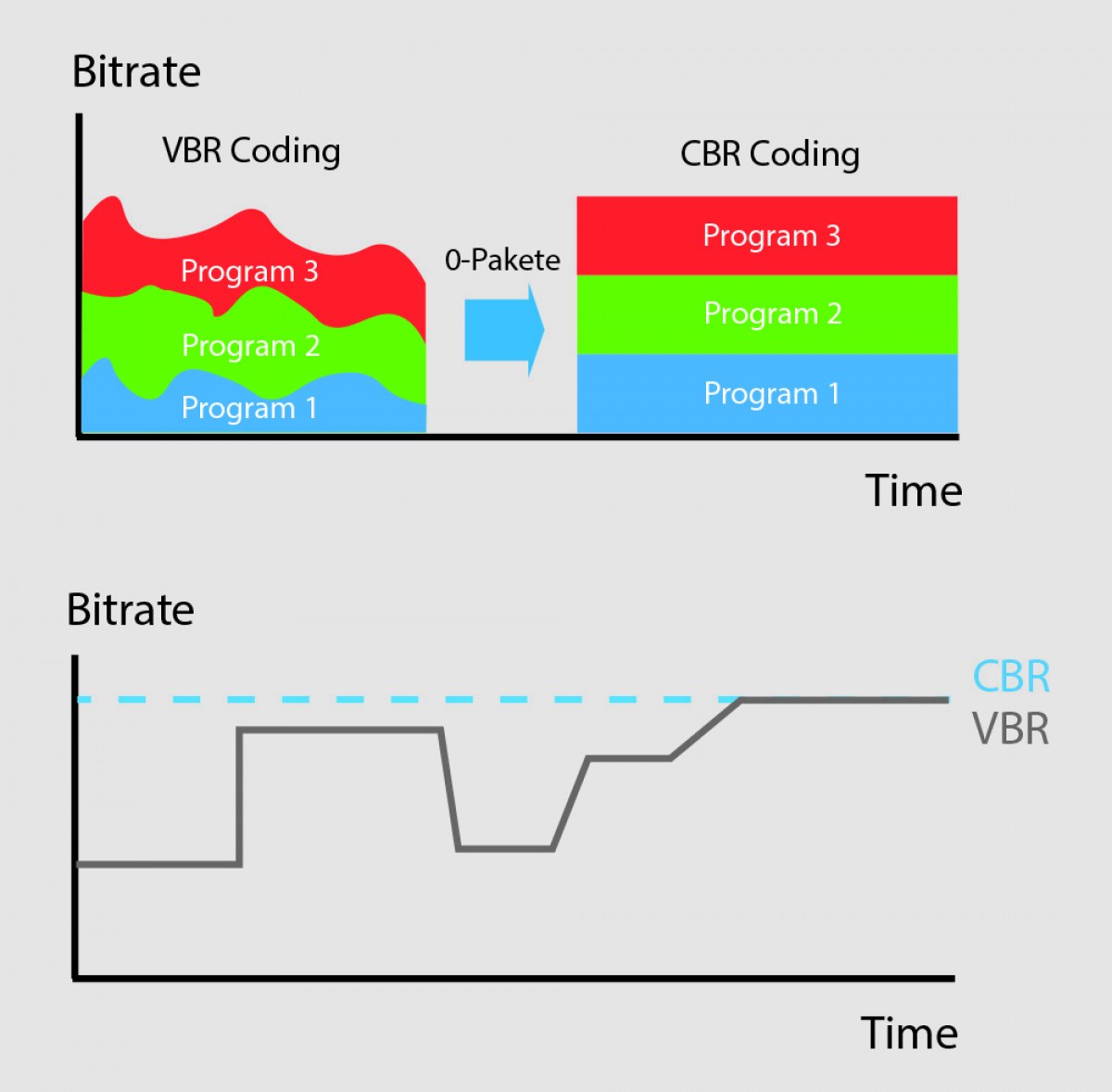
To understand Constant Bit Rate, one must first understand what a “bitrate” represents. In digital telecommunications and computing, bitrate refers to the number of bits that are processed or transmitted over a unit of time—typically per second. Constant Bit Rate, as the name implies, keeps this value static. If a video is encoded at 6,000 kbps (kilobits per second) using CBR, the encoder will output exactly 6,000 bits for every second of footage, regardless of the complexity of the visual information.
How CBR Processes Data
When an encoder processes a file using CBR, it does not discriminate between a high-motion action sequence and a static black screen. In a high-motion scene, the encoder must compress the data heavily to fit within the narrow “pipe” of the fixed bitrate. Conversely, in a static scene where very little is happening, the encoder may fill the remaining space with “null packets” or redundant data to ensure the bitrate remains constant.
This mechanical consistency is both a strength and a limitation. It ensures that the flow of data is perfectly linear, which is essential for certain types of hardware and network configurations that cannot handle fluctuations in data throughput.
The Role of the Encoder in CBR
The encoder is the software or hardware component responsible for converting raw data into a compressed format. In a CBR workflow, the encoder is given a strict instruction: “Do not exceed or fall below this specific threshold.”
This makes the encoder’s job relatively simple from a processing standpoint. Because it does not need to analyze the complexity of upcoming frames to allocate bits (a process known as “look-ahead” analysis), CBR encoding is often faster and requires less computational power than its more complex counterparts. This efficiency makes it a favorite for real-time applications where latency is a primary concern.
CBR vs. VBR: Choosing the Right Encoding Path
In the world of tech, CBR is most frequently compared to Variable Bit Rate (VBR). While CBR maintains a steady line, VBR allows the bitrate to fluctuate based on the complexity of the content. Choosing between them requires a deep understanding of your distribution medium and the priorities of your project.
Predicting Bandwidth Needs
One of the most significant advantages of CBR is predictability. For network engineers and IT professionals, CBR is a dream come true because it allows for precise bandwidth management. If you are managing a corporate network and you know that ten employees are watching a 2,000 kbps CBR stream, you know exactly that the stream will consume 20 Mbps of total bandwidth.
VBR, by contrast, can be unpredictable. A VBR stream might average 2,000 kbps but spike to 8,000 kbps during a complex scene. If the network is already near capacity, these spikes can cause congestion, packet loss, and buffering. In the tech world, where “uptime” and “stability” are the ultimate goals, CBR’s predictability often outweighs VBR’s efficiency.
Quality vs. Efficiency Trade-offs
The primary criticism of CBR is that it is not “bit-efficient.” Because it uses the same amount of data for every second, it often results in lower quality during highly complex scenes (where more bits are needed but unavailable) and wasted space during simple scenes (where fewer bits are needed but the quota must be filled).
VBR is generally considered to offer higher overall image or audio quality because it “saves” bits during quiet moments and “spends” them during intense moments. However, for many modern applications, the raw speed and stability of CBR are more important than achieving the absolute highest theoretical quality per megabyte.
Practical Applications in Modern Technology
CBR is not a legacy technology; it is an active, vital part of modern infrastructure. Its use cases are defined by the need for synchronization and the limitations of real-time data transmission.
Live Streaming and Real-Time Broadcasting
Live streaming is the most prominent use case for CBR today. Platforms like Twitch, YouTube Live, and Facebook Live generally recommend (or even require) that streamers use CBR.
In a live broadcast, the video is being encoded and sent over the internet simultaneously. If a streamer used VBR and a high-action moment caused a sudden spike in bitrate, the streamer’s upload connection might not be able to handle the burst. This results in dropped frames and a “stuttering” experience for viewers. By using CBR, the streamer ensures a consistent “push” of data that fits comfortably within their internet upload overhead, providing a smooth experience for the end-user.
VoIP and Digital Communications
Voice over IP (VoIP) services like Zoom, Microsoft Teams, and Discord often utilize constant bit rates for audio transmission. Audio data is significantly smaller than video data, but it is much more sensitive to “jitter” (fluctuations in delay).
When you are in a digital meeting, the software needs to deliver your voice in a steady stream of packets. If the bitrate fluctuated wildly, the timing of the packets arriving at the receiver’s end would be inconsistent, leading to robotic-sounding voices or audio dropouts. CBR helps maintain the rhythm of packet delivery, ensuring clear communication.
Legacy Audio Formats (MP3 and Beyond)
While we have moved toward more advanced codecs, the history of digital music is rooted in CBR. The early days of MP3s were dominated by CBR files (e.g., 128 kbps or 320 kbps). This was because early portable MP3 players had very limited processing power. A CBR file was easy for the hardware to decode because the data arrived at a predictable speed, and the player could easily calculate the “time-remaining” on a track by simply looking at the file size and the bitrate—a calculation that is much more complex with VBR.
Optimized Workflow: When to Use CBR
For technology professionals and content creators, knowing when to deploy CBR is a matter of balancing hardware constraints, network stability, and end-user experience.
Factors to Consider for Content Creators
If you are producing content that will be downloaded and played locally (such as a 4K movie on a Blu-ray or a high-end YouTube upload), CBR is rarely the best choice. In these instances, you want the best possible quality-to-file-size ratio, which VBR provides.
However, if your content is intended for “one-way” delivery where you cannot control the receiver’s buffer—such as satellite radio or live webcasting—CBR is the industry standard. Content creators should evaluate their “bottleneck.” If the bottleneck is the internet connection, use CBR. If the bottleneck is storage space, VBR or other adaptive methods are superior.
Hardware Constraints and Processing Power
In the world of IoT (Internet of Things) and edge computing, processing power is often at a premium. Encoding a VBR stream requires a “two-pass” or complex “one-pass” analysis that can tax a small processor. CBR, being a “dumb” encoding method, is much lighter on CPU resources. This makes it ideal for security cameras, low-power drones, and older hardware encoders that need to maintain a steady stream without overheating or crashing.
The Future of Bitrate Management
As we look toward the future of technology, the conversation around CBR is shifting from “how it works” to “how it integrates” with emerging AI and cloud technologies.
AI-Driven Encoding Techniques
Artificial Intelligence is beginning to blur the lines between CBR and VBR. New AI-driven encoders can analyze a video in real-time and predict the optimal bitrate needed to maintain a “perceived” constant quality. While technically a form of VBR, these AI systems are so fast that they can simulate the stability of CBR while providing the efficiency of VBR. This “Content-Aware Encoding” is currently being pioneered by companies like Netflix to ensure that mobile users get the best quality without blowing through their data caps.
The Shift Toward Adaptive Bitrate Streaming (ABR)
It is important to distinguish CBR from Adaptive Bitrate Streaming (ABR). ABR is the technology used by Netflix and YouTube to change the resolution of your video based on your internet speed. While ABR uses multiple “rungs” of quality, each individual rung is often encoded using CBR.
In this ecosystem, CBR acts as the building block for a larger, more flexible system. The future of tech lies in this hybrid approach: using the stability of CBR at the micro-level to build the massive, scalable streaming platforms of the macro-level.

Conclusion
Constant Bit Rate remains an essential concept in the tech world because it prioritizes stability over efficiency. In an era where we demand instant, lag-free communication and high-quality live entertainment, the predictability of CBR is its greatest asset. While it may not be the most storage-efficient method, its role in live streaming, VoIP, and hardware-constrained environments ensures that it will remain a vital tool for developers, engineers, and creators for years to come. Understanding CBR is not just about understanding a setting in an app; it is about understanding the fundamental physics of how data moves across our digital world.
aViewFromTheCave is a participant in the Amazon Services LLC Associates Program, an affiliate advertising program designed to provide a means for sites to earn advertising fees by advertising and linking to Amazon.com. Amazon, the Amazon logo, AmazonSupply, and the AmazonSupply logo are trademarks of Amazon.com, Inc. or its affiliates. As an Amazon Associate we earn affiliate commissions from qualifying purchases.