
The modern world runs on electricity, a ubiquitous force that powers everything from our smartphones to sprawling industrial complexes. Yet, the journey of electricity from generation to consumption is a complex dance involving various voltage levels, each with its unique characteristics, applications, and safety considerations. Among these classifications, “medium voltage” occupies a critical, often understated, position, acting as the vital artery connecting high-capacity transmission lines to the low-voltage circuits that ultimately deliver power to our homes and businesses. Understanding what constitutes medium voltage is not merely an academic exercise; it’s fundamental to comprehending power distribution infrastructure, safety protocols, and the technological innovations driving electrical grids worldwide.
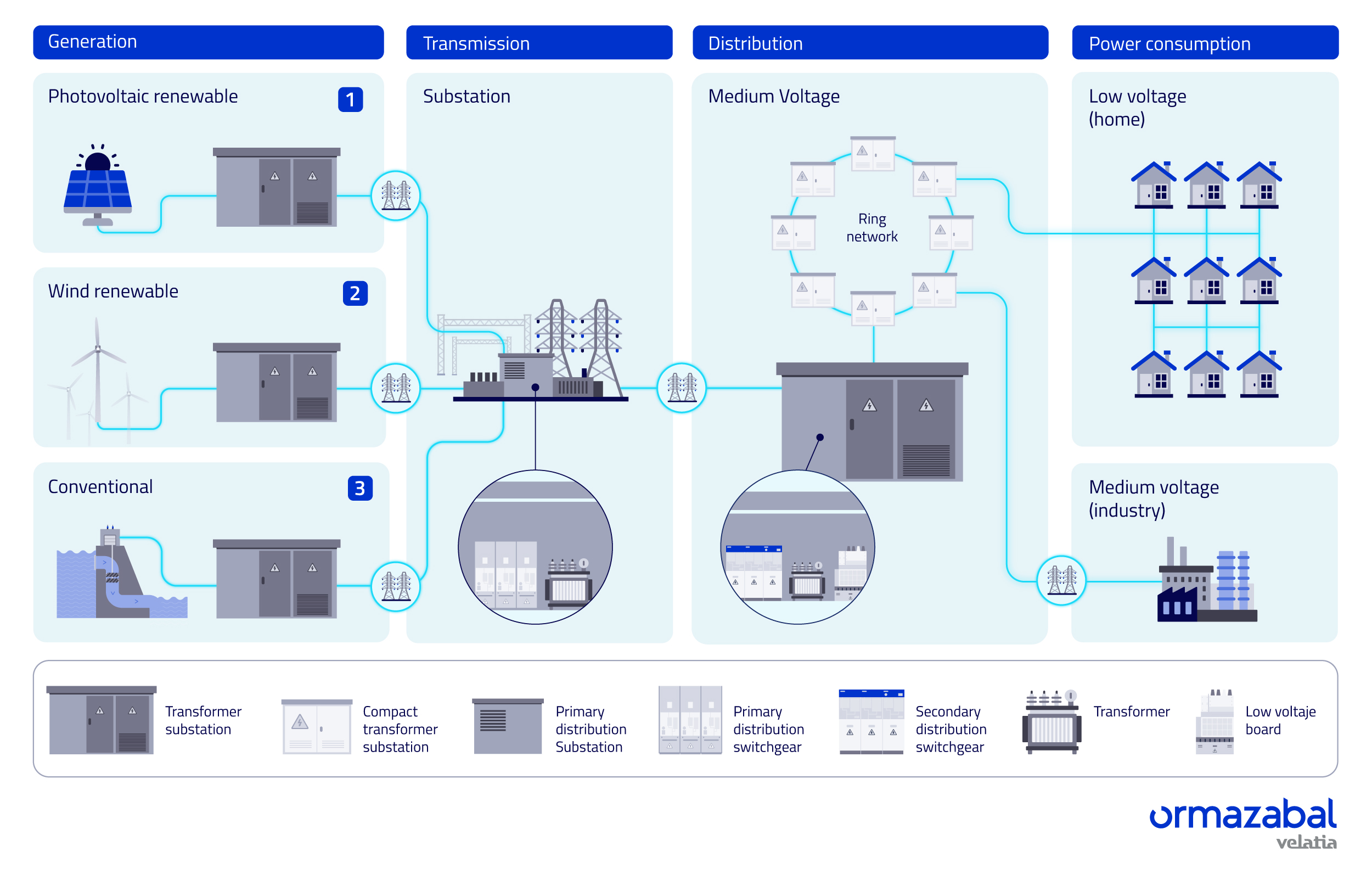
Defining the Electrical Landscape: Voltage Classifications
The classification of electrical voltage into low, medium, and high categories is a standardized practice adopted by various engineering bodies and regulatory agencies across the globe. This categorization is not arbitrary; it directly influences equipment design, insulation requirements, safety procedures, and the overall architecture of electrical power systems.
The Importance of Classification
Voltage classification provides a common language for engineers, technicians, and regulators. It allows for consistent design principles, ensures equipment compatibility, and, most critically, establishes safety standards appropriate for the energy levels involved. Without clear classifications, the design and operation of electrical grids would be chaotic, leading to inefficiencies, increased costs, and significantly higher risks of electrical hazards. These categories dictate everything from the thickness of cable insulation to the clearances required in substations.
Low Voltage: The Everyday Current
Low voltage (LV) systems are the most familiar to the general public, encompassing the electricity that directly powers end-user devices. While specific definitions can vary slightly by region, low voltage generally refers to systems operating at voltages up to 1,000 volts (1 kV) AC (alternating current) or 1,500 volts DC (direct current). This range includes the 120V and 240V found in North American homes, the 230V and 400V common in European residences and small commercial settings, and various DC voltages used in electronic devices. LV systems are characterized by relatively lower risks of severe arc flash and electrocution compared to higher voltage levels, though they still pose significant hazards if mishandled. Equipment designed for LV is typically compact and widely available, from circuit breakers to wall outlets.
High Voltage: The Backbone of Transmission
At the opposite end of the spectrum is high voltage (HV), which is the domain of long-distance power transmission. High voltage is typically defined as anything above 35 kV, extending to hundreds of kilovolts (e.g., 138 kV, 230 kV, 500 kV, 765 kV, and even ultra-high voltage (UHV) exceeding 800 kV). The primary reason for using such high voltages for transmission is to minimize energy losses. According to Joule’s law, power loss in a conductor is proportional to the square of the current ($P = I^2R$). By increasing the voltage, the current required to transmit a given amount of power decreases proportionally ($P = VI$), thus dramatically reducing resistive losses over long distances. HV systems require massive insulators, extensive safety clearances, and specialized infrastructure like large transmission towers and substations. They are the arteries of the national and international grid, efficiently moving bulk power from generation plants to regional distribution points.
Pinpointing Medium Voltage: Industry Standards and Ranges
Medium voltage (MV) occupies the crucial intermediate space between the high-voltage transmission backbone and the low-voltage end-user circuits. It’s where bulk power is broken down and distributed to localized areas. However, precisely defining the upper and lower limits of medium voltage can be challenging, as different international and national standards bodies adopt slightly varying ranges.
IEEE and ANSI Standards
In North America, the Institute of Electrical and Electronics Engineers (IEEE) and the American National Standards Institute (ANSI) are primary authorities for electrical standards. Under their guidelines, medium voltage typically spans from 1 kV to 35 kV.
- Below 1 kV: Considered low voltage.
- 1 kV to 35 kV: Classified as medium voltage.
- Above 35 kV: Classified as high voltage.
This range is widely accepted and utilized in the design and operation of utility distribution systems, industrial facilities, and large commercial buildings across the United States and Canada. Equipment like medium voltage switchgear, circuit breakers, and cables are specifically engineered to operate reliably and safely within these parameters.
IEC Standards: A Global Perspective
The International Electrotechnical Commission (IEC) provides global standards that are widely adopted in Europe, Asia, and many other parts of the world. The IEC’s classification for medium voltage is generally more expansive than IEEE/ANSI, though the exact definitions can vary depending on specific application contexts.
- Below 1 kV: Low Voltage.
- 1 kV to 35 kV: Often considered Medium Voltage.
- 35 kV to 150 kV: Can also fall under the “Medium Voltage” or “High Voltage” category depending on regional nuances and specific IEC documents. Some IEC definitions place the upper limit of MV higher, sometimes up to 72.5 kV or even 150 kV for certain distribution applications, while other definitions consider anything above 35 kV as “High Voltage.”
The broader interpretation under IEC for MV can sometimes extend the upper bound of MV distribution systems to encompass voltages that IEEE/ANSI might classify as lower end high voltage transmission. This discrepancy highlights the importance of understanding the specific standard referenced when discussing “medium voltage” in a global context.
Typical Voltage Ranges for MV
Despite the slight variations in formal definitions, the most commonly encountered operational voltages within the medium voltage classification across both IEEE/ANSI and many IEC-aligned systems include:
- 2.4 kV, 4.16 kV, 6.9 kV, 11 kV, 13.8 kV, 22 kV, 25 kV, and 33 kV.
These voltages are prevalent in utility distribution networks, feeding substations within communities, powering large industrial motors, and supplying electricity to major commercial establishments like shopping malls, data centers, and university campuses. They represent the practical working range for MV equipment and infrastructure.
The Critical Role of Medium Voltage in Power Distribution
Medium voltage systems are the workhorses of electrical grids, performing the crucial function of stepping down high transmission voltages and distributing power efficiently to local areas. Without MV, the intricate process of delivering electricity from distant power plants to end-users would be impossible.
Bridging the Gap: From Transmission to Utilization
MV systems essentially act as an intermediary, transforming power from the bulk transmission level to a voltage suitable for further, localized distribution. Large substations receive high voltage (e.g., 138 kV) and use step-down transformers to reduce it to medium voltage levels (e.g., 13.8 kV or 33 kV). This MV power is then routed through overhead lines or underground cables to smaller substations or feeder points closer to the consumers. These local substations further step down the voltage to low voltage (e.g., 480V, 208V, 240V, 120V) for final delivery to homes and businesses. This hierarchical voltage reduction process is essential for safety, efficiency, and cost-effectiveness.
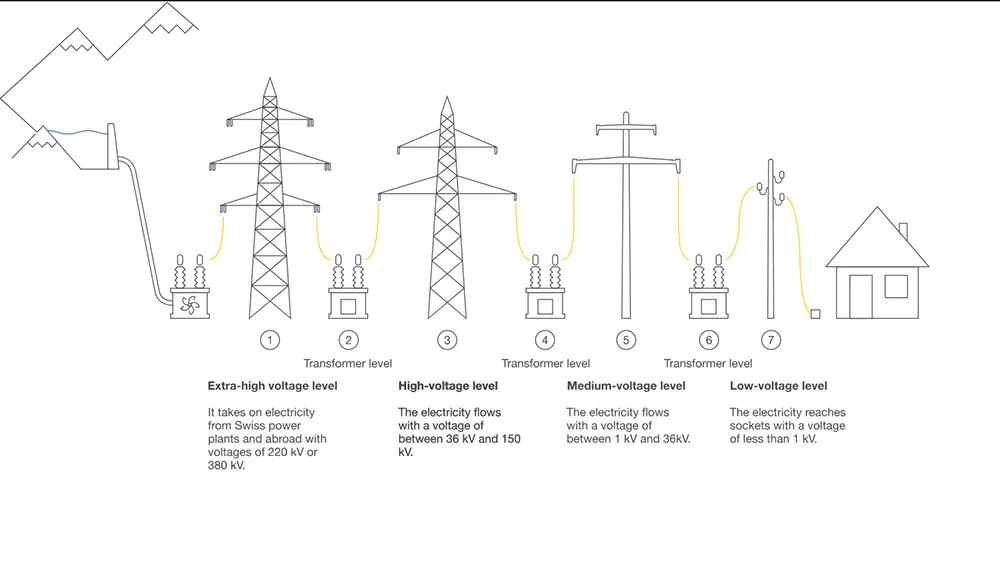
Industrial and Commercial Applications
Many industrial facilities and large commercial complexes require significant amounts of power that cannot be efficiently supplied at low voltage. Factories with heavy machinery, large motors, and specialized equipment often receive power directly at medium voltage (e.g., 4.16 kV or 13.8 kV) and then step it down internally as needed. This direct MV connection reduces current draw from the utility, minimizing losses and allowing for more efficient operation of high-power equipment. Data centers, hospitals, and large office buildings also frequently utilize MV systems within their premises for enhanced reliability and capacity.
Urban and Rural Grids
In urban environments, MV lines are often installed underground to minimize visual impact, save space, and provide greater protection from weather elements. These underground networks form dense grids that supply power to densely populated areas. In rural areas, MV lines are more commonly overhead, strung on poles, covering vast distances to serve scattered communities and agricultural operations. The choice between overhead and underground depends on factors such as population density, terrain, cost, and desired reliability. Regardless of deployment method, MV forms the backbone of the local distribution network.
Renewable Energy Integration
The integration of renewable energy sources like solar farms and wind turbines often relies heavily on medium voltage technology. While individual solar panels produce DC low voltage, large-scale solar arrays and wind turbines generate power at low to medium voltage levels (e.g., 690V AC from an inverter or a few kilovolts from a wind turbine generator). This power is then stepped up to medium voltage (e.g., 13.8 kV, 33 kV) via local transformers to be efficiently connected to the existing distribution grid. MV networks are thus crucial for bringing decentralized renewable energy into the broader power system, facilitating the transition to cleaner energy sources.
Technology and Infrastructure for Medium Voltage Systems
The reliable and safe operation of medium voltage systems depends on a specialized array of technological components and robust infrastructure, designed to manage significant power levels and protect against electrical faults.
Key Components: Switchgear, Transformers, Cables
- Transformers: These are arguably the most critical components, responsible for changing voltage levels. Step-down transformers at substations reduce HV to MV, and further step-down transformers at local distribution points reduce MV to LV. MV transformers are robust, designed for outdoor or industrial environments, and often incorporate advanced cooling systems.
- Switchgear: This encompasses a combination of disconnect switches, circuit breakers, fuses, and control devices used to protect, control, and isolate electrical equipment. MV switchgear is designed to handle high currents and arc energies, incorporating sophisticated safety interlocks and insulation. It is essential for fault protection, maintenance isolation, and load management.
- Cables: MV cables are specifically engineered with appropriate insulation and shielding to contain the higher voltages and prevent electrical breakdown. They can be overhead (bare or insulated) or underground (direct-buried or in conduits), with designs varying based on environmental conditions and power requirements. Materials like XLPE (cross-linked polyethylene) are common for insulation due to their excellent dielectric properties.
- Protection Relays: These intelligent devices monitor current and voltage, detecting faults (like short circuits or overloads) and sending trip signals to circuit breakers to isolate the faulty section, minimizing service disruption and equipment damage.
Safety Protocols and Equipment
Working with medium voltage demands stringent safety protocols due to the elevated risk of severe injury or fatality from electrocution or arc flash.
- Personal Protective Equipment (PPE): Arc-rated clothing, insulated gloves, hard hats, and face shields are mandatory.
- Lockout/Tagout Procedures: Strict procedures are followed to ensure equipment is de-energized and locked out before maintenance or repair.
- Clearance Distances: Specified safe working distances from energized MV conductors are legally mandated and rigorously enforced.
- Grounding: Proper grounding techniques are essential to dissipate fault currents safely.
- Trained Personnel: Only qualified and certified personnel are permitted to work on or near MV systems.
Smart Grid Integration and Automation
Modern MV systems are increasingly integrating smart grid technologies to enhance reliability, efficiency, and responsiveness.
- Fault Location, Isolation, and Service Restoration (FLISR): Automated systems can quickly detect a fault, isolate the affected section, and reroute power to healthy sections, minimizing outage times.
- Remote Monitoring and Control: SCADA (Supervisory Control and Data Acquisition) systems allow operators to monitor MV feeders, switchgear, and transformers remotely, enabling quick adjustments and responses to changing conditions.
- Distributed Energy Resource (DER) Management: Smart MV grids can more effectively manage the bidirectional power flow from distributed energy resources like rooftop solar and battery storage, ensuring grid stability.
Challenges in MV System Management
Managing MV systems presents unique challenges:
- Aging Infrastructure: Many MV distribution networks are decades old, requiring significant investment for modernization and upgrades.
- Grid Resiliency: MV systems are susceptible to weather events (storms, ice), which can cause widespread outages.
- Cybersecurity: As MV systems become more digitized, they face increased cybersecurity threats to control systems and data.
- Integration Complexity: Integrating new technologies like DERs and advanced automation into existing MV infrastructure can be complex and costly.
The Future of Medium Voltage: Innovation and Sustainability
The role of medium voltage is evolving rapidly, driven by the imperative for a more sustainable, resilient, and intelligent power grid. Innovations in MV technology are central to achieving these goals.
Decentralized Grids and Microgrids
The shift towards decentralized power generation, with more renewable energy sources located closer to consumption, places MV networks at the forefront of microgrid development. Microgrids, which can operate independently or connected to the main grid, often rely on MV circuits to distribute power from local generators (solar, wind, battery storage, small gas turbines) to local loads. This approach enhances energy independence, reliability, and local control. MV distribution within these localized systems ensures efficient power delivery within the microgrid boundary.
Enhanced Reliability and Efficiency
Future MV systems will leverage even more advanced analytics, predictive maintenance, and artificial intelligence to anticipate and prevent faults, further enhancing grid reliability. Innovations in fault detection, such as non-intrusive partial discharge monitoring, will allow for proactive maintenance. Greater adoption of solid-state transformers and advanced power electronics promises to make MV distribution more efficient, dynamic, and controllable, with features like voltage regulation and reactive power compensation. High-temperature superconducting (HTS) cables, though still niche, hold potential for transmitting large amounts of power at MV with minimal losses in urban areas.

Electrification of Transport and Industry
As electrification accelerates in sectors like transportation (electric vehicle charging infrastructure) and industry (electric furnaces, process heating), the demand for robust and adaptable MV infrastructure will surge. Fast-charging stations for EVs often require dedicated MV connections to handle the massive power draw. Industrial processes transitioning from fossil fuels to electricity will necessitate upgrades and expansions of MV supply lines and internal distribution systems. This expansion will drive further innovation in MV component design, grid planning, and operational strategies to support these new, power-intensive loads.
In conclusion, medium voltage is far more than just a range of numbers; it’s a foundational element of our global electrical infrastructure. Its precise definition, technological components, safety protocols, and evolving role are critical to understanding how electricity is delivered, managed, and prepared for a sustainable future. As technology advances and energy demands shift, the innovations within the medium voltage domain will continue to shape the reliability and efficiency of our power systems, ensuring a robust electrical backbone for generations to come.
aViewFromTheCave is a participant in the Amazon Services LLC Associates Program, an affiliate advertising program designed to provide a means for sites to earn advertising fees by advertising and linking to Amazon.com. Amazon, the Amazon logo, AmazonSupply, and the AmazonSupply logo are trademarks of Amazon.com, Inc. or its affiliates. As an Amazon Associate we earn affiliate commissions from qualifying purchases.