
In the sophisticated world of global commodities, “size” is frequently synonymous with “margin.” While a casual consumer might view a large prawn as merely a culinary luxury, institutional investors, supply chain analysts, and aquaculture entrepreneurs view it as a high-value asset class within the “Blue Economy.” Determining what is considered a “large” prawn is not a matter of subjective observation; it is a rigorous financial metric defined by “count per pound” (CPP), species-specific growth cycles, and market-clearing prices.
Understanding the thresholds of prawn sizing is essential for anyone looking to capitalize on the multi-billion dollar seafood trade. In this analysis, we will explore the technical benchmarks of prawn classification, the economic drivers behind large-scale aquaculture, and the investment strategies required to navigate this volatile yet lucrative sector of the food industry.
Decoding the Commodity: Market Standards and Value Tiers
In the financial landscape of international trade, prawns are categorized by their “count.” This numerical value dictates the unit price and determines the target market, from mass-market frozen goods to high-end Michelin-starred procurement.
Understanding the “U” Count System
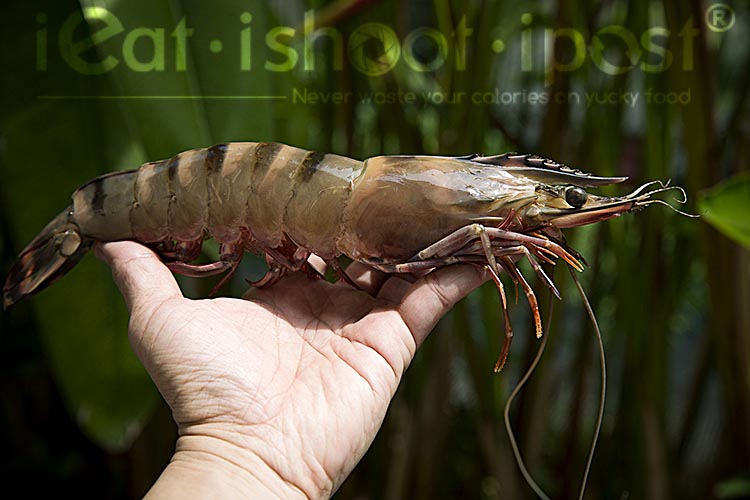
The gold standard for defining a large prawn in the business world is the “U” system, which stands for “Under.” When a wholesaler refers to a “U10” prawn, they are stating that fewer than ten individual prawns are required to make up one pound of weight. From an investment perspective, any prawn categorized as U15 or lower (U12, U10, U8) is considered “Large” to “Colossal.”
The economic significance of the U10 category cannot be overstated. These specimens represent the pinnacle of biological efficiency and market demand. As the count number decreases, the price per pound does not rise linearly; it rises exponentially. This price “step-up” creates a high-barrier-to-entry market where the largest prawns command a disproportionate share of the total industry revenue.
Species Differentiation and Market Positioning
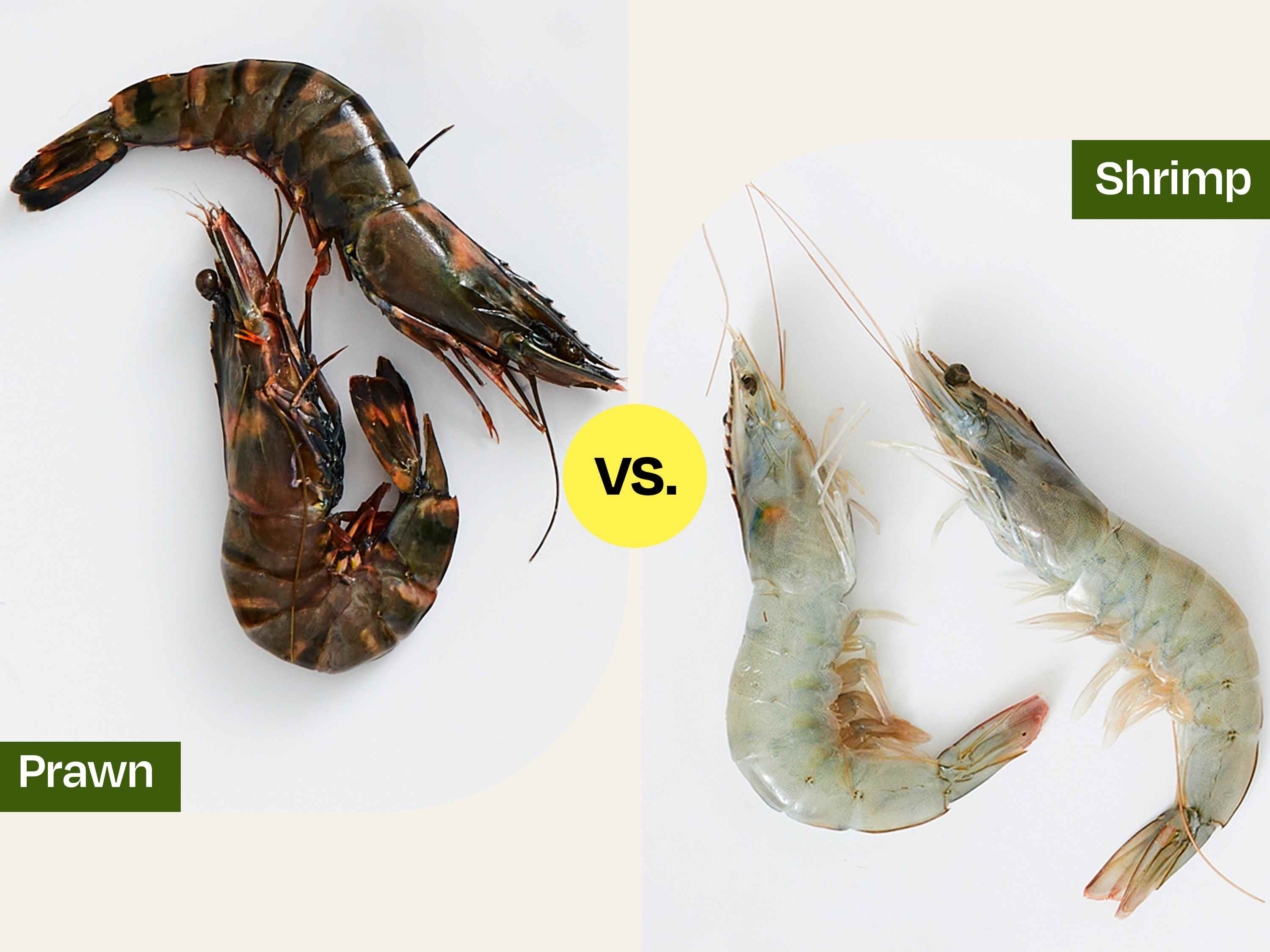
Not all large prawns are created equal in the eyes of a portfolio manager. The “Tiger Prawn” (Penaeus monodon) and the “King Prawn” (Melicertus plebejus) are the primary drivers of the premium segment. While the Vannamei (Whiteleg shrimp) dominates the high-volume, low-margin sector due to its ability to be farmed at high densities, it rarely reaches the “Colossal” sizes that Tiger prawns achieve.
Investors must distinguish between these species when evaluating aquaculture startups. A venture focused on “large” Tiger prawns is targeting the luxury export market (primarily Japan, the US, and the EU), whereas a Vannamei operation is a volume-based play. Understanding these biological constraints is fundamental to assessing the long-term scalability of a seafood-based investment.
The Business of Upsizing: Why Size Drives Profit Margins
The pursuit of the “Large Prawn” is driven by the fundamental economic principle of scarcity. Growing a prawn to a U10 size requires significantly more time, specialized feed, and environmental control than growing it to a standard U40 size.
Premium Pricing Strategies in the Luxury Sector
In the hospitality and retail sectors, large prawns are marketed as “center-of-the-plate” proteins. This positioning allows for a “premiumization” strategy. For a commercial business, the labor cost associated with processing one U10 prawn is virtually the same as processing one U40 prawn, yet the revenue generated from the larger specimen is four to five times higher.
This creates an attractive operational efficiency for high-end restaurants and caterers. By sourcing larger prawns, these businesses can justify higher menu prices while maintaining—or even reducing—back-of-house labor costs. For the supplier, this translates to a “sticky” customer base that is less sensitive to price fluctuations than the commodity-grade market.
Export Logistics and the Cost of Scale
The logistics of “Large” prawns involve complex cold-chain management. Large prawns are often processed using IQF (Individually Quick Frozen) technology to preserve their structural integrity and aesthetic appeal, which are their primary selling points.
From a business finance perspective, the “Large Prawn” niche requires higher working capital. Because the grow-out period is longer (often 120–150 days compared to 60–90 days for smaller sizes), the capital is tied up in the “biological asset” for a longer duration. However, the higher exit price at the end of the cycle often compensates for the increased risk and the time-value of money, provided the mortality rates are kept under strict control.
Investing in the Blue Economy: The Aquaculture Opportunity
As wild-catch yields plateau due to overfishing and environmental regulations, the investment community has turned its focus toward “Precision Aquaculture.” This tech-enabled approach to farming is specifically designed to maximize the percentage of “Large” prawns in a single harvest.
Tech-Driven Yield Optimization
Modern aquaculture firms are utilizing AI-driven sensors and automated feeding systems to optimize growth rates. In the past, achieving a “Large” prawn size was often a matter of luck and environmental serendipity. Today, it is a matter of data science.
Investors are increasingly looking at companies that use “Real-time Biomass Monitoring.” These tools allow farmers to track the growth curve of the prawns and adjust nutrient inputs to ensure the crop reaches the U15 threshold. By reducing the “FCR” (Feed Conversion Ratio), these companies can produce large prawns at a lower cost-of-goods-sold (COGS), significantly widening the profit margin.
Risk Management in Prawn Farming
Investing in the production of large prawns is not without significant financial risk. The longer a prawn stays in a pond to reach a “Large” or “Jumbo” classification, the higher the exposure to “tail risks” such as viral outbreaks (e.g., White Spot Syndrome Virus) or environmental shocks.
A sophisticated financial approach to this sector involves “risk-pooling” across multiple geographical locations and investing in advanced biosecurity infrastructure. For a business, the decision to aim for “Large” prawns is a calculated gamble on biological stability versus market reward. Insurance products tailored specifically for aquaculture are now becoming a standard part of the financial toolkit for large-scale prawn producers, allowing them to hedge against crop failure.
Future Outlook: Scalability and Sustainability in Large Prawn Production
The future of the “Large Prawn” market is being shaped by two diametrically opposed forces: increasing global demand for premium protein and the urgent need for environmental sustainability.
Consumer Demand Trends and the “Wealth Effect”
As the middle class expands in emerging markets, particularly in Asia, the demand for “luxury” seafood is projected to grow at a CAGR of 6-8% over the next decade. This “wealth effect” ensures a consistent floor for the price of large prawns. Unlike generic commodities, the large prawn market behaves more like a Veblen good—where demand remains high even as prices rise, due to its status as a symbol of prosperity.
For investors, this represents a secular growth trend. Diversifying a portfolio with exposure to the “Large Prawn” supply chain—whether through direct farm ownership, logistics providers, or biotech firms specializing in crustacean genetics—offers a hedge against traditional inflation.
Environmental, Social, and Governance (ESG) Considerations
The modern investor cannot ignore the ESG implications of prawn production. Historically, the pursuit of large-scale prawn farming has been linked to mangrove deforestation and water pollution. However, the tide is turning.
“Sustainable Large Prawns” are now fetching a further premium in Western markets. Certifications like ASC (Aquaculture Stewardship Council) or BAP (Best Aquaculture Practices) are no longer optional for businesses looking to access global capital. Companies that can produce U10 prawns using recirculating aquaculture systems (RAS) or “zero-exchange” biofloc technology are attracting significant venture capital. These systems offer a “triple bottom line”: they protect the environment, reduce the risk of disease, and produce the high-value “Large” prawns that the market craves.
In conclusion, “what is considered a large prawn” is a question that sits at the intersection of biology and high finance. To the uninitiated, it is a measure of length; to the professional, it is a measure of market power, margin optimization, and investment potential. As the global food system becomes more digitized and demand for premium protein scales, the “Large Prawn” will remain a cornerstone of the sophisticated investor’s maritime portfolio.
aViewFromTheCave is a participant in the Amazon Services LLC Associates Program, an affiliate advertising program designed to provide a means for sites to earn advertising fees by advertising and linking to Amazon.com. Amazon, the Amazon logo, AmazonSupply, and the AmazonSupply logo are trademarks of Amazon.com, Inc. or its affiliates. As an Amazon Associate we earn affiliate commissions from qualifying purchases.