
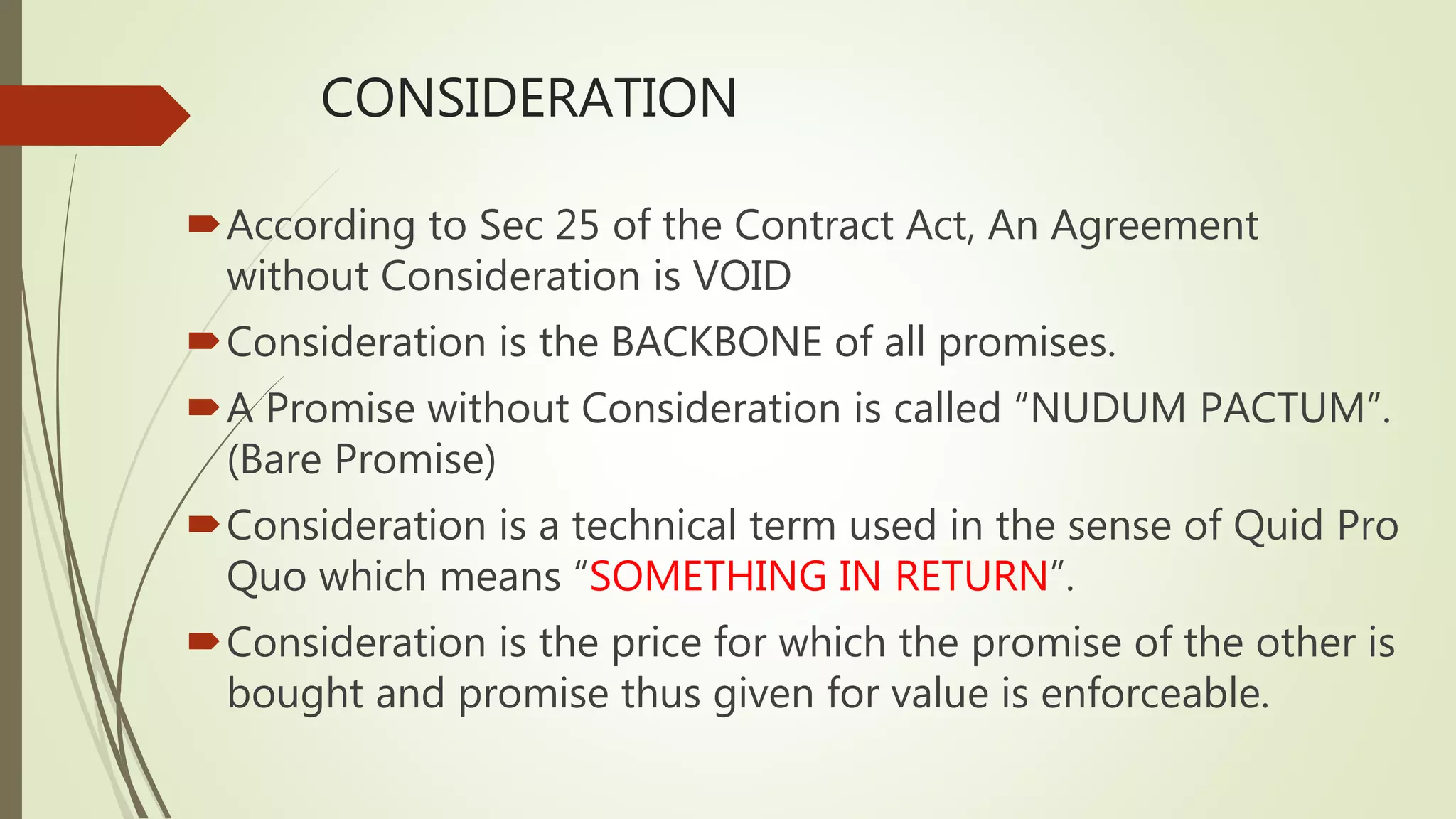
In the world of business finance and commercial transactions, a contract is more than just a signed piece of paper; it is the fundamental architecture of economic exchange. While most entrepreneurs and investors understand that a contract requires an offer and an acceptance, the third pillar—consideration—is often the most misunderstood. Without legal consideration, a financial agreement is merely a “nudum pactum” or a naked promise, which is generally unenforceable in a court of law.
For anyone navigating the complexities of business finance, personal investing, or corporate scaling, understanding the mechanics of consideration is essential. It is the “price” paid for a promise, the mechanism that turns a social agreement into a legally binding financial instrument. This guide explores the depths of consideration, its legal requirements, and its vital role in modern financial structures.
Understanding the Economic Value of a Promise
At its core, consideration is the concept of a “bargained-for exchange.” In the realm of money and business, this means that for a promise to be legally binding, the person receiving the promise (the promisee) must provide something of value in return to the person making the promise (the promisor). This exchange of value is what distinguishes a commercial contract from a simple gift.
The Legal Definition and Requirements
In legal and financial terms, consideration is defined as either a benefit accruing to one party or a detriment suffered by the other. This “benefit-detriment” analysis is the litmus test for enforceability. For instance, if a venture capitalist promises to fund a startup, the startup provides consideration by giving up equity (a detriment to the founder, a benefit to the investor).
The requirements for valid consideration are strict. It must move from the promisee, though it does not necessarily have to move to the promisor. Furthermore, the exchange must be part of the bargain itself. In business finance, this ensures that both parties have “skin in the game,” protecting the integrity of financial markets by ensuring that only serious, mutual obligations are upheld by the state.
Why Consideration Matters in Financial Agreements
In the context of business finance, consideration provides the certainty required for long-term planning and investment. When a business enters into a supply contract, a loan agreement, or a merger, the financial officers must be certain that the obligations are binding.
Consideration prevents “opportunistic behavior.” Without it, a party could promise a financial favor and then retract it without consequence, leading to market instability. By requiring a mutual exchange, the law ensures that financial resources are allocated based on reciprocal commitments, which is the cornerstone of capitalist economic systems.
The Core Principles of Valid Consideration
Not all exchanges qualify as legal consideration. Over centuries of common law, specific principles have been established to determine what constitutes “value” in a contractual setting. For business owners and financial managers, these principles dictate how agreements are drafted and executed.
Sufficiency vs. Adequacy: The Value Myth
One of the most critical distinctions in contract law is between “sufficiency” and “adequacy.” Legal sufficiency means the consideration must have some value in the eyes of the law. However, the law does not require the consideration to be “adequate,” meaning it does not have to be a fair market exchange or of equal value.
In the famous phrase, “a peppercorn can be sufficient consideration.” If an investor agrees to sell a high-value patent for one dollar, the court will not intervene to say the price was too low. This is a fundamental principle of financial freedom; the law respects the parties’ right to determine the value of their own bargains. As long as there is some recognizable value, the contract stands.
The Problem with Past Consideration
In business finance, timing is everything. A common pitfall is “past consideration.” This occurs when a party attempts to use an act that has already been performed as consideration for a new promise.
For example, if an employee works overtime for free and the manager later promises a $5,000 bonus for that specific work, that promise is often unenforceable. Why? Because the work was already done before the promise was made; it was not “bargained for” in exchange for the bonus. To ensure financial agreements are valid, the exchange of value must be current or future-oriented.
Existing Legal Duties and Financial Performance

Another complexity arises when a party is already legally obligated to perform a task. Generally, performing a pre-existing duty is not valid consideration for a new financial promise. If a contractor is hired to build a warehouse for $1 million but demands an extra $200,000 halfway through just to finish on time, the promise to pay the extra money may be unenforceable if the contractor is doing nothing more than what was originally agreed upon. However, if the contractor provides something extra—such as finishing the project two weeks early—this “extra” serves as fresh consideration for the additional payment.
Types of Consideration in Business Finance
Consideration can take several forms depending on when the value is exchanged. In professional finance, the distinction between these types often determines when a liability is recorded on a balance sheet.
Executory Consideration: Future Financial Obligations
Executory consideration consists of a promise to perform an act or pay money in the future. Most modern business contracts are based on executory consideration. For example, in a Purchase Agreement, Company A promises to deliver goods in thirty days, and Company B promises to pay upon delivery. Both parties have provided consideration in the form of mutual promises. This creates a binding obligation even before any money or goods have changed hands.
Executed Consideration: Immediate Exchange
Executed consideration occurs when one party has already fulfilled their part of the bargain at the time the contract is formed. A common example in personal finance is a reward-based contract. If a bank offers a $500 bonus for opening a new account and maintaining a specific balance, the act of opening the account and depositing the funds is “executed consideration.” The contract is formed, and the bank’s obligation to pay becomes binding only after the act is performed.
Common Pitfalls and Exceptions in Contractual Finance
While consideration is a strict requirement for most contracts, the financial world has developed specific mechanisms to handle situations where traditional consideration might be lacking or problematic.
When Consideration is Absent: The Doctrine of Promissory Estoppel
There are times in business where one party makes a promise that the other party relies on to their financial detriment, even if no formal consideration was exchanged. This is where the doctrine of “Promissory Estoppel” comes into play.
If an investor promises a startup founder that they will provide funding, and based on that promise, the founder signs a lease for an expensive office space, the investor may be “estopped” (prevented) from backing out. Even though the founder didn’t give the investor “consideration” in the traditional sense, the court may enforce the promise to prevent financial injustice. For business leaders, this means that even informal financial promises can carry legal weight if they induce reliance.
Contracts Under Seal: The Exception of Deeds
In some jurisdictions, a “deed” (a contract under seal) does not require consideration to be enforceable. Deeds are often used in high-stakes financial transactions, such as the transfer of real estate or the creation of a power of attorney. Because a deed involves a more formal execution process (witnessing and sealing), the law assumes the parties have given the matter serious thought, waiving the need for a bargained-for exchange.
Strategic Implications for Modern Entrepreneurs
Understanding the nuances of consideration is not just for lawyers; it is a strategic tool for entrepreneurs, CFOs, and investors. Properly structuring consideration can mitigate risk and ensure that financial interests are protected.
Ensuring Enforceability in Investment Rounds
During investment rounds, consideration must be clearly defined. When an angel investor provides “seed money,” the consideration from the startup is usually the issuance of preferred stock or a convertible note. If the documentation fails to clearly link the investment to the issuance of securities, the agreement could be challenged. Business owners should ensure that every “Term Sheet” eventually evolves into a contract where the exchange of value is explicitly stated to avoid future litigation during an exit or IPO.

Negotiating Variations in Financial Contracts
Business environments are dynamic, and contracts often need to be modified. However, a “contract variation” requires its own consideration to be binding. If a business wants to lower its interest rate on a private loan, simply asking the lender to agree isn’t enough. To make the new rate legally binding, the business might offer fresh consideration, such as agreeing to an earlier maturity date or providing additional collateral. Understanding this principle allows financial managers to negotiate modifications that are legally robust and resistant to being overturned.
In conclusion, consideration is the lifeblood of the law of contract within the financial sector. It ensures that the machinery of commerce is powered by genuine, reciprocal exchanges rather than hollow promises. By mastering the principles of sufficiency, avoiding the traps of past consideration, and understanding the strategic use of deeds and estoppel, business professionals can navigate the world of finance with greater confidence and legal security. Whether you are signing a simple service agreement or a multi-million dollar merger, always ask the fundamental question: “What is the consideration?” The answer is the key to your contract’s enforceability and your business’s financial protection.
aViewFromTheCave is a participant in the Amazon Services LLC Associates Program, an affiliate advertising program designed to provide a means for sites to earn advertising fees by advertising and linking to Amazon.com. Amazon, the Amazon logo, AmazonSupply, and the AmazonSupply logo are trademarks of Amazon.com, Inc. or its affiliates. As an Amazon Associate we earn affiliate commissions from qualifying purchases.