
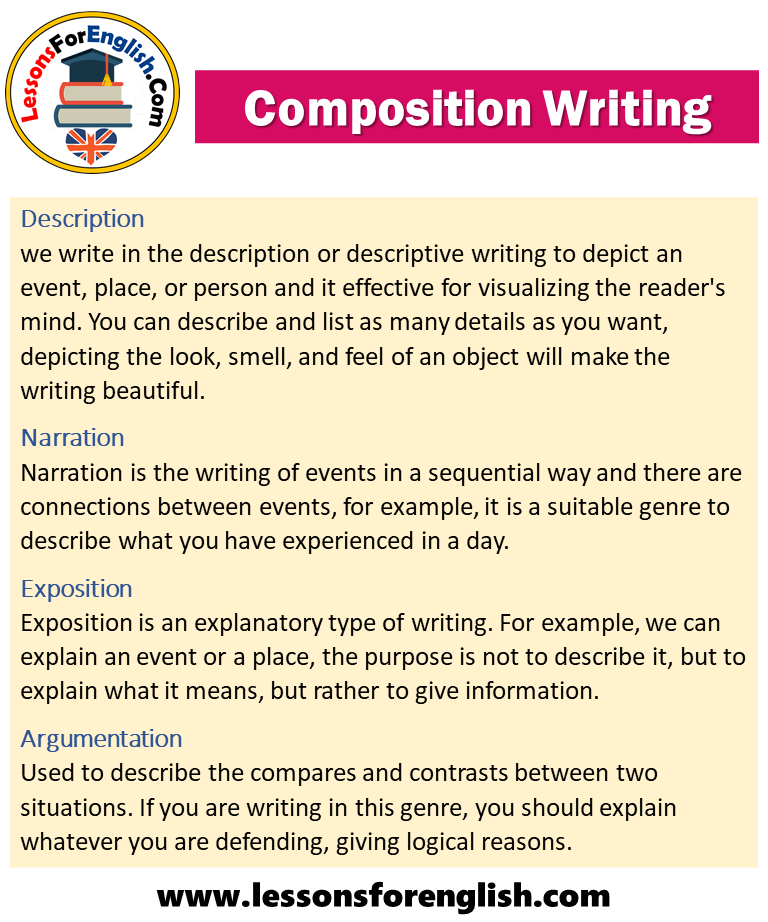
In the dynamic landscape of brand building and communication, the seemingly simple question, “What is composition in English?” transcends basic grammar lessons to become a critical pillar of effective brand strategy. At its core, composition in English refers to the art and science of assembling words, sentences, and paragraphs into a coherent, purposeful, and impactful piece of writing. For brands, this isn’t merely about constructing grammatically correct sentences; it’s about crafting narratives, conveying value, shaping perception, and forging connections that resonate deeply with target audiences. It is the deliberate arrangement of textual elements to achieve a specific communicative objective, whether that’s to inform, persuade, entertain, or build community. In the realm of branding, masterful composition is the silent architect behind a powerful brand voice, compelling marketing copy, and a consistent corporate identity that commands attention and loyalty.
The Strategic Imperative of Composition for Branding
Effective composition is not a secondary consideration for brands; it is a strategic imperative. Every written word a brand produces—from a website headline to a social media caption, an email newsletter to an annual report—contributes to its overall identity and perception. Poor composition can dilute a message, confuse an audience, or even undermine credibility, while exceptional composition can elevate a brand, differentiate it from competitors, and foster deeper engagement.
Defining Composition Beyond Grammar
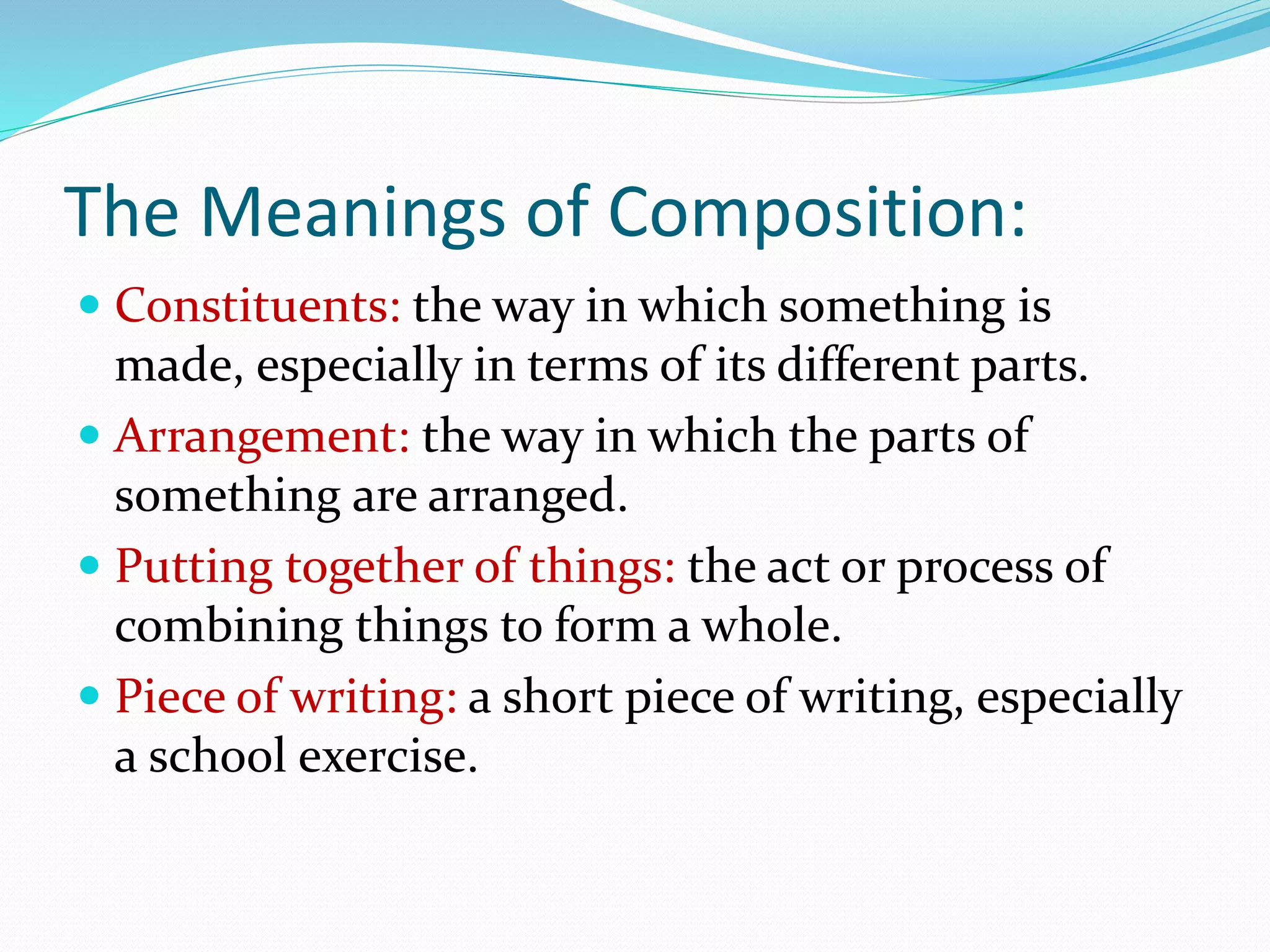
While grammar, spelling, and punctuation are the foundational mechanics, composition extends far beyond these rules. It encompasses the larger structural elements: how ideas are organized, the logical flow between paragraphs, the choice of vocabulary, the rhythm and pacing of sentences, and the overall tone and style. For brands, this means consciously designing every piece of communication to reflect its core values, personality, and strategic goals. It’s about ensuring that the brand’s message is not just understood, but felt and remembered.
Brand Voice and Tone: A Compositional Imperative
A brand’s voice—its consistent personality and perspective—and its tone—the mood and attitude conveyed in specific communications—are direct products of its compositional choices. Is the brand authoritative, playful, empathetic, or innovative? These characteristics are expressed through word choice, sentence structure, and the overall rhetorical approach. Skillful composition ensures that the brand voice remains consistent across all platforms and touchpoints, reinforcing its identity and making it instantly recognizable. An inconsistent voice, born from haphazard composition, can confuse audiences and fragment the brand’s identity.
Building Trust and Credibility Through Clarity
In an information-saturated world, clarity is a brand’s most valuable asset. Confusing or convoluted language erodes trust and signals a lack of professionalism. Strong composition, characterized by precision, conciseness, and logical progression, ensures that a brand’s message is unambiguous and easy to absorb. When a brand communicates clearly and directly, it demonstrates respect for its audience’s time and intelligence, thereby building a foundation of trust and enhancing its credibility as an expert or reliable partner in its field.
Foundational Elements of Effective Brand Composition
To leverage composition strategically, brands must master several key elements that transform mere writing into powerful communication. These components work in synergy to create a cohesive and impactful message.
Audience-Centricity and Purpose
At the heart of all effective composition is a deep understanding of the target audience and a clear purpose for the communication. Who are you speaking to? What do they already know? What do they need to know? What action do you want them to take? For brands, this translates into crafting messages that resonate with specific customer segments, addressing their pain points, aspirations, and values. Every piece of brand communication must have a defined objective, whether it’s to educate, convert, engage, or build community. Without this clarity, composition becomes directionless.
Structure, Flow, and Cohesion
A well-composed piece of writing has a clear beginning, middle, and end, guiding the reader through the information seamlessly. For brands, this means structuring content logically, whether it’s a blog post, a sales email, or a corporate report.
- Structure: This involves organizing information with headings, subheadings, and distinct sections that make the content digestible.
- Flow: This refers to the smooth transition between ideas and paragraphs, often achieved through transition words and logical progression of thought.
- Cohesion: This ensures that all parts of the text relate to the main theme or brand message, preventing tangents and maintaining focus.
Effective structure and flow enhance readability and comprehension, ensuring that the brand’s message is absorbed efficiently and effectively.
Conciseness and Impact
In the fast-paced digital age, brevity is often synonymous with respect for the audience’s time. Concise composition eliminates superfluous words and phrases, delivering the message directly and powerfully. For brands, this means cutting through the noise with impactful statements, strong verbs, and precise language. Conciseness doesn’t mean sacrificing depth; rather, it’s about conveying maximum meaning with minimum words, ensuring that every word chosen serves a purpose in reinforcing the brand’s message and driving desired actions.
Word Choice and Persuasion
The words a brand chooses are potent tools for persuasion and differentiation. Strategic word choice can evoke specific emotions, establish credibility, and shape perceptions. For instance, using industry-specific jargon may appeal to a niche B2B audience, while plain language and relatable metaphors might be more effective for a broad consumer market. Moreover, the careful selection of adjectives, adverbs, and verbs can imbue brand copy with energy, trustworthiness, or exclusivity, influencing how the audience perceives the brand’s offerings and values.
Applying Composition to Diverse Brand Touchpoints
The principles of strong composition are universally applicable across all brand communication channels, each requiring nuanced execution to maximize impact.
Website Copy and SEO Considerations
A brand’s website is often its digital storefront, and its composition must be both informative and persuasive. Website copy requires a blend of clear, concise language to convey product/service benefits, compelling calls to action (CTAs), and strategic integration of keywords for search engine optimization (SEO). Effective composition here balances reader experience with algorithmic requirements, ensuring the content is easily discoverable, engaging, and ultimately drives conversions. Headings, bullet points, and short paragraphs are compositional choices that enhance scannability and user experience.
Marketing Collateral and Campaigns
From brochures and advertisements to email marketing sequences and landing pages, marketing collateral demands highly persuasive and goal-oriented composition. Each piece must be meticulously crafted to capture attention, build interest, create desire, and prompt action. This often involves mastering the art of storytelling, crafting compelling headlines, and writing emotionally resonant body copy that connects with the audience on a deeper level, all while maintaining the consistent brand voice established through prior compositional efforts.
Social Media and Engagement
Social media platforms require highly adaptable compositional skills. Character limits, the need for visual integration, and the demand for immediate engagement necessitate brevity, wit, and a keen awareness of platform-specific nuances. Composition on social media means crafting posts that are eye-catching, shareable, and provoke interaction, often through questions, emojis, and calls to comment. The challenge is to maintain brand consistency and voice even within these micro-compositions.
Internal Communications and Corporate Culture
Beyond external marketing, strong composition is vital for internal brand building and corporate culture. Employee handbooks, internal newsletters, executive memos, and mission statements all benefit from clear, consistent, and well-structured writing. Effective internal composition fosters transparency, aligns teams with company objectives, and reinforces shared values, thereby strengthening the brand from within and ensuring that all employees are brand ambassadors.
Refining Your Brand’s Compositional Mastery
Achieving compositional excellence for a brand is an ongoing process that requires continuous effort, analysis, and adaptation.
Iteration and Feedback Loops
No piece of composition is perfect on the first draft. Brands must embrace a culture of iteration, continually refining their written content. This involves soliciting feedback from diverse perspectives—colleagues, target audience members, or professional editors—to identify areas for improvement in clarity, impact, and resonance. A/B testing different compositional approaches for headlines or calls to action can provide valuable data-driven insights.
Consistency Across Platforms
One of the greatest challenges and strengths of brand composition is maintaining consistency across all touchpoints. The brand’s voice, tone, and key messages must remain uniform, whether they appear in a press release, a tweet, or a customer service email. This requires a dedicated style guide and a disciplined approach to content creation, ensuring that every piece of writing contributes to a unified brand identity.
The Power of Storytelling
Ultimately, powerful composition enables brands to tell compelling stories. Humans are wired for narratives, and brands that master storytelling through their written composition can create deeper emotional connections with their audience. Whether it’s the brand’s origin story, customer success stories, or the narrative of a new product’s journey, well-composed storytelling transforms abstract concepts into relatable experiences, making the brand memorable, engaging, and ultimately, beloved.
In conclusion, “what is composition in English?” for a brand is about much more than just putting words on a page. It is the strategic deployment of language to build identity, convey value, foster trust, and drive engagement. It is the silent, yet powerful, force behind every successful brand’s communication strategy, deserving of meticulous attention and continuous refinement.
aViewFromTheCave is a participant in the Amazon Services LLC Associates Program, an affiliate advertising program designed to provide a means for sites to earn advertising fees by advertising and linking to Amazon.com. Amazon, the Amazon logo, AmazonSupply, and the AmazonSupply logo are trademarks of Amazon.com, Inc. or its affiliates. As an Amazon Associate we earn affiliate commissions from qualifying purchases.