
In the intricate world of technology, where every operation, transaction, and data flow can have cascading effects, understanding fundamental mathematical properties is paramount. Among these, the concept of “commutativity” stands out as a critical principle with profound implications for software design, algorithm efficiency, database management, and the reliability of distributed systems. Far from being a mere academic abstraction, commutativity dictates how operations behave when their order is changed, directly influencing system performance, data integrity, and overall user experience.
Understanding Commutativity: The Core Concept
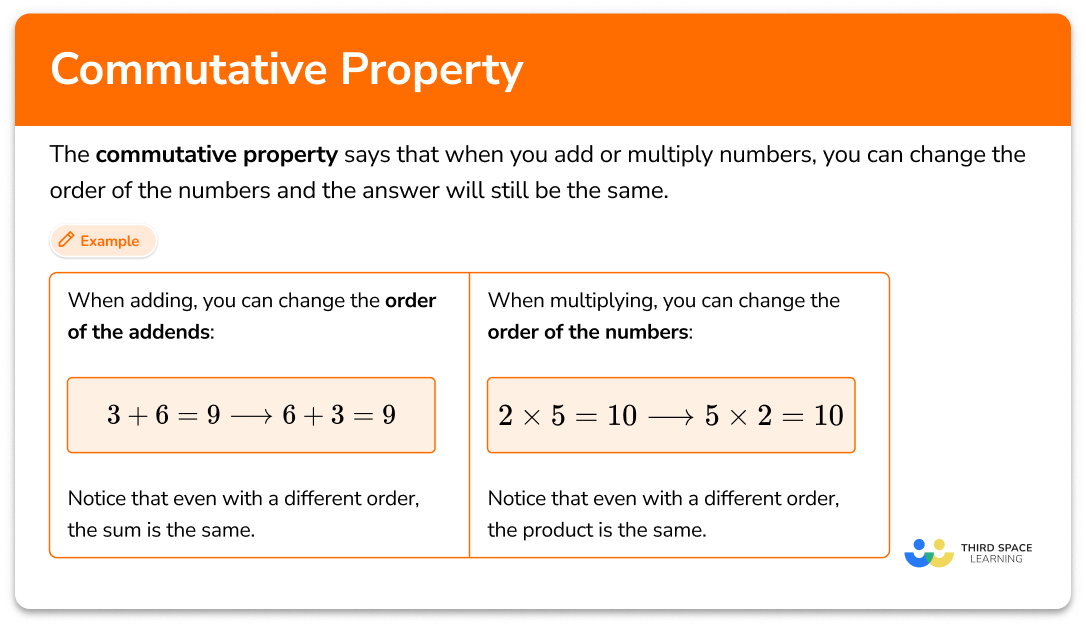
At its heart, commutativity describes a property of binary operations, meaning operations that take two inputs. An operation is said to be commutative if changing the order of the operands does not change the result. If we denote an operation by *, then for any two elements a and b, the operation * is commutative if a * b always equals b * a.

Basic Arithmetic Examples
The most intuitive examples of commutative operations come from basic arithmetic:
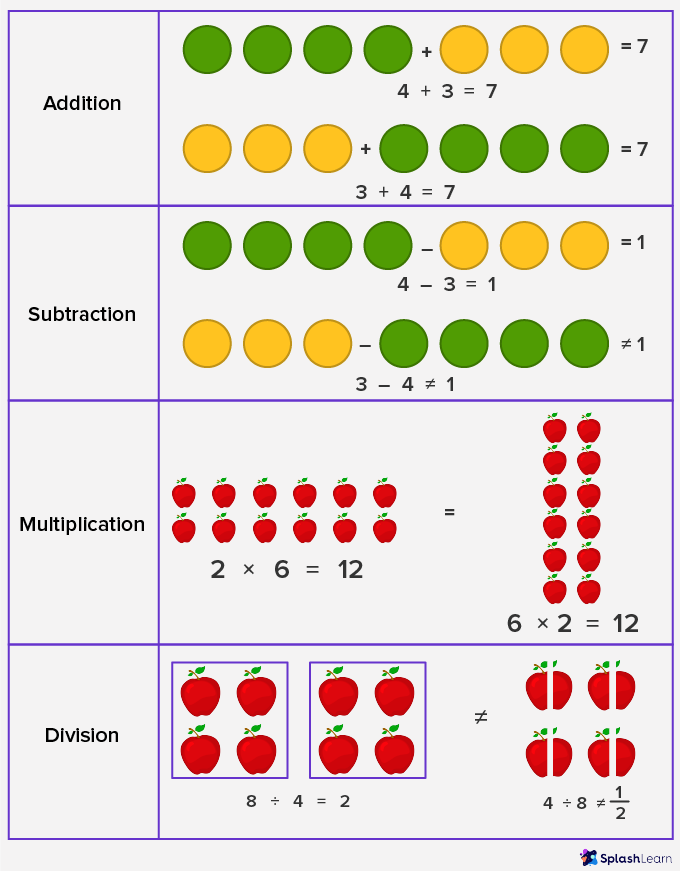
- Addition: When adding numbers, the order does not matter.
5 + 3yields8, and3 + 5also yields8. This holds true for all real numbers. - Multiplication: Similarly, when multiplying numbers, the order of the factors does not affect the product.
4 × 2gives8, and2 × 4also gives8. This property is fundamental to many mathematical disciplines.
Conversely, there are many operations that are not commutative.
- Subtraction:
5 - 3equals2, but3 - 5equals-2. The results are different, making subtraction a non-commutative operation. - Division:
10 ÷ 2equals5, but2 ÷ 10equals0.2. Division is also non-commutative. - Matrix Multiplication: In linear algebra, multiplying matrices is a prime example of a non-commutative operation, where
A × Bgenerally does not equalB × A.
Beyond Numbers: Logic and Set Theory
The principle of commutativity extends beyond simple arithmetic to various other domains. In boolean algebra and logic, for instance:
- Logical AND (
∧):P ∧ Q(P and Q) is equivalent toQ ∧ P. The order of propositions doesn’t change the truth value of their conjunction. - Logical OR (
∨):P ∨ Q(P or Q) is equivalent toQ ∨ P. Similarly, the order doesn’t alter the truth value of their disjunction.
In set theory, operations like union and intersection are also commutative:
- Set Union (
∪): The union of set A and set B (A ∪ B) is the same as the union of set B and set A (B ∪ A). - Set Intersection (
∩): The intersection of set A and set B (A ∩ B) is the same as the intersection of set B and set A (B ∩ A).
Understanding these basic principles is crucial because the concept of commutativity translates directly into how we design, optimize, and ensure the correctness of digital systems.
Commutativity in Software Engineering and Algorithms
In the realm of software development, commutativity is not just an abstract concept; it’s a practical property that influences how code is written, how data is processed, and how systems scale. Recognizing whether an operation is commutative can guide architectural decisions and prevent subtle bugs.
Operation Order and Side Effects
Consider a sequence of operations performed on data. If these operations are commutative, their execution order can be rearranged without affecting the final state of the data. This flexibility is incredibly valuable, especially in concurrent programming environments. For example:
- Counter Increments: If multiple threads concurrently increment a shared counter (
counter = counter + 1), this operation is inherently commutative.(counter + 1) + 1yields the same result regardless of the order of the two+1operations. However, the read-modify-write cycle involved in updating a shared variable itself might not be atomic, leading to race conditions if not properly synchronized. But the conceptual addition operation is commutative. - Applying Filters: In image processing, applying a “brightness” filter and then a “contrast” filter might yield a different result than applying “contrast” then “brightness.” These operations are typically non-commutative. If they were commutative, developers would have more freedom in how they pipeline these transformations.
Functional Programming and Immutability
The paradigm of functional programming heavily leverages concepts related to mathematical properties, including commutativity. Pure functions, a cornerstone of functional programming, are deterministic and produce no side effects. When operations are designed as pure functions acting on immutable data, they often exhibit commutative properties.
- Referential Transparency: Because pure functions always produce the same output for the same input and have no side effects, the order in which they are applied (if their inputs are independent) often doesn’t matter. This contributes to referential transparency, making code easier to reason about, test, and parallelize.
- Immutability’s Role: When data structures are immutable, operations don’t modify the existing data but instead return new data structures. This property simplifies reasoning about concurrency, as there’s no shared mutable state to worry about race conditions. Operations that combine immutable structures or transform them without side effects are more likely to be commutative.
The Role of Commutativity in Distributed Systems and Databases
Perhaps nowhere is the concept of commutativity more impactful than in distributed systems and databases, where multiple processes or users interact with shared data across different nodes. Ensuring consistency, reliability, and performance in such environments often hinges on careful consideration of operation ordering and commutativity.
Concurrency Control and Transaction Processing
In multi-user database systems or distributed environments, multiple transactions or operations can occur simultaneously. Concurrency control mechanisms are put in place to manage these operations and prevent data corruption.
- Locking vs. Commutativity: Traditional concurrency control often relies on locking, which serializes access to data, effectively forcing non-commutative operations to execute in a specific order. However, if operations are known to be commutative, they can sometimes be executed concurrently without locks, leading to higher throughput and better performance.
- Optimistic Concurrency Control: Some systems employ optimistic concurrency control, where transactions proceed without explicit locks and only check for conflicts at commit time. If conflicting operations are commutative, these conflicts might be resolved automatically or might not even be considered conflicts in the first place, allowing for greater parallelism.
Eventual Consistency and Conflict Resolution
Distributed systems often prioritize availability and partition tolerance over strong consistency (as per the CAP theorem). This leads to models like “eventual consistency,” where data might temporarily diverge across different nodes but eventually converges to a consistent state. Commutativity plays a vital role here.
- CRDTs (Conflict-free Replicated Data Types): CRDTs are data structures that inherently resolve conflicts in a way that allows operations to be applied in any order (i.e., they are commutative), while still converging to the same state across all replicas. For example, a grow-only counter is a CRDT where increments are commutative. If two nodes independently increment a counter, their results can be merged by simply summing the increments, regardless of which node incremented first.
- Operation-Based Replication: In systems that replicate operations rather than just data states, if these operations are commutative, the system can apply them at different nodes in different orders and still guarantee convergence. This simplifies replication logic and improves system resilience against network partitions.
Idempotence vs. Commutativity
While related, it’s important to distinguish commutativity from idempotence.
- Idempotence: An operation is idempotent if applying it multiple times has the same effect as applying it once. For example, setting a value (
set x = 5) is idempotent; issuing the command twice produces the same result. Deleting a record is also idempotent (deleting an already deleted record has no further effect). - Relationship: An operation can be idempotent without being commutative, and vice versa. However, in distributed systems, operations that are both idempotent and commutative are highly desirable because they greatly simplify conflict resolution and retry mechanisms, making systems more robust to failures and message reordering. For instance, adding an element to a set (
add(element)) is often both idempotent (adding an existing element changes nothing) and commutative (adding A then B is the same as adding B then A).
Practical Implications and Design Considerations
For software engineers, database administrators, and system architects, understanding commutativity isn’t just an intellectual exercise; it’s a tool that informs critical design choices and directly impacts the quality and performance of the systems they build.
Performance Optimization
Leveraging commutative properties can lead to significant performance gains:
- Parallel Processing: If a series of computations or operations are commutative and independent, they can be easily parallelized across multiple cores or machines without the need for complex synchronization mechanisms. This can dramatically speed up data processing tasks.
- Reduced Locking: As discussed, identifying commutative operations can reduce the need for expensive locks in concurrent programming, allowing threads or processes to operate with less contention and higher throughput.
- Batch Processing Flexibility: Commutative operations can be batched and reordered more flexibly, potentially allowing for more efficient resource utilization (e.g., grouping database writes).
Data Integrity and Consistency
Commutativity is a cornerstone for ensuring data integrity, especially in distributed and highly available systems:
- Simplified Conflict Resolution: For systems designed around eventual consistency, operations with commutative properties simplify the logic required to merge conflicting states, reducing the likelihood of data loss or corruption.
- Robustness to Failures: In message queues or event streams, if messages represent commutative operations, reordering or replaying messages (due to network failures or retries) will not lead to incorrect states. This increases system resilience.
System Reliability and Maintainability
Systems built with an awareness of commutative properties tend to be more reliable and easier to maintain:
- Predictable Behavior: When operations are commutative, system behavior becomes more predictable under varying loads and concurrency levels. This predictability makes debugging easier and reduces the surface area for hard-to-find bugs related to timing or order.
- Simplified Reasoning: Developers can more easily reason about the correctness of code and system states when operations have well-defined mathematical properties like commutativity. This contributes to higher code quality and reduced maintenance overhead.
In conclusion, the simple mathematical concept of commutativity underpins much of the complexity and elegance found in modern technological systems. By consciously designing operations and algorithms to exploit or account for this property, developers can build more performant, robust, and scalable applications, directly contributing to the advancement of technology and the seamless functioning of our digital world.
aViewFromTheCave is a participant in the Amazon Services LLC Associates Program, an affiliate advertising program designed to provide a means for sites to earn advertising fees by advertising and linking to Amazon.com. Amazon, the Amazon logo, AmazonSupply, and the AmazonSupply logo are trademarks of Amazon.com, Inc. or its affiliates. As an Amazon Associate we earn affiliate commissions from qualifying purchases.