
The concept of “community walking speed” has long been a cornerstone of physical therapy and urban planning, traditionally defined as the velocity required for an individual to safely navigate a public environment—such as crossing a busy intersection before the light changes. Historically, this was measured with a stopwatch in a controlled clinical setting. However, in the contemporary era of the Internet of Things (IoT), wearable sensors, and artificial intelligence, community walking speed has been reimagined as a vital digital biomarker.
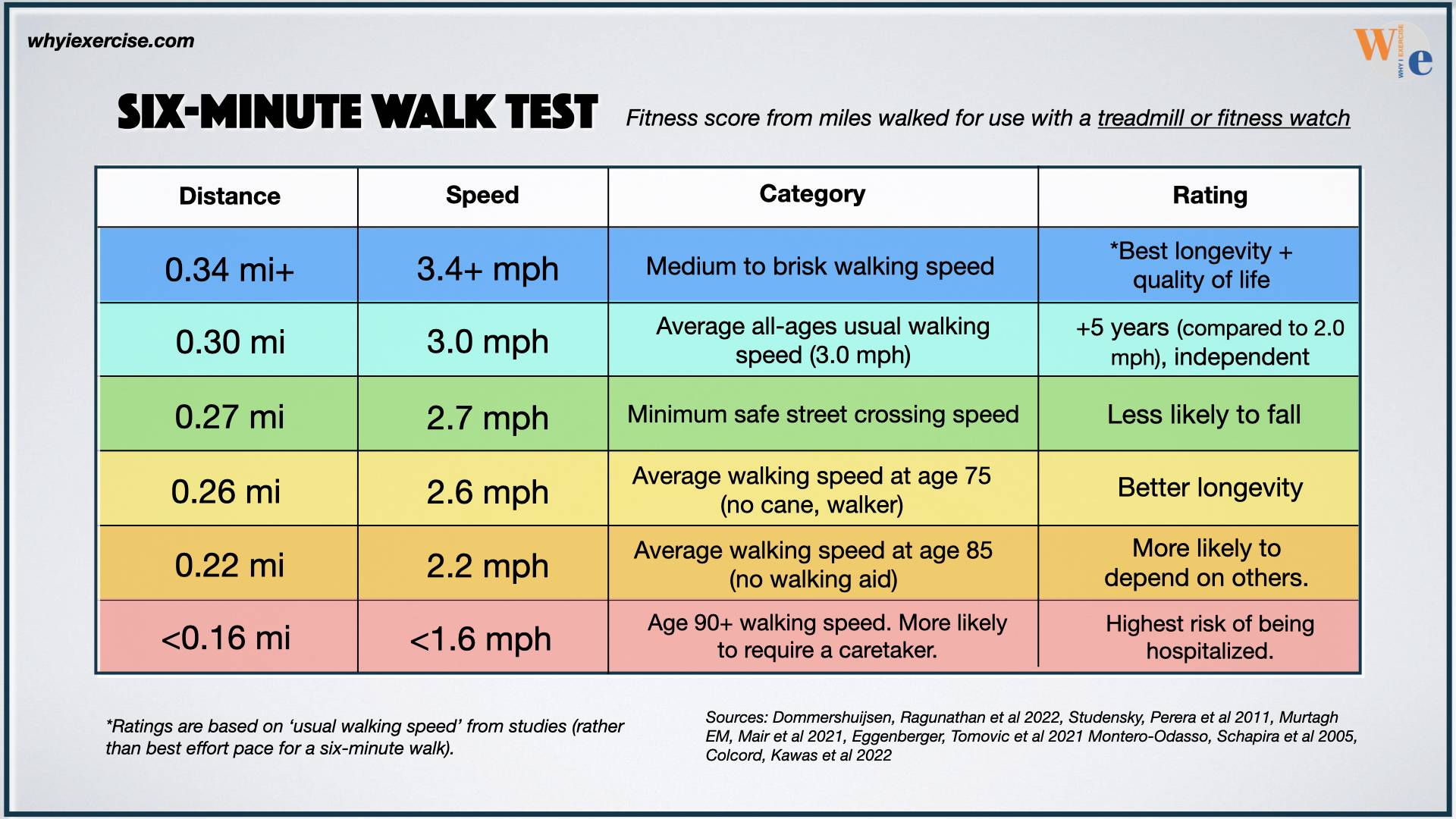
Today, the threshold of 1.2 meters per second (approximately 2.7 to 3.0 mph) is no longer just a manual benchmark; it is a data point integrated into the sophisticated ecosystems of health-tech and smart city infrastructure. This article explores the technological evolution of community walking speed, the hardware and software driving its measurement, and the predictive power of gait analytics in the modern digital landscape.
The Digital Evolution of Gait Analysis and Mobility Metrics
The transition from clinical observation to automated data collection has transformed how we understand human movement. In the past, assessing whether an individual could maintain the necessary mph to function in society was a periodic event. Now, technology allows for continuous, longitudinal monitoring.
From Stopwatches to Sensor Fusion
The traditional method of calculating walking speed involved a “10-Meter Walk Test.” While accurate for a specific moment, it failed to capture the nuances of “community” walking, which involves environmental obstacles, distractions, and fatigue. Modern technology utilizes sensor fusion—the combination of data from accelerometers, gyroscopes, and magnetometers—to provide a holistic view of gait. By integrating these sensors, mobile devices can filter out “noise” and identify the specific kinematic signatures of purposeful walking versus incidental movement.
Defining the 3.0 MPH Threshold in Tech Specs
In the world of urban design and accessibility tech, the “community speed” is often programmed into assistive devices and smart infrastructure. For instance, developers of robotic exoskeletons and smart prosthetics use 2.7 to 3.1 mph as a target velocity for “community level” functionality. If a device cannot assist a user in reaching this speed, it is often categorized as a household-only tool. This technical benchmark serves as a standard for software engineers designing mobility-assistive algorithms, ensuring that technology bridges the gap between disability and community participation.
Data Interoperability and Health Clouds
The measurement of walking speed is only as valuable as the system that interprets it. With the rise of health-oriented cloud platforms, such as Apple HealthKit and Google Fit, community walking speed data is increasingly being synced across platforms. This interoperability allows researchers to aggregate millions of data points to determine how environmental factors—such as temperature, terrain, and city density—affect the average mph of a population, leading to more data-driven urban development.
Wearable Technology and the Quantified Self
Wearable devices have democratized gait analysis, moving it out of the laboratory and onto the wrists and ankles of the general public. These gadgets do more than count steps; they analyze the quality and speed of those steps to provide deep insights into physical health.
The Role of High-Frequency Accelerometry
Modern smartwatches utilize high-frequency sampling to measure the exact millisecond a foot hits the ground. By applying sophisticated signal processing, these devices calculate “gait symmetry” and “stride velocity.” For a user, seeing a notification that their community walking speed has dropped below 2.5 mph can be an early warning sign of underlying health issues. This shift from “fitness tracking” to “clinical-grade monitoring” is a hallmark of current wearable trends.
Machine Learning and Predictive Gait Modeling
AI is now being used to predict health outcomes based on walking speed fluctuations. Machine learning models trained on thousands of gait cycles can identify the “digital fingerprint” of a person’s walk. If the software detects a subtle decrease in mph over a six-month period, it can flag potential neurological or cardiovascular decline long before a patient notices symptoms. This predictive capability is a cornerstone of “Proactive Tech,” where the goal is to intervene before a mobility crisis occurs.
In-Shoe Sensors and Smart Fabrics
Beyond the wrist, the tech industry is seeing a surge in “smart footwear.” Companies are embedding pressure sensors and flexible electronics into the soles of shoes and the fabric of socks. These devices offer a much more accurate measurement of community walking speed because they are at the point of impact. They can measure ground reaction forces and the exact duration of the “stance phase” versus the “swing phase” of a stride, providing a level of detail that a wrist-based device simply cannot match.
Smart Cities and the Infrastructure of Movement
The “community” in community walking speed implies a shared environment. As we move toward the era of Smart Cities, the infrastructure itself is becoming aware of how fast its citizens are moving.
IoT-Enabled Pedestrian Crossings
One of the most practical applications of walking speed data is in the development of adaptive traffic management systems. Using computer vision and IoT sensors, smart intersections can detect the walking speed of pedestrians currently in the crosswalk. If the system identifies a group walking at a slower community speed (e.g., 2.0 mph instead of the standard 3.0 mph), the software can dynamically extend the “walk” signal. This real-time adjustment enhances safety and optimizes traffic flow based on actual human behavior rather than static timers.
Digital Twins for Urban Planning
Urban planners are now using “Digital Twins”—virtual replicas of physical cities—to simulate pedestrian movement. By inputting various community walking speeds into these AI models, planners can test how different sidewalk widths, park placements, and subway entrances will handle the flow of people. This allows for the optimization of “throughput,” ensuring that high-traffic areas are designed to accommodate the technological and physical realities of the modern walker.
The Role of 5G in Real-Time Mobility Mapping
The low latency of 5G networks allows for the real-time transmission of mobility data from thousands of devices simultaneously. This enables “heat mapping” of walking speeds across a city. If data shows a consistent slowdown in community walking speed at a specific geographic point, city tech departments can investigate whether there is an infrastructure failure, such as a broken sidewalk or poorly timed signal, that is hindering movement.
The Future of Health-Tech: Predictive and Preventive Mobility
As we look toward the next decade, the integration of community walking speed into the broader tech ecosystem will only deepen. We are moving away from simple measurement and toward active intervention.
Remote Patient Monitoring (RPM) and Telehealth
The COVID-19 pandemic accelerated the adoption of Remote Patient Monitoring. Physicians can now monitor a patient’s community walking speed from a dashboard miles away. If a post-operative patient’s average mph doesn’t reach the “community threshold” within a certain timeframe, the system can automatically trigger a telehealth consultation or adjust a physical therapy app’s daily goals. This automated loop ensures that recovery stays on track using objective data.
Augmented Reality (AR) for Gait Rehabilitation
AR headsets and smart glasses are beginning to play a role in maintaining community walking speed. For individuals with Parkinson’s disease or those recovering from a stroke, AR can project “visual cues”—virtual lines on the ground—that help the brain regulate stride length and speed. By gamifying the maintenance of a 3.0 mph pace, these tech tools make rehabilitation more engaging and effective, utilizing the principles of neuroplasticity and visual biofeedback.
Ethical Considerations in Mobility Data
As walking speed becomes a standard digital metric, the tech industry must navigate the ethics of data privacy. Who owns your gait data? Could insurance companies use a decrease in your community walking speed to justify higher premiums? The development of “Edge AI”—where data is processed locally on the device rather than in the cloud—is a technological solution to these privacy concerns, ensuring that a user’s most intimate physical data remains under their control.
Conclusion: The Velocity of Progress
Community walking speed, measured in mph, has evolved from a simple physical therapist’s benchmark into a sophisticated metric at the intersection of health-tech, AI, and urban engineering. Whether it is a smartwatch predicting a health crisis, an IoT sensor extending a crosswalk timer, or a machine learning algorithm optimizing a city’s layout, the way we measure and respond to human velocity is being fundamentally rewritten by technology.
By maintaining a focus on the “3.0 mph” standard, the tech industry is not just tracking movement; it is ensuring that the digital world remains inclusive, safe, and optimized for the physical realities of the human experience. As sensors become more discreet and AI becomes more intuitive, our understanding of community walking speed will continue to be a vital pulse check for both individual health and the efficiency of the modern smart city.
aViewFromTheCave is a participant in the Amazon Services LLC Associates Program, an affiliate advertising program designed to provide a means for sites to earn advertising fees by advertising and linking to Amazon.com. Amazon, the Amazon logo, AmazonSupply, and the AmazonSupply logo are trademarks of Amazon.com, Inc. or its affiliates. As an Amazon Associate we earn affiliate commissions from qualifying purchases.