
In the rapidly evolving landscape of personal finance, the transition from traditional banking to decentralized systems has introduced a suite of tools designed to give individuals total control over their wealth. Among these tools, the Coinbase Wallet stands out as a premier financial instrument for those looking to move beyond the limitations of centralized exchanges. While many beginners confuse the Coinbase exchange with the Coinbase Wallet, the two serve fundamentally different purposes in a modern investment strategy.
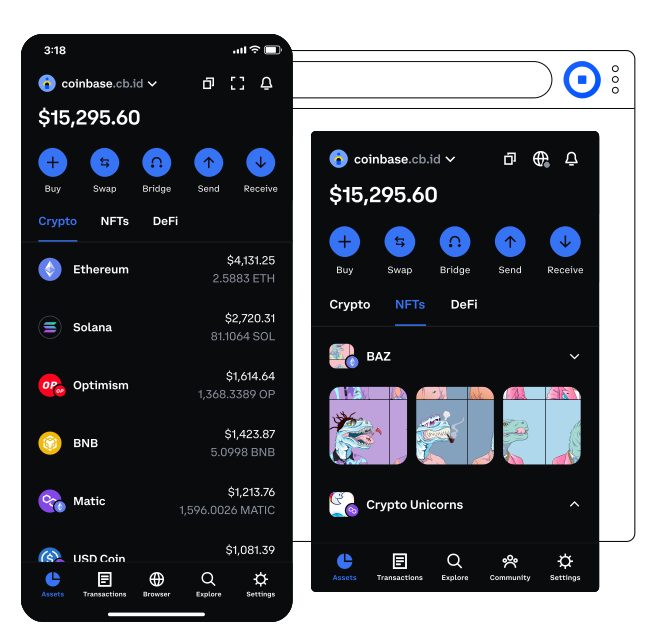
The Coinbase Wallet is a self-custody (or non-custodial) mobile app and browser extension that allows users to store, manage, and interact with their digital assets and decentralized applications (dApps). To understand its value within the “Money” niche, one must view it not merely as a software application, but as a digital vault that empowers users with financial sovereignty.
Understanding the Role of Self-Custody in Personal Finance
The cornerstone of the Coinbase Wallet experience is the concept of self-custody. In traditional finance, you trust a bank to hold your fiat currency. In the world of cryptocurrency exchanges, the exchange acts as the bank. However, the Coinbase Wallet shifts that responsibility—and the power—directly to the user.
The Difference Between Coinbase Exchange and Coinbase Wallet
For most investors, the journey begins on a centralized exchange like Coinbase.com. When you buy Bitcoin or Ethereum on the exchange, Coinbase holds the “private keys” to those assets on your behalf. This is a custodial relationship. If the exchange were to face a liquidity crisis or a security breach, your access to those funds could be compromised.
In contrast, the Coinbase Wallet is a non-custodial tool. This means that the private keys—the digital codes required to authorize transactions—are stored on your device rather than on Coinbase’s servers. When you use the wallet, you are effectively “your own bank.” This distinction is vital for investors who prioritize asset security and want to eliminate third-party risk from their financial portfolio.
Why Self-Custody Matters for Investors
In the context of wealth management, self-custody is the ultimate form of asset protection. By holding your own keys, you ensure that your assets cannot be frozen by a centralized entity or lost due to corporate mismanagement. Furthermore, a self-custody wallet provides the “seed” for financial privacy. While exchange accounts are tied to rigorous identity verification and monitoring, a wallet allows for a more direct, peer-to-peer interaction with the global economy. For the savvy investor, mastering self-custody is a prerequisite for participating in the next generation of global finance.
Key Features of Coinbase Wallet as a Financial Tool
The Coinbase Wallet is much more than a storage unit for Bitcoin. It is a sophisticated financial gateway that allows users to diversify their holdings, generate passive income, and manage a wide array of digital property.
Support for Multi-Chain Assets
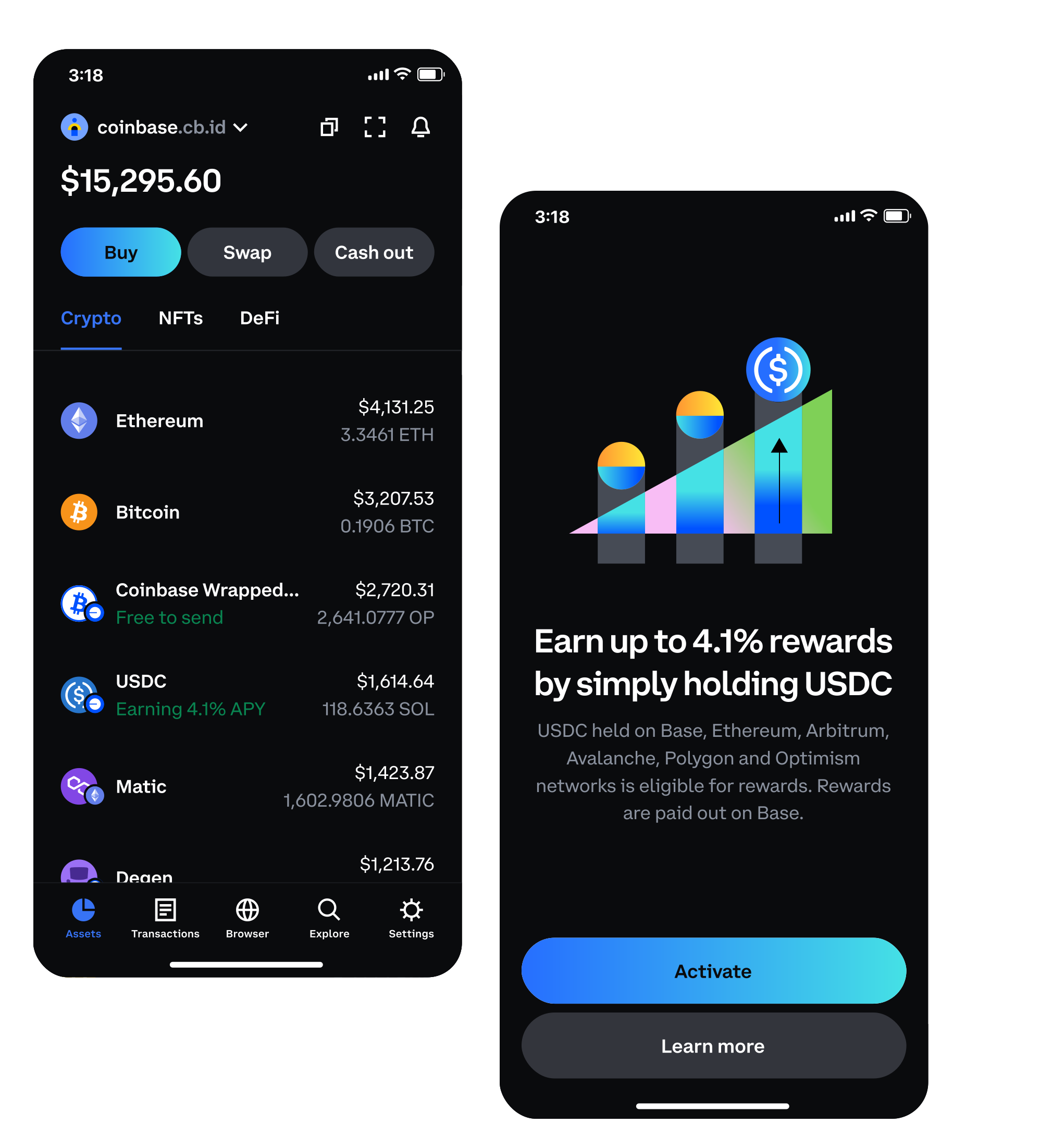
One of the most significant advantages of using Coinbase Wallet as a financial tool is its versatility. It supports hundreds of thousands of tokens across various blockchains, including Ethereum, Bitcoin, Solana, and Layer-2 networks like Polygon and Base. For an investor, this means the ability to manage a highly diversified portfolio from a single interface. Instead of having fragmented accounts across different platforms, you can track your holdings in decentralized finance (DeFi) protocols, stablecoins, and altcoins all in one place.
Decentralized Finance (DeFi) Integration
For those looking to grow their net worth through online income and side hustles, DeFi is a revolutionary frontier. Through the Coinbase Wallet, users can access decentralized exchanges (DEXs) like Uniswap or lending protocols like Aave.
In a traditional savings account, interest rates are often negligible. However, by using the Coinbase Wallet to interact with DeFi protocols, investors can “stake” their assets or provide liquidity to earn yields that often significantly outperform traditional financial products. This ability to earn interest directly from the blockchain—without a bank taking a cut—is one of the most compelling reasons to integrate the wallet into a personal finance strategy.
Managing NFTs as Digital Investments
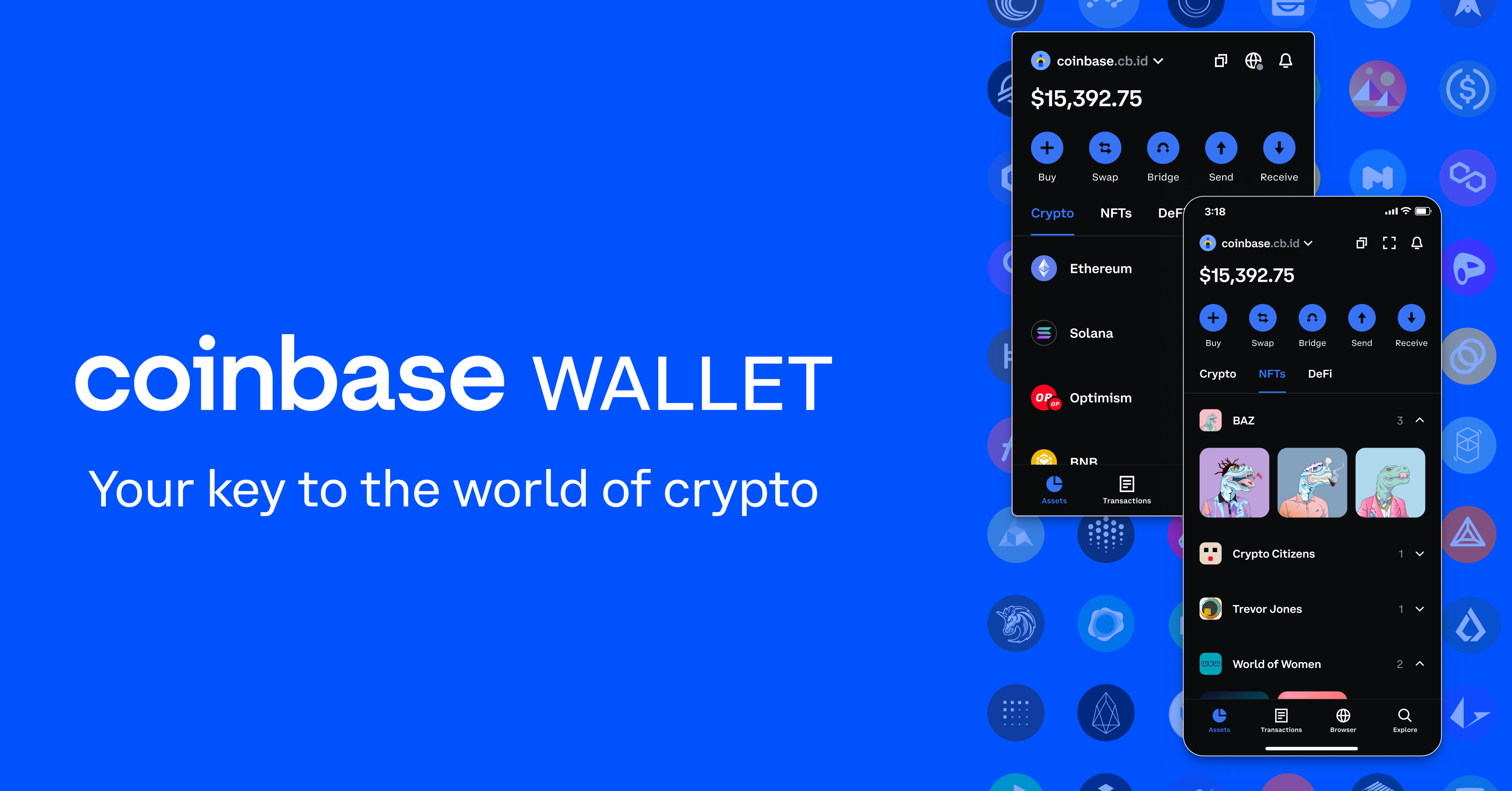
Non-Fungible Tokens (NFTs) have emerged as a unique asset class, representing everything from digital art to virtual real estate and tokenized physical assets. The Coinbase Wallet provides a robust gallery view for NFTs, allowing investors to manage their digital collectibles with the same ease as their liquid tokens. As the line between traditional collectibles and digital assets blurs, having a secure tool to manage these high-value items is essential for any modern investment portfolio.
Security Protocols: Protecting Your Digital Wealth
In the “Money” niche, security is synonymous with capital preservation. Because the Coinbase Wallet gives you full control, it also places the burden of security on your shoulders. Understanding the safety mechanisms of the wallet is critical to preventing financial loss.
Private Keys and Recovery Phrases
When you initialize a Coinbase Wallet, you are provided with a 12-word recovery phrase (also known as a seed phrase). This phrase is the master key to your digital wealth. In the world of finance, if you lose your credit card, you can call the bank for a replacement. In the world of self-custody, if you lose your recovery phrase, you lose access to your funds forever.
The wallet utilizes industry-leading encryption to ensure that these keys never leave your device. For investors, the “gold standard” of security involves writing this phrase down on a physical medium and storing it in a secure location, such as a fireproof safe or a bank deposit box. This offline storage prevents hackers from accessing your funds through digital means.
Biometric Authentication and Secure Enclave
Beyond the recovery phrase, the Coinbase Wallet leverages the hardware security of your mobile device. It utilizes “Secure Enclave” technology—a dedicated chip in modern smartphones that protects sensitive data—and supports biometric authentication like FaceID or fingerprint scanning. This creates a multi-layered defense system. Even if someone gains physical access to your phone, they cannot move your funds without your biometric signature. This level of security is often superior to traditional mobile banking apps, which may rely on more vulnerable password systems.
How to Integrate Coinbase Wallet into Your Financial Strategy
Adopting a new financial tool requires a clear plan. Integrating the Coinbase Wallet into your routine involves moving from a passive “buy and hold” mentality to an active “manage and grow” approach.
Setting Up Your Wallet for the First Time
The process of setting up the wallet is designed to be intuitive. After downloading the app, you are given the option to create a new wallet or import an existing one. During this stage, the focus is on the “Seed Phrase” generation. Once the wallet is live, you can link it to your Coinbase exchange account. This link allows for the seamless transfer of assets from the custodial environment (the exchange) to the non-custodial environment (your wallet). For many investors, a common strategy is to buy assets on the exchange and then “sweep” them into the wallet for long-term secure storage.
Swapping Assets and Earning Yield
Once your wallet is funded, you can begin to utilize its built-in swap feature. This allows you to trade one cryptocurrency for another without ever sending your funds back to an exchange. This is particularly useful for capitalizing on market movements quickly.
Furthermore, the wallet’s “Earn” tab highlights opportunities to participate in staking or lending. By allocating a portion of your portfolio to these yield-generating activities, you can turn a stagnant investment into a productive asset. This reflects a shift toward “smart money” management, where every dollar (or token) is working to generate further value.
The Future of Digital Banking and Self-Sovereign Finance
As we look toward the future of business finance and personal wealth, the role of the Coinbase Wallet will only become more central. We are moving toward an era of “Self-Sovereign Finance,” where individuals have the same tools as institutional banks.
Bridging the Gap Between Traditional Finance and Web3
The Coinbase Wallet is not just a crypto tool; it is a bridge. As more real-world assets—such as stocks, bonds, and real estate—become tokenized, they will likely be managed through wallets like this one. The ability to hold a deed to a house, a share of a company, and a digital currency all in one secure, self-custodied app represents the ultimate evolution of personal finance.
In conclusion, the Coinbase Wallet is an essential tool for anyone serious about their financial future in the digital age. By providing self-custody, access to the burgeoning world of DeFi, and robust security protocols, it empowers the individual to take full ownership of their economic destiny. Whether you are looking to secure your first investment in Bitcoin or seeking to build a complex portfolio of yield-bearing assets, understanding and utilizing the Coinbase Wallet is a vital step toward modern financial independence.
aViewFromTheCave is a participant in the Amazon Services LLC Associates Program, an affiliate advertising program designed to provide a means for sites to earn advertising fees by advertising and linking to Amazon.com. Amazon, the Amazon logo, AmazonSupply, and the AmazonSupply logo are trademarks of Amazon.com, Inc. or its affiliates. As an Amazon Associate we earn affiliate commissions from qualifying purchases.