
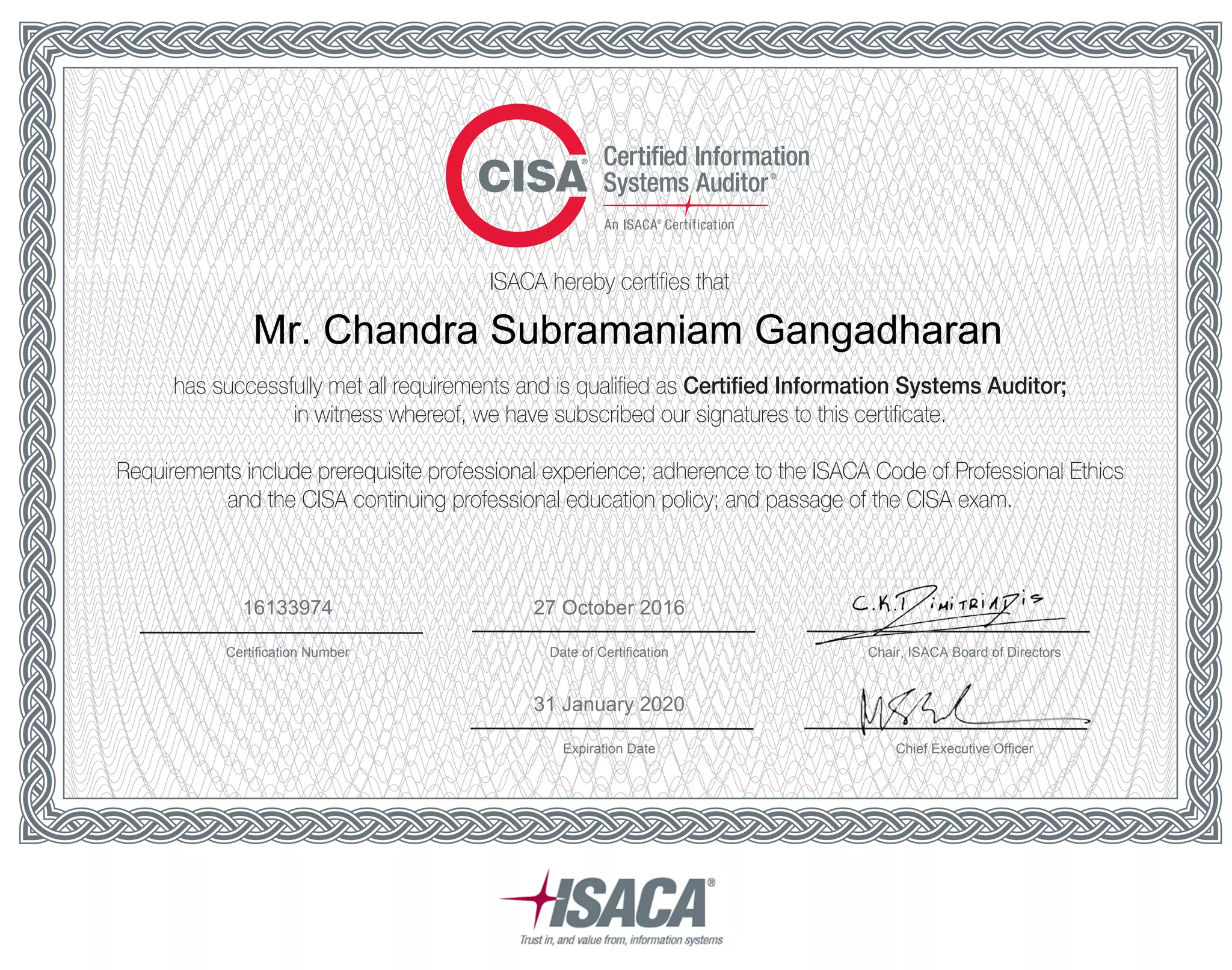
The Certified Information Systems Auditor (CISA) certification is a globally recognized credential for professionals in IT audit, control, and security. Administered by ISACA (Information Systems Audit and Control Association), CISA signifies a practitioner’s expertise in assessing vulnerabilities, reporting on compliance, instituting controls, and ensuring the overall integrity of an organization’s information systems. In an era defined by escalating cyber threats, complex regulatory landscapes, and an ever-expanding digital footprint, the CISA designation has become indispensable for demonstrating advanced proficiency in protecting an organization’s critical technology assets.
The Foundation of IT Audit Expertise
At its core, CISA equips professionals with the knowledge and skills necessary to critically evaluate an organization’s IT infrastructure, policies, and operations. This involves more than just identifying flaws; it encompasses a holistic understanding of how technology supports business objectives, manages risk, and ensures data integrity.

Defining CISA and its Purpose
CISA stands as a benchmark for IT audit professionals, providing a structured framework for assessing information systems. Its primary purpose is to validate that certified individuals possess the technical acumen and practical experience required to manage, control, monitor, and audit an organization’s information technology and business systems. This validation reassures stakeholders that IT processes are secure, reliable, and compliant with relevant standards and regulations. The certification is crucial for those who design, manage, and execute IT audit plans, ensuring that an organization’s technology stack aligns with its strategic goals while mitigating potential digital risks.
The Role of an IT Auditor
An IT auditor, armed with CISA, performs a multifaceted role essential for digital security and operational resilience. Their responsibilities extend beyond simple compliance checks to include a proactive approach to risk management and control improvement. Key tasks include:
- Evaluating IT Infrastructure: Assessing the security and effectiveness of hardware, software, network systems, and data centers.
- Auditing Applications and Data: Examining business applications for security vulnerabilities, data integrity, and compliance with processing standards.
- Reviewing Operational Processes: Analyzing IT operational procedures, such as incident response, disaster recovery, and change management, to ensure efficiency and control.
- Assessing Cybersecurity Controls: Verifying the implementation and effectiveness of controls designed to protect against cyber threats, unauthorized access, and data breaches.
- Reporting and Recommendations: Documenting audit findings, identifying risks, and providing actionable recommendations for control enhancements and process improvements to management.
Key Domains Covered by CISA
The CISA exam and its underlying body of knowledge are structured around five critical domains, each representing a core area of IT audit and control. A thorough understanding of these domains is vital for any professional seeking to uphold digital security standards.
- The Process of Auditing Information Systems (21%): This domain covers the fundamental principles and practices of IT auditing, including audit planning, execution, reporting, and follow-up. It emphasizes standards, guidelines, and ethics applicable to the profession.
- Governance and Management of IT (17%): Focuses on how IT contributes to an organization’s strategic objectives. It encompasses IT governance frameworks, risk management strategies, information security policies, and resource management.
- Information Systems Acquisition, Development, and Implementation (12%): Addresses the controls and audit considerations throughout the lifecycle of information systems, from project management and requirements definition to system testing and implementation.
- Information Systems Operations and Business Resilience (23%): Covers the audit of IT operations, maintenance, service desk functions, and critical aspects like disaster recovery, business continuity planning, and backup strategies.
- Protection of Information Assets (27%): This is the largest domain and crucial for digital security. It delves into the audit of information security controls, including access management, network security, data encryption, physical security, and cybersecurity incident management.
Why CISA Matters in Today’s Digital Landscape
The accelerating pace of digital transformation has amplified the importance of robust IT controls and meticulous auditing. CISA plays a pivotal role in addressing the myriad challenges organizations face in securing their digital assets and maintaining operational integrity.
Addressing Cybersecurity Threats
With ransomware attacks, data breaches, and sophisticated phishing campaigns becoming daily occurrences, organizations are under immense pressure to bolster their defenses. CISA-certified professionals are instrumental in this fight. They possess the expertise to evaluate an organization’s cybersecurity posture, identify vulnerabilities in network architectures, application code, and data storage, and assess the effectiveness of implemented security controls. Their audit findings provide critical insights, enabling organizations to prioritize and remediate weaknesses before they are exploited by malicious actors, thereby safeguarding sensitive information and maintaining business continuity.
Ensuring Compliance and Governance
The regulatory environment surrounding data privacy (e.g., GDPR, CCPA) and financial reporting (e.g., SOX) is increasingly stringent. Non-compliance can lead to severe penalties, reputational damage, and loss of customer trust. CISA professionals are uniquely positioned to ensure that an organization’s IT systems and processes comply with these complex legal and regulatory mandates. They audit for adherence to internal policies, industry best practices, and external regulations, helping organizations navigate the compliance maze and avoid costly infractions. This governance oversight is crucial for maintaining legal standing and ethical operations in the digital realm.

Enhancing Trust and Business Resilience
In a digital-first world, trust is a fundamental currency. Customers, partners, and investors need assurance that an organization’s information systems are reliable and secure. CISA-certified auditors contribute significantly to building and maintaining this trust by independently verifying the effectiveness of IT controls and the integrity of data. Furthermore, by evaluating disaster recovery and business continuity plans, they help ensure that an organization can withstand disruptions—whether from cyberattacks, natural disasters, or technical failures—and quickly restore critical operations. This resilience is vital for minimizing downtime, protecting revenue streams, and preserving an organization’s market standing.
The Path to CISA Certification
Achieving CISA certification is a rigorous process that demands dedication, foundational knowledge, and practical experience. It is a commitment to excellence in the field of IT audit and digital security.
Eligibility Requirements
To be eligible for CISA certification, candidates must meet specific criteria set by ISACA. While anyone can take the CISA exam, certification is only granted after satisfying both the exam requirement and the experience requirement.
- Experience: A minimum of five years of professional experience in information systems auditing, control, or security is required.
- Education Waivers: Waivers for up to three years of experience can be obtained through relevant academic degrees (e.g., a bachelor’s or master’s degree in IT, accounting, or business) or by holding other professional certifications. However, a minimum of two years of actual work experience is non-waivable.
Exam Structure and Preparation
The CISA exam is a single, comprehensive test comprising 150 multiple-choice questions, which candidates must complete within four hours. The exam covers the five domains mentioned earlier, with varying percentages allocated to each.
- Preparation Strategies: Successful candidates typically engage in a combination of self-study using ISACA’s official review manual, participating in instructor-led training courses, and utilizing practice questions and mock exams. A deep understanding of audit methodologies, risk management principles, security controls, and governance frameworks is essential. Familiarity with global standards and best practices in IT security is also highly beneficial.
Maintaining Your Certification
CISA certification is not a one-time achievement; it requires ongoing commitment to professional development. To maintain their CISA status, certified professionals must:
- Earn CPEs: Obtain a minimum of 20 Continuing Professional Education (CPE) hours annually, and a minimum of 120 CPE hours over a three-year period. These hours must be relevant to the CISA domains and contribute to the development of IT audit, control, or security skills.
- Adhere to Ethics: Comply with ISACA’s Code of Professional Ethics.
- Annual Dues: Pay annual CISA maintenance fees.
This ongoing requirement ensures that CISA holders remain current with the latest technological advancements, emerging threats, and evolving regulatory landscapes, thus upholding the integrity and relevance of the certification.
Career Impact and Opportunities
A CISA certification significantly enhances a professional’s career trajectory, opening doors to advanced roles and opportunities within the digital security and IT governance landscape.
In-Demand Roles and Industries
CISA-certified individuals are highly sought after across various industries, including finance, healthcare, government, technology, and consulting. They fill critical roles that are essential for protecting digital assets and ensuring operational integrity. Common job titles include:
- IT Auditor: Specializing in evaluating information systems.
- Information Security Analyst/Manager: Focused on implementing and managing security controls.
- Cybersecurity Consultant: Advising organizations on security best practices and risk mitigation.
- Compliance Officer: Ensuring adherence to regulatory requirements and internal policies.
- Risk Manager: Identifying, assessing, and mitigating IT-related risks.
- Privacy Officer: Overseeing data privacy strategies and compliance.
The demand for these roles continues to grow as organizations grapple with complex digital environments and increased regulatory scrutiny.
Salary Expectations and Professional Growth
CISA certification is often associated with higher earning potential and accelerated career growth. Salaries for CISA professionals typically surpass those of their uncertified peers, reflecting the specialized knowledge and critical skills they bring to an organization. Beyond financial benefits, CISA provides a robust framework for professional development, encouraging continuous learning and enabling practitioners to stay at the forefront of IT audit and digital security trends. It serves as a stepping stone to leadership positions, such as Chief Information Security Officer (CISO) or Head of IT Audit.
Complementary Certifications
While CISA is comprehensive, many professionals choose to pursue complementary certifications to broaden their expertise or specialize further. For those interested in digital security, certifications like Certified Information Security Manager (CISM) for security management, Certified in Risk and Information Systems Control (CRISC) for IT risk management, or CompTIA Security+ for foundational cybersecurity knowledge can enhance a CISA holder’s profile. These certifications, when combined with CISA, offer a more holistic understanding of the interplay between IT audit, security, and risk, making individuals invaluable assets to any organization.
In conclusion, CISA certification is more than just a credential; it is a commitment to excellence in the critical field of information systems auditing, control, and digital security. It empowers professionals to safeguard organizational assets, ensure regulatory compliance, and build trust in an increasingly interconnected and vulnerable digital world.
aViewFromTheCave is a participant in the Amazon Services LLC Associates Program, an affiliate advertising program designed to provide a means for sites to earn advertising fees by advertising and linking to Amazon.com. Amazon, the Amazon logo, AmazonSupply, and the AmazonSupply logo are trademarks of Amazon.com, Inc. or its affiliates. As an Amazon Associate we earn affiliate commissions from qualifying purchases.