
Navigating the complexities of modern banking requires a keen understanding of how financial institutions manage transactions that exceed an account holder’s available balance. For millions of Chase customers, the question of an “overdraft limit” is not just about a specific dollar amount, but rather a set of policies, tools, and thresholds that determine whether a transaction is approved or declined—and how much it will cost.
Unlike a credit card, which provides a hard credit limit, a checking account’s overdraft capacity is often fluid. Chase, one of the largest financial institutions in the United States, has refined its overdraft policies in recent years to provide more transparency and consumer protection. Understanding these nuances is essential for maintaining financial health and avoiding unnecessary fees.

The Mechanics of Chase Overdraft Services
To understand the “limit” of what Chase will allow you to spend beyond your balance, you must first distinguish between the types of transactions and the specific services Chase offers. There is no single, publicly disclosed dollar limit for overdrafts; instead, Chase uses internal algorithms to determine if they will cover a transaction based on your account history, deposit patterns, and the length of your relationship with the bank.
Standard Overdraft Practice
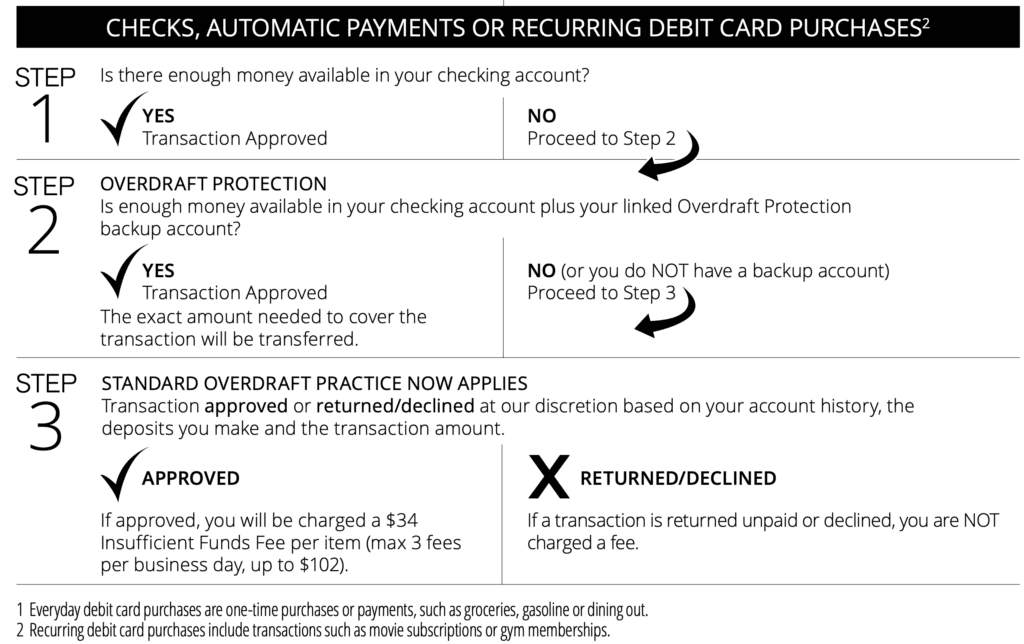
Chase’s Standard Overdraft Practice applies to checks, recurring debit card transactions (such as monthly subscriptions), and ACH payments (like utility bills). Under this practice, Chase has the discretion to pay transactions that overdraw your account. If they choose to pay the item, they will charge an Insufficient Funds Fee, unless the transaction meets specific criteria for fee waiver. If they decline the transaction, it may be returned unpaid, potentially resulting in a fee from the merchant or service provider.
Chase Debit Card Coverage
For everyday, non-recurring transactions—such as buying groceries or paying for gas—Chase will generally decline the transaction if you do not have enough money in your account, and no fee will be charged. However, customers can opt into “Chase Debit Card Coverage.”
By opting in, you authorize Chase to pay for these one-time debit card transactions even if you don’t have sufficient funds. If you do not opt in, the transaction is simply declined at the point of sale. It is important to note that even if you opt in, approval is not guaranteed. Chase still decides on a case-by-case basis whether to cover the transaction based on your account standing.
The $34 Insufficient Funds Fee
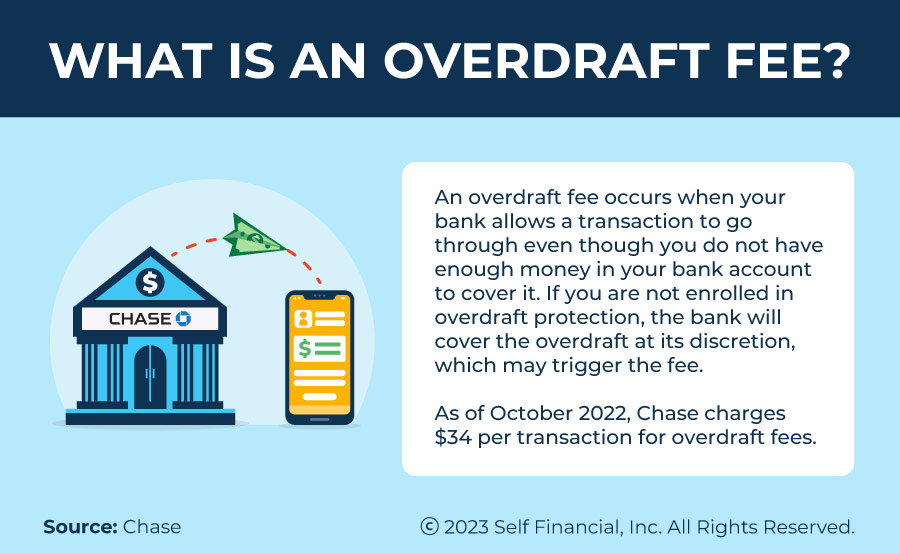
When Chase pays an item that results in an overdraft, the standard fee is $34 per item. However, there are strict limits on how many times this can occur. Chase will not charge more than three Insufficient Funds Fees per business day, regardless of how many transactions occur. This caps the daily fee exposure at $102.
Understanding Chase Overdraft Assist
In 2021, Chase introduced “Chase Overdraft Assist,” a significant policy shift that effectively serves as a “limit” or buffer for customers. This feature is designed to prevent small mistakes from turning into expensive financial setbacks.
The $50 De Minimis Rule
The most critical component of Chase Overdraft Assist is the $50 threshold. Chase will not charge an Insufficient Funds Fee if your account is overdrawn by $50 or less at the end of the business day. This means that if you accidentally spend $30 more than you have, you effectively have a $50 interest-free “limit” to cover that gap without being penalized.
The 24-Hour Grace Period
If you overdraw your account by more than $50, Chase provides a grace period to rectify the balance. You have until the end of the next business day (typically 8:00 PM ET or 11:59 PM ET depending on the channel of deposit) to bring your account balance to a level where it is overdrawn by $50 or less. If you successfully deposit or transfer enough funds to meet this requirement within the “extra time” window, Chase will waive the $34 fee.
Overdraft Assist and Pending Transactions
It is important to understand that the $50 threshold is calculated based on your balance at the end of the business day after all transactions have been processed. During the day, you may see “pending” transactions that put you into the negative. The Overdraft Assist window begins the moment a transaction processes and leaves your account overdrawn by more than $50.
Factors That Influence Your Personal Overdraft Potential
Because Chase does not provide a fixed, publicized overdraft limit (such as “$500 for all customers”), the “limit” is essentially how much the bank trusts you to pay back. Several variables influence whether Chase will honor a transaction that exceeds your balance.
Account Longevity and Activity
Customers who have maintained an account in good standing for several years are generally given more leeway than those with brand-new accounts. Consistent deposit activity is perhaps the most significant factor. If you have a recurring direct deposit from an employer, the bank’s automated systems recognize a reliable source of incoming funds, making them more likely to approve an occasional overdraft.
Average Daily Balance
While your balance might be low at the moment of a transaction, your average daily balance over the preceding 30 to 90 days matters. A customer who usually keeps $5,000 in their account but experiences a temporary dip is viewed differently than a customer who consistently hovers near a zero balance.
History of Overdrafts
Frequent overdrafting signals financial instability. If a customer often hits the maximum three-fee-per-day limit, the bank may tighten the “limit” on what they are willing to cover, eventually declining all discretionary transactions and potentially closing the account if the negative balance is not cleared promptly.
Strategies to Manage and Avoid Overdraft Fees
For those looking to avoid the uncertainty of overdraft limits and the cost of fees, Chase offers several tools designed to keep accounts in the black.
Chase Overdraft Protection Linking
One of the most effective ways to manage overdrafts is to link your Chase checking account to a Chase savings account. If the checking account balance falls below zero, Chase will automatically transfer funds from the linked savings account to cover the difference. This service is generally free, though the transferred amount must be available in the savings account. This acts as your own personal “limit”—the limit is simply whatever you have saved.
Real-Time Alerts
Chase provides robust mobile and email alert systems. Customers can set up “Low Balance Alerts” that trigger a notification when the account balance drops below a specific, self-defined threshold (e.g., $100). This provides an early warning to stop spending or move money before the account hits the negative.
The Chase Secure Banking Account
For individuals who want to eliminate the risk of overdrafts entirely, the Chase Secure Banking account is a strategic option. This account type does not have overdraft fees. If there are insufficient funds, the transaction is simply declined. It does not allow for Standard Overdraft Practice or Debit Card Coverage, making it an excellent tool for those focused on strict budgeting and avoiding debt.
The Long-Term Impact of Overdrafting
While an occasional overdraft is a minor inconvenience, relying on it as a form of short-term credit can have long-term consequences for your financial profile.
Indirect Impact on Credit and Banking History
While standard overdrafts are not typically reported to credit bureaus (Equifax, Experian, TransUnion), they are reported to ChexSystems. ChexSystems is a consumer reporting agency that tracks how individuals handle bank accounts. If an account is closed with a negative balance due to unpaid overdrafts, it becomes significantly harder to open a new bank account at any major institution for up to five years.
The Cost of “Hidden” Interest
If you incur a $34 fee on a $60 overdraft, that is effectively a massive interest rate for a very short-term loan. Over time, these fees can drain hundreds or thousands of dollars from a household budget. Treating the “overdraft limit” as a safety net rather than a resource is vital for long-term wealth building.
Relationship with the Institution
Banks categorize customers based on risk. High-risk customers who frequently overdraw may find it harder to get approved for other Chase products, such as mortgages, auto loans, or premium credit cards like the Sapphire Preferred. Maintaining a clean checking history demonstrates fiscal responsibility, which strengthens your overall “brand” as a borrower.
In summary, the Chase overdraft limit is not a fixed number but a combination of a $50 fee-free buffer, a 24-hour grace period, and a daily cap on fees. By leveraging Chase Overdraft Assist and linking backup accounts, customers can navigate these limits with confidence, ensuring that their daily banking remains a tool for growth rather than a source of financial friction.
aViewFromTheCave is a participant in the Amazon Services LLC Associates Program, an affiliate advertising program designed to provide a means for sites to earn advertising fees by advertising and linking to Amazon.com. Amazon, the Amazon logo, AmazonSupply, and the AmazonSupply logo are trademarks of Amazon.com, Inc. or its affiliates. As an Amazon Associate we earn affiliate commissions from qualifying purchases.