
The cathode ray tube (CRT) monitor, once a ubiquitous fixture in homes and offices worldwide, represents a foundational technology in the history of visual display. Before the advent of sleek, lightweight flat-panel displays, CRTs were the dominant method for rendering images from computers, televisions, and various industrial applications. Understanding what a CRT monitor is involves delving into its ingenious underlying physics and engineering, which allowed for the conversion of electrical signals into visible light on a screen.
The Core Technology: How CRTs Work
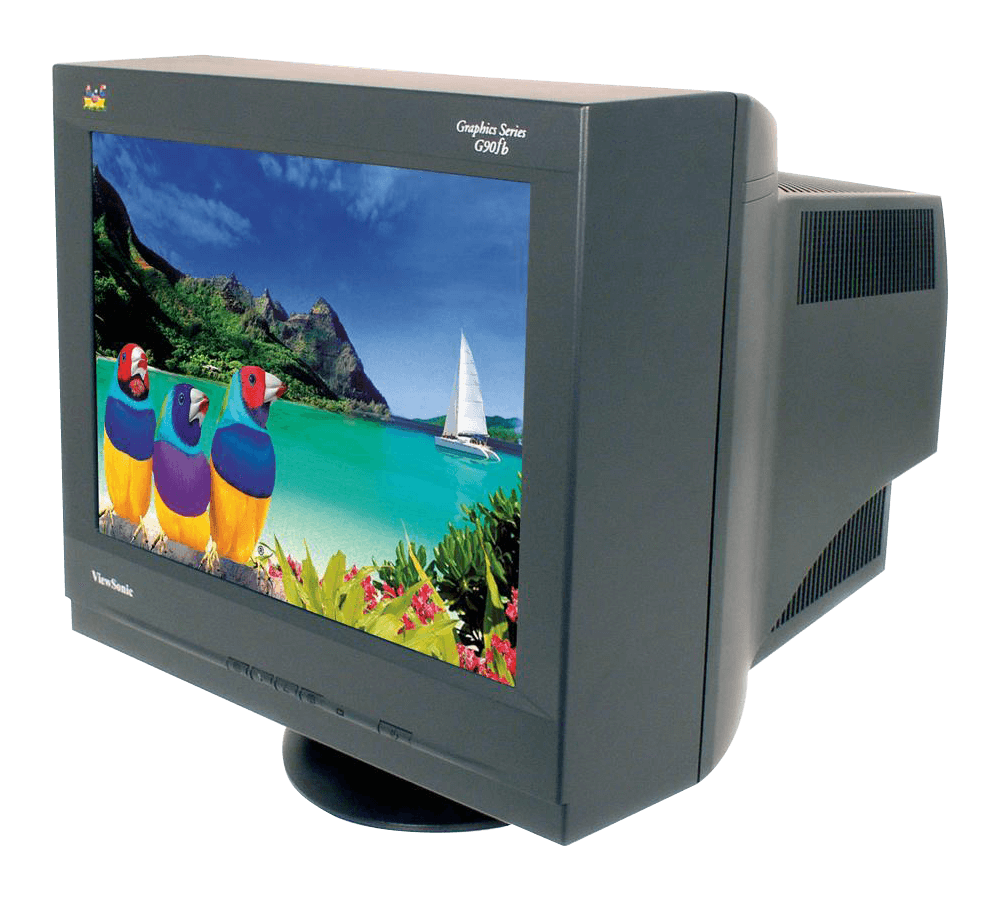
At its heart, a CRT monitor is a vacuum tube containing an electron gun and a phosphor-coated screen. The operational principle relies on the controlled emission of electrons, their acceleration and deflection, and their subsequent interaction with a luminescent material.
The Electron Gun and Phosphor Screen
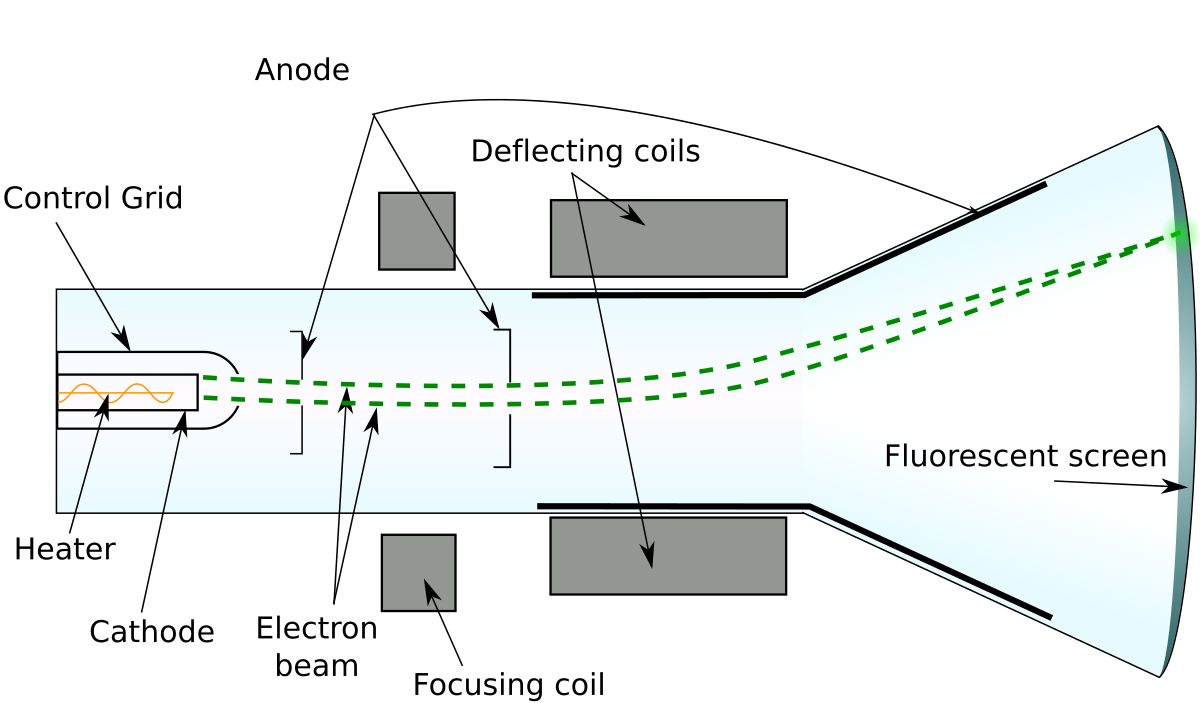
The process begins at the “cathode,” a heated filament within the “electron gun” assembly located at the narrow end of the tube. When heated, the cathode emits a stream of electrons, which are then accelerated towards the screen by high voltage anodes. This focused beam of electrons is incredibly precise. The inside surface of the monitor’s glass screen is coated with phosphors – tiny chemical compounds that glow when struck by electrons. In a monochrome CRT, a single electron gun targets a single type of phosphor (e.g., green, amber, or white). For color CRTs, the complexity increases significantly. These monitors employ three separate electron guns, one for each primary additive color: red, green, and blue (RGB). The screen itself is meticulously arranged with triads of red, green, and blue phosphor dots or stripes. A critical component, known as a shadow mask (a thin metal sheet with precisely aligned holes or slots), sits just behind the phosphor screen. This mask ensures that each electron beam only hits its corresponding colored phosphor dot, preventing misregistration and ensuring color purity.
Deflection Yokes and Magnetic Fields
Once the electron beams are accelerated, they must be directed across the screen to paint the entire image. This is achieved by a system of “deflection yokes” – coils of wire placed around the neck of the CRT. When electrical current passes through these coils, they generate magnetic fields. By rapidly varying the strength and polarity of these magnetic fields, the electron beams can be precisely bent, both horizontally and vertically. The beams sweep across the screen in a meticulously controlled pattern called a “raster scan.” Starting from the top-left corner, the electron beams sweep horizontally across the screen, illuminating phosphors as they go. At the end of each line, the beams quickly “retrace” to the left side, dropping down one line, and begin the next sweep. This process repeats hundreds of times per second, from top to bottom, creating a complete “frame” of an image. The speed of this process, known as the refresh rate, determines how often the image is redrawn, impacting perceived flicker.
The Role of RGB Pixels
In a color CRT, the three electron guns (red, green, blue) fire simultaneously at their respective phosphor dots within each pixel triad. The intensity of each beam is modulated by the video signal received from the computer or television tuner. By varying the intensity of the red, green, and blue electron beams hitting their corresponding phosphors, a vast spectrum of colors can be produced within each pixel. For instance, firing all three at maximum intensity produces white, while no intensity produces black (or the natural dark color of the unlit phosphors). The human eye then blends these tiny, closely spaced colored lights into a single perceived color at that specific point on the screen. The combination of millions of these illuminated pixel triads, refreshed rapidly, creates the full, dynamic image that users saw on their CRT monitors.
A Glimpse into the Past: The Rise and Dominance of CRTs
The cathode ray tube’s journey began long before computers, with its roots in late 19th-century scientific experiments. Ferdinand Braun invented the first CRT in 1897, primarily as an oscilloscope to visualize electrical waveforms. Its evolution into a display device for entertainment and information marked a significant technological leap that would dominate visual media for nearly a century.
Early Computing and Television
By the mid-20th century, CRTs had become the cornerstone of television technology. Early black-and-white televisions utilized CRTs to render broadcast signals, and the introduction of color television in the 1950s solidified the CRT’s position as the primary display medium. As computing began its ascent, CRTs naturally transitioned to serve as the visual interface for these new machines. Early computers, from mainframes to the first personal computers like the Apple II and IBM PC, relied exclusively on CRT monitors. Their ability to display text and graphics, albeit in limited resolutions and color palettes initially, was revolutionary, making computing accessible and interactive.
The Golden Age of Gaming and Graphics
The 1980s and 1990s witnessed the “golden age” of CRT monitors, particularly in the realms of computer gaming and professional graphics. Gaming consoles like the NES, SNES, Sega Genesis, PlayStation, and Nintendo 64 were all designed with CRT televisions in mind, leveraging their unique display characteristics for optimal performance, especially for light gun games that specifically relied on the CRT’s scanning properties. On the PC front, the evolution from CGA and EGA to VGA and SVGA standards pushed CRT technology to display higher resolutions and more colors, driving advancements in desktop publishing, CAD/CAM, and early digital video editing. Graphics professionals often preferred high-end CRTs for their color accuracy and consistency, which was crucial for print media and early digital art.
Design and Ergonomics Challenges
Despite their technical prowess, CRT monitors presented significant design and ergonomic challenges. Their fundamental structure, requiring a deep vacuum tube, made them inherently bulky and heavy. A 21-inch CRT could easily weigh over 50 pounds and occupy a substantial portion of a desk. This bulk limited portability and required robust furniture. Moreover, the curved screen surface, while largely flattened in later designs, could introduce geometric distortions, especially at the edges. Flicker, particularly at lower refresh rates, was another common complaint, leading to eye strain for many users. The high voltage involved also raised concerns about electromagnetic radiation, though later designs incorporated shielding to mitigate this.
Strengths and Weaknesses: Why CRTs Persisted (and Why They Faded)
CRTs held their ground for decades due to several inherent advantages that competitor technologies struggled to match, yet they ultimately succumbed to the undeniable benefits of flat-panel displays.
Unmatched Color Accuracy and Motion Clarity
One of the most significant advantages of high-quality CRT monitors was their exceptional color accuracy and depth. With no inherent backlight bleed and the ability to truly turn off pixels (i.e., when no electron beam hits a phosphor, it’s completely dark), CRTs offered “true blacks” and a superior contrast ratio that often surpassed early flat-panel displays. Furthermore, their impulse-driven display mechanism gave them virtually instantaneous pixel response times. This meant zero motion blur or ghosting, making them ideal for fast-paced gaming and professional video editing where precise motion rendition was critical. Their ability to display a wide range of refresh rates, including non-standard ones, also made them flexible for legacy content and systems.
Resolution Limitations and Flicker
While capable of various resolutions, CRTs had practical limitations. Higher resolutions required finer phosphor pitch and more precise electron beam focusing, which became increasingly difficult and expensive. For a given screen size, the achievable pixel density was lower than what later LCDs could offer. A common complaint was screen flicker, especially prevalent at lower refresh rates (e.g., 60 Hz). This flicker was due to the rapid refreshing of the image, and while less noticeable at higher refresh rates (75 Hz or above), it remained a factor for many users. Geometry distortions, where straight lines might appear curved or trapezoidal, were also inherent challenges, requiring complex calibration.
Size, Weight, and Power Consumption
The most glaring weaknesses of CRT monitors were their physical dimensions, weight, and power consumption. The vacuum tube design necessitated a deep chassis, making monitors cumbersome and dictating workstation layouts. Their substantial weight made them difficult to move and ship. Environmentally and economically, their power consumption was considerably higher than modern displays, generating significant heat. Disposal also became an issue due to the lead content in the glass and other hazardous materials. These factors collectively made CRTs increasingly unsustainable in an era demanding smaller, lighter, and more energy-efficient electronics.
The Digital Revolution: The Transition to Flat Panels
The relentless march of technological innovation inevitably led to the decline of the CRT. As new display technologies matured, they began to offer compelling alternatives that addressed the CRT’s fundamental limitations.
LCDs, Plasmas, and OLEDs
The primary successor to the CRT was the Liquid Crystal Display (LCD). Early LCDs, while lacking the color accuracy and response times of CRTs, offered unparalleled thinness, lightness, and energy efficiency. Over time, advancements in backlighting (from CCFL to LED), panel technology (TN, IPS, VA), and processing power allowed LCDs to overcome many of their initial shortcomings, eventually surpassing CRTs in most performance metrics. Plasma display panels (PDPs) briefly competed, particularly for large-screen televisions, offering excellent black levels and viewing angles, but were eventually sidelined by LCDs and the emerging Organic Light Emitting Diode (OLED) technology. OLEDs, in particular, represent the spiritual successor to CRTs in terms of true black levels and infinite contrast, as each pixel emits its own light and can be individually turned off.
Space-Saving and Energy Efficiency
The defining characteristics that drove the mass adoption of flat-panel displays were their drastic reduction in size, weight, and power consumption. A modern 24-inch LCD or LED monitor weighs a fraction of its CRT counterpart and occupies mere inches of desk depth compared to feet. This transformation liberated desk space, enabled multi-monitor setups, and facilitated the design of more compact and portable computers. The energy efficiency of flat panels also contributed to lower operating costs and a reduced environmental footprint, aligning with global trends towards sustainability.
The Legacy and Niche Revival of CRTs
While CRTs have largely vanished from mainstream use, their legacy endures, and they’ve even seen a niche revival. For retro gaming enthusiasts, CRTs offer an authentic experience, particularly for games designed to be played on them. Light gun games like Duck Hunt function only on CRTs due to the way their sensors detect the electron beam. Furthermore, the scanline aesthetic and perfect pixel response of CRTs are often preferred for older console games. Some professional applications, especially in specific medical imaging or industrial control systems, continued to use CRTs long after their commercial demise due to their robust design and specific display characteristics. The CRT monitor, though a relic of a bygone era, remains a testament to ingenious engineering and a critical stepping stone in the evolution of visual display technology.
aViewFromTheCave is a participant in the Amazon Services LLC Associates Program, an affiliate advertising program designed to provide a means for sites to earn advertising fees by advertising and linking to Amazon.com. Amazon, the Amazon logo, AmazonSupply, and the AmazonSupply logo are trademarks of Amazon.com, Inc. or its affiliates. As an Amazon Associate we earn affiliate commissions from qualifying purchases.