
For many retirees and individuals approaching their golden years, Social Security benefits form a crucial pillar of financial stability. However, the desire or necessity to continue working, even part-time, often arises, prompting a critical question: how much money can one earn without impacting those hard-earned benefits? The answer, while seemingly straightforward, involves a nuanced understanding of specific rules, thresholds, and strategic planning. This article delves into the intricacies of Social Security’s earnings limits, their implications, and strategies for navigating this complex financial landscape.
Understanding Social Security’s Earnings Limits
The Social Security Administration (SSA) implements what is known as the “Retirement Earnings Test” (RET) to determine how much a beneficiary can earn before their benefits are reduced. This test applies to individuals who are receiving Social Security retirement or survivor benefits and have not yet reached their “full retirement age” (FRA).
What is the Earnings Limit?
Simply put, the earnings limit is a threshold set by the SSA each year. If your earned income exceeds this threshold before you reach your FRA, a portion of your Social Security benefits will be withheld. It’s crucial to distinguish between “earned income”—which includes wages from employment and net earnings from self-employment—and other forms of income like pensions, annuities, investment income, interest, or capital gains, which do not count towards this limit.
The “Full Retirement Age” (FRA) Threshold
Your full retirement age is a pivotal factor in the Social Security system. It’s the age at which you are entitled to receive 100% of your primary insurance amount (PIA). For most people born in 1943 or later, the FRA gradually increases from 66 to 67. For instance, if you were born in 1960 or later, your FRA is 67. Reaching your FRA completely changes how earnings limits apply to you.
Earning Limits Before Full Retirement Age
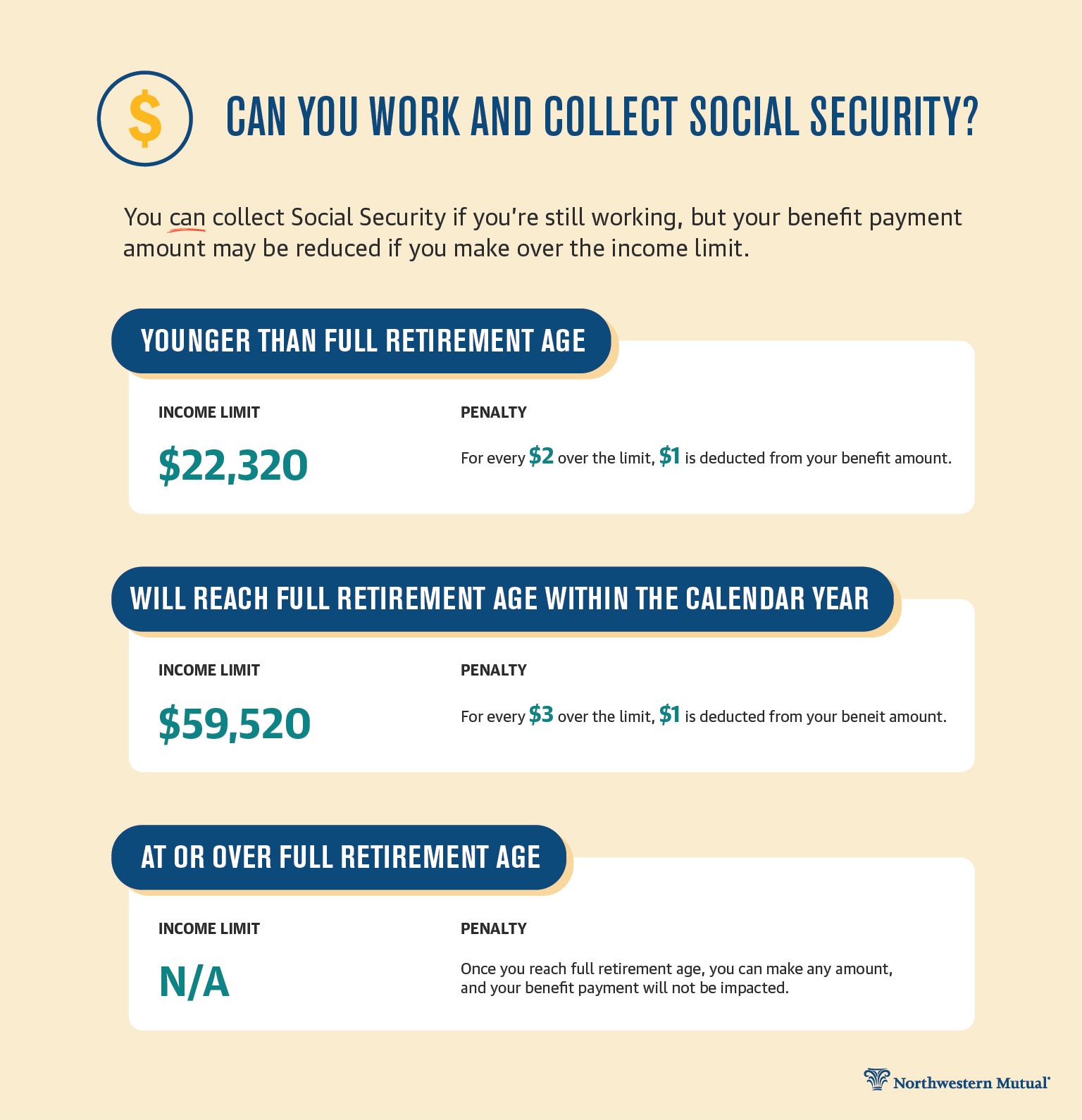
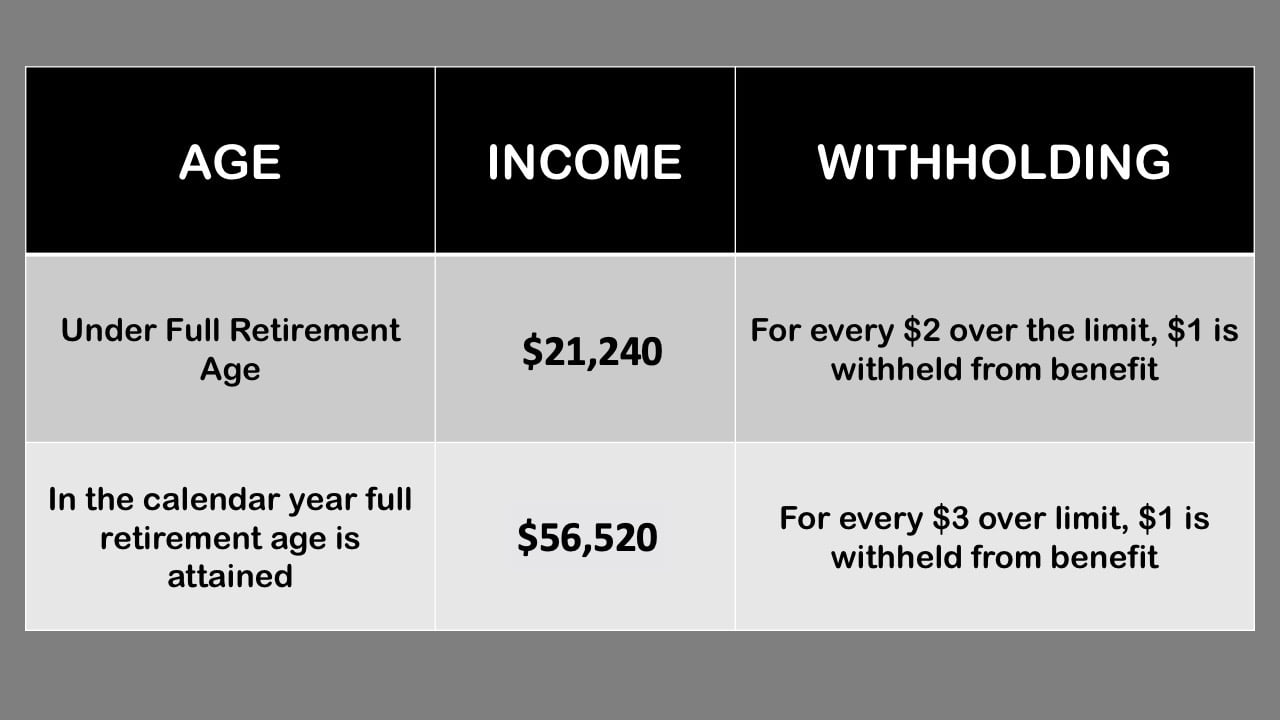
If you are under your full retirement age for the entire year, the SSA will withhold $1 in benefits for every $2 you earn above the annual earnings limit. This limit is adjusted annually to account for national wage growth. For example, if the limit is $22,320 (as it was in 2024), and you earn $24,320, you’ve exceeded the limit by $2,000. The SSA would then withhold $1,000 in benefits ($2,000 / 2). This withholding continues until you either stop working, your earnings fall below the limit, or you reach your full retirement age.
Earning Limits During the Year You Reach FRA
A different set of rules applies during the calendar year in which you reach your full retirement age. In this specific year, the earnings limit is significantly higher, and the withholding rate is less stringent. The SSA withholds $1 in benefits for every $3 you earn above a different, higher limit, but only for the months before you reach your FRA. Once you hit your full retirement age, the earnings limit no longer applies, even if it’s only partway through the year. This transitional rule acknowledges that many individuals continue working up until their FRA.
Earning After Full Retirement Age
This is perhaps the most liberating aspect of the earnings rules: once you reach your full retirement age, the Social Security earnings limit completely disappears. You can earn any amount of income from employment or self-employment without having your Social Security benefits reduced or withheld. This allows retirees to work full-time, start a new business, or pursue any income-generating activity without fear of losing their earned benefits. Any benefits that were withheld due to earnings before your FRA are not permanently lost; they are factored into a recalculation of your benefits at your FRA, potentially leading to higher monthly payments later on.
How Earnings Affect Your Social Security Benefits
Understanding the mechanism by which your benefits are affected is crucial for effective financial planning. It’s not just about hitting a limit; it’s about how the SSA processes those earnings and adjusts your payments.
The Benefit Withholding Mechanism
When your earnings exceed the applicable limit, the SSA doesn’t necessarily reduce your monthly benefit amount. Instead, they withhold entire months of benefits until the total amount withheld equals the amount by which your benefits should be reduced. For instance, if your benefits are $1,500 per month and $3,000 needs to be withheld, the SSA might withhold two full months of benefits. This can impact your cash flow significantly, making it essential to plan for these potential interruptions.
Examples of Benefit Reduction
Consider an individual under FRA receiving $1,200 per month in Social Security benefits, with an annual earnings limit of $22,320. If they earn $26,320 in a year, they’ve exceeded the limit by $4,000.
- Calculation: $4,000 (excess earnings) / 2 = $2,000 (amount to be withheld).
- Impact: The SSA would withhold benefits totaling $2,000. With a $1,200 monthly benefit, they might withhold one full month and then a portion of a second month, or adjust payments over several months.
This scenario underscores the importance of monitoring your income if you’re working while collecting benefits before your FRA.
The “Retirement Earnings Test” (RET) in Detail
The RET applies to those receiving retirement benefits, survivor benefits, and even spousal benefits if the spouse is under their FRA and working. It does not apply to Social Security Disability Insurance (SSDI) benefits, which have their own distinct “substantial gainful activity” (SGA) rules. The RET is designed to ensure that Social Security primarily supports those who have genuinely retired or are transitioning into retirement, not those still in full-time careers before their FRA.
What Counts as “Earned Income”?
For the purpose of the earnings test, “earned income” strictly refers to:
- Wages: Money you receive from an employer for your work, including bonuses, commissions, and vacation pay.
- Net earnings from self-employment: The profit you make from running your own business or working as an independent contractor, after deducting allowable business expenses.
Crucially, passive income sources like interest from savings accounts, dividends from stocks, capital gains from investments, rental income from properties where you’re not actively involved, pensions, and annuities are NOT considered earned income and do not affect your Social Security benefits, regardless of your age. This distinction is vital for financial planning.
Strategies for Maximizing Income While Receiving Social Security
Navigating the earnings limits effectively requires thoughtful planning and an understanding of your financial goals. There are several strategies beneficiaries can employ to optimize their income without inadvertently jeopardizing their Social Security benefits.
Timing Your Claim for Social Security Benefits
One of the most significant decisions is when to start receiving your benefits.
- Claiming Early (as early as age 62): While tempting for immediate income, claiming early permanently reduces your monthly benefit amount. If you also plan to work, you’re subject to the earnings limits, meaning benefits could be further reduced or withheld. However, for some, the immediate cash flow outweighs these reductions.
- Delaying Your Claim (up to age 70): For each year you delay claiming past your FRA, your benefits increase by a certain percentage, known as “delayed retirement credits,” until age 70. This can result in a significantly higher monthly payment. If you’re working and earning above the limits, delaying your claim until you stop working or reach FRA can be a smart strategy to avoid benefit reductions while simultaneously building a larger future benefit.
Working Part-Time or Flexibly
For those who want or need to continue working before their FRA, structuring employment to stay below the earnings limit is a common approach.
- Hourly vs. Salary: If you’re paid hourly, you have more control over your total annual earnings.
- Seasonal or Project-Based Work: Engaging in work that is not year-round can help manage your income stream.
- Consulting with Careful Billing: Self-employed individuals have flexibility in how they bill clients and manage their income recognition, which can sometimes be strategically adjusted to align with earnings limits.
Utilizing Non-Earned Income Sources
As established, many forms of income do not count against the Social Security earnings limit. This is a critical point for retirees.
- Investment Income: Interest, dividends, and capital gains from stocks, bonds, and mutual funds are entirely exempt from the earnings test.
- Rental Income: If you own rental properties and are not actively involved in their management (i.e., it’s considered passive income), this income will not affect your benefits.
- Pensions and Annuities: Income from traditional pensions or purchased annuities is not considered earned income.
- Withdrawals from Retirement Accounts: Distributions from 401(k)s, IRAs, and similar retirement vehicles are not earned income.
By strategically building a portfolio that generates significant passive income, individuals can supplement their Social Security benefits without triggering the earnings test.
Consulting and Freelancing Considerations
The gig economy offers numerous opportunities for retirees. When engaging in consulting or freelancing, it’s crucial to understand how self-employment income is calculated for Social Security purposes. It’s your net earnings (gross income minus allowable business expenses) that count towards the limit. Meticulous record-keeping and understanding business deductions are essential. Furthermore, consider structuring your self-employment to potentially limit your earnings in months before your FRA, utilizing the monthly earnings test if applicable in your initial year of claiming.
Tax Implications of Earning While on Social Security
Beyond the earnings limit itself, working while receiving Social Security benefits can also introduce tax complexities. Your combined income — including your earnings and a portion of your Social Security benefits — may make your benefits subject to federal income tax.
When Social Security Benefits Become Taxable
Your Social Security benefits can become taxable at the federal level if your “combined income” exceeds certain thresholds. Combined income is generally defined as your adjusted gross income (AGI) plus non-taxable interest plus one-half of your Social Security benefits.
- First Threshold: If your combined income is between $25,000 and $34,000 for an individual, or between $32,000 and $44,000 for a married couple filing jointly, up to 50% of your Social Security benefits may be taxable.
- Second Threshold: If your combined income exceeds $34,000 for an individual, or $44,000 for a married couple filing jointly, up to 85% of your Social Security benefits may be taxable.
These thresholds apply regardless of your age or whether you are subject to the earnings test. The additional income from working can easily push you over these limits, leading to a portion of your benefits being taxed.
Calculating Your Provisional Income
To determine if your benefits are taxable, you need to calculate your “provisional income” (also known as “combined income”). The formula is:
Adjusted Gross Income (AGI) + Tax-Exempt Interest + 50% of Your Social Security Benefits = Provisional Income.
Your earned income from working contributes directly to your AGI, thus increasing your provisional income and the likelihood that your Social Security benefits will be subject to federal income tax.
Impact on Federal and State Taxes
The taxation of Social Security benefits is solely a federal matter for the purpose of the earnings test. However, some states also tax Social Security benefits, though most do not. It’s important to check your state’s specific income tax laws. The additional earned income from working will also be subject to standard federal and state income taxes, as well as Social Security and Medicare taxes (FICA or SECA for self-employment). This can significantly reduce your net take-home pay from your work efforts and impact your overall tax liability.
Strategies to Mitigate Tax Burden
- Tax-Advantaged Accounts: Utilizing Roth IRAs or Roth 401(k)s can provide tax-free income in retirement, which doesn’t count towards provisional income thresholds.
- Qualified Charitable Distributions (QCDs): For those over 70.5, QCDs from IRAs can reduce your AGI.
- Careful Income Planning: Strategically timing income, especially large capital gains, can help manage your provisional income year by year.
- Professional Tax Advice: Given the complexities, consulting a tax professional is highly recommended to develop a personalized tax strategy.
Reporting Earnings to the Social Security Administration (SSA)
Transparency with the SSA is not just a recommendation; it’s a requirement. Failure to accurately report your earnings can lead to significant headaches and financial penalties.
Your Obligation to Report
If you are receiving Social Security benefits and are under your full retirement age, you are legally obligated to report your estimated earnings for the year to the SSA. This is especially true if you anticipate earning more than the annual limit. The SSA uses this information to determine how much, if any, of your benefits need to be withheld. They can also request annual earnings information from you.
Methods of Reporting
You can report your earnings to the SSA in several ways:
- Online: Through your mySocialSecurity account, which is often the most convenient method.
- By Phone: Calling the SSA’s toll-free number.
- By Mail: Sending a written statement of your estimated earnings.
It’s advisable to keep records of all communications and confirmations of your reported earnings.
Consequences of Under-reporting
If you earn more than you reported and exceed the limit, the SSA will determine you’ve received an overpayment. You will then be required to repay these benefits. In some cases, if the SSA determines that you knowingly failed to report earnings or provided false information, they may impose penalties in addition to requiring repayment of the overpaid benefits. This could include withholding future benefits until the overpayment and penalties are recovered. Conversely, if you report higher earnings than you actually make, and benefits are withheld unnecessarily, the SSA will repay you the withheld benefits, often in a lump sum, once your actual earnings are confirmed.
Conclusion
The question of “how much money can you earn while receiving Social Security” is multifaceted, impacting not only your benefit payments but also your tax obligations. For those under full retirement age, the earnings limits are a critical consideration, requiring careful monitoring and strategic financial planning to avoid benefit reductions. However, once you reach your full retirement age, the shackles of these limits are removed, offering complete freedom to earn as much as you desire.
Understanding the difference between earned and unearned income, the annual earnings thresholds, and the mechanisms of benefit withholding are essential. By strategically timing your Social Security claim, structuring your work, and leveraging non-earned income sources, you can effectively navigate these rules. Moreover, recognizing the tax implications of working in retirement is crucial for optimizing your overall financial well-being. Always remember that proactive planning and, when in doubt, consulting with a financial advisor or the Social Security Administration directly, can provide clarity and ensure you make the most informed decisions for your retirement.
aViewFromTheCave is a participant in the Amazon Services LLC Associates Program, an affiliate advertising program designed to provide a means for sites to earn advertising fees by advertising and linking to Amazon.com. Amazon, the Amazon logo, AmazonSupply, and the AmazonSupply logo are trademarks of Amazon.com, Inc. or its affiliates. As an Amazon Associate we earn affiliate commissions from qualifying purchases.