
In the hyper-connected era of the 21st century, few companies hold as much influence over the way we communicate, work, and process data as Broadcom Inc. While it may not be a household name like Apple or Google, Broadcom is the invisible giant powering the internal components of your smartphone, the high-speed switches in global data centers, and the software layers that manage massive corporate cloud environments.
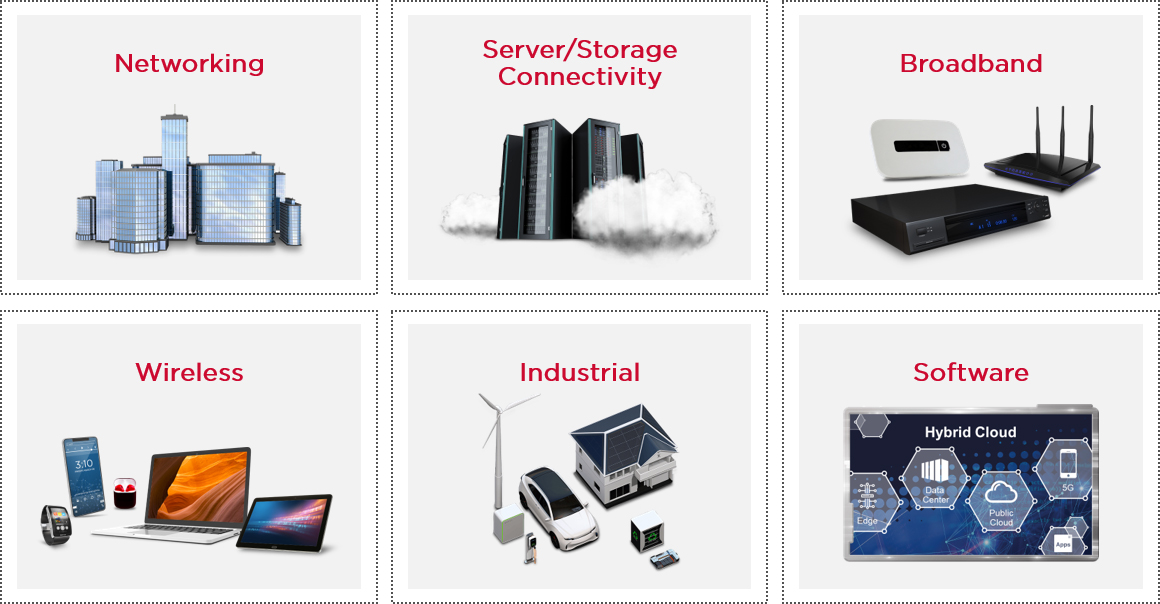
Broadcom is a global technology leader that designs, develops, and supplies a broad range of semiconductor and infrastructure software solutions. Its products serve the data center, networking, enterprise software, broadband, wireless, storage, and industrial markets. To understand Broadcom is to understand the physical and virtual architecture of the internet itself.
The Evolution of a Semiconductor Powerhouse
Broadcom’s journey to becoming a trillion-dollar-adjacent tech titan is a masterclass in strategic growth and engineering excellence. The company we know today is the result of decades of innovation and some of the most significant mergers in the history of the technology sector.
From Hewlett-Packard Roots to Avago Technologies
The lineage of Broadcom can be traced back to the semiconductor products division of Hewlett-Packard (HP), which was established in the 1960s. This division eventually became part of Agilent Technologies when HP spun off its test and measurement business in 1999. Later, in 2005, KKR and Silver Lake Partners acquired Agilent’s Semiconductor Products Group, forming Avago Technologies.
Avago was a specialist in analog, mixed-signal, and optoelectronic components. Under the leadership of CEO Hock Tan, the company embarked on an aggressive acquisition strategy. In 2016, Avago acquired the “original” Broadcom Corporation (founded by Henry Samueli and Henry Nicholas) for $37 billion. Following the merger, Avago adopted the Broadcom name, signaling its intent to dominate the global communications market.
Strategic Acquisitions: Symantec, CA Technologies, and VMware
Broadcom’s strategy shifted significantly in the late 2010s. Recognizing that the hardware market is often cyclical, the company began diversifying into enterprise software. This move was designed to create more predictable, recurring revenue streams while providing a “full-stack” solution to corporate clients.
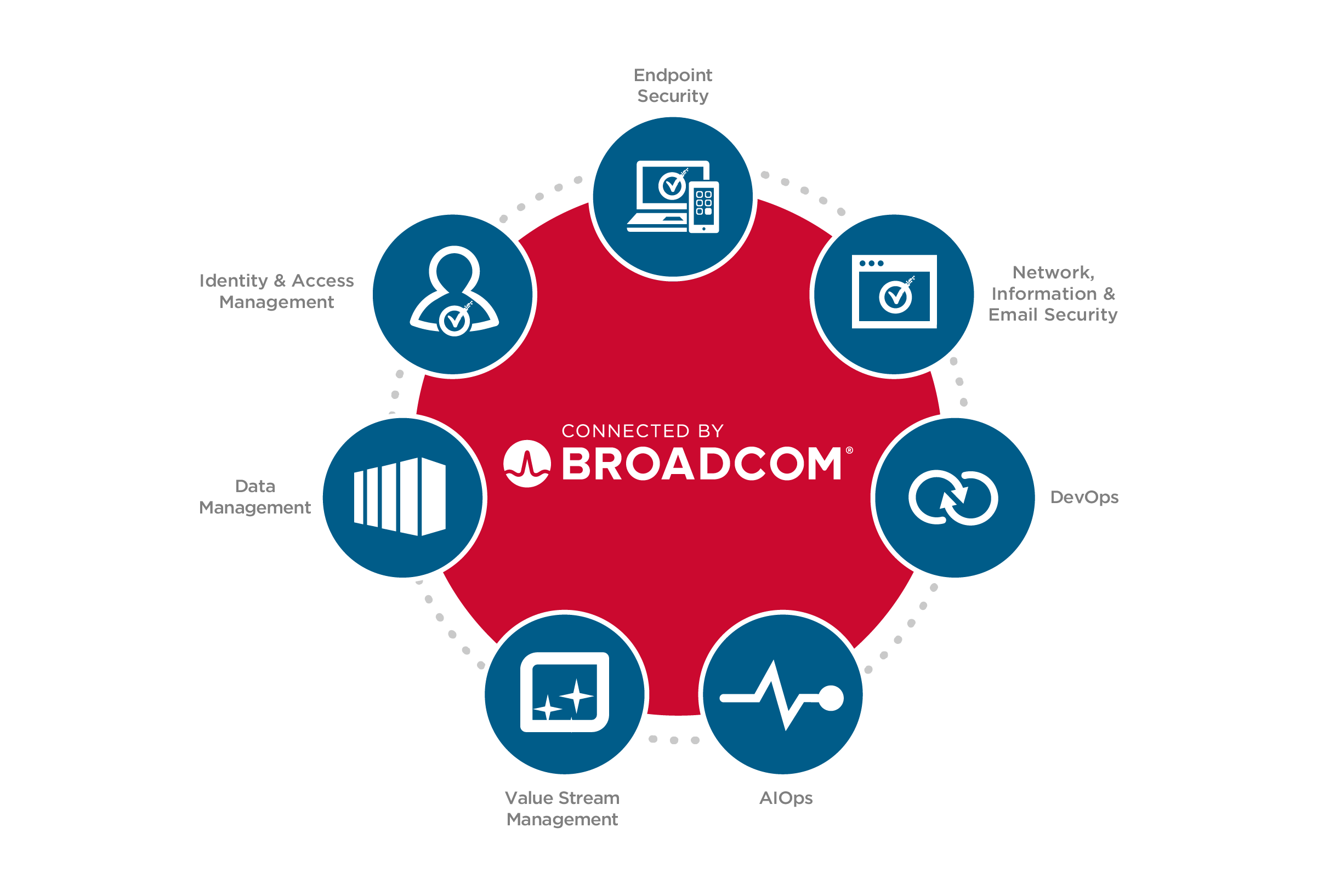
In 2018, Broadcom acquired CA Technologies for $18.9 billion, gaining a foothold in mainframe software and enterprise management. This was followed by the acquisition of Symantec’s enterprise security business in 2019, adding robust cybersecurity tools to its portfolio. The most transformative move, however, was the $61 billion acquisition of VMware, which closed in late 2023. This acquisition positioned Broadcom as a leader in virtualization and multi-cloud infrastructure, bridging the gap between hardware performance and software-defined data centers.
Core Technologies: Semiconductors and Hardware
At its heart, Broadcom remains a semiconductor company. Its silicon is integrated into almost every part of the modern digital experience, from the Wi-Fi chips in your laptop to the massive routers that power the backbone of the global internet.
Ethernet Switching and Routing Solutions
Broadcom is perhaps best known for its “StrataXGS” and “StrataDNX” product lines, which include the famous Tomahawk and Jericho switch silicon. These chips are the industry standard for high-performance networking.
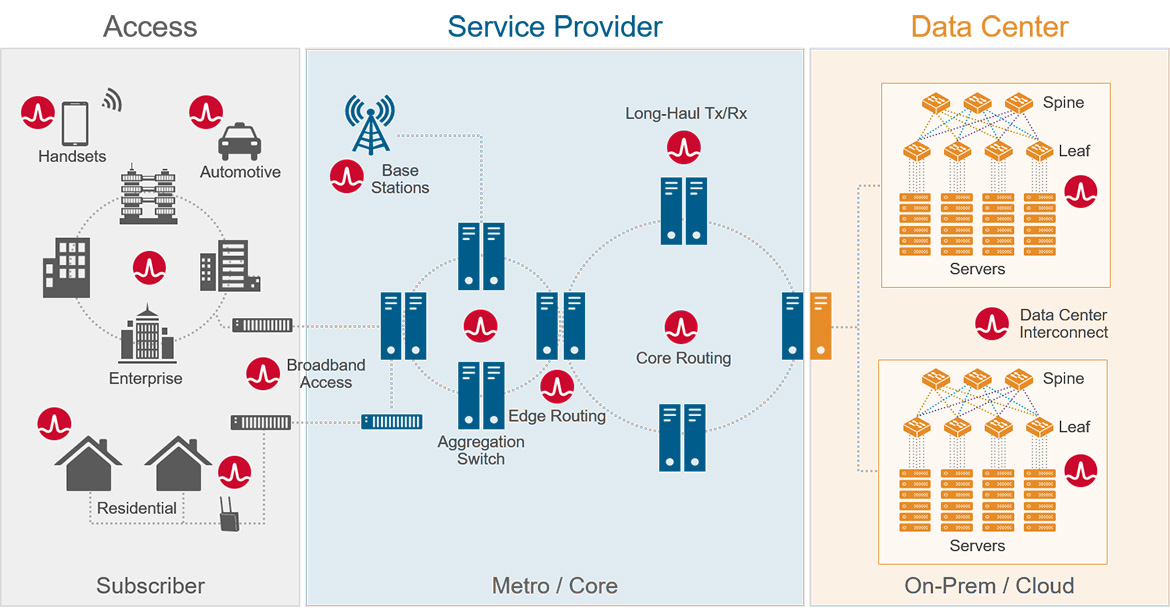
The Tomahawk series is designed for massive data centers where speed and throughput are the primary goals. It allows hyperscalers (like Amazon Web Services and Microsoft Azure) to move petabytes of data with minimal latency. Meanwhile, the Jericho series handles the complex routing requirements of service provider networks. Without Broadcom’s innovations in Ethernet switching, the modern cloud would likely be slower, more expensive, and far less scalable.
Wireless Connectivity and Optical Interconnects
If you own a high-end smartphone, there is a high probability it contains Broadcom technology. Broadcom is a premier provider of Wi-Fi and Bluetooth “combo” chips, which provide the high-speed wireless connectivity we take for granted. Their Wi-Fi 6E and Wi-Fi 7 solutions have set the bar for consumer electronics, offering faster speeds and more reliable connections in crowded environments.
Beyond consumer wireless, Broadcom is a leader in optical interconnects. As data centers transition to faster speeds (400G, 800G, and beyond), traditional copper wiring becomes inefficient. Broadcom’s optical components convert electrical signals into light, allowing data to travel at incredible speeds across the fiber-optic cables that link servers together.
The Pivot to Software and Cloud Infrastructure
With the integration of CA Technologies, Symantec, and especially VMware, Broadcom has evolved into a diversified infrastructure company. This shift allows Broadcom to support the entire lifecycle of a digital transaction—from the chip that processes the packet to the software that manages the virtual machine.
Virtualization and the VMware Integration
VMware is the crown jewel of Broadcom’s software strategy. Virtualization technology allows a single physical server to be divided into multiple “virtual” servers, maximizing hardware efficiency. VMware’s vSphere platform is the industry standard for managing these environments.
Under Broadcom’s ownership, the focus has shifted toward the “VMware Cloud Foundation” (VCF). This is an integrated platform that combines compute, storage, and networking virtualization with modern management tools. By integrating its hardware expertise with VMware’s software-defined data center (SDDC) capabilities, Broadcom is helping enterprises build “private clouds” that offer the flexibility of the public cloud with the security and control of on-premise hardware.
Cybersecurity and Enterprise Management
In an era where digital threats are constant, Broadcom’s software division also focuses on protecting the enterprise. The Symantec security portfolio provides end-point protection, web security, and data loss prevention (DLP).
Furthermore, through CA Technologies, Broadcom offers AIOps (Artificial Intelligence for IT Operations) tools. These software solutions use machine learning to monitor complex IT environments, predicting and resolving performance issues before they impact the end user. This ensures that the massive infrastructure powered by Broadcom hardware remains stable and efficient.
Broadcom’s Role in the AI Revolution
The sudden explosion of Generative AI (GenAI) has placed Broadcom at the center of the next great technological shift. While Nvidia dominates the market for GPUs (the “brains” of AI), Broadcom dominates the plumbing and custom logic that makes large-scale AI possible.
Custom AI Accelerators (TPUs and ASICs)
Not every company wants to use a standard off-the-shelf GPU for AI. Some tech giants, such as Google and Meta, prefer custom-designed chips optimized for their specific AI workloads. Broadcom is the world leader in helping these companies design Application-Specific Integrated Circuits (ASICs).
Broadcom’s co-design business allows these “hyperscalers” to build chips like Google’s Tensor Processing Unit (TPU). These chips are incredibly efficient at training large language models (LLMs). By providing the IP (Intellectual Property) and the manufacturing expertise for these custom accelerators, Broadcom has become a silent partner in the AI arms race.
High-Performance Networking for Data Centers
AI models require thousands of processors to work together in parallel. This creates a massive networking challenge: if the processors have to wait for data to travel between them, the entire system slows down. This is known as the “tail latency” problem.
Broadcom’s Jericho3-AI fabric is specifically designed to solve this. It provides high-bandwidth, low-latency connectivity that allows AI clusters to scale to tens of thousands of nodes. While others focus on the individual processor, Broadcom focuses on the “fabric”—the complex web of connections that allows a data center to function as a single, massive supercomputer.
The Future of Connectivity and Computing
As we look toward the future, Broadcom’s influence is only expected to grow. The company is currently spearheading the transition to Wi-Fi 7, which promised to revolutionize augmented and virtual reality (AR/VR) by providing the low-latency wireless speeds these technologies require.
In the data center, Broadcom is pushing the boundaries of silicon photonics. This technology integrates lasers and optical components directly onto the silicon chip, potentially eliminating the need for separate pluggable transceivers. This would significantly reduce power consumption—a critical concern as the energy demands of AI continue to climb.
Broadcom represents the convergence of physical hardware and sophisticated software. From the smallest filter in a 5G radio to the massive software platforms managing global finance, Broadcom’s technology is the foundation upon which the modern world is built. By staying at the bleeding edge of semiconductor physics and enterprise software, Broadcom ensures that no matter how much data the world creates, the infrastructure will be there to move, store, and secure it.
aViewFromTheCave is a participant in the Amazon Services LLC Associates Program, an affiliate advertising program designed to provide a means for sites to earn advertising fees by advertising and linking to Amazon.com. Amazon, the Amazon logo, AmazonSupply, and the AmazonSupply logo are trademarks of Amazon.com, Inc. or its affiliates. As an Amazon Associate we earn affiliate commissions from qualifying purchases.