
In the rapidly evolving landscape of digital culture, the phrase “what is bro waffling about” has transitioned from a niche internet meme to a poignant critique of modern communication. While the term originated in social media comment sections to dismiss incoherent or overly long-winded arguments, it has found a surprising and critical resonance within the technology sector. As we enter the era of ubiquitous Artificial Intelligence (AI) and Large Language Models (LLMs), “waffling”—the act of speaking at length without meaningful content—has become a significant technical hurdle.

In the context of technology, waffling refers to two distinct but related phenomena: AI hallucinations and algorithmic verbosity. When a user asks a complex question and receives a thousand-word response that circles the point without ever landing on it, or worse, invents facts with total confidence, they are witnessing the high-tech version of waffling. Understanding why this happens and how developers are working to fix it is essential for anyone navigating the current tech frontier.
The Mechanics of AI Waffling: Why LLMs Struggle with Conciseness
To understand why a machine would “waffle,” one must understand the underlying architecture of Generative AI. Most modern AI tools, such as ChatGPT, Claude, and Gemini, are built on the Transformer architecture. These models are essentially highly sophisticated “next-token predictors.” They do not “know” facts in the way humans do; instead, they calculate the mathematical probability of which word (or token) should follow the previous one based on a massive dataset.
The Stochastic Parrot Problem
The term “stochastic parrot” was coined by researchers to describe the tendency of LLMs to produce sequences of words that sound human-like but lack actual comprehension. Because these models are trained to prioritize fluency and coherence, they often prioritize “sounding right” over “being right.” This leads to waffling—producing high volumes of text that satisfy the grammatical requirements of a response while failing to provide actual value. When a model lacks the specific data required to answer a prompt, its probabilistic nature forces it to continue generating text, leading to the circular reasoning and filler content that users find frustrating.
Token Optimization and Reward Models
Another technical reason for AI waffling lies in the Reinforcement Learning from Human Feedback (RLHF) process. During training, human testers rate AI responses. Historically, models learned that longer, more detailed responses were often rated higher by humans, who equate length with thoroughness. Consequently, the AI was inadvertently “incentivized” to be verbose. Tech companies are now pivoting toward “brevity-weighted” reward models to train AI to be more concise, recognizing that in a professional tech environment, efficiency is more valuable than word count.
The Impact on User Experience and Software Development
Waffling is not merely an annoyance; it is a significant barrier to effective User Experience (UX) design and software efficiency. When integrated into software products, chat interfaces that “waffle” can decrease productivity and increase the cost of operations.
API Latency and Computational Costs
From a developer’s perspective, every word an AI generates has a cost. Modern AI models are accessed via APIs (Application Programming Interfaces), where pricing is typically based on the number of tokens processed and generated. If an AI assistant waffles for 500 words when a 50-word answer would suffice, the operational cost increases tenfold. Furthermore, more tokens mean higher latency. In the tech world, speed is a feature. A “waffling” AI slows down the interface, leading to a degraded user experience and higher infrastructure overhead for the company providing the tool.
The Challenge of Technical Documentation
One of the most practical applications of AI in tech is the generation and summarization of technical documentation. However, if an AI waffles, it risks burying critical syntax or security protocols under a mountain of fluff. Developers rely on precision; a misplaced comma in a snippet of code or a vague instruction in a security manual can lead to catastrophic system failures. The industry is currently seeing a surge in “Small Language Models” (SLMs) that are fine-tuned on specific, high-quality technical datasets to eliminate the noise associated with general-purpose LLMs.
Optimization Strategies: Techniques to Reduce Algorithmic Noise
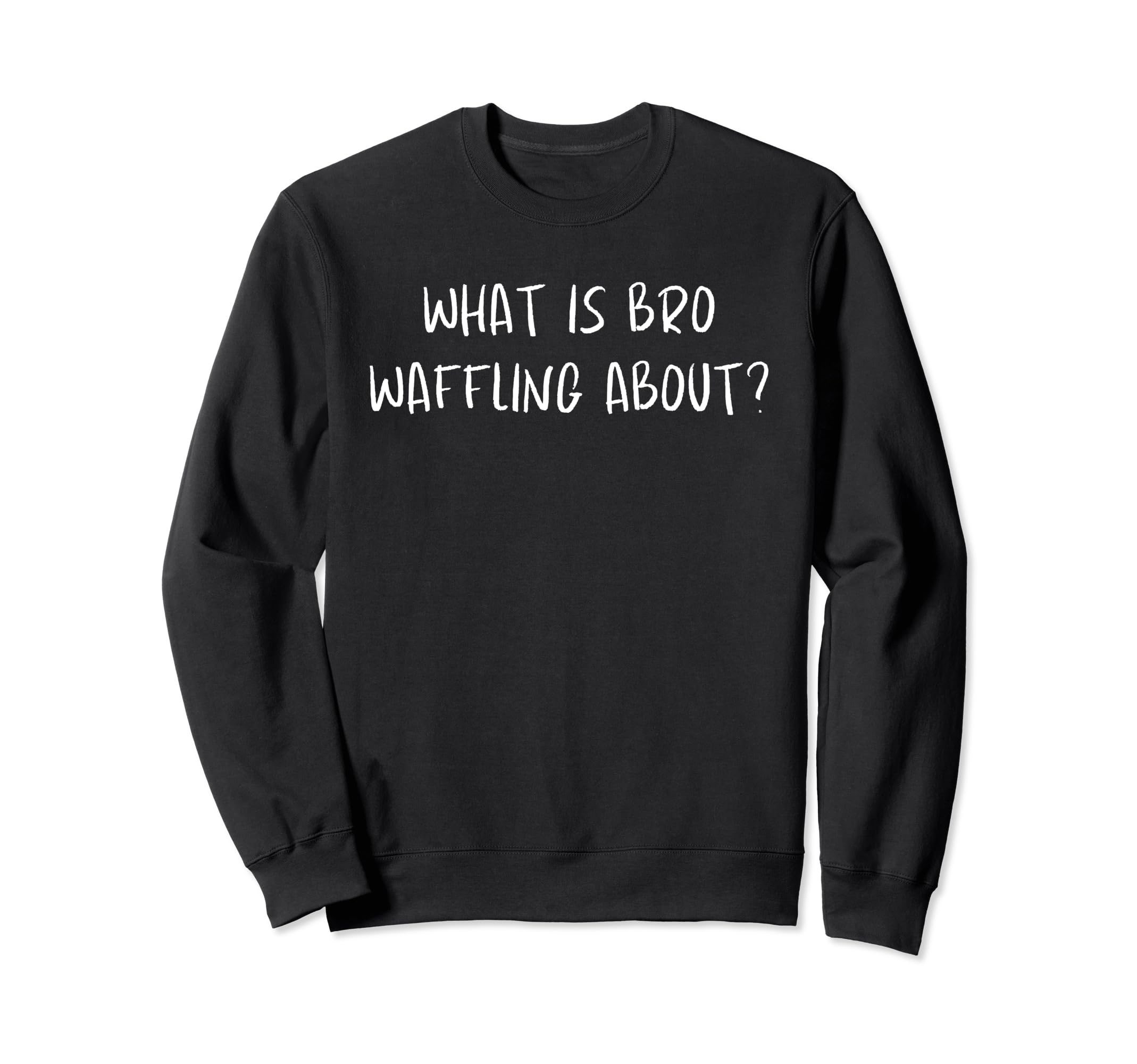
As the “what is bro waffling about” sentiment grows among tech-savvy users, developers are implementing specific strategies to ensure AI outputs remain focused, accurate, and concise. This field, often referred to as Prompt Engineering or Model Tuning, is dedicated to cutting through the digital noise.
System Prompts and Constraint Mapping
The first line of defense against waffling is the “System Prompt.” This is a hidden set of instructions given to the AI before it ever interacts with the user. By setting strict constraints—such as “be concise,” “avoid corporate jargon,” or “do not speculate if the answer is unknown”—developers can significantly reduce the likelihood of the model wandering off-task. Advanced constraint mapping involves telling the AI to “think step-by-step” internally but only provide the final, distilled answer to the user.
Retrieval-Augmented Generation (RAG)
One of the most effective tech solutions to AI waffling is Retrieval-Augmented Generation (RAG). Instead of relying solely on the model’s internal (and potentially outdated or “waffly”) training data, RAG allows the AI to look up information in a specific, verified database before responding. By grounding the AI in external facts, the model has less “room” to waffle. It finds the specific data point, presents it, and stops. This technology is currently being used to power smarter search engines and enterprise-level AI tools that require 100% accuracy.
Temperature and Top-P Settings
In the technical backend of AI tools, there are parameters known as “Temperature” and “Top-P.” These settings control the “creativity” or randomness of the model’s output. A high temperature makes the AI more likely to take risks and use diverse vocabulary, which often leads to waffling and hallucinations. By lowering these parameters in technical or financial applications, developers can force the model to stay on a narrow path of high-probability, factual tokens, effectively silencing the “waffle.”
Digital Security: The Dangers of “Waffling” in Social Engineering
While waffling can be a sign of a struggling AI, it is also becoming a tool for malicious actors in the realm of digital security. Understanding the technical side of this trend is vital for protecting digital assets.
AI-Powered Phishing and Deception
In the past, phishing emails were easy to spot due to poor grammar and obvious errors. However, bad actors are now using AI to create highly sophisticated, “waffling” prose that mimics the tone of corporate communications or legal notices. By generating long, authoritative-sounding emails, attackers can overwhelm a victim’s critical thinking. The “waffle” serves as a smoke screen, hiding a malicious link or a request for sensitive data within a sea of professional-sounding text.
Deepfakes and Synthetic Clarity
As voice and video synthesis technology improves, we are seeing the rise of “vocal waffling.” AI-generated voices can now maintain long conversations, filling gaps with “umms,” “ahhs,” and conversational filler that sounds incredibly human. This makes it harder for automated security systems to distinguish between a real human and a synthetic one. The tech community is responding by developing “deepfake detection” software that analyzes the mathematical patterns of speech, looking for the tell-tale signs of algorithmic generation that the human ear might miss.
The Future of Computational Clarity
The tech industry is currently in a “correction phase.” After the initial excitement of AI’s ability to generate massive amounts of content, the focus has shifted toward quality, precision, and clarity. The phrase “what is bro waffling about” serves as a cultural reminder that more is not always better.
The Rise of Specialized AI
We are moving away from the “one model to rule them all” approach. The future of tech lies in specialized, modular AI agents designed for specific tasks. A coding agent, for instance, will be tuned to provide the most efficient script possible, with zero verbal fluff. A legal AI will be tuned for extreme precision. By narrowing the scope of what these models are expected to do, we naturally eliminate the need for the model to “fill the gaps” with irrelevant information.

Human-Centric Design in the AI Era
Ultimately, the goal of modern technology is to serve human needs. As we integrate AI more deeply into our gadgets, apps, and workflows, the priority must be on meaningful interaction. The “waffle” is a byproduct of a technology that is still learning how to communicate with us. As we refine our algorithms, improve our data sets, and implement better guardrails, we will move toward a future where digital communication is as direct and purposeful as possible.
In conclusion, “what is bro waffling about” is more than just a meme; it is a diagnostic tool for the modern age. It highlights the friction between human expectations of clarity and the probabilistic nature of current AI. By addressing the mechanics of verbosity, implementing robust optimization strategies, and remaining vigilant against the security risks of synthetic speech, the tech industry can turn the “waffle” into a relic of the past, paving the way for a more efficient and trustworthy digital future.
aViewFromTheCave is a participant in the Amazon Services LLC Associates Program, an affiliate advertising program designed to provide a means for sites to earn advertising fees by advertising and linking to Amazon.com. Amazon, the Amazon logo, AmazonSupply, and the AmazonSupply logo are trademarks of Amazon.com, Inc. or its affiliates. As an Amazon Associate we earn affiliate commissions from qualifying purchases.