
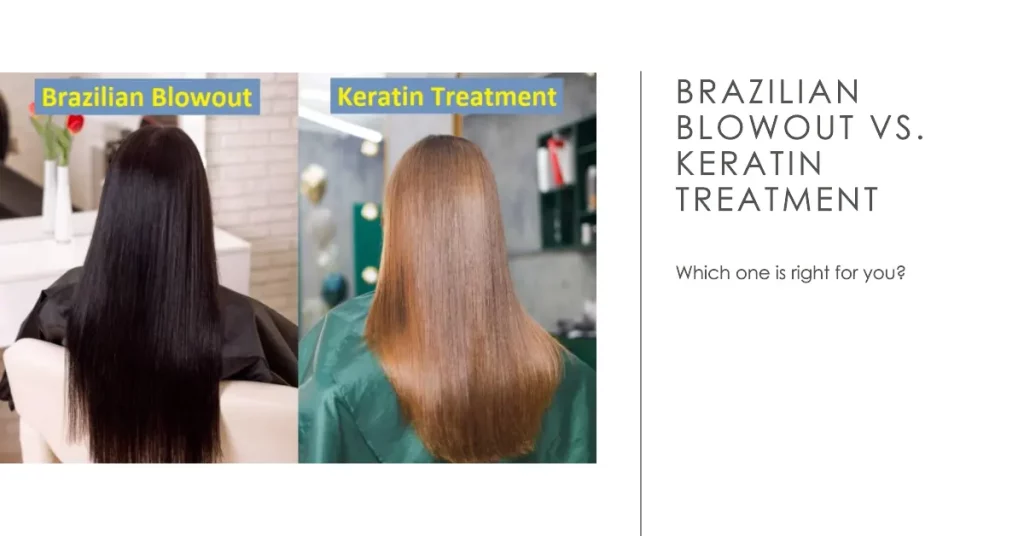
In the landscape of the global beauty industry, few innovations have demonstrated the economic resilience and revenue-generating power of Brazilian hair straightening. Often marketed under the professional moniker of a “keratin treatment” or “Brazilian blowout,” this service represents far more than a cosmetic preference; it is a multi-billion dollar vertical within the professional salon sector. To understand what Brazilian hair straightening is from a financial and business perspective, one must look past the aesthetic results and examine the microeconomics of the service, the investment required for professional mastery, and the recurring revenue models that have made it a cornerstone of modern salon profitability.

At its core, Brazilian hair straightening is a semi-permanent hair smoothing method that involves the application of a liquid keratin formula and a preservative, which is then sealed into the hair fiber using high-temperature thermal tools. However, for the salon owner and the independent stylist, it is a high-ticket service offering that bridges the gap between basic maintenance and luxury chemical restructuring.
The Microeconomics of High-Ticket Salon Services
The financial allure of Brazilian hair straightening lies in its significant profit margins and its ability to command a premium price point. Unlike a standard haircut, which is capped by the time-for-money trade-off, a keratin treatment is a specialized procedure that justifies a higher hourly rate due to the chemical expertise and physical labor involved.
Cost of Goods Sold (COGS) and Margin Analysis
In a professional setting, the cost of the raw materials—the keratin solution, clarifying shampoos, and finishing serums—typically accounts for only 10% to 15% of the total service price. For a treatment that may retail between $250 and $600 depending on the metropolitan market, the physical product cost is relatively low. The primary “cost” is the stylist’s time, usually spanning two to four hours. When broken down, the gross margin on a Brazilian hair straightening service often exceeds 70%, making it one of the most lucrative items on a salon’s service menu.
Pricing Strategies and Market Tiering
Stylists and salon owners utilize tiered pricing strategies based on hair length, density, and the specific brand of formula used. By categorizing the service into “Express” vs. “Full” treatments, businesses can capture different segments of the market. The financial objective is to maximize “chair path efficiency”—ensuring that every hour a stylist spends with a client yields the highest possible return on investment (ROI). Brazilian hair straightening is the gold standard for achieving this efficiency.
Capital Investment and the Professional ROI
Entering the market for Brazilian hair straightening requires more than just a bottle of product; it demands a calculated capital investment in both human and physical capital. For a professional to offer this service legally and effectively, they must navigate a landscape of certification costs and equipment overhead.
The Cost of Professional Certification
Most reputable manufacturers of straightening formulas require stylists to undergo proprietary training. These certification courses, which can range from $200 to $1,000, represent a barrier to entry that protects the value of the service. From a business standpoint, this is an investment in “intellectual property.” A certified stylist can charge a premium over an uncertified competitor, leveraging the brand equity of the treatment provider to build trust with high-net-worth clients.
Infrastructure and Equipment Overhead
The physical requirements for performing high-end straightening treatments include specialized high-heat flat irons (often retailing for $150–$300), high-velocity blow dryers, and specialized ventilation systems. In many jurisdictions, health and safety regulations necessitate the installation of air filtration units to manage the fumes associated with the heating of preservatives. While these represent significant upfront costs, the payback period for these investments is remarkably short. In a high-traffic salon, the cost of a high-end flat iron can be recouped in a single afternoon of treatments.
The Recurring Revenue Model: Lifetime Value of a Client
The most profound financial impact of Brazilian hair straightening is its effect on the Lifetime Value (LTV) of a client. In the world of personal finance and business growth, recurring revenue is the “holy grail.” Brazilian hair straightening is not a one-time purchase; it is a cyclical commitment.
The 12-Week Revenue Cycle
Because the results of a keratin treatment typically last between three and five months, it creates a built-in schedule for client returns. This predictability allows salon owners to forecast annual revenue with greater accuracy. A single client committed to Brazilian hair straightening represents a predictable annual revenue stream of $1,000 to $2,400 in service fees alone, excluding gratuities and retail markups.
Ancillary Revenue and Retail Pull-Through
The financial ecosystem of hair straightening extends into post-treatment care. The efficacy of the treatment is contingent upon the use of sulfate-free, sodium-chloride-free shampoos and conditioners. This creates a captive market for salon-exclusive retail products. By bundling these products into the service price or selling them as essential maintenance, salons can increase their “average ticket size” by an additional 15% to 20%. This synergy between service and retail is a primary driver of salon profitability in a competitive digital landscape where e-commerce often eats into traditional retail margins.
Global Market Dynamics and the Future of Smoothing
The “Brazilian Blowout” phenomenon has evolved into a global commodity. As we analyze the market trends, it is clear that the demand for these services is not a fad but a structural shift in the beauty economy.
M&A Activity and Brand Consolidation
The success of these treatments has led to significant mergers and acquisitions within the beauty industry. Large conglomerates often acquire smaller, specialized keratin brands to diversify their portfolios. For investors, the hair smoothing market represents a “recession-resistant” asset class. Even during economic downturns, high-income consumers tend to maintain their grooming rituals, viewing them as essential “affordable luxuries.”
Regulatory Impact on Market Stability
One of the primary risks to the financial stability of this niche is regulatory change. The presence of formaldehyde or its derivatives in some formulas has led to scrutiny from bodies like the FDA and OSHA. From a business perspective, this creates a market for “clean” or “formaldehyde-free” alternatives. Companies that pivot successfully to these safer, albeit more expensive, formulations are capturing a growing segment of health-conscious consumers. The cost of R&D for these new formulas is high, but the potential for market dominance in the “Green Beauty” sector is a significant financial incentive.

Conclusion: The Strategic Value of the Smoothing Vertical
What is Brazilian hair straightening? In the context of business and finance, it is a high-yield, labor-intensive service that leverages chemical innovation to create a recurring revenue stream with high barriers to entry and strong brand loyalty. For the stylist, it is an avenue for income acceleration. For the salon owner, it is a tool for client retention and retail growth. For the global beauty market, it is a testament to the power of specialized services in driving economic value.
By viewing Brazilian hair straightening through a financial lens, we see a sophisticated business model that balances product innovation, professional expertise, and consumer psychology. As the industry continues to evolve with new technologies and safer formulations, the core economic principles—high margins, recurring demand, and significant retail pull-through—will ensure that this service remains a cornerstone of the professional beauty economy for decades to come. Professional stylists and salon entrepreneurs who master the financial architecture of this service are not just selling “straight hair”; they are building a sustainable and highly profitable business enterprise.
aViewFromTheCave is a participant in the Amazon Services LLC Associates Program, an affiliate advertising program designed to provide a means for sites to earn advertising fees by advertising and linking to Amazon.com. Amazon, the Amazon logo, AmazonSupply, and the AmazonSupply logo are trademarks of Amazon.com, Inc. or its affiliates. As an Amazon Associate we earn affiliate commissions from qualifying purchases.