
The question of where Boeing (NYSE: BA) stock stands today is far more complex than a simple numerical ticker value. For investors, analysts, and market spectators, Boeing represents a unique intersection of industrial heritage, geopolitical significance, and high-stakes financial recovery. As one half of the global aerospace duopoly, Boeing’s stock price serves as a barometer for the health of global aviation, defense spending, and the intricacies of high-end manufacturing. To understand the stock’s current valuation, one must look beyond the daily price fluctuations and examine the structural, financial, and regulatory pillars that support—or weigh down—the company’s market capitalization.
The Factors Influencing Boeing’s Current Market Valuation
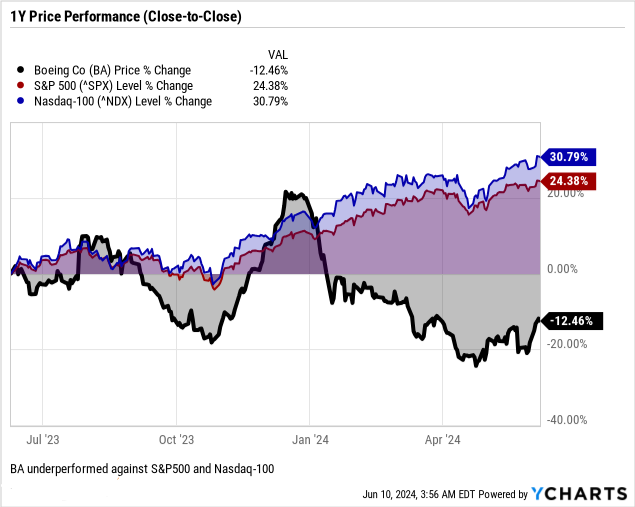
Boeing’s stock price is notoriously sensitive to headlines, perhaps more so than any other industrial giant in the S&P 500. Today’s valuation is the result of a delicate balancing act between massive order backlogs and the operational hurdles required to fulfill them. When an investor looks at the stock price, they are seeing a real-time assessment of the company’s ability to navigate three primary pressures.
Regulatory Oversight and Production Quality
The most immediate influence on Boeing’s stock “today” is the level of scrutiny from the Federal Aviation Administration (FAA) and other global regulators. Following the high-profile incidents involving the 737 MAX and subsequent quality control questions regarding the 787 Dreamliner, Boeing has been under a microscopic lens. Every report regarding production caps, safety audits, or whistleblower testimony acts as a direct catalyst for price movement.
For the stock to find a stable floor and begin a sustained upward trajectory, the market requires “boring” news—consistent, incident-free production. When the FAA imposes production limits on the 737 MAX line, it directly impacts the company’s top-line revenue projections, leading to immediate downward pressure on the stock. Conversely, milestones in clearing safety protocols or receiving certifications for new variants (like the 737-7 or 737-10) act as bullish signals for the investing community.
Delivery Rates and the Order Backlog
From a financial perspective, Boeing is a business of “deliveries.” While the company boasts a massive backlog of thousands of aircraft worth hundreds of billions of dollars, revenue is primarily recognized upon the physical delivery of the plane to the customer. Therefore, the stock price is highly sensitive to monthly delivery reports.
If Boeing delivers 50 planes in a month, the stock typically responds favorably, signaling that the “factory-to-cash” cycle is functioning. If deliveries stall due to supply chain bottlenecks—such as a shortage of engines from CFM International or seats from third-party suppliers—the stock price reflects the delayed cash inflow. Investors watch the delivery numbers for the 737 MAX and 787 Dreamliner as the primary indicators of operational health.
The Defense and Space Narrative
While commercial airplanes dominate the headlines, Boeing’s Defense, Space & Security (BDS) segment is a critical component of its valuation. This segment provides a degree of insulation against the volatility of the commercial travel market. Contracts with the U.S. Department of Defense and international allies provide long-term, predictable revenue streams. However, this segment has recently faced its own challenges with fixed-price contracts and cost overruns on programs like the KC-46A Pegasus tanker and the new Air Force One. Today’s stock price reflects the market’s skepticism regarding the margins in the defense sector, balanced against the geopolitical necessity of Boeing’s products.
Analyzing the Financial Fundamentals and Balance Sheet
To understand why Boeing stock is priced where it is today, an investor must peel back the layers of its balance sheet. The company’s financial journey over the last five years has been a study in crisis management and liquidity preservation.
The Burden of Long-term Debt
One of the most significant weights on Boeing’s stock price is its debt load. To survive the dual crises of the 737 MAX grounding and the COVID-19 pandemic—which saw global air travel grind to a halt—Boeing took on tens of billions of dollars in debt. Today, a significant portion of the company’s operating cash flow is dedicated to servicing this debt and maintaining an investment-grade credit rating.
Equity investors are wary of high leverage. When interest rates are elevated, the cost of refinancing this debt becomes more expensive, eating into potential profits. The market is currently looking for a clear path toward “deleveraging.” As Boeing uses its free cash flow to pay down its principal debt, shareholders often see a corresponding rise in equity value, as the “enterprise value” shifts from debt-holders to equity-holders.
Free Cash Flow: The North Star for Investors
In the world of aerospace investing, Free Cash Flow (FCF) is the ultimate metric. It represents the actual cash a company generates after accounting for capital expenditures. Boeing has set ambitious targets for FCF, often aiming for the $10 billion mark in the mid-term.
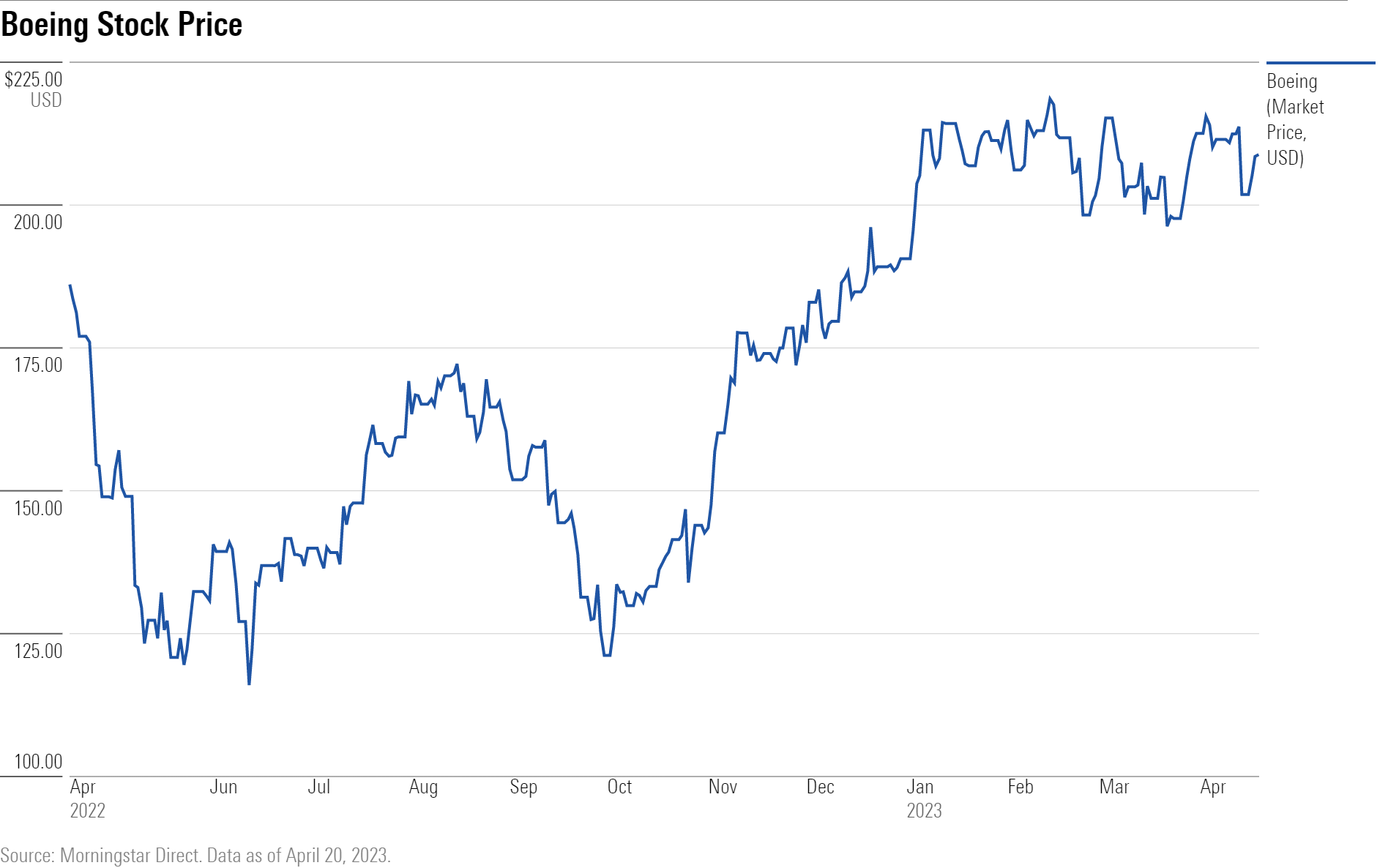
The stock price “today” is essentially a discounted projection of this future cash flow. When management provides guidance that suggests FCF will be back-weighted toward the end of the year, the stock may experience short-term volatility. Investors are looking for a return to “normalized” cash flow, which would eventually allow the company to reinstate dividends or resume share buybacks—two activities that were hallmarks of Boeing’s financial strategy prior to 2019.
The Broader Market Context and Competitive Pressures
No stock exists in a vacuum, and Boeing’s price is heavily influenced by the competitive landscape and the broader macroeconomic environment.
The Boeing vs. Airbus Duopoly
The aerospace industry is essentially a two-horse race. Every time a major airline like United, Delta, or Ryanair places a massive order, it is a zero-sum game between Boeing and its European rival, Airbus. If Airbus gains market share in the narrow-body segment with its A321neo, Boeing’s stock often suffers from a perceived loss of future dominance.
However, the duopoly also provides a “moat.” Because Airbus is also facing supply chain constraints and has a multi-year backlog, airlines cannot easily switch suppliers. This gives Boeing a certain level of “pricing power” and ensures that as long as they can fix their production issues, the demand for their product remains nearly guaranteed. The stock price reflects this “guaranteed demand” versus “execution risk.”
Interest Rates and Global Travel Demand
Boeing is a cyclical stock that thrives when the global economy is expanding and airlines are profitable. High interest rates are a double-edged sword: they make it more expensive for Boeing to carry debt, and they make it more expensive for airlines to finance the purchase of new planes.
Despite this, global passenger traffic has returned to, and in some regions exceeded, pre-pandemic levels. This secular growth in air travel is the primary “bull case” for Boeing stock. As the middle class grows in Asia and Latin America, the demand for new, fuel-efficient aircraft is expected to remain robust for decades. Today’s stock price is a tug-of-war between these long-term growth prospects and the short-term headwinds of a restrictive monetary environment.
Investment Thesis: Is Boeing a Buy, Hold, or Sell?
When determining the value of Boeing stock today, investors typically fall into one of three camps based on their risk tolerance and time horizon.
The Bull Case: The Recovery Play
Bulls argue that Boeing is a “national champion” that is too important to fail. They see the current suppressed stock price as a generational buying opportunity. From this perspective, the current production issues are temporary “teething pains” in a long-term recovery. As Boeing stabilizes its production lines and reaches its FCF targets, the stock could potentially double as it returns to its historical highs. For these investors, the current price represents a discount on a company with a massive, untouchable backlog and a critical role in global infrastructure.
The Bear Case: The Execution Risk
Bears point to the repeated missed targets and cultural issues within the company. They argue that Boeing has lost its engineering-first edge to a finance-heavy culture, leading to the quality issues seen today. From a bear’s perspective, the debt load is too high, and the competition from Airbus—and eventually China’s COMAC—will erode Boeing’s margins. They see the stock as a “value trap,” where the low price is justified by the immense risks and the possibility of further dilutive capital raises.
The Institutional Perspective: The “Hold” and “Wait-and-See”
Many institutional investors and analysts maintain a “Hold” rating on Boeing today. They recognize the incredible potential of the aerospace sector but require more evidence of “operational stability.” For these investors, the stock will remain range-bound until there are three to four consecutive quarters of meeting delivery guidance and positive free cash flow. They are looking for a “clean” earnings report without massive one-time charges or regulatory setbacks.

Conclusion: The Long View on BA
What is Boeing stock at today? It is at a crossroads. It is a reflection of a company transitioning from a period of unprecedented crisis into a phase of rigorous self-correction and recovery. The price is a composite of the world’s desire for travel, the complexities of modern engineering, and the unforgiving nature of the financial markets.
For the disciplined investor, Boeing is not a stock for day-trading on headlines. It is a long-term play on the reality that the world needs more planes, more satellites, and more defense systems every year. While the “today” price may be volatile, the underlying value of the company is tied to its ability to safely and efficiently build the machines that connect the world. As the company clears its regulatory hurdles and streamlines its manufacturing, the financial metrics—and consequently the stock price—will likely follow the path of the aircraft they build: upward.
aViewFromTheCave is a participant in the Amazon Services LLC Associates Program, an affiliate advertising program designed to provide a means for sites to earn advertising fees by advertising and linking to Amazon.com. Amazon, the Amazon logo, AmazonSupply, and the AmazonSupply logo are trademarks of Amazon.com, Inc. or its affiliates. As an Amazon Associate we earn affiliate commissions from qualifying purchases.