
Blockchain has rapidly evolved from an esoteric concept associated primarily with cryptocurrencies to a foundational technology promising to reshape numerous industries. At its core, blockchain is an ingenious method for storing and managing data in a highly secure, transparent, and immutable manner. It represents a significant paradigm shift in how information is recorded and shared, moving away from centralized authorities towards a distributed, peer-to-peer network. Understanding blockchain requires delving into its fundamental architectural principles, the cryptographic techniques that underpin its security, and the consensus mechanisms that maintain its integrity. Far from being a mere buzzword, blockchain offers practical solutions to long-standing challenges in data management, security, and trust. This exploration will demystify blockchain, breaking down its complex mechanisms into understandable components and illustrating its vast potential beyond its initial application in digital currencies.
Understanding the Foundational Concepts of Blockchain
At its heart, blockchain is a distributed ledger technology (DLT) designed to create an unchangeable record of transactions. Unlike traditional databases, which are often centralized and controlled by a single entity, blockchain distributes its ledger across a vast network of computers. This decentralization is key to its resilience and security.
The Distributed Ledger Technology (DLT)
A distributed ledger is a database that is shared, replicated, and synchronized among multiple participants across a network. Instead of a central administrator maintaining a single, authoritative copy, every participant (or “node”) on the network holds an identical copy of the ledger. Whenever a new transaction occurs, it is recorded and broadcast to all nodes, which then validate and add it to their respective ledgers. This distributed nature eliminates single points of failure, making the system incredibly robust and resistant to censorship or data manipulation. If one node fails, the rest of the network continues to operate seamlessly, ensuring continuous availability and data integrity. The transparency inherent in DLT means that all participants can view the complete history of transactions, fostering trust without the need for an intermediary.
Immutability and Cryptographic Hashing
One of blockchain’s most revolutionary features is its immutability. Once a transaction is recorded on the blockchain, it cannot be altered or deleted. This property is achieved through sophisticated cryptographic hashing. Every block in the blockchain contains a unique cryptographic hash of its own data, along with the hash of the previous block. A cryptographic hash function is a mathematical algorithm that takes an input (data) and returns a fixed-size string of characters, known as a hash value or digest. Even a tiny change to the input data will result in a completely different hash value.
When a new block is added to the chain, its hash is generated, and it also includes the hash of the preceding block. This creates a tamper-evident chain: if anyone tries to alter a transaction in an earlier block, its hash will change. Consequently, the hash of the subsequent block (which included the original hash) will no longer match, breaking the entire chain. This cryptographic link makes it practically impossible to tamper with past records without being detected by the network, thus guaranteeing the ledger’s integrity and trustworthiness.
Consensus Mechanisms: The Heart of Decentralization
For a distributed system like blockchain to function without a central authority, all participating nodes must agree on the validity of transactions and the order in which new blocks are added to the chain. This agreement is reached through what are known as consensus mechanisms. These algorithms ensure that the entire network operates under the same set of rules and maintains a single, consistent ledger.
The most well-known consensus mechanism is Proof of Work (PoW), famously used by Bitcoin. In PoW, “miners” compete to solve complex computational puzzles. The first miner to find a solution gets to add the next block to the chain and is rewarded. This process is computationally intensive, making it difficult and expensive to manipulate the network. Other mechanisms exist, such as Proof of Stake (PoS), where validators are chosen to create new blocks based on the amount of cryptocurrency they hold and are willing to “stake” as collateral. PoS is generally more energy-efficient and scalable than PoW. Regardless of the specific mechanism, the goal of consensus is to establish trust and agreement across a decentralized network, preventing malicious actors from controlling the ledger or introducing fraudulent transactions.
The Mechanics Behind a Blockchain Transaction
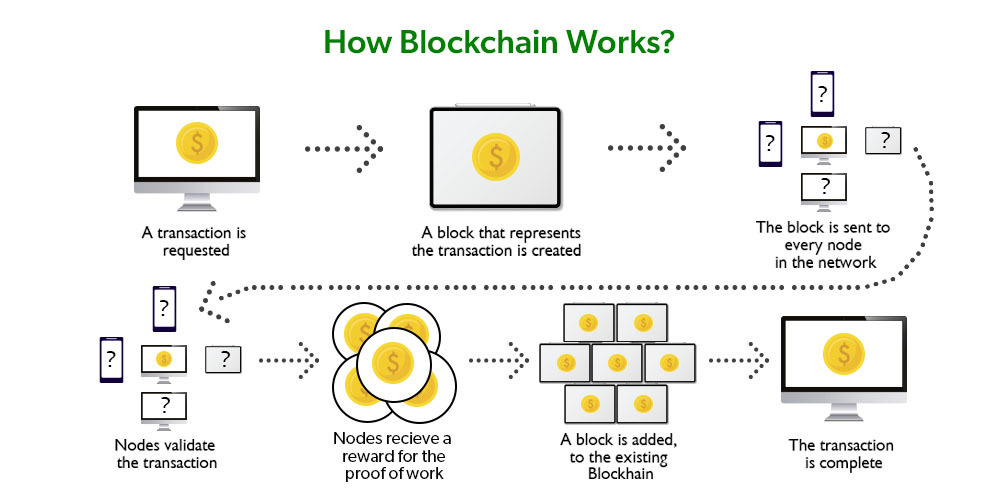
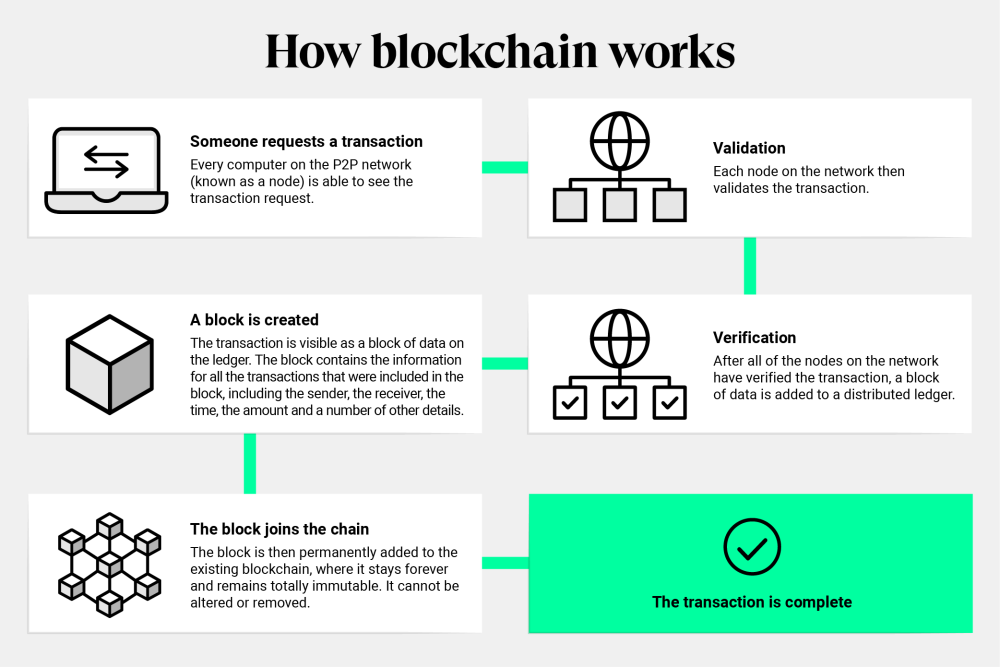
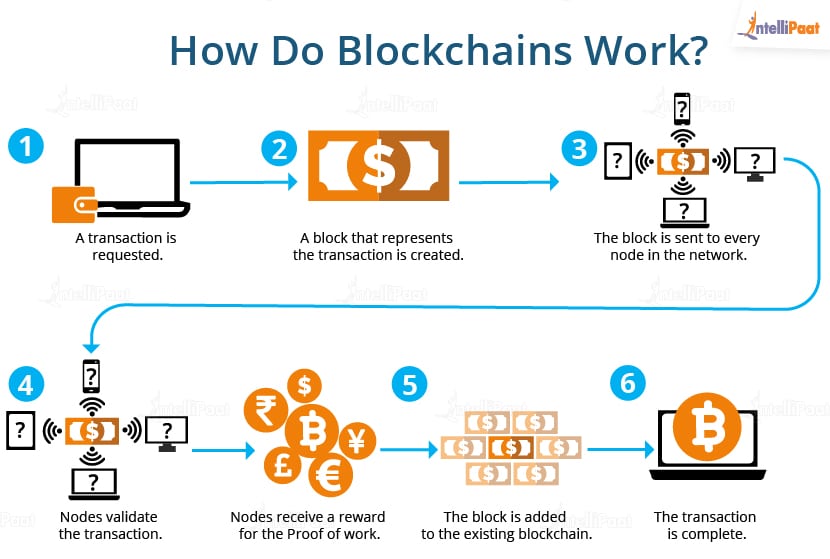
Understanding the foundational concepts sets the stage for comprehending the lifecycle of a transaction on a blockchain. From initiation to final confirmation, a series of cryptographic and network processes ensure data integrity and security.
Initiating a Transaction
A blockchain transaction typically begins when a user wants to send value (like cryptocurrency) or record data (like a supply chain update). The user creates a transaction, which includes details such as the sender’s address, the recipient’s address, and the amount or data being transferred. This transaction is then digitally signed by the sender using their private key. The private key is a secret alphanumeric code known only to the sender, and it’s mathematically linked to their public key (their blockchain address). This digital signature proves the sender’s identity and ensures that the transaction has not been tampered with since it was signed. Without the correct private key, a transaction cannot be authorized, providing a strong layer of security against unauthorized access.
Block Creation and Validation
Once signed, the transaction is broadcast to the entire blockchain network. It doesn’t immediately become part of the blockchain; instead, it enters a “mem-pool” or transaction pool, awaiting confirmation. Network nodes, specifically “miners” (in PoW systems) or “validators” (in PoS systems), collect a batch of these pending transactions and assemble them into a candidate block. Before this block can be added to the chain, it must be validated. Validation involves several checks: verifying the digital signatures, ensuring the sender has sufficient funds or authority for the transaction, and confirming that no double-spending attempts are present.
For PoW blockchains, the miner then attempts to solve a cryptographic puzzle (finding a “nonce” that, when combined with the block data, produces a hash below a certain target). This process is computationally intensive and acts as a security measure, making it costly to create fraudulent blocks. The first miner to solve the puzzle successfully “mines” the block.
Adding Blocks to the Chain
Upon successful mining or validation, the newly created block (containing the validated transactions) is broadcast to all other nodes in the network. Each node independently verifies the newly submitted block, checking its validity, the proof-of-work (if applicable), and ensuring it adheres to the network’s rules. If the block is deemed valid by a majority of the network, it is added to the end of their copy of the blockchain.
Crucially, the new block includes the cryptographic hash of the previous block, permanently linking it to the chain and making the entire sequence immutable. This process of adding blocks sequentially creates an ever-growing, unbroken chain of verified transactions. The more blocks that are added on top of a particular transaction, the more “confirmed” and irreversible that transaction becomes, as it would require re-mining all subsequent blocks to alter it—an economically and computationally prohibitive task for large, active networks.
Key Characteristics and Types of Blockchains
Blockchain technology derives its strength from several inherent characteristics that distinguish it from traditional data management systems. These characteristics also lead to different types of blockchain implementations, each suited for specific use cases.
Decentralization and Transparency
Decentralization is arguably blockchain’s most defining feature. By distributing the ledger across a network of independent nodes, blockchain eliminates the need for a central authority or intermediary to validate transactions and maintain the database. This architecture democratizes data control, reducing reliance on single entities that could be vulnerable to censorship, manipulation, or failure. Data is openly shared and validated by the network, not by a single gatekeeper. While the specific identities of participants might be pseudonymous (e.g., wallet addresses), the transactions themselves are typically transparent and auditable by anyone on the network. This transparency fosters trust among participants who might not otherwise trust each other or a central intermediary, paving the way for more efficient and secure interactions.
Security and Pseudonymity
The security of blockchain is multifaceted, relying heavily on its cryptographic underpinnings and distributed nature. As discussed, cryptographic hashing ensures immutability, making it exceedingly difficult to alter past records without detection. The decentralized architecture protects against single points of attack; to compromise the network, an attacker would need to control a significant portion (often more than 51%) of its computational power or validating nodes, which is an immense and costly undertaking for established blockchains.
Regarding identity, most public blockchains offer pseudonymity rather than full anonymity. Users interact using cryptographic addresses (public keys) that are not directly linked to their real-world identities. While transactions are transparent and traceable on the ledger, associating an address with a specific individual typically requires external information. This balance provides a degree of privacy while maintaining accountability within the network.
Public, Private, and Consortium Blockchains
Not all blockchains are designed the same way, and their architecture often depends on their intended purpose:
- Public Blockchains: These are permissionless networks, meaning anyone can join, participate in the consensus process, and read/write transactions. Bitcoin and Ethereum are prime examples. They offer the highest degree of decentralization and transparency but often face scalability challenges and can be resource-intensive.
- Private Blockchains: Also known as permissioned blockchains, these networks are controlled by a single organization. Participation requires an invitation and is restricted. While they offer faster transaction speeds and greater privacy due to fewer participants, they sacrifice decentralization. They are often used within enterprises for internal processes or specific business applications where full public transparency isn’t desired.
- Consortium Blockchains: These are a hybrid model, permissioned but governed by a group of organizations rather than a single entity. They offer a balance between decentralization and control, making them suitable for industry-specific applications where multiple companies need to collaborate on a shared ledger. Examples include supply chain networks or interbank settlement systems.
Beyond Cryptocurrencies: Diverse Applications of Blockchain Technology
While blockchain first gained prominence through Bitcoin, its potential extends far beyond digital currencies. Its core properties of immutability, transparency, and decentralization make it a transformative technology applicable across numerous sectors.
Supply Chain Management and Traceability
One of the most promising applications of blockchain is in revolutionizing supply chain management. Traditional supply chains are often opaque and fragmented, making it difficult to trace products from origin to consumer. Blockchain can create an immutable, shared ledger of every step in a product’s journey—from raw materials, manufacturing, shipping, and distribution to retail. Each transfer of ownership or change in status can be recorded as a transaction. This provides unprecedented transparency and traceability, enabling companies to quickly identify sources of contamination, verify ethical sourcing, reduce counterfeiting, and optimize logistics. Consumers could even scan a QR code to see a product’s full history, fostering greater trust and accountability.
Digital Identity and Record Keeping
Managing digital identity is a growing challenge in an increasingly online world. Blockchain offers a solution by enabling “self-sovereign identity,” where individuals control their own digital identities and share verifiable credentials selectively, rather than relying on centralized databases controlled by governments or corporations. For example, a university could issue a diploma as a cryptographic credential on a blockchain, which the graduate can then present to an employer. The employer can instantly verify its authenticity without needing to contact the university directly. Similarly, blockchain can secure medical records, academic transcripts, land titles, and other vital documents, making them tamper-proof and easily verifiable while giving individuals control over who accesses their sensitive information.
Smart Contracts and Decentralized Applications (dApps)
Smart contracts are self-executing contracts with the terms of the agreement directly written into lines of code. They run on a blockchain, automatically executing and enforcing the terms when predefined conditions are met. For instance, a smart contract could automatically release payment to a supplier once a shipment is verified as delivered and inspected, removing the need for intermediaries. This automation reduces costs, speeds up processes, and minimizes human error and fraud.
Building on smart contracts, Decentralized Applications (dApps) are applications that run on a blockchain network, operating autonomously without a central authority. Unlike traditional apps that rely on centralized servers, dApps distribute their backend logic across a peer-to-peer network. This makes them resistant to censorship and downtime and ensures data integrity. Examples include decentralized finance (DeFi) platforms, gaming platforms, and social media networks that prioritize user control and data ownership.
Enhancing Cybersecurity and Data Integrity
Blockchain’s inherent security features are a natural fit for enhancing cybersecurity. Its distributed and immutable ledger makes it incredibly difficult for hackers to alter records without detection. This can be applied to secure critical infrastructure, election systems, and even IoT devices, where data integrity is paramount. By recording data provenance and ensuring that every modification is transparently logged, blockchain can create robust audit trails that are resistant to tampering. Furthermore, the cryptographic principles underlying blockchain can be used to improve authentication systems, moving beyond traditional passwords to more secure, verifiable methods.
The Future Landscape of Blockchain Technology
While blockchain has made significant strides, it is still an evolving technology. Addressing its current limitations and exploring new innovations will define its trajectory in the coming years.
Addressing Scalability and Interoperability Challenges
One of the primary challenges for many public blockchains is scalability—the ability to process a large volume of transactions quickly and efficiently. Early blockchain designs, particularly PoW systems, prioritize security and decentralization, which often comes at the cost of transaction speed and throughput. Solutions like sharding, layer-2 protocols (e.g., Lightning Network, rollups), and alternative consensus mechanisms (e.g., PoS) are being developed and implemented to enhance scalability. These innovations aim to allow blockchain networks to handle enterprise-level transaction volumes without compromising decentralization or security.
Another critical challenge is interoperability: the ability for different blockchain networks to communicate and exchange data or assets seamlessly. Currently, many blockchains operate as isolated silos. Efforts are underway to develop cross-chain bridges, protocols, and standards that enable different blockchains to interact, fostering a more interconnected and efficient decentralized ecosystem. This will be crucial for broader adoption, allowing specialized blockchains to collaborate and leverage each other’s strengths.
Emerging Trends and Innovations
The blockchain landscape is continuously innovating. Beyond scalability and interoperability, several other trends are shaping its future:
- Zero-Knowledge Proofs (ZKPs): These cryptographic methods allow one party to prove that they possess certain information or that a statement is true, without revealing any of the underlying information itself. ZKPs can significantly enhance privacy and efficiency on blockchains, enabling verifiable computations or transactions without exposing sensitive data.
- Decentralized Autonomous Organizations (DAOs): DAOs are organizations represented by rules encoded as a transparent computer program, controlled by the organization’s members, and not influenced by a central government. They represent a new model for governance and collaboration, leveraging blockchain for transparent decision-making and automated execution.
- Web3: Blockchain is a foundational technology for Web3, a vision for the next iteration of the internet that is decentralized, user-centric, and powered by blockchain technologies. Web3 aims to give users more control over their data and digital assets, moving away from the centralized platforms that dominate Web2.
- Tokenization of Real-World Assets: The ability to represent tangible assets (like real estate, art, or commodities) as digital tokens on a blockchain offers new avenues for liquidity, fractional ownership, and transparent asset management. This has the potential to democratize access to investments and streamline traditional asset markets.
In conclusion, blockchain is far more than just the technology behind cryptocurrencies. It represents a fundamental shift in how data is managed, secured, and shared in a decentralized world. With ongoing innovations addressing its limitations, blockchain is poised to become an increasingly integral part of our digital infrastructure, unlocking new possibilities for transparency, efficiency, and trust across a multitude of industries. Its continued evolution will undoubtedly reshape the technological landscape, fostering a more secure and interconnected future.
aViewFromTheCave is a participant in the Amazon Services LLC Associates Program, an affiliate advertising program designed to provide a means for sites to earn advertising fees by advertising and linking to Amazon.com. Amazon, the Amazon logo, AmazonSupply, and the AmazonSupply logo are trademarks of Amazon.com, Inc. or its affiliates. As an Amazon Associate we earn affiliate commissions from qualifying purchases.