
In the rapidly evolving landscape of the digital age, few innovations have promised as much systemic change as blockchain technology. Often misunderstood as merely the engine behind cryptocurrencies, blockchain is, at its core, a sophisticated architectural framework for managing data. It represents a paradigm shift in how information is recorded, shared, and synchronized across a network. By eliminating the need for a central authority and replacing it with mathematical certainty, blockchain introduces a level of transparency and security that was previously unattainable in digital environments.
To understand blockchain is to understand the future of the internet itself—often referred to as Web3—where the “internet of information” matures into the “internet of value.”
Understanding the Core Architecture of Blockchain
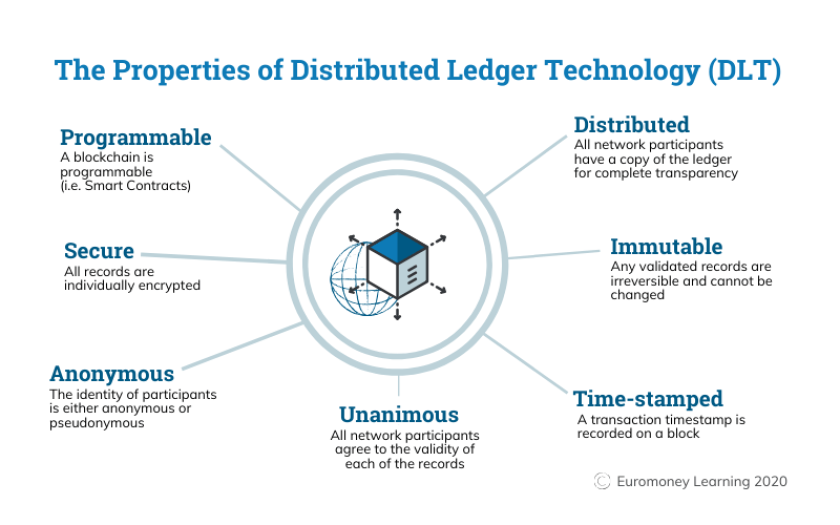
At its most fundamental level, a blockchain is a distributed, immutable ledger that records transactions across a network of computers. Unlike a traditional database managed by a single entity (such as a bank or a government agency), a blockchain is decentralized. This means that every participant in the network has access to the same record of truth, and no single participant can alter the data without the consensus of the others.
The Concept of a Distributed Ledger
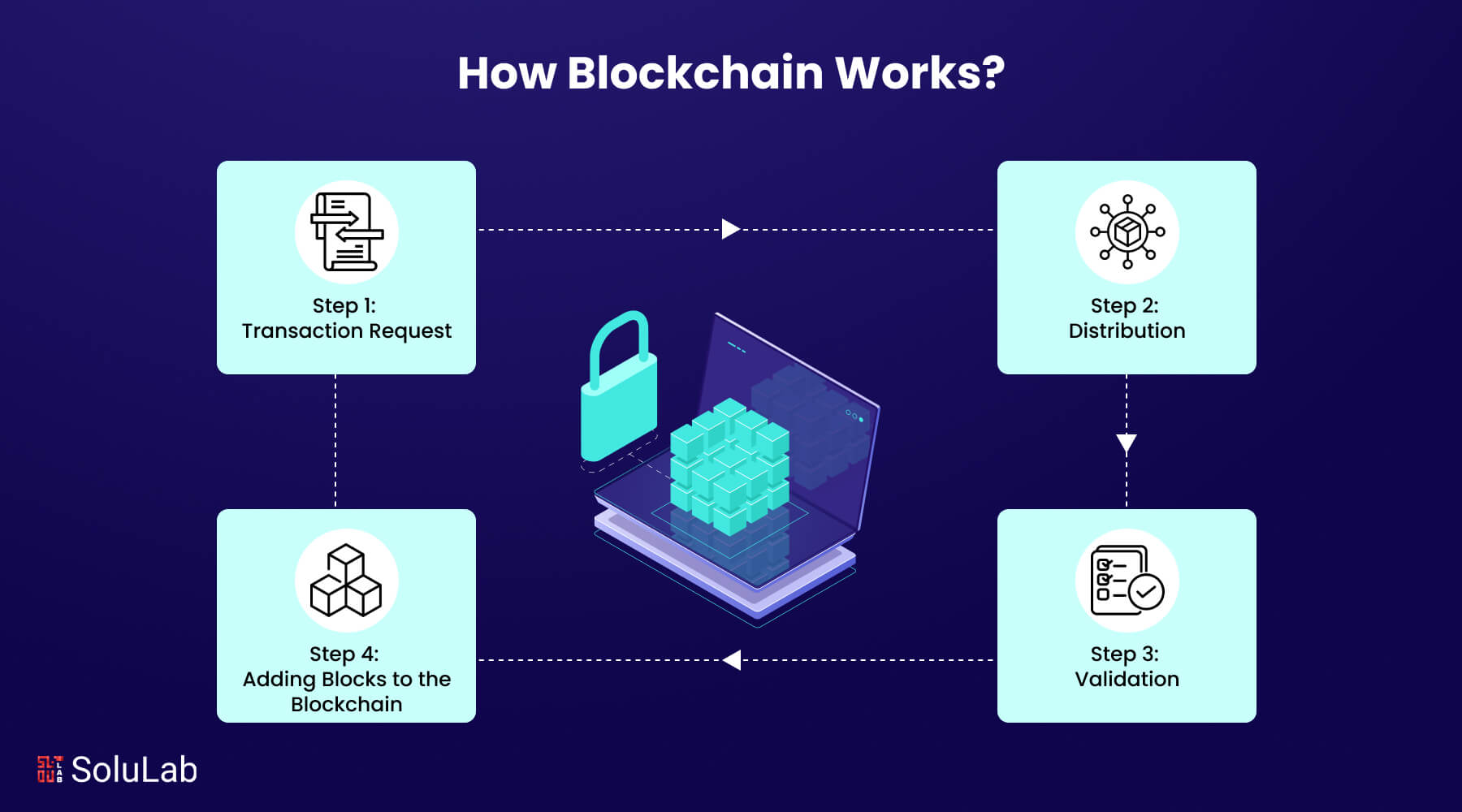
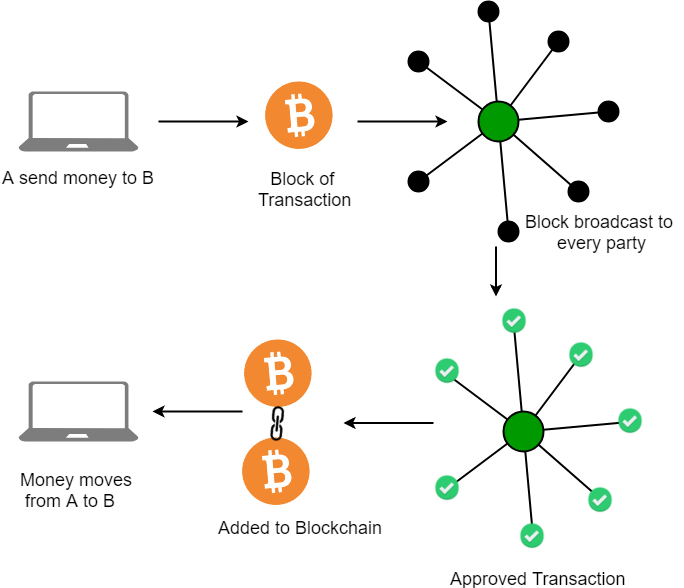
In a centralized system, a single master ledger is kept by a central authority. If that authority’s server is hacked or suffers a technical failure, the entire system is compromised. Blockchain utilizes a Distributed Ledger Technology (DLT). In this model, the ledger is replicated and synchronized across thousands of independent computers, known as “nodes.” This redundancy ensures that the system remains operational even if several nodes go offline, and it makes unauthorized data tampering nearly impossible.
Blocks, Chains, and Cryptographic Hashes
The “block” in blockchain refers to a digital container of data. Each block contains a list of validated transactions, a timestamp, and a unique identifier called a “hash.” A hash is generated through a cryptographic algorithm (such as SHA-256) that turns any input data into a unique string of characters.
The “chain” is formed because each new block also contains the hash of the block that preceded it. This creates a mathematical link between the blocks. If a single bit of data in an old block is changed, its hash changes, which invalidates the subsequent block, and consequently the entire chain. This structural dependency is what makes the technology “immutable.”
Nodes and the Peer-to-Peer Network
The infrastructure of a blockchain relies on a Peer-to-Peer (P2P) network. Nodes are the individual computers that run the blockchain software. There are different types of nodes:
- Full Nodes: These maintain a complete copy of the blockchain history and verify every transaction.
- Light Nodes: These store only a portion of the ledger and rely on full nodes for verification, making them suitable for mobile devices.
- Mining/Validating Nodes: These are specialized nodes that perform the heavy lifting of adding new blocks to the chain.
The Mechanics of Consensus Mechanisms
One of the greatest technical challenges in a decentralized system is reaching an agreement on the state of the ledger without a central boss. This is solved through “consensus mechanisms”—mathematical protocols that ensure all nodes stay in sync.
Proof of Work (PoW) and Mining
Proof of Work was the first consensus mechanism, popularized by Bitcoin. In this system, “miners” compete to solve complex mathematical puzzles. The first one to solve the puzzle earns the right to add the next block to the chain and receives a reward. This process is intentionally resource-intensive to prevent spam and protect the network from attacks. While highly secure, PoW is often criticized for its high energy consumption, leading the tech industry to explore more efficient alternatives.
Proof of Stake (PoS) and Validating
Proof of Stake is a more modern, energy-efficient alternative. Instead of using computational power to “mine” blocks, participants “stake” or lock up a certain amount of the network’s native tokens to become validators. The network chooses validators to create new blocks based on the size of their stake and other factors. If a validator attempts to cheat the system, they lose their staked assets. This alignment of economic incentives and technical security is the foundation for major networks like Ethereum 2.0.
Emerging Consensus Protocols
As the technology matures, new protocols are emerging to solve specific technical hurdles. Practical Byzantine Fault Tolerance (PBFT) is used in private or “permissioned” blockchains where speed is a priority. Proof of Authority (PoA) relies on the reputation of specific nodes, making it ideal for corporate supply chains. These variations allow blockchain technology to be tailored to specific software requirements and performance needs.
Security Foundations and Immutability
Security is the primary reason why developers and enterprises are gravitating toward blockchain. In a world of frequent data breaches, the architectural security of a blockchain offers a “trustless” environment where users don’t have to trust each other; they only have to trust the code.
Cryptographic Foundations
Blockchain relies heavily on asymmetric cryptography (public-private key pairs). Every user has a public key, which acts like an email address or an account number, and a private key, which acts like a digital signature or password. Transactions are signed using the private key, providing proof of ownership and intent without ever revealing the key itself. This ensures that only the rightful owner of a digital asset can initiate a transfer.
Decentralization as a Security Feature
In traditional tech stacks, there is a “single point of failure.” In a blockchain, the data is everywhere and nowhere at the same time. To successfully hack a major public blockchain, an attacker would need to compromise more than half of the nodes simultaneously, which is computationally and financially prohibitive. This makes the ledger effectively resistant to censorship and unauthorized alterations.
The Problem of the “51% Attack”
While blockchain is highly secure, it is not invincible. A “51% attack” occurs if a single entity gains control of more than half of the network’s computing power (in PoW) or staked assets (in PoS). If successful, the attacker could theoretically prevent new transactions from being confirmed or “double-spend” assets. However, for large, established networks, the cost of mounting such an attack far outweighs the potential gains, serving as a powerful deterrent.
Smart Contracts and the Programmable Web
The most significant evolution in blockchain technology since its inception is the move from simple ledgers to “programmable” blockchains. This was spearheaded by the launch of Ethereum, which introduced the concept of Smart Contracts.
What are Smart Contracts?
A smart contract is a self-executing contract with the terms of the agreement directly written into lines of code. They reside on the blockchain and automatically execute when predefined conditions are met. For example, a smart contract could be programmed to release payment to a vendor only after a shipping carrier confirms the delivery of goods. This removes the “middleman”—such as a lawyer or an escrow agent—from the equation, reducing costs and increasing speed.
Ethereum and the Birth of dApps
By enabling smart contracts, blockchain became a platform for Decentralized Applications (dApps). These are software applications that run on a P2P network rather than a central server. This technology has birthed entirely new sectors in the tech world, such as Decentralized Finance (DeFi) and Non-Fungible Tokens (NFTs), which allow for the digital ownership of unique assets.
Industrial Applications Beyond Finance
The programmable nature of blockchain extends far beyond digital currency:
- Supply Chain Management: Real-time tracking of goods from origin to consumer, ensuring authenticity.
- Identity Management: Providing individuals with a secure, sovereign digital identity that they control.
- Healthcare: Securely sharing patient records between providers while maintaining strict privacy and audit trails.
The Future Landscape: Scalability and Interoperability
As blockchain technology moves toward mass adoption, the tech community is focused on overcoming its “trilemma”: the struggle to achieve decentralization, security, and scalability simultaneously.
Layer 2 Solutions and Sharding
Early blockchains were slow, often handling only a handful of transactions per second. To solve this, developers are building “Layer 2” solutions—protocols that sit on top of the main blockchain to handle high-volume traffic. Examples include “Rollups” and “Sidechains,” which bundle transactions together before settling them on the main chain. Additionally, “Sharding” is a technique that breaks the blockchain into smaller, more manageable pieces (shards) to allow for parallel processing.
Cross-Chain Communication
In the current ecosystem, different blockchains (like Bitcoin, Ethereum, and Solana) operate as isolated islands. The future of the tech lies in “interoperability”—the ability for different blockchains to communicate and share data seamlessly. Protocols like Polkadot and Cosmos are building the “Internet of Blockchains,” creating bridges that allow assets and information to flow freely across diverse networks.
The Integration of AI and Blockchain
The intersection of Artificial Intelligence (AI) and blockchain is one of the most exciting frontiers in technology. While AI can analyze vast amounts of data to make decisions, blockchain can provide a transparent record of why those decisions were made. Furthermore, blockchain can be used to decentralize AI models, preventing a few large tech corporations from monopolizing the world’s most powerful algorithms.
In conclusion, blockchain technology is far more than a trend; it is a fundamental restructuring of digital infrastructure. By providing a secure, transparent, and decentralized way to manage data and execute code, it is laying the groundwork for a more efficient and equitable digital future. Whether through smart contracts, enhanced security protocols, or global interoperability, the technological impact of blockchain will continue to resonate across every sector of the modern world.
aViewFromTheCave is a participant in the Amazon Services LLC Associates Program, an affiliate advertising program designed to provide a means for sites to earn advertising fees by advertising and linking to Amazon.com. Amazon, the Amazon logo, AmazonSupply, and the AmazonSupply logo are trademarks of Amazon.com, Inc. or its affiliates. As an Amazon Associate we earn affiliate commissions from qualifying purchases.