
The title “What is Bleeding Brakes” clearly falls into the Tech category. This topic directly relates to the mechanics and functioning of a critical automotive system, involving fluid dynamics, components, and the technology behind ensuring safe and effective operation. While brakes involve money (repair costs) and can be a brand differentiator (performance braking systems), the core subject matter is unequivocally technical. Therefore, this article will focus exclusively on the technological aspects of brake bleeding.
Understanding the Hydraulic Foundation of Your Braking System
At its heart, your car’s braking system is a marvel of hydraulic engineering. Unlike mechanical brakes, which directly connect the brake pedal to the braking mechanism through cables, hydraulic brakes utilize fluid pressure to transmit force. This allows for greater control, more even application of braking force across multiple wheels, and the ability to operate complex anti-lock braking systems (ABS).
The Role of Brake Fluid: The Unsung Hero
Brake fluid is the lifeblood of your hydraulic braking system. It’s a specialized, non-compressible fluid designed to transmit the pressure applied by your foot on the brake pedal to the brake calipers or wheel cylinders. When you press the brake pedal, a piston within the master cylinder is pushed, forcing the brake fluid through a network of brake lines. This fluid then acts upon pistons in the calipers (for disc brakes) or wheel cylinders (for drum brakes), which in turn push the brake pads against the rotors or brake shoes against the drums, slowing or stopping the vehicle.
Several key properties make brake fluid ideal for this role:
- High Boiling Point: Under heavy braking, friction generates significant heat. If the brake fluid boils, it creates vapor pockets. Vapor is compressible, unlike liquid, meaning when you press the brake pedal, the pressure will compress the vapor instead of transmitting force to the brakes. This leads to a spongy pedal feel and a dangerous loss of braking ability – a phenomenon known as “brake fade.” Automotive brake fluids are therefore formulated with very high boiling points to prevent this.
- Non-Compressibility: As mentioned, the primary function of brake fluid is to transmit force. Its liquid form ensures that the pressure applied at the master cylinder is directly and efficiently transferred to the braking components.
- Lubrication: Brake fluid also lubricates the moving parts within the master cylinder and calipers/wheel cylinders, contributing to the longevity and smooth operation of the braking system.
- Corrosion Inhibition: The fluid contains additives that protect the metal components of the braking system from rust and corrosion.
However, brake fluid is hygroscopic, meaning it absorbs moisture from the atmosphere over time. This absorbed moisture lowers the boiling point of the fluid, making it more susceptible to boiling and brake fade. It also accelerates corrosion within the system. This is a primary reason why regular brake fluid flushes and replacements are crucial for maintaining braking performance and safety.
The Components of a Hydraulic Brake System
To fully grasp the concept of brake bleeding, it’s essential to understand the key components it involves:
- Brake Pedal: The input point for the driver.
- Master Cylinder: A hydraulic pump that converts the mechanical force from the brake pedal into hydraulic pressure. It contains reservoirs to hold the brake fluid.
- Brake Lines (or Hoses): Tubes (typically made of steel or reinforced rubber) that carry the pressurized brake fluid from the master cylinder to the individual wheel brakes.
- Calipers (Disc Brakes): Units that house the brake pads and pistons. When pressurized fluid reaches the caliper, it forces the pistons to push the brake pads against the rotor.
- Brake Rotors (Disc Brakes): Metal discs attached to the wheel hub that the brake pads clamp onto.
- Wheel Cylinders (Drum Brakes): Cylinders that house pistons. When pressurized fluid reaches the wheel cylinder, it forces the pistons outwards, pushing the brake shoes against the inner surface of the brake drum.
- Brake Shoes/Pads: Friction materials that press against the rotors or drums to create the stopping force.
- Bleeder Valves: Small, screw-like valves located on each brake caliper or wheel cylinder. These valves are the focal point of the brake bleeding process.
The Problem of Air in the Hydraulic System
Even with a perfectly engineered hydraulic system, a critical vulnerability exists: air. Air, unlike brake fluid, is compressible. When air enters the brake lines, it disrupts the efficient transfer of hydraulic pressure.
How Air Enters the System
Air can infiltrate your braking system through several common scenarios:
- Low Brake Fluid Level: If the brake fluid level in the master cylinder reservoir drops too low, especially during spirited driving or due to a leak, air can be drawn into the system.
- Component Replacement or Repair: Whenever a part of the hydraulic system is opened, such as replacing brake lines, calipers, wheel cylinders, or even brake pads (if the caliper pistons are fully retracted), air inevitably enters.
- Leaking Seals: Worn or damaged seals in the master cylinder, calipers, or wheel cylinders can allow air to seep into the system while simultaneously allowing brake fluid to escape.
- Aging Brake Fluid: As brake fluid absorbs moisture and deteriorates over time, it can lose its ability to effectively seal, potentially contributing to air ingress, though this is a less direct cause than leaks or component work.
The Consequences of Air in the Brake Lines
The presence of air in your brake lines is not a minor inconvenience; it’s a significant safety hazard. The compressibility of air leads to a noticeable degradation in braking performance:
- Spongy or Soft Brake Pedal: This is the most common symptom. When you press the brake pedal, instead of feeling firm and responsive, it will feel mushy and travel much further towards the floor. This is because the initial pedal travel is spent compressing the air bubbles within the lines before the hydraulic pressure can effectively reach the brakes.
- Reduced Braking Power: With air in the system, less hydraulic pressure is transmitted to the brakes. This means you’ll need to press harder on the pedal to achieve the same stopping force, and in extreme cases, braking can become dangerously ineffective.
- Inconsistent Braking: The air bubbles can shift and move within the lines, leading to unpredictable braking response. One pedal press might feel different from the next.
- Complete Brake Failure (in severe cases): If enough air is present, the braking system may fail entirely, leaving you without any means to slow down.
Therefore, identifying and removing air from the hydraulic braking system, a process known as “bleeding,” is a critical maintenance procedure.
The Technical Process of Bleeding Brakes
Brake bleeding is the process of forcing air out of the hydraulic brake system by pushing fresh brake fluid through it. This ensures that only incompressible fluid is present in the lines, restoring optimal braking performance and safety. While the underlying principle is simple, the execution requires careful attention to detail and specific tools.
Methods of Brake Bleeding
There are several common methods for bleeding brakes, each with its own advantages and disadvantages:
Manual Bleeding (Two-Person Method)
This is the traditional and most straightforward method, but it requires two people.
-
Procedure:
- Ensure the master cylinder reservoir is topped up with the correct type of fresh brake fluid.
- One person sits in the driver’s seat and is responsible for pumping the brake pedal.
- The second person goes to each wheel, typically starting with the wheel furthest from the master cylinder (e.g., right rear, left rear, right front, left front) and working closer.

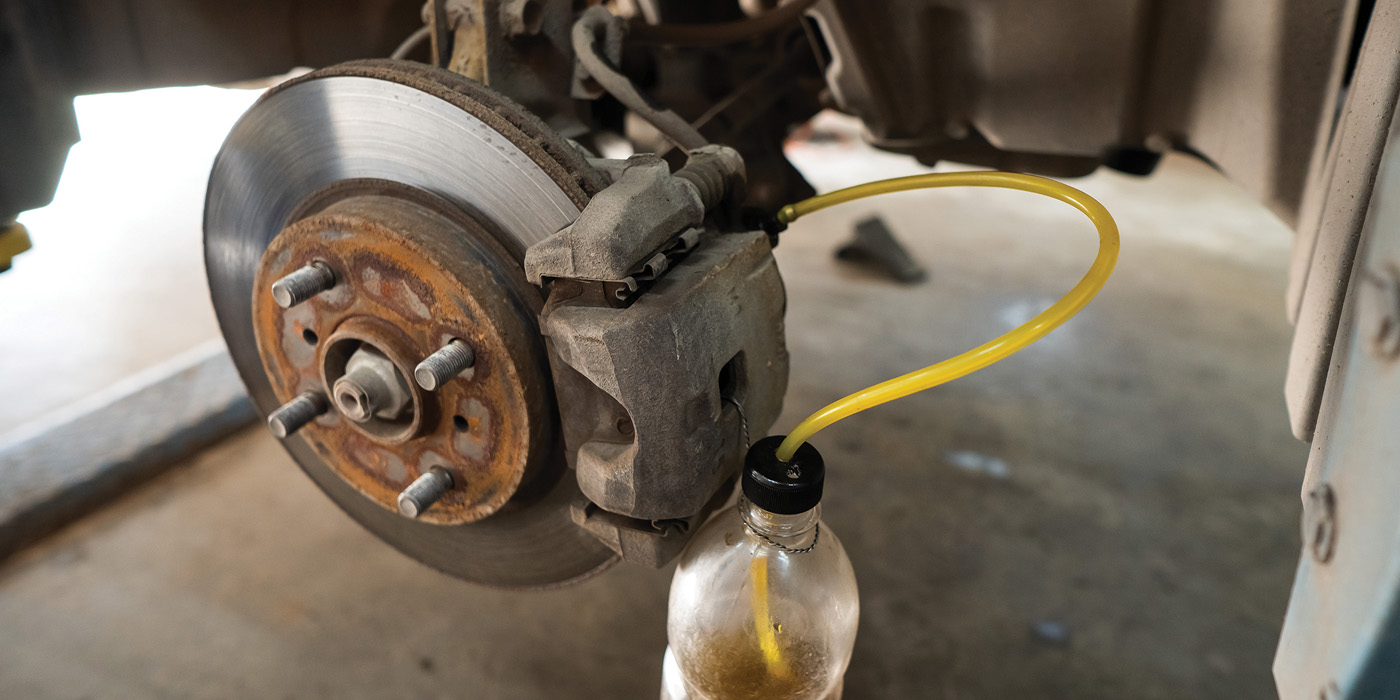
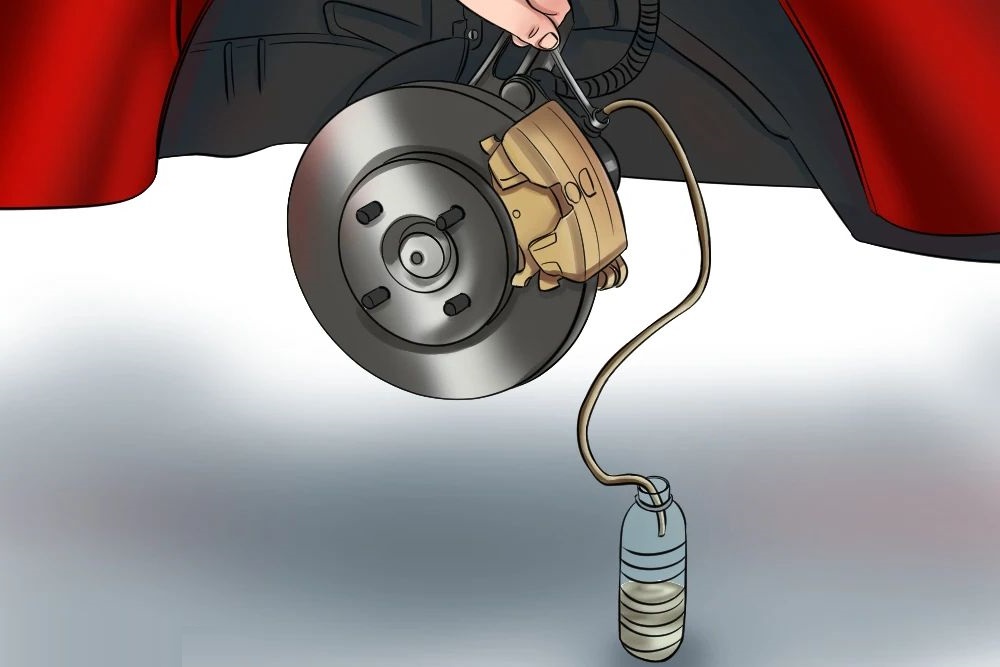
- At each wheel, a bleeder valve is located. A clear hose is attached to the bleeder valve, with the other end submerged in a container filled with fresh brake fluid. This prevents air from being drawn back into the system.
- The person at the wheel opens the bleeder valve slightly.
- The person in the driver’s seat slowly pumps the brake pedal several times and then holds it firmly down.
- While the pedal is held down, the person at the wheel closes the bleeder valve.
- The person in the driver’s seat slowly releases the brake pedal.
- This cycle is repeated until no more air bubbles are seen exiting the hose and only clear brake fluid flows out.
- The master cylinder reservoir must be monitored and topped up frequently throughout the process to prevent it from running dry.
-
Pros: Requires minimal specialized equipment beyond a wrench, hose, and container.
-
Cons: Requires two people, can be time-consuming, and it’s easy to allow air back into the system if not done precisely.
Vacuum Bleeding
This method uses a vacuum pump to draw fluid and air out of the system.
-
Procedure:
- Connect a vacuum pump (either hand-operated or powered) to the bleeder valve.
- With the master cylinder reservoir topped up, open the bleeder valve.
- Apply vacuum to the bleeder valve. This will draw brake fluid and any trapped air out of the lines.
- Monitor the fluid exiting the bleeder valve for air bubbles.
- Once no more air bubbles are visible, close the bleeder valve while maintaining vacuum.
- Release the vacuum.
- Repeat for all wheels, ensuring the master cylinder reservoir is kept topped up.
-
Pros: Can often be performed by one person, generally faster than manual bleeding.
-
Cons: Requires a vacuum pump, and it’s possible to draw air in past the bleeder valve threads if the seal isn’t perfect.
Pressure Bleeding
This method uses a pressure bleeder device to push fluid through the system from the master cylinder reservoir.
-
Procedure:
- The pressure bleeder is attached to the master cylinder reservoir, creating a sealed environment and applying a controlled amount of pressure.
- A hose with a special fitting is connected to the bleeder valve at each wheel.
- Open the bleeder valve.
- The pressure from the bleeder tank forces the brake fluid through the system, pushing air out of the bleeder valve.
- Close the bleeder valve when only clear fluid is observed.
- Repeat for all wheels.
-
Pros: Typically the fastest and most efficient method, often considered the easiest for one person to perform. It ensures consistent pressure throughout the system.
-
Cons: Requires a dedicated pressure bleeder tool.
Considerations for Modern Vehicles with ABS and Stability Control
Modern vehicles equipped with Anti-lock Braking Systems (ABS) and Electronic Stability Control (ESC) have more complex hydraulic control units (HCUs). These units contain intricate valve bodies and often multiple chambers.
- ABS Modulator: Bleeding systems with ABS requires particular care. The ABS modulator contains a pump and valves that recirculate and reapply brake pressure. In some cases, specialized diagnostic tools may be needed to cycle these valves and ensure all air is purged from the ABS unit itself, not just the standard brake lines. Failure to do so can result in residual air pockets that compromise ABS function.
- Consulting the Service Manual: For vehicles with advanced electronic braking systems, it is highly recommended to consult the manufacturer’s service manual for specific bleeding procedures. Some vehicles may require a scan tool to activate specific ABS functions during the bleeding process.
In summary, bleeding brakes is a fundamental yet crucial technological process in automotive maintenance. It involves understanding the principles of hydraulic systems, the properties of brake fluid, and the specific techniques required to remove air and restore optimal braking performance and safety. Regular attention to your braking system’s health through proper fluid maintenance and timely bleeding is an investment in your safety on the road.
aViewFromTheCave is a participant in the Amazon Services LLC Associates Program, an affiliate advertising program designed to provide a means for sites to earn advertising fees by advertising and linking to Amazon.com. Amazon, the Amazon logo, AmazonSupply, and the AmazonSupply logo are trademarks of Amazon.com, Inc. or its affiliates. As an Amazon Associate we earn affiliate commissions from qualifying purchases.