
In an era defined by rapid economic shifts and technological disruption, the question of “how can you make money” has evolved far beyond the traditional confines of a steady nine-to-five job. Today, wealth creation is a multi-dimensional pursuit that combines career optimization, digital entrepreneurship, and strategic asset management. To achieve financial independence or even a comfortable surplus, one must understand the mechanics of different income archetypes: active, leveraged, and passive. This guide explores the most effective frameworks for generating income in the current economy, providing a roadmap for those looking to diversify their financial portfolio and build lasting security.
Optimizing Your Primary Income Stream
For the majority of people, the primary engine of wealth is active income—money earned in exchange for time and expertise. However, the difference between a stagnant salary and a high-growth career lies in how you position your value within the marketplace.
High-Value Skill Acquisition
The most direct way to increase your earning potential is to acquire “high-value skills.” These are skills that are in high demand but have a relatively low supply of practitioners. In the current market, this often includes technical proficiencies like data analysis, software development, or cybersecurity, but it also extends to “soft” skills such as high-stakes negotiation, complex project management, and strategic leadership. By focusing on a “T-shaped” skill set—deep expertise in one area supplemented by a broad understanding of related fields—you make yourself indispensable. The more specialized and rare your skills, the higher the premium you can command for your time.
Strategic Career Positioning
Making money through a career is not just about working hard; it is about working in the right place at the right time. This involves identifying growth industries—such as renewable energy, healthcare technology, or fintech—where capital is flowing and opportunities for advancement are abundant. Furthermore, strategic career positioning requires a mastery of the “internal marketplace.” This includes understanding how to document your impact on a company’s bottom line, mastering the art of the performance review, and knowing when to pivot to a new organization to realize a significant salary increase. In many cases, “job hopping” with purpose every 2–4 years can lead to a 20% to 50% increase in income compared to staying at a single firm with modest annual raises.
Capitalizing on the Freelance and Gig Economy
The rise of the “gig economy” has decentralized the workplace, allowing individuals to monetize their skills on a global scale. Whether as a side hustle or a full-time business, freelancing offers a path to income that is not capped by a single employer’s budget.
Establishing a Specialized Freelance Brand
To maximize earnings in the freelance world, one must move away from being a generalist. Generalists compete on price, which leads to a “race to the bottom.” Specialists, however, compete on value. For example, a “content writer” might earn a modest hourly rate, but a “white paper specialist for Series B fintech startups” can charge premium project fees. Making money in this space requires building a portfolio that demonstrates a clear Return on Investment (ROI) for clients. By focusing on a specific niche, you reduce competition and increase your authority, allowing you to transition from an hourly worker to a value-based consultant.
Platforms and Scalability
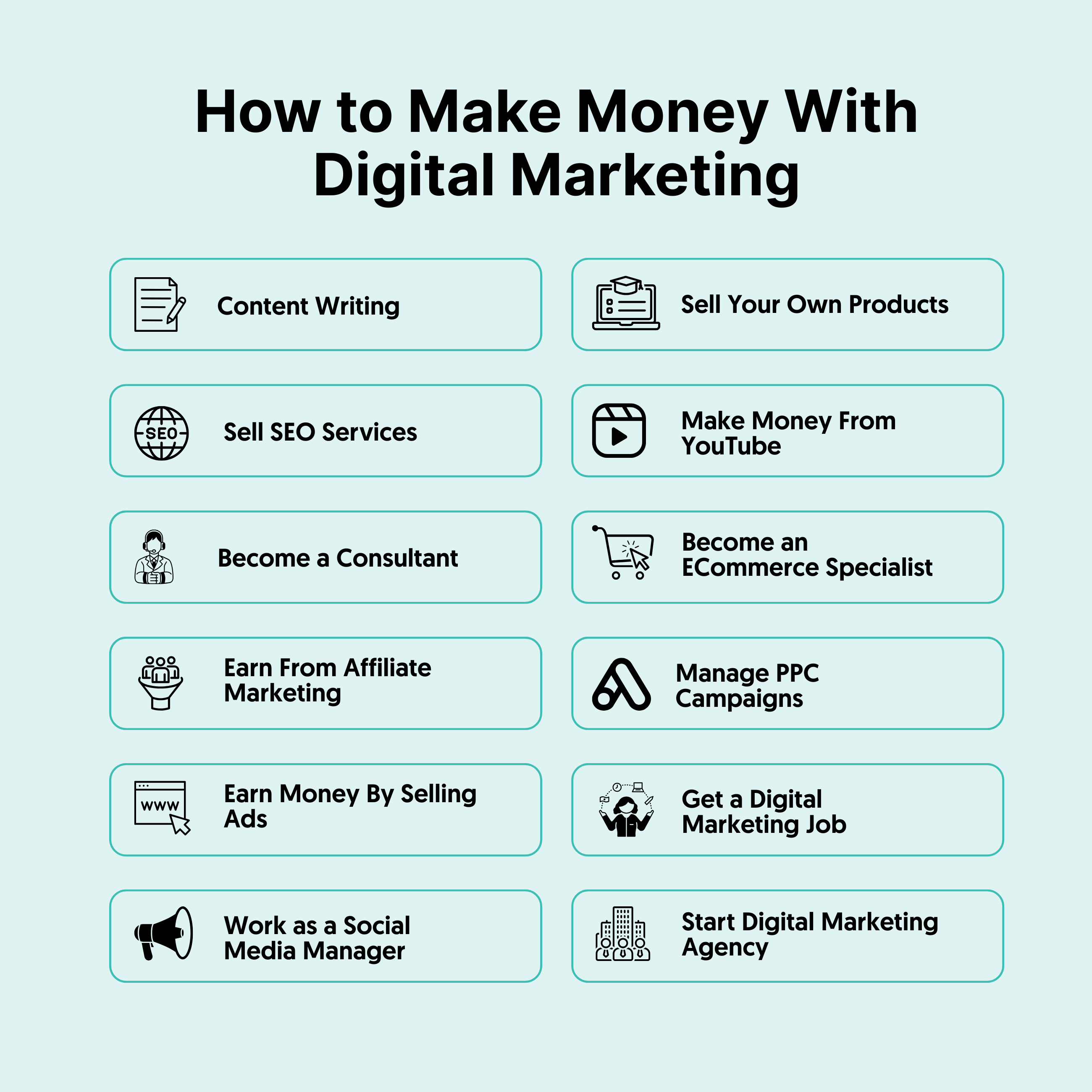
While platforms like Upwork, Fiverr, and Toptal provide immediate access to a global client base, they should be viewed as a starting point rather than a destination. True financial growth in freelancing comes from building an independent pipeline of clients through LinkedIn, networking, and direct outreach. Once a freelancer reaches capacity, the next step in making more money is “scaling.” This can be achieved by transitioning into an agency model—hiring other freelancers to handle the execution while you focus on sales and strategy—or by productizing your services into fixed-price packages that require less manual oversight.
The Power of Passive Income and Scalable Systems
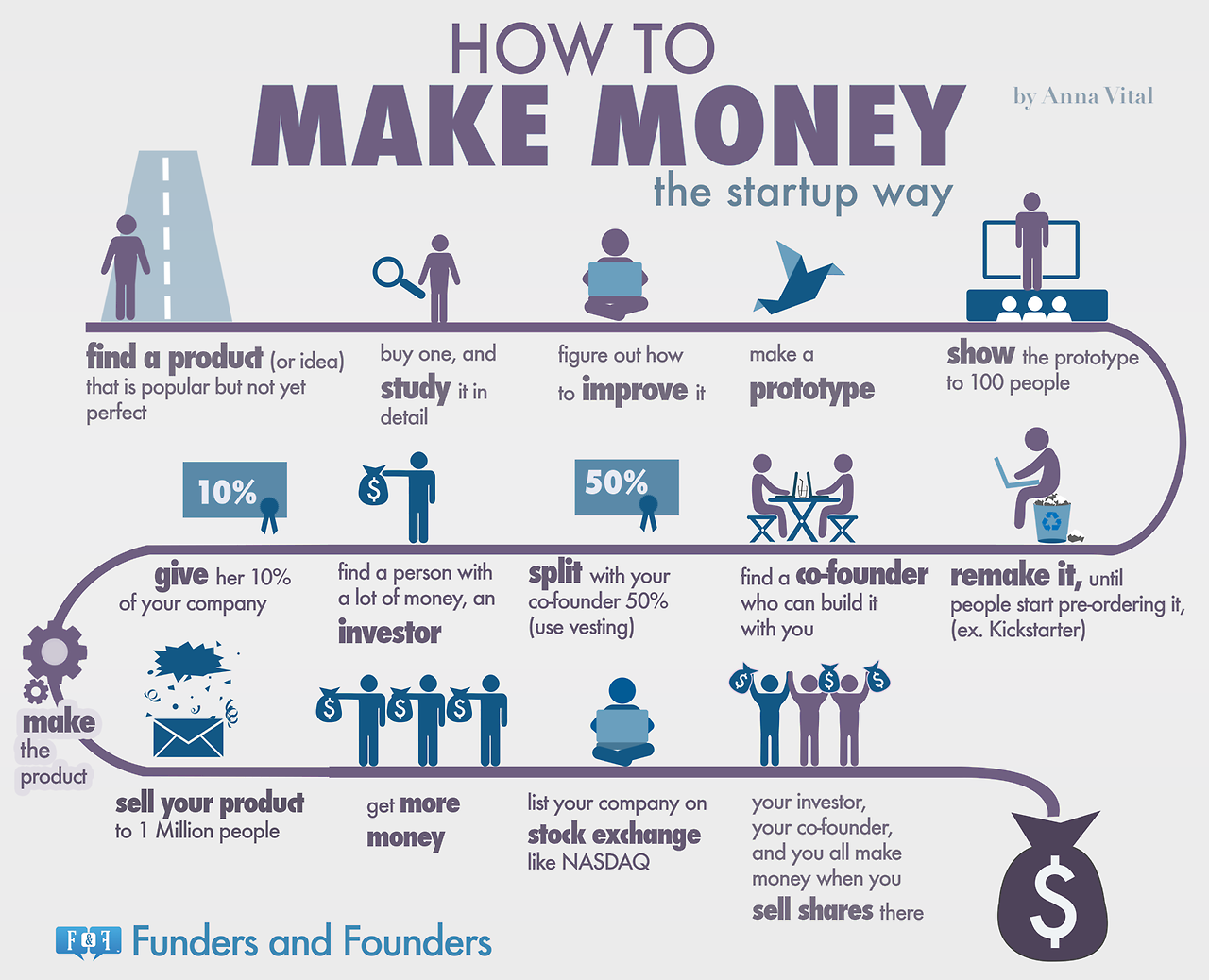
The ultimate goal for many is to decouple their income from their time. This is the essence of passive income: creating or purchasing an asset that continues to generate cash flow with minimal ongoing effort.
Digital Product Development
The digital economy has lowered the barrier to entry for creating scalable products. Unlike physical goods, digital products—such as e-books, online courses, specialized software (SaaS), or even stock photography—carry negligible marginal costs. This means that once the product is created, every subsequent sale is almost entirely profit. To make money through digital products, one must identify a specific pain point for a target audience and provide a comprehensive solution. The scalability is infinite; a course sold to ten people requires the same amount of initial production as a course sold to ten thousand.
Affiliate Marketing and Lead Generation
Another powerful way to generate income is by acting as a bridge between consumers and products. Affiliate marketing involves promoting a third-party product and earning a commission on every sale made through your referral. While it is often dismissed as a “get rich quick” scheme, professional affiliate marketing is a sophisticated business involving SEO (Search Engine Optimization), content strategy, and data-driven marketing. Similarly, lead generation—where you capture the interest of potential customers and sell those “leads” to businesses like insurance companies or contractors—remains a highly lucrative and semi-passive revenue stream for those who understand digital traffic.
Strategic Investing for Long-Term Wealth
Earning money is only half the battle; the other half is keeping it and making it grow. Investing is the process of putting your “saved” money to work so that it generates more money through the power of compounding.
Equities and Market Participation
The stock market remains one of the most accessible vehicles for wealth creation. For those looking for a long-term approach, low-cost index funds and Exchange-Traded Funds (ETFs) offer a way to participate in the growth of the overall economy with diversified risk. For the more active investor, dividend-growth investing provides a dual benefit: the potential for capital appreciation (the stock price going up) and a steady stream of cash payments (dividends). By reinvesting these dividends, investors can trigger an exponential growth curve that can eventually replace their primary income.
Real Estate and Physical Assets
Real estate has historically been a cornerstone of wealth for the world’s most successful individuals. It offers multiple avenues for making money: rental income (cash flow), property appreciation, and significant tax advantages. While traditional residential rentals require management, options like Real Estate Investment Trusts (REITs) or real estate crowdfunding allow individuals to invest in commercial properties or large-scale developments with much smaller amounts of capital. The key to real estate is leverage—using the bank’s money to purchase an asset that pays for itself and grows in value over time.
Financial Management and Resource Allocation
To truly answer “how can you make money,” one must also address the discipline of financial management. Without a system for managing what you earn, even a high income can evaporate through lifestyle creep and poor planning.
Budgeting for Reinvestment
Successful wealth builders do not view a budget as a tool for restriction, but as a tool for allocation. The most effective strategy is “paying yourself first.” This involves automatically directing a portion of every dollar earned toward an investment or business account before any discretionary spending occurs. By treating your investments like a mandatory bill, you ensure that your capital base is constantly growing. The goal is to maximize the “gap” between what you earn and what you spend, then aggressively funnel that gap into income-producing assets.
Risk Management and Diversification
Finally, making money sustainably requires a defensive strategy. This involves diversification—not putting all your financial eggs in one basket. If your only source of income is a job, you are one layoff away from a crisis. If your only investment is a single stock, you are one market crash away from significant loss. A robust financial plan includes an emergency fund, insurance to protect against catastrophic loss, and a diversified portfolio that spans different asset classes (stocks, bonds, real estate, and perhaps a small allocation of alternative assets like crypto or private equity). By managing risk, you ensure that the money you make stays with you, providing the freedom and security that true wealth represents.
In conclusion, making money in the modern world is a multifaceted endeavor that requires a blend of skill acquisition, entrepreneurial initiative, and disciplined investing. By optimizing your career, leveraging the digital landscape for additional revenue, and consistently putting your capital to work in the markets, you can move from a position of financial dependency to one of lasting abundance. The path to wealth is rarely a straight line, but for those who are willing to learn and adapt, the opportunities have never been greater.
aViewFromTheCave is a participant in the Amazon Services LLC Associates Program, an affiliate advertising program designed to provide a means for sites to earn advertising fees by advertising and linking to Amazon.com. Amazon, the Amazon logo, AmazonSupply, and the AmazonSupply logo are trademarks of Amazon.com, Inc. or its affiliates. As an Amazon Associate we earn affiliate commissions from qualifying purchases.