
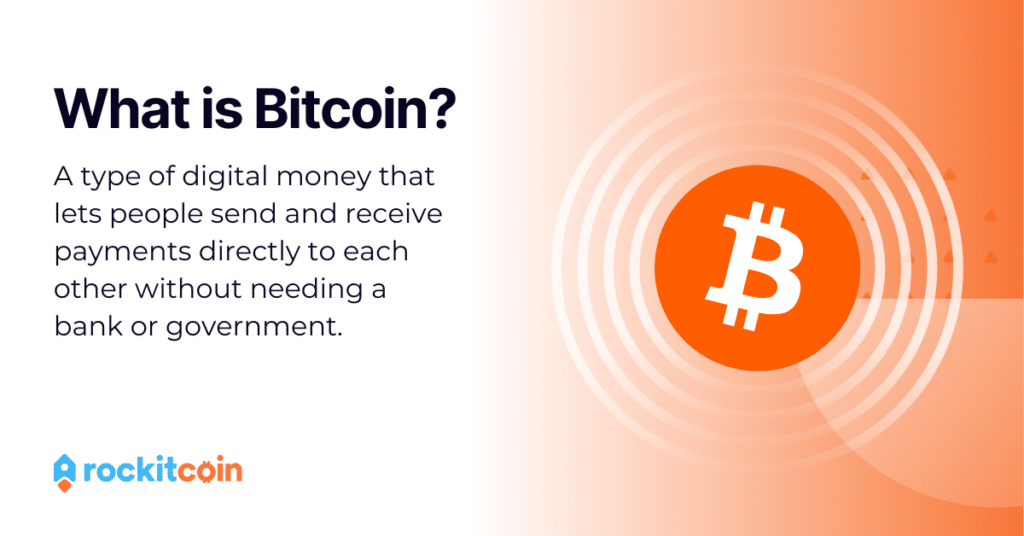
Since its mysterious inception in 2009, Bitcoin has evolved from an obscure cryptographic experiment into a global financial powerhouse. To understand what Bitcoin is, one must look beyond the computer code and view it through the lens of monetary evolution. At its core, Bitcoin represents a fundamental shift in how humanity perceives, stores, and transfers value. It is the world’s first decentralized, peer-to-peer digital money system that operates without the need for a central authority, such as a bank or government.
In a world where traditional fiat currencies are subject to the whims of central bank policies and inflationary pressures, Bitcoin offers a unique alternative: a hard-capped, transparent, and borderless asset. Whether you view it as “digital gold,” a revolutionary payment network, or a hedge against economic instability, understanding Bitcoin is essential for anyone looking to navigate the modern financial landscape.

The Evolution of Money: From Physical Assets to Digital Scarcity
To appreciate the significance of Bitcoin, we must first understand the history of money itself. Money is essentially a tool used to solve the problem of “double coincidence of wants” in a barter system. Throughout history, humans have used various mediums—seashells, salt, cattle, and eventually precious metals like gold—to serve as a store of value and a medium of exchange.
The Shift from the Gold Standard to Fiat Currency
For centuries, the global economy was anchored by the gold standard, where paper money was directly redeemable for physical gold. This provided a natural limit on how much money could be printed. However, in 1971, the world transitioned fully into the era of fiat currency. Fiat money has no intrinsic value and is not backed by a physical commodity; instead, its value is derived from government decree and public trust. While this allows for flexible monetary policy, it also leads to the inevitable debasement of currency through inflation.
Solving the “Double Spending” Problem
Before Bitcoin, digital money always required a central intermediary (like Visa or PayPal) to ensure that a sender didn’t spend the same dollar twice. This intermediary maintains a private ledger and charges fees for the service. Bitcoin solved this “double spending” problem without a central authority. It introduced a public, distributed ledger that allows for “digital scarcity.” By limiting the total supply of Bitcoin to 21 million units, it reintroduced the hardness of gold into a digital format.
The Concept of Absolute Scarcity
Bitcoin is the first asset in human history with an absolute, mathematically enforced supply cap. Unlike gold, which can be mined more aggressively if the price rises, or fiat currency, which can be printed at will, Bitcoin’s supply is fixed. This makes it a “hard” asset. In the world of personal finance, this scarcity is the primary driver of its value proposition as a long-term inflationary hedge.
Bitcoin as a Strategic Asset Class: Store of Value vs. Medium of Exchange
In the world of investing, Bitcoin is often categorized as a “hybrid” asset. While it was originally designed as a “Peer-to-Peer Electronic Cash System,” its primary use case today has shifted toward being a “Store of Value” (SoV).
The “Digital Gold” Thesis
Many institutional investors and financial analysts refer to Bitcoin as “Digital Gold.” This comparison stems from shared characteristics: both are scarce, durable, fungible, and divisible. However, Bitcoin improves upon gold in several ways. It is easier to transport (you can carry billions of dollars on a thumb drive), easier to verify (anyone can run a node to check its authenticity), and easier to divide (one Bitcoin can be split into 100 million “Satoshis”).
Understanding Market Volatility
For the casual observer, Bitcoin’s most defining trait is its price volatility. From a financial perspective, this volatility is a byproduct of its nascent stage and its fixed supply. Because the supply cannot respond to changes in demand, the price must bear the full weight of market fluctuations. Over time, as the market capitalization grows and more institutional liquidity enters the space, this volatility is expected to decrease, making it a more stable component of a diversified portfolio.
Bitcoin in a Diversified Portfolio
From a modern portfolio theory perspective, Bitcoin offers a low correlation with traditional assets like stocks and bonds. This means that adding a small percentage of Bitcoin to a portfolio can potentially increase the overall risk-adjusted returns. Financial advisors are increasingly looking at Bitcoin not as a speculative gamble, but as “insurance” against the failure or devaluation of traditional monetary systems.
The Mechanics of Financial Sovereignty: How Bitcoin Redefines Banking
One of the most profound aspects of Bitcoin is the concept of “financial sovereignty.” In the traditional banking system, you do not truly “own” your money; you have a claim on the bank’s assets. Banks can freeze accounts, limit withdrawals, and censor transactions. Bitcoin changes this dynamic entirely.
Peer-to-Peer Transactions and Permissionless Access
Bitcoin operates on a permissionless basis. This means that anyone, anywhere in the world, can download a wallet and start receiving or sending value without asking for permission from a bank or a government. This is particularly transformative for the “unbanked” population in developing nations, who may have access to a smartphone and the internet but lack the documentation required to open a traditional bank account.
The Role of Private Keys and Self-Custody
In the Bitcoin ecosystem, the phrase “Not your keys, not your coins” is a fundamental mantra. When you hold Bitcoin in a self-custody wallet, you hold the “private keys”—essentially a digital signature that proves ownership. This allows individuals to act as their own bank. While this grants immense freedom, it also carries the responsibility of security. Unlike a bank, there is no “forgot password” button in Bitcoin; if you lose your keys, you lose access to your funds.
Transparency and the Public Ledger
While traditional banking is opaque, Bitcoin is entirely transparent. Every transaction ever made is recorded on a public ledger called the blockchain. While the identities of the users are pseudonymous (represented by strings of alphanumeric characters), the flow of money is visible to everyone. This creates a level of financial accountability that is impossible in the world of offshore bank accounts and hidden corporate structures.
Navigating the Bitcoin Investment Landscape: Risks, Rewards, and Strategy
Investing in Bitcoin requires a different mindset than investing in the stock market. Because the technology is revolutionary and the market is open 24/7, investors must be disciplined and informed.
Long-Term Perspective and Dollar-Cost Averaging (DCA)
Due to Bitcoin’s short-term price swings, many successful investors employ a “Dollar-Cost Averaging” (DCA) strategy. This involves buying a fixed dollar amount of Bitcoin at regular intervals (e.g., $50 every week), regardless of the price. This strategy mitigates the risk of “timing the market” and lowers the average cost of the investment over time, focusing on the long-term growth of the network rather than daily charts.
The Emergence of Institutional Vehicles (ETFs)
The financial landscape for Bitcoin changed significantly with the approval of Spot Bitcoin Exchange-Traded Funds (ETFs). These financial products allow traditional investors to gain exposure to Bitcoin’s price movements through their regular brokerage accounts without the need to manage private keys or navigate crypto exchanges. This has opened the door for pension funds, 401(k) providers, and large institutional desks to treat Bitcoin as a legitimate asset class.
Assessing the Risks: Regulatory and Security Concerns
No investment is without risk. For Bitcoin, the primary risks are regulatory and technical. Governments may impose restrictive tax laws or attempt to limit the on-ramps and off-ramps between Bitcoin and the traditional banking system. Furthermore, while the Bitcoin network itself has never been “hacked,” the platforms that trade it (exchanges) and the individuals who hold it are often targets for cybercriminals. Understanding how to use hardware wallets and practicing good “cyber hygiene” are essential steps for any serious investor.

Conclusion: The Future of Digital Money
Bitcoin is more than just a digital currency; it is a discovery of digital scarcity and a return to sound money principles in a digital age. By removing the middleman and providing a transparent, immutable ledger, Bitcoin offers a vision of a financial future where individuals have total control over their wealth.
Whether Bitcoin becomes the global reserve currency or remains a niche “digital gold,” its impact on the world of finance is undeniable. It has forced central banks to rethink digital currencies and has provided millions of people with a life raft in failing economies. As the world becomes increasingly digitized, the importance of a decentralized, secure, and scarce form of money will only grow. For the modern investor, the question is no longer “What is Bitcoin?” but rather “What role will Bitcoin play in my financial future?”
aViewFromTheCave is a participant in the Amazon Services LLC Associates Program, an affiliate advertising program designed to provide a means for sites to earn advertising fees by advertising and linking to Amazon.com. Amazon, the Amazon logo, AmazonSupply, and the AmazonSupply logo are trademarks of Amazon.com, Inc. or its affiliates. As an Amazon Associate we earn affiliate commissions from qualifying purchases.