
Understanding the value of Bitcoin requires a fundamental shift in how we perceive money, scarcity, and the architecture of global finance. Unlike traditional fiat currencies, which are backed by government decree and central bank policy, or gold, which derives value from physical properties and historical precedent, Bitcoin represents a new paradigm: digital, decentralized, and programmatic value. To the casual observer, Bitcoin is often reduced to its market price—the fluctuating number on a ticker. However, to the investor and the economist, its value is derived from a complex interplay of scarcity, utility, security, and the network effect.
The Foundations of Scarcity and Digital Gold
The most frequent comparison used to describe Bitcoin’s value proposition is “digital gold.” This analogy is not merely marketing; it is rooted in the economic principles of sound money. Like gold, Bitcoin is difficult to produce and finite in supply. However, Bitcoin improves upon the properties of gold by being more portable, divisible, and verifiable.
The 21 Million Cap and Hard Money Economics
At the core of Bitcoin’s value is its absolute scarcity. The protocol is hard-coded to ensure that only 21 million units will ever exist. This is a stark contrast to fiat currencies like the US Dollar or the Euro, which can be printed in unlimited quantities by central banks. When the supply of a currency increases, the purchasing power of each individual unit typically decreases—a process known as inflation.
Bitcoin’s value is intrinsically linked to its role as a hedge against this monetary debasement. By providing a fixed supply cap that cannot be altered by any politician or institution, Bitcoin offers a “hard money” alternative. This predictability creates a long-term incentive for holding the asset, as the supply side of the equation is perfectly inelastic regardless of how high the demand climbs.
The Impact of the Halving Cycles
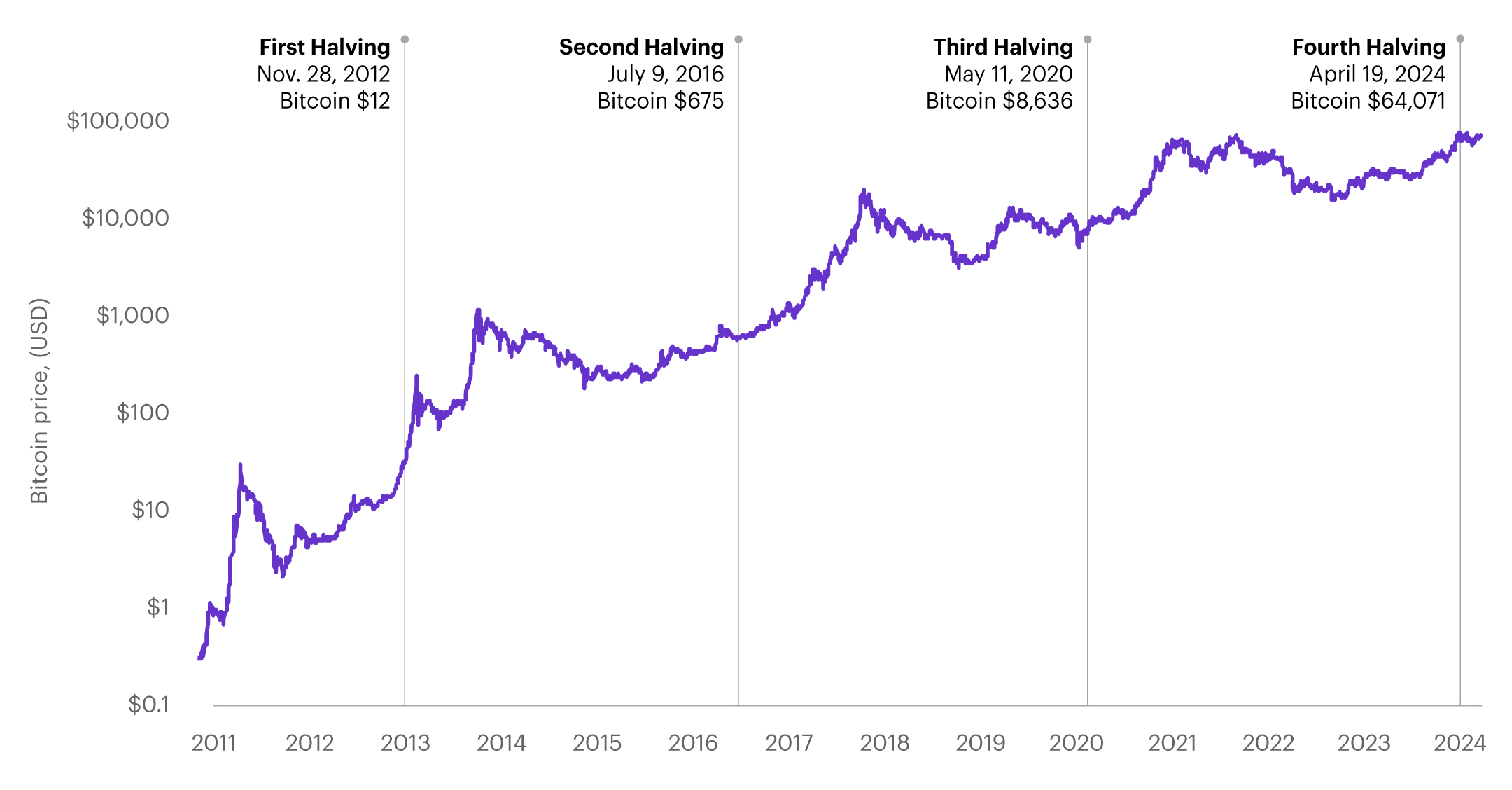
To maintain this scarcity, Bitcoin employs a mechanism known as the “halving.” Approximately every four years, the reward for mining new blocks—and thus the issuance of new Bitcoin—is cut in half. This programmatic reduction in supply creates a recurring supply shock. Historically, these events have served as catalysts for price appreciation, reinforcing the market’s perception of Bitcoin as an appreciating asset rather than a depreciating currency. The halving is a transparent, predictable monetary policy that stands in direct opposition to the often opaque and reactive decisions made by central bank committees.
Valuation Models and the Network Effect
While scarcity provides the foundation, the actual market value of Bitcoin is driven by its adoption and the growth of its network. In finance, the value of a network is often measured by Metcalfe’s Law, which states that the value of a telecommunications network is proportional to the square of the number of connected users. Applying this to Bitcoin provides a roadmap for understanding its exponential growth.
Metcalfe’s Law and the Power of Adoption
Bitcoin’s value increases as more people, institutions, and governments integrate it into their financial ecosystems. Each new wallet created, each merchant that accepts it, and each institutional fund that adds it to their balance sheet increases the utility and liquidity of the network. As the network grows, it becomes more secure and more useful, creating a feedback loop that attracts further participants.
This network effect is what transformed Bitcoin from a niche experiment among cryptographers into a global financial asset. The value is not just in the “coin” itself, but in the global, 24/7, borderless infrastructure that allows anyone with an internet connection to transfer value without a middleman.
The Stock-to-Flow Model
In the world of professional investing, the Stock-to-Flow (S2F) model has been a popular, albeit debated, method for quantifying Bitcoin’s value. This model measures the relationship between the existing supply (stock) and the annual production (flow). Commodities with a high S2F ratio, like gold, are used as stores of value because new supply cannot easily dilute the existing holdings.
As Bitcoin undergoes its halving cycles, its S2F ratio increases, eventually surpassing that of gold. For investors, this trajectory suggests that Bitcoin is moving toward becoming the scarcest liquid asset in human history. While the model is not a perfect predictor of price, it highlights the structural reasons why institutional investors view Bitcoin as a legitimate competitor to traditional safe-haven assets.
The Role of Decentralization and Financial Sovereignty

A significant portion of Bitcoin’s value is derived from its “anti-fragility” and its status as a decentralized protocol. In a world where financial censorship and geopolitical instability are on the rise, the ability to hold an asset that is not controlled by a central authority is a powerful value proposition.
Censorship Resistance and Permissionless Access
Traditional banking systems are “permissioned.” An individual’s ability to send or receive money can be frozen or restricted by banks or governments. Bitcoin’s value lies in its “permissionless” nature. Because it operates on a decentralized ledger maintained by thousands of independent nodes globally, no single entity can block a transaction or seize an account.
For individuals in countries experiencing hyperinflation or political unrest, this is not just a theoretical benefit; it is a critical tool for financial survival. The value of Bitcoin, in this context, is the value of financial sovereignty—the ability to be one’s own bank and maintain total control over one’s wealth.
Institutional Integration and the ETF Era
For years, Bitcoin’s value was driven primarily by retail investors. However, the landscape shifted dramatically with the entry of institutional giants. The approval of Spot Bitcoin Exchange-Traded Funds (ETFs) by major financial regulators marked a turning point in the asset’s history.
These financial products allow pension funds, insurance companies, and traditional brokerage accounts to gain exposure to Bitcoin within a regulated framework. This institutional “stamp of approval” has two primary effects on value: it brings massive amounts of new capital into the market, and it reduces the perceived risk of the asset. When companies like BlackRock and Fidelity offer Bitcoin to their clients, it signals that Bitcoin has matured from a speculative experiment into a permanent fixture of the global financial system.
The Volatility Paradox and Risk Assessment
One cannot discuss Bitcoin’s value without addressing its volatility. To the critic, volatility is a sign of instability; to the proponent, it is the price of discovery. Bitcoin is a nascent asset class attempting to find its “fair value” in real-time on a global stage.
Volatility as a Function of Price Discovery
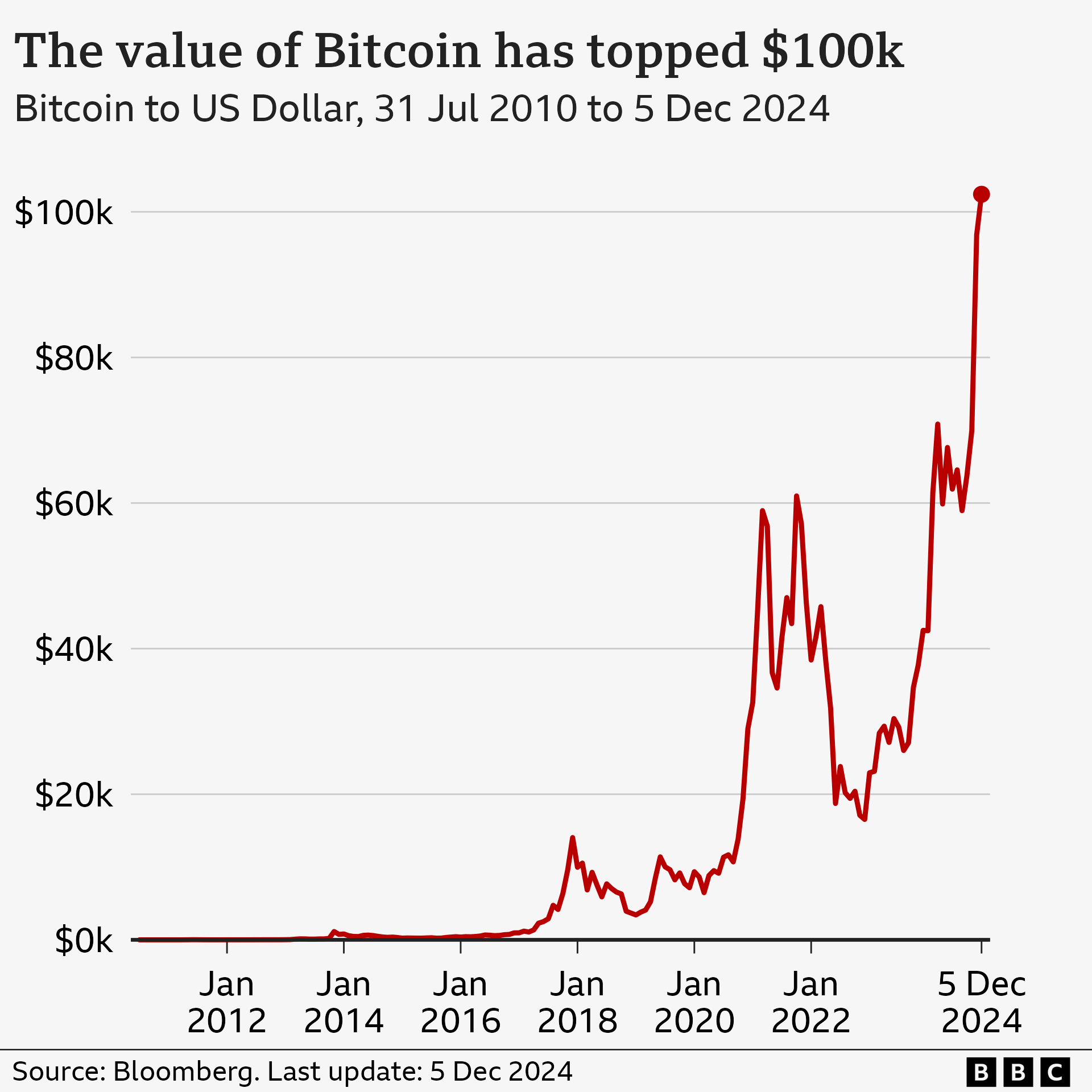
Because Bitcoin has no “lender of last resort” or central bank to stabilize its price, it is subject to the pure forces of supply and demand. This leads to dramatic price swings. However, as the market capitalization grows and the asset becomes more distributed, this volatility has historically trended downward.
The value for investors often lies in the “asymmetric upside.” While the risk of a significant drawdown remains, the potential for Bitcoin to capture a larger share of the $14 trillion gold market or the global offshore wealth market provides a growth trajectory that traditional assets cannot match. The volatility is simply the market’s way of processing the rapid growth of a new monetary system.
Regulatory and Technological Risks
The value of Bitcoin is also sensitive to the regulatory environment. Changes in tax law, mining bans, or restrictive exchange policies can create short-term headwinds. However, Bitcoin has proven remarkably resilient to such challenges. For instance, when China banned Bitcoin mining in 2021, the network’s hash rate (a measure of security and processing power) initially dropped but fully recovered within months as miners relocated to other jurisdictions.
This resilience adds to Bitcoin’s value. It proves that the network is capable of withstanding state-level opposition. The technological security—guaranteed by the massive amount of computational power protecting the network—ensures that the ledger remains immutable. The value of Bitcoin is, in many ways, the value of the most secure computer network ever created.
Conclusion: Defining Value in a Digital Age
Ultimately, Bitcoin’s value is multifaceted. It is a mathematical certainty in an uncertain economic world. It is a store of value for those fearing inflation, a medium of exchange for those seeking freedom from censorship, and a high-growth technology play for the modern investor.
As the world continues to digitize, the demand for a digital-native form of money that is scarce, secure, and global is likely to persist. Bitcoin does not have value because a government says it does; it has value because millions of individuals and institutions have recognized its unique properties and have chosen to use it as a vehicle for their wealth. In the evolution of money, Bitcoin represents the transition from trust in people to trust in math—a shift that defines its enduring value in the 21st century.
aViewFromTheCave is a participant in the Amazon Services LLC Associates Program, an affiliate advertising program designed to provide a means for sites to earn advertising fees by advertising and linking to Amazon.com. Amazon, the Amazon logo, AmazonSupply, and the AmazonSupply logo are trademarks of Amazon.com, Inc. or its affiliates. As an Amazon Associate we earn affiliate commissions from qualifying purchases.