
In the world of finance, few metrics command as much attention as an asset’s “All-Time High” (ATH). For Bitcoin, the pioneer of the cryptocurrency market, the ATH is more than just a numerical record; it is a psychological milestone, a barometer of global economic sentiment, and a catalyst for massive shifts in capital. Understanding Bitcoin’s all-time high requires a deep dive into the mechanics of supply and demand, the psychology of investing, and the evolving landscape of institutional finance.
As of early 2024, Bitcoin reached a new pinnacle, surpassing the previous $69,000 record set in 2021 to trade above $73,000. This breakthrough marked a significant shift in the asset’s maturity, moving it from a speculative “internet coin” to a cornerstone of modern investment portfolios. To navigate this volatile yet rewarding market, investors must understand what drives these peaks and how to position themselves when the market enters uncharted territory.
The Significance of the All-Time High in Crypto Investing
An all-time high represents the highest price point an asset has ever reached in its trading history. While it might seem like a simple statistic, its implications for the “Money” niche are profound, affecting everything from market liquidity to individual investor behavior.
Defining the ATH and Price Discovery
When Bitcoin reaches an all-time high, it enters a phase known as “price discovery.” Because there are no historical resistance levels above the current price, the market must find a new equilibrium where buyers and sellers agree on value. During this phase, volatility typically increases. Investors who bought at lower levels are often tempted to take profits, while those on the sidelines experience “Fear Of Missing Out” (FOMO), driving further upward pressure.
Why the ATH Acts as a Psychological Barrier
In technical analysis and market psychology, previous highs act as “resistance.” When Bitcoin approaches its former peak, many investors anticipate a sell-off, creating a self-fulfilling prophecy of price stagnation. However, once the ATH is decisively broken, it often triggers a massive surge in momentum. This is because every single holder of the asset is now “in the green” (profitable), reducing the immediate pressure of “panic selling” and shifting the narrative toward how much higher the price can go.
Historical Context: The Evolution of Bitcoin’s Price Peaks
Bitcoin’s journey is characterized by boom-and-bust cycles that have consistently led to higher lows and exponentially higher highs. Looking back at these cycles provides invaluable context for today’s investors.
The Early Years and the First Significant Peaks
In its infancy, Bitcoin was worth fractions of a penny. Its first major milestone was reaching $1 in 2011, followed by a surge to over $1,000 in late 2013. These early peaks were driven primarily by retail enthusiasts and niche tech adopters. The crashes that followed—often losing 80% or more of the value—hardened the resolve of “HODLers” and established Bitcoin as a resilient, albeit volatile, store of value.
The 2017 and 2021 Bull Runs
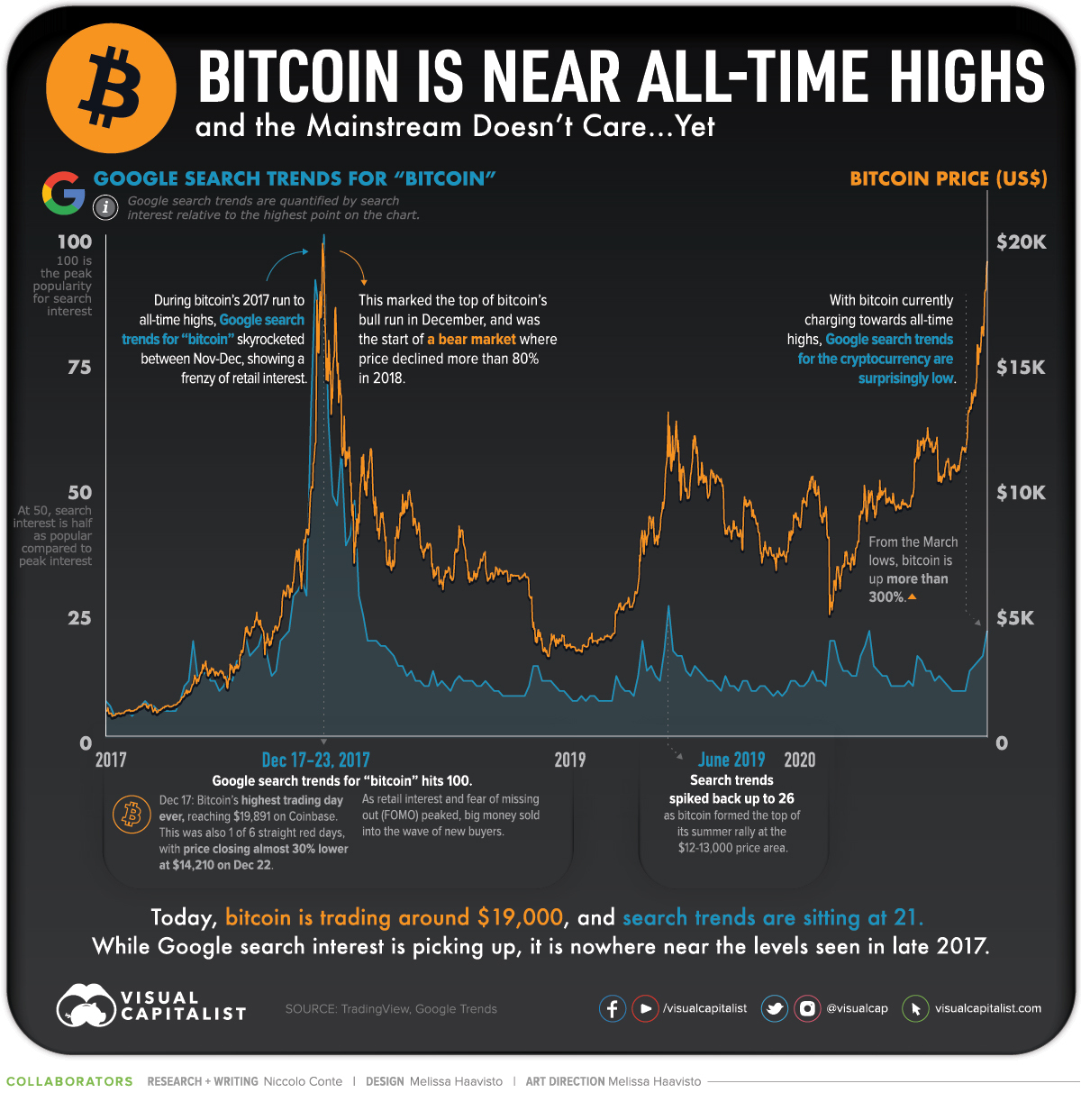
The 2017 bull run, which saw Bitcoin reach nearly $20,000, was the first time the asset captured global mainstream attention. This peak was fueled by the Initial Coin Offering (ICO) craze and retail speculation. However, the 2021 peak of approximately $69,000 was different. This cycle was characterized by the entry of corporate treasuries (like MicroStrategy and Tesla) and the emergence of decentralized finance (DeFi). The 2021 ATH proved that Bitcoin could withstand global macroeconomic shocks, such as the COVID-19 pandemic, and serve as a hedge against inflation.
The 2024 Breakout and the Institutional Era
The most recent all-time high in 2024, which saw Bitcoin cross the $73,000 mark, represents the “Institutional Era.” Unlike previous peaks, this surge was underpinned by the approval of Spot Bitcoin ETFs (Exchange-Traded Funds) in the United States. This allowed trillions of dollars in traditional brokerage accounts to flow into Bitcoin with ease, fundamentally changing the liquidity profile of the asset and setting a new floor for its valuation.

Factors That Drive Bitcoin to New Heights
Reaching an all-time high is rarely an accident; it is the result of a confluence of technical, fundamental, and macroeconomic factors.
Institutional Adoption and the ETF Effect
The single greatest driver of Bitcoin’s recent ATH is the legitimization of the asset by Wall Street. The launch of Bitcoin ETFs by giants like BlackRock and Fidelity has created a consistent “buy pressure” that did not exist in previous cycles. These institutions bring stability and a long-term investment horizon, reducing the extreme volatility seen in the retail-heavy days of 2017. When institutional money enters, the ATH is often just a stepping stone to deeper market integration.
The Halving Phenomenon
Bitcoin’s monetary policy is hard-coded into its protocol. Approximately every four years, the reward for mining new blocks is cut in half—an event known as “The Halving.” This reduces the daily issuance of new Bitcoin, creating a supply shock. Historically, every Bitcoin Halving has been followed by a massive bull run leading to a new all-time high within 12 to 18 months. As the supply becomes scarcer and demand stays constant or grows, the price is mathematically pressured to rise.
Macroeconomic Factors: Inflation and Interest Rates
Bitcoin is often referred to as “Digital Gold.” In environments where central banks are printing money or where inflation is eroding the purchasing power of fiat currencies, Bitcoin becomes an attractive alternative. Investors look to Bitcoin as a non-sovereign, censorship-resistant store of value. Furthermore, shifts in the Federal Reserve’s interest rate policies significantly impact Bitcoin’s price; lower rates generally encourage investment in “risk-on” assets like Bitcoin, pushing it toward new highs.
Investment Strategies for Navigating All-Time Highs
For the personal finance enthusiast, an all-time high is both an opportunity and a risk. Managing a portfolio during these periods requires discipline and a clear strategy.
Profit-Taking vs. Long-Term Holding
One of the hardest decisions for an investor is when to sell. When Bitcoin hits an ATH, the temptation to “exit” is high. Professional investors often use a “staggered exit” strategy, where they sell small percentages of their holdings at predetermined price intervals above the ATH. This allows them to lock in gains while still maintaining exposure if the price continues to climb. Conversely, “long-termers” or “maximalists” view the ATH as a mere milestone on the way to much higher valuations, choosing to hold through the inevitable corrections.
Managing Risk and the Dangers of FOMO
Buying at the all-time high is statistically the riskiest time to enter the market. “FOMO” (Fear Of Missing Out) often leads retail investors to buy at the peak, only to sell in a panic when a 10% or 20% correction occurs. To mitigate this, successful investors focus on risk management. This includes never investing more than one can afford to lose and maintaining a diversified portfolio where Bitcoin is just one component of a broader financial plan.
The Role of Dollar-Cost Averaging (DCA)
For those looking to build wealth over time, Dollar-Cost Averaging (DCA) remains the gold-standard strategy, regardless of whether Bitcoin is at an all-time high or a multi-year low. By investing a fixed amount of money at regular intervals, an investor buys more Bitcoin when prices are low and less when prices are high. This removes the emotional stress of trying to “time the market” and averages out the cost basis over the long term, which is crucial in an asset as volatile as Bitcoin.

Conclusion: The Future of Bitcoin’s Valuation
Bitcoin’s all-time high is a moving target. What seemed impossible in 2013 ($1,000) became a baseline in 2017, and what seemed like a peak in 2021 ($69,000) was surpassed in 2024. As a financial asset, Bitcoin continues to challenge traditional models of valuation.
For the modern investor, the ATH should not be viewed as a “ceiling” but as a signal of the asset’s growing adoption and utility. Whether Bitcoin eventually reaches $100,000, $500,000, or more will depend on continued institutional integration, global regulatory clarity, and its performance as a hedge against a turbulent global economy. By understanding the cycles, the drivers, and the strategies for managing wealth, investors can turn the volatility of Bitcoin’s all-time highs into a powerful tool for long-term financial growth.
aViewFromTheCave is a participant in the Amazon Services LLC Associates Program, an affiliate advertising program designed to provide a means for sites to earn advertising fees by advertising and linking to Amazon.com. Amazon, the Amazon logo, AmazonSupply, and the AmazonSupply logo are trademarks of Amazon.com, Inc. or its affiliates. As an Amazon Associate we earn affiliate commissions from qualifying purchases.