
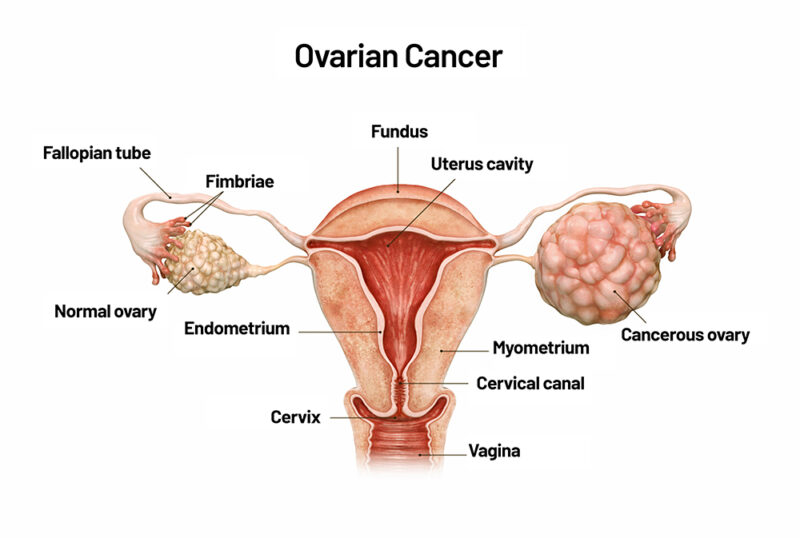
The medical landscape is currently undergoing a paradigm shift, transitioning from a model of reactive treatment to one of proactive prevention. At the heart of this transformation is the quest to understand “what is before” a diagnosis—the subtle, often invisible precursors to complex diseases like ovarian cancer. For decades, ovarian cancer has been termed the “silent killer” due to its lack of early-stage symptoms. However, through the lens of modern technology, specifically Artificial Intelligence (AI), genomic sequencing, and advanced bioinformatics, the period before cancer is no longer a void of information. It is a rich, data-heavy environment that tech innovators are now successfully decoding.
The Digital Frontier of Early Detection: AI and Machine Learning
The primary challenge in identifying what precedes ovarian cancer lies in the subtlety of biological signals. Technology is bridging this gap by processing volumes of data that exceed human cognitive capacity. Artificial Intelligence, particularly deep learning models, is now being trained to recognize patterns in diagnostic imaging and blood work that were previously dismissed as “noise.”
Neural Networks and Diagnostic Imaging
In the traditional clinical setting, a transvaginal ultrasound (TVUS) is a primary tool for examining the ovaries. However, the interpretation of these images is subjective. Tech startups are now deploying convolutional neural networks (CNNs) to analyze ultrasound frames. These algorithms can detect minute structural anomalies or vascular patterns that correlate with pre-malignant states. By comparing a patient’s scans against databases of millions of historical images, AI can assign a “risk score” to a patient long before a physical tumor is palpable or visible to the human eye.
Predictive Analytics in Electronic Health Records (EHR)
The precursors to ovarian cancer are often buried in a patient’s medical history—vague complaints of bloating, fatigue, or gastrointestinal changes. Predictive analytics software is now being integrated into hospital systems to scan Electronic Health Records (EHR) for these “weak signals.” By utilizing Natural Language Processing (NLP), these tools can flag a sequence of seemingly unrelated symptoms across multiple years, alerting physicians to a high-probability pre-cancerous trajectory. This tech-driven “early warning system” turns unstructured clinical notes into a powerful tool for longitudinal surveillance.
Genomic Sequencing and the Bio-Informatics Revolution
If we want to know what exists before cancer, we must look at the blueprint of the cell. The technological advancement of Next-Generation Sequencing (NGS) has shifted the focus from treating the tumor to monitoring the genome.
Identifying Germline and Somatic Mutations
The most well-known “pre-cancer” indicators are mutations in the BRCA1 and BRCA2 genes. However, recent tech developments in bioinformatics have identified a wider array of genetic markers, such as the RAD51C and RAD51D genes. Software platforms now allow for rapid, high-throughput sequencing that can identify these mutations with near-perfect accuracy. This data allows for the creation of “digital twins”—virtual models of a patient’s biological risk—enabling clinicians to simulate the progression of cellular changes and intervene before the first malignant cell even forms.
The Rise of Epigenetics and Tech-Enabled Screening
Beyond the static DNA code lies the epigenome—how genes are expressed. Technology is now capable of measuring “DNA methylation,” a chemical change that often occurs before a cell becomes cancerous. High-tech screening tools are being developed to detect these methylation patterns in a simple blood draw. This marriage of molecular biology and computational power allows us to see the molecular “pre-fuel” that cancer uses to ignite, providing a window for preventative measures that were technologically impossible a decade ago.
FemTech Innovations: From Wearables to Liquid Biopsies
The consumer technology sector, often categorized as FemTech (Female Technology), is playing an increasingly vital role in monitoring the “before” state of reproductive health. This ecosystem ranges from high-end lab technology to the smartphone in a patient’s pocket.
Liquid Biopsies and Microfluidics
One of the most exciting technological leaps is the development of the “liquid biopsy.” This involves using microfluidic chips—tiny devices that can sort through blood or other bodily fluids—to find circulating tumor DNA (ctDNA) or exosomes. These are microscopic bits of genetic material shed by cells that are beginning to turn cancerous. The technology required to isolate these fragments among billions of healthy cells is a feat of engineering, relying on precision sensors and advanced fluid dynamics. By identifying these fragments, tech provides a “molecular snapshot” of what is happening in the ovaries in real-time.
Wearable Integration and Symptom Tracking
While not a diagnostic tool on their own, high-tech wearables (smartwatches, rings, and patches) are becoming essential for data collection. These devices track core body temperature, sleep quality, and physiological stress markers. When integrated with symptom-tracking apps, this longitudinal data provides a baseline of a user’s “normal.” Advanced algorithms can then detect deviations from this baseline. For high-risk individuals, this tech provides a continuous stream of data that can be shared with specialists, ensuring that the transition from “healthy” to “pre-cancerous” is caught in its earliest, most treatable phase.
The Infrastructure of Data: Security, Ethics, and Interoperability
As we develop more sophisticated tech to monitor the precursors of ovarian cancer, we face the immense challenge of managing the data itself. The “before” stage of cancer is essentially a data-management problem.
The Challenge of Data Silos and Interoperability
For technology to effectively predict ovarian cancer, data must flow seamlessly between genomic labs, imaging centers, and primary care physicians. The tech industry is currently focused on creating “Interoperable Health Clouds.” These platforms use standardized protocols (such as FHIR – Fast Healthcare Interoperability Resources) to ensure that a piece of data from a genetic test can be automatically cross-referenced with an ultrasound report by an AI diagnostic tool. This ecosystem is what allows for a holistic view of the pre-cancerous landscape.
Privacy in the Era of Predictive Medicine
The ability to predict “what is before” cancer raises significant ethical and security concerns. If an algorithm determines a 90% probability of a future cancer diagnosis, that data becomes incredibly sensitive. The tech sector is responding with “Confidential Computing” and blockchain-based health records. These technologies allow researchers to train AI models on patient data without ever actually seeing the patient’s identity, ensuring that the path toward early detection does not compromise individual privacy. Furthermore, the use of “Synthetic Data”—artificially generated data that mimics real patient patterns—allows developers to sharpen their diagnostic tools without risking the exposure of real-world sensitive information.
Conclusion: A Proactive Future Driven by Tech
Understanding what is before ovarian cancer is no longer a matter of waiting for symptoms to appear; it is a matter of refining our technological “resolution.” We are moving toward a future where “pre-cancer” is a manageable state, monitored by smart sensors, analyzed by ethical AI, and prevented through the insights provided by deep genomic sequencing.
The synergy between biotechnology and information technology is dismantling the “silent” nature of this disease. As these tools become more accessible and their algorithms more refined, the focus of the tech world will continue to shift further upstream. The goal is clear: to turn the period before ovarian cancer into an opportunity for total prevention, ensuring that a diagnosis of “cancer” becomes an avoidable relic of a less-connected era. By investing in the tech that identifies these early signals, we are not just improving survival rates—we are redefining what it means to be “at risk” in the digital age.
aViewFromTheCave is a participant in the Amazon Services LLC Associates Program, an affiliate advertising program designed to provide a means for sites to earn advertising fees by advertising and linking to Amazon.com. Amazon, the Amazon logo, AmazonSupply, and the AmazonSupply logo are trademarks of Amazon.com, Inc. or its affiliates. As an Amazon Associate we earn affiliate commissions from qualifying purchases.