
In the landscape of modern consumer packaged goods (CPG), few products have successfully bridged the gap between traditional snacking and interactive entertainment as effectively as Jelly Belly’s Bean Boozled. While on the surface it appears to be a simple collection of jelly beans, a deeper dive into its market positioning reveals a masterclass in brand strategy, sensory marketing, and the psychological levers of gamification. Bean Boozled is not merely a product; it is a high-risk, high-reward brand experiment that redefined how a legacy company can maintain relevance in a digital-first economy.

By analyzing the “What is Bean Boozled” phenomenon through the lens of brand strategy, we can uncover how a 150-year-old company leveraged the “gross-out” factor to build a multi-million dollar sub-brand that thrives on organic virality and social proof.
From Confectionery to Content: The Pivot of Jelly Belly
To understand Bean Boozled, one must first understand the corporate identity of the Jelly Belly Candy Company. Traditionally, the brand was built on a promise of “gourmet” quality—using real purees and high-end ingredients to create sophisticated flavors like Pear, Buttered Popcorn, and Toasted Marshmallow. However, the launch of Bean Boozled represented a radical departure from this heritage of taste excellence.
The Legacy of Innovation and the Bertie Bott’s Precursor
The conceptual roots of Bean Boozled lie in a strategic partnership with the Harry Potter franchise. Jelly Belly was tasked with bringing “Bertie Bott’s Every Flavour Beans” to life. This required the development of flavors that were intentionally offensive, such as Earthworm, Earwax, and Rotten Egg. This project proved that there was a massive market appetite for “experiential eating”—a concept where the consumer is not seeking a pleasant snack, but a memorable event.
When the licensing for Harry Potter shifted, Jelly Belly recognized that they owned the intellectual property for the technology behind these flavors. Instead of retiring the “disgusting” profiles, they rebranded them under the Bean Boozled banner. This was a critical strategic move: it allowed the company to detach the novelty experience from a third-party IP and build its own sustainable brand ecosystem.
The Risk of Negative Brand Associations
From a brand management perspective, deliberately making a product taste like “Stinky Socks” or “Lawn Clippings” is a counterintuitive move. It risks Diluting the brand’s core value proposition of quality and deliciousness. However, Jelly Belly mitigated this by creating a distinct visual identity for Bean Boozled. By housing these flavors in a separate sub-brand with its own “Caution” aesthetic and vibrant, chaotic packaging, they protected the “Gourmet” parent brand while allowing the experimental product to push boundaries. This “brand shielding” allowed them to explore the boundaries of consumer psychology without alienating their traditional customer base.
The Mechanics of Modern Gamification
At its core, the Bean Boozled brand is built on the psychological principle of “Variable Reward”—the same mechanism that makes slot machines and social media feeds addictive. The product features pairs of jelly beans that look identical but have vastly different flavor profiles. For every “Peach” bean, there is a “Barf” bean; for every “Juicy Pear,” there is a “Booger.”
The Psychology of the Mystery Flavor
The brand strategy here shifts from “satisfaction” to “suspense.” In a traditional retail environment, the brand promise is consistency. When you buy a Snickers bar, you expect the exact same taste every time. Bean Boozled flips this script. The brand promise is inconsistency. This creates a “risk/reward” loop that engages the prefrontal cortex of the consumer. The act of eating the bean becomes a game of chance, turning a passive snack into an active social event.
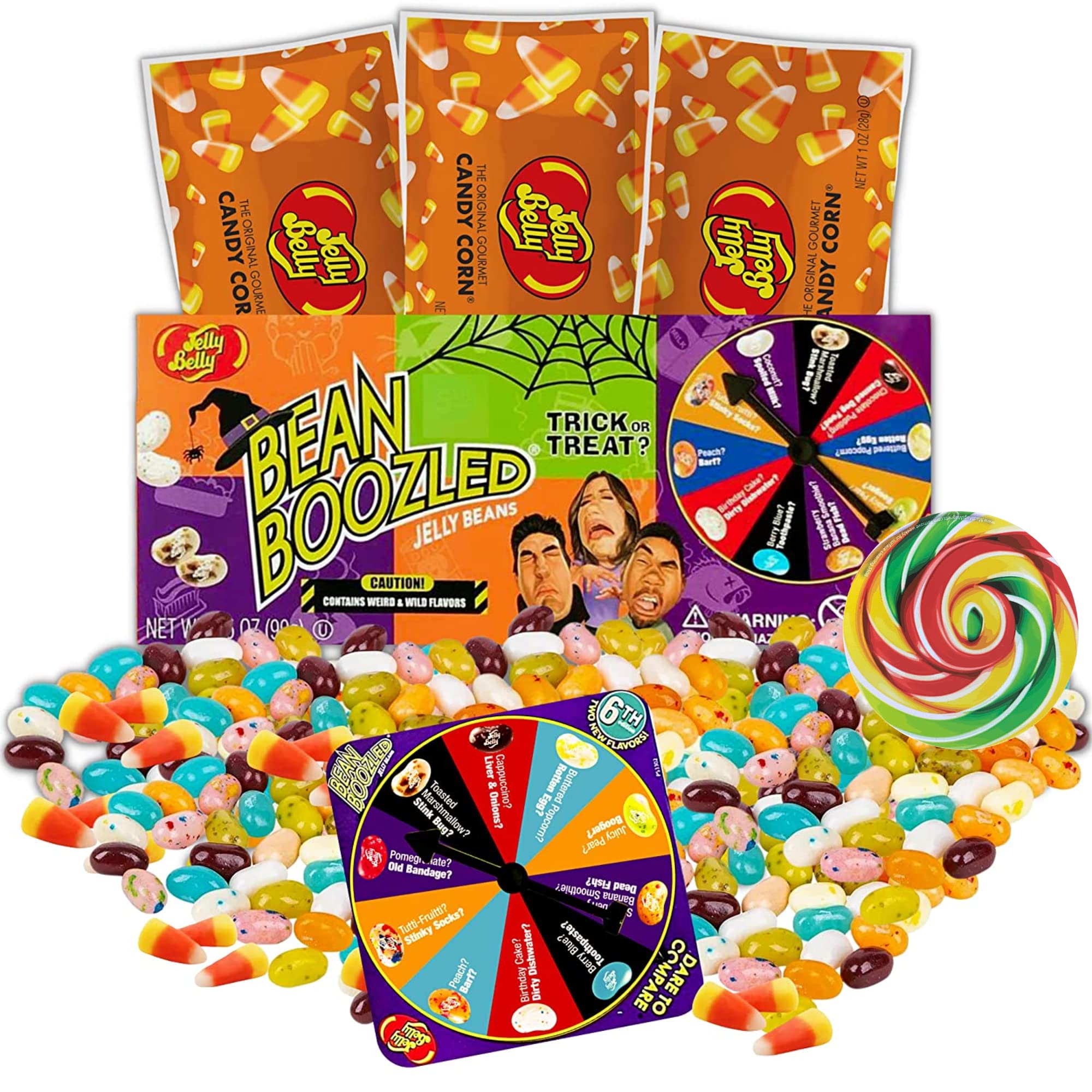
This gamification is reinforced by the physical components included in the packaging. Many Bean Boozled kits include a spinner wheel, further cementing the product’s identity as a board game rather than a food item. By providing the tools for the game, Jelly Belly successfully moved their product from the pantry to the coffee table, increasing its “shareability” and presence in social settings.
Converting Products into Social Experiences
In branding, “stickiness” refers to how well a product stays in a consumer’s mind. Bean Boozled achieves ultimate stickiness by requiring a social context. It is rarely consumed alone. It is a product designed for sleepovers, parties, and office team-building exercises. By positioning the product as a catalyst for social interaction, Jelly Belly tapped into the “Experience Economy.” Consumers are not paying for sugar and corn syrup; they are paying for the laughter, the shared disgust, and the memories created during the “challenge.”

Viral Marketing and the Era of the YouTube Challenge
If Bean Boozled had been released in the 1980s, it likely would have been a niche novelty. However, its launch coincided perfectly with the rise of the creator economy and video-sharing platforms. The brand became a cornerstone of the “YouTube Challenge” era, providing a template for how companies can achieve massive reach with zero traditional advertising spend.
Low-Cost, High-Impact Influencer Integration
During the mid-2010s, the “Bean Boozled Challenge” became a global phenomenon. High-profile influencers with millions of subscribers—from lifestyle vloggers to gaming personalities—filmed themselves playing the game. The visual nature of the product was perfect for video: the apprehension before eating, the dramatic reactions to a “bad” flavor, and the relief of a “good” one.
Jelly Belly’s brand team did not need to pay for these placements. The product itself was so inherently entertaining that it served as “free content” for creators. This organic integration provided a level of authenticity that paid advertisements could never achieve. The brand became synonymous with “trending” culture, positioning itself as a must-have for anyone wanting to participate in the digital conversation.
User-Generated Content as a Growth Engine
The brilliance of the Bean Boozled brand strategy lies in its ability to turn every customer into a brand ambassador. Because the product is designed for social interaction, consumers naturally document their experiences. Every TikTok, Instagram Reel, or Facebook post featuring the Bean Boozled spinner acts as a micro-advertisement.
This loop of user-generated content (UGC) creates a self-sustaining marketing funnel. A viewer sees a video of a friend reacting to a “Dirty Dishwater” flavored bean, finds it hilarious, buys the product to replicate the experience with their own social circle, and subsequently posts their own video. This is the pinnacle of viral brand architecture: a product that markets itself through the natural behavior of its target demographic.
Strategic Takeaways for Modern Brand Architects
The success of Bean Boozled offers several vital lessons for marketing executives and brand strategists looking to disrupt crowded markets.
Embracing the “Unpleasant” to Build Authenticity
Most brands spend their entire existence trying to be as pleasant and flawless as possible. Bean Boozled proved that there is immense power in the “unpleasant,” provided it is framed correctly. By leaning into the gross and the weird, the brand established a sense of honesty and vulnerability. It didn’t take itself too seriously, which resonated deeply with Gen Z and Millennial consumers who often feel fatigued by the polished, “perfect” branding of traditional corporations.
Future-Proofing Brand Identity Through Novelty
Jelly Belly has maintained the Bean Boozled momentum by treating the product like software—releasing “Editions” (e.g., 1st Edition, 2nd Edition, up to the current 6th Edition). Each new edition introduces new flavor pairings, such as “Pomegranate vs. Old Bandage” or “Cappuccino vs. Liver & Onions.”
This versioning strategy keeps the brand fresh and encourages repeat purchases from existing fans who want to try the latest “bugs” or “features.” It transforms a one-off novelty into a collectible series, providing a blueprint for how brands can sustain interest in a product over a decade-long lifecycle.
The Power of Sensory Branding
Finally, Bean Boozled is a testament to the power of sensory branding. It engages sight (the identical colors), touch (the texture of the bean), and, most importantly, taste and smell in a way that is emotionally evocative. Because smell and taste are tied closely to the limbic system—the part of the brain responsible for emotion and memory—the brand creates a much deeper “imprint” than a visual ad ever could. Even years later, a consumer who tasted a “Skunk Spray” bean will have a vivid, visceral memory of the Jelly Belly brand.
Conclusion
Bean Boozled is a sophisticated example of how a brand can thrive by subverting expectations. By combining the thrill of gambling, the reach of social media, and a deep understanding of human psychology, Jelly Belly transformed a potentially off-putting concept into a global powerhouse. It serves as a reminder that in the modern economy, the most valuable thing a brand can offer is not just a product, but a shared experience that is worth talking about. For brand strategists, the lesson is clear: sometimes, to build a truly great brand, you have to be willing to leave a bad taste in the customer’s mouth—as long as you give them a reason to laugh while it’s happening.
aViewFromTheCave is a participant in the Amazon Services LLC Associates Program, an affiliate advertising program designed to provide a means for sites to earn advertising fees by advertising and linking to Amazon.com. Amazon, the Amazon logo, AmazonSupply, and the AmazonSupply logo are trademarks of Amazon.com, Inc. or its affiliates. As an Amazon Associate we earn affiliate commissions from qualifying purchases.