
In the rapidly evolving landscape of telecommunications, the physical infrastructure that powers our mobile devices is often divorced from the brand name printed on our monthly billing statements. While Verizon Wireless remains one of the “Big Three” facilities-based providers in the United States, a significant portion of the mobile market operates through Mobile Virtual Network Operators (MVNOs). These entities do not own the radio frequency spectrum or the physical cell towers they utilize; instead, they enter into wholesale agreements to provide service via existing infrastructure.
Verizon’s network, long regarded as a benchmark for coverage density and reliability, particularly in rural and suburban corridors, serves as the backbone for dozens of these smaller carriers. Understanding which carriers utilize Verizon’s towers is not merely a matter of brand preference; it is a technical decision involving network prioritization, frequency band compatibility, and the specific deployment of 5G technologies.
Decoding the Mobile Virtual Network Operator (MVNO) Framework
To understand how third-party carriers utilize Verizon’s infrastructure, one must first grasp the technical architecture of an MVNO. Unlike a standard carrier, an MVNO functions as a service provider that manages its own billing, customer service, and often its own core network elements, while “renting” the Radio Access Network (RAN) from a host provider—in this case, Verizon.
The Backend Integration
The integration between an MVNO and Verizon’s towers occurs at the Gateway GPRS Support Node (GGSN) or the Packet Data Network Gateway (PGW) in an LTE/5G environment. When a device connected to an MVNO transmits data, the signal travels from the local Verizon cell site to Verizon’s Evolved Packet Core (EPC). From there, depending on the technical sophistication of the MVNO, the traffic may be routed back to the MVNO’s own servers for processing or handled entirely within Verizon’s ecosystem.
Wholesale Capacity and Technical Constraints
Verizon sells its network capacity in bulk to these operators. However, these agreements often come with specific technical parameters. For instance, some MVNOs may only have access to 4G LTE bands, while others are granted access to Verizon’s high-frequency 5G Ultra Wideband (mmWave) and mid-band (C-Band) spectrum. This distinction is critical for users who require high-throughput data for professional applications or low-latency connections for mobile edge computing.
Major Carriers Powered by Verizon’s Infrastructure
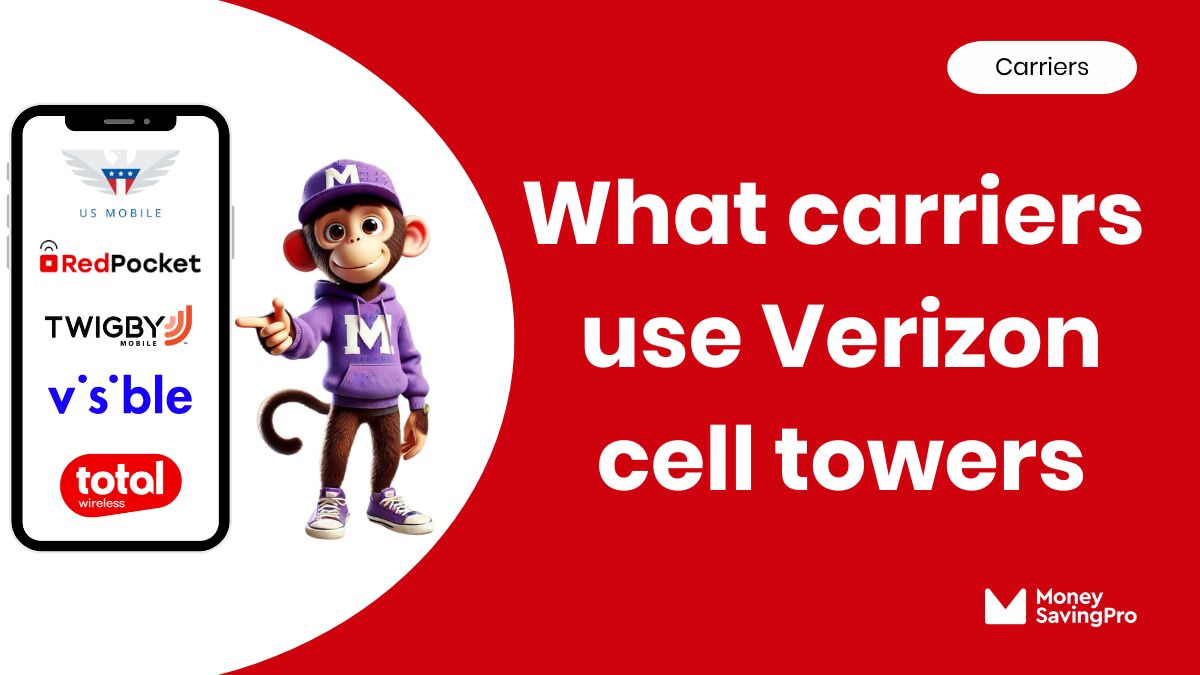
The list of carriers using Verizon’s towers is extensive, ranging from digital-only startups to massive subsidiaries of cable conglomerates. Each utilizes the network differently, offering varied levels of access to Verizon’s sophisticated hardware.
Visible: The Native Cloud Solution
Visible occupies a unique position in this ecosystem because it is owned and operated by Verizon. Technically, it serves as a testing ground for Verizon’s cloud-native networking. Unlike traditional carriers that rely on legacy hardware switches, Visible’s core network is almost entirely software-based. This allows for a leaner operational model, though it historically meant higher latency. Recent upgrades have integrated Visible more deeply into Verizon’s primary core, narrowing the performance gap between the parent company and the subsidiary.
Xfinity Mobile and Spectrum Mobile: The Hybrid Strategy
The cable giants Comcast (Xfinity) and Charter (Spectrum) utilize Verizon’s towers to power their wireless offerings. Their technical model is a hybrid “Wi-Fi First” strategy. These devices are programmed to prioritize connections to the millions of proprietary Wi-Fi hotspots maintained by the cable companies. When a Wi-Fi signal is unavailable or the signal-to-noise ratio (SNR) drops below a specific threshold, the device seamlessly handovers to Verizon’s LTE or 5G NR (New Radio) bands.
US Mobile: The Multi-Network Implementation
US Mobile is a prominent “super-carrier” that offers access to multiple networks. Their “Warp 5G” plan is specifically built on Verizon’s infrastructure. US Mobile is notable in the tech community for offering “priority data” on 5G devices, a technical feature usually reserved for Verizon’s own premium postpaid customers. This means that even during times of heavy network congestion, US Mobile users on 5G handsets maintain the same QCI (Quality of Service Class Identifier) level as Verizon’s own high-tier subscribers.
TracFone and Its Subsidiaries
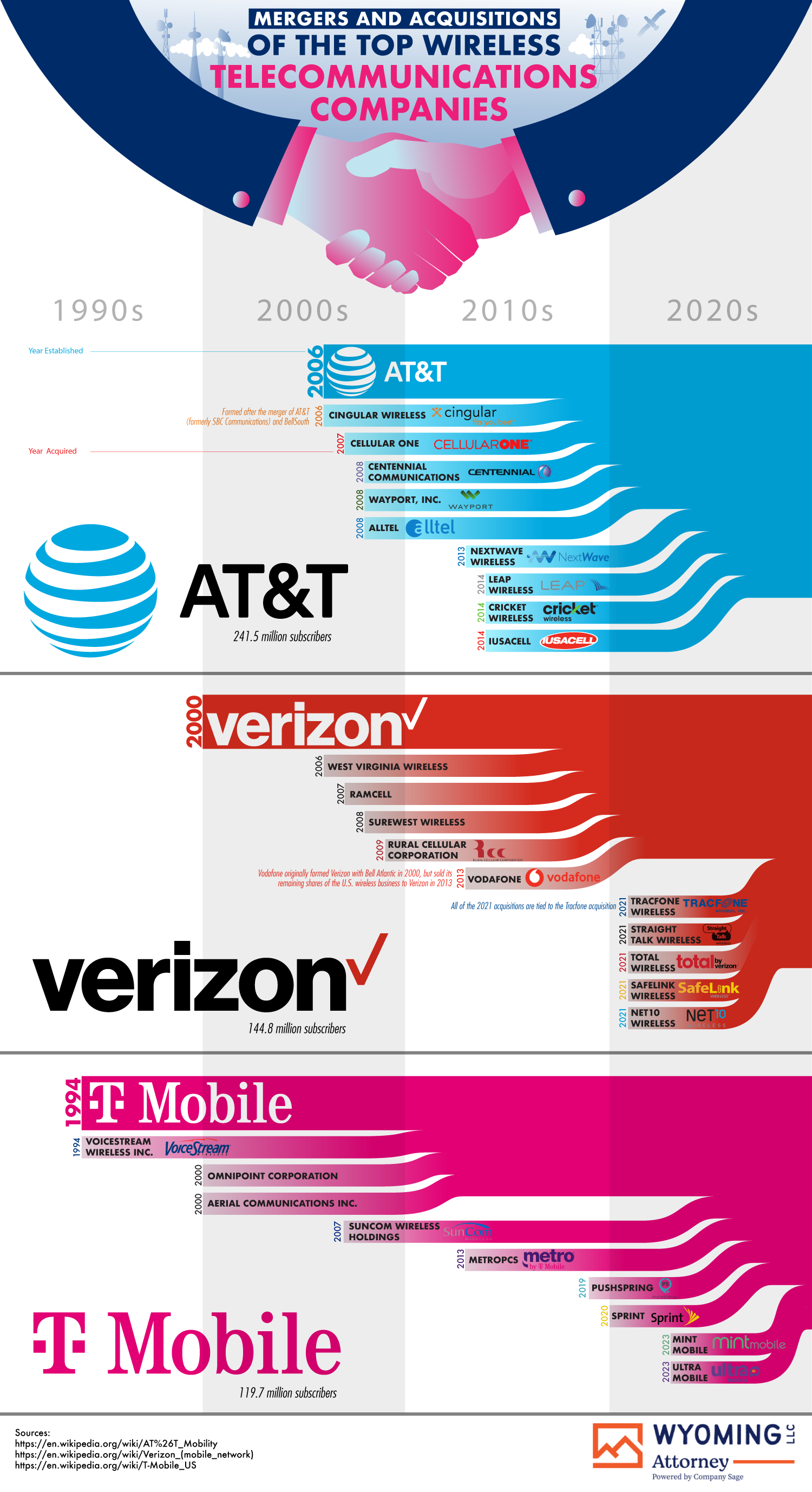
Following Verizon’s acquisition of TracFone Wireless, Inc. in 2021, a massive migration of users began. This includes brands like Straight Talk, Total Wireless (now Total by Verizon), and Walmart Family Mobile. While these brands previously utilized a mix of T-Mobile and AT&T towers, the technical roadmap is now firmly focused on Verizon’s RAN. This consolidation represents one of the largest technical migrations in cellular history, moving millions of subscribers onto a singular infrastructure stack.
Technical Performance: Network Prioritization and Data Architecture

One of the most misunderstood aspects of using a carrier that utilizes Verizon’s towers is “deprioritization.” This is a technical mechanism used to manage network traffic and ensure stability across the cell site.
Understanding QCI Levels
In the LTE and 5G standards, traffic is categorized by Quality of Service Class Identifiers (QCI). Verizon generally reserves QCI 8 for its premium postpaid customers and certain wholesale partners. QCI 9 is typically assigned to “base” plans and most MVNOs.
When a specific cell tower reaches its maximum throughput capacity, the scheduler at the base station begins to prioritize QCI 8 traffic over QCI 9. For the user on an MVNO, this manifests as a sudden drop in download speeds or increased latency, even if the signal bars remain high. This is not “throttling” (which is a hard cap on speed) but rather a dynamic adjustment of resources based on network demand.
The Role of 5G Ultra Wideband (UWB)
For tech-focused users, the availability of 5G UWB is a primary concern. Verizon’s UWB encompasses both mmWave (extremely high frequency, short range) and C-Band (mid-frequency, medium range). Not all carriers using Verizon towers have access to these bands. MVNOs that do not include UWB access are restricted to “5G Nationwide,” which uses Dynamic Spectrum Sharing (DSS) to run 5G over existing 4G LTE frequencies. This often results in speeds that are comparable to, or only marginally faster than, standard LTE.
5G Integration and Spectrum Allocation
The transition from 4G LTE to 5G NR has changed how MVNOs interact with Verizon’s hardware. Verizon’s deployment of the n77 band (C-Band) has significantly increased the capacity available to wholesale partners.
Spectrum Bands to Monitor
To ensure a device performs optimally on a carrier using Verizon towers, it must support the following key bands:
- LTE Bands: 2, 4, 5, 13, 46, 48, and 66. Band 13 is the “gold” frequency for Verizon, providing the long-range coverage and building penetration that the network is known for.
- 5G NR Bands: n2, n5, n66 (Nationwide), n77 (C-Band), and n260/n261 (mmWave).
A device lacking Band 13 or n77 support will experience significantly degraded performance on Verizon’s infrastructure, regardless of the carrier’s specific plan.
VoLTE and the Death of CDMA
Technologically, Verizon has moved away from its legacy CDMA (Code Division Multiple Access) network. This means that all carriers using Verizon towers now rely exclusively on Voice over LTE (VoLTE) for voice calls. This shift was a massive technical hurdle for older MVNOs, as it required all subscriber devices to support the specific IP Multimedia Subsystem (IMS) profiles required for Verizon’s VoLTE implementation. Today, this is standard, but it underscores the importance of device-network certification.
Selecting a Carrier Based on Hardware and Frequency Compatibility
When choosing an MVNO that uses Verizon’s towers, the “tech stack” of your smartphone is just as important as the service plan. Because Verizon’s network utilizes specific frequencies and technologies like Carrier Aggregation (CA), not all “unlocked” phones are created equal.
The Importance of Carrier Aggregation
Carrier Aggregation allows a phone to download data from multiple frequency bands simultaneously. A high-end device on an MVNO like Visible or US Mobile can combine Band 13 and Band 66 to achieve higher speeds than a budget device that can only lock onto a single band. When evaluating carriers, users should ensure their hardware supports 4×4 MIMO (Multiple Input Multiple Output) and at least 3-way Carrier Aggregation to fully leverage Verizon’s tower capabilities.
The eSIM Revolution
The rise of eSIM technology has made switching between carriers that use Verizon towers easier than ever. From a technical standpoint, eSIM allows for the remote provisioning of the SIM profile, including the necessary APN (Access Point Name) settings and authentication keys required to handshake with Verizon’s towers. This has enabled a new generation of “app-based” carriers to flourish, offering instant activation on the Verizon network without the need for physical logistics.
In conclusion, while the branding on the box may vary, the underlying technology remains a sophisticated web of Verizon-owned hardware and software. For the savvy user, selecting a carrier that uses Verizon towers is about balancing the cost of the service with the technical necessity of network prioritization and 5G spectrum access. By understanding the QCI levels, frequency bands, and backend architectures of these MVNOs, users can secure the reliability of the nation’s most robust network while tailoring the service to their specific technological needs.
aViewFromTheCave is a participant in the Amazon Services LLC Associates Program, an affiliate advertising program designed to provide a means for sites to earn advertising fees by advertising and linking to Amazon.com. Amazon, the Amazon logo, AmazonSupply, and the AmazonSupply logo are trademarks of Amazon.com, Inc. or its affiliates. As an Amazon Associate we earn affiliate commissions from qualifying purchases.