
In an era increasingly defined by data, the ability to collect, process, analyze, and derive insights from vast and varied datasets has become paramount for businesses striving for a competitive edge. Traditional data architectures, often fragmented and complex, frequently struggle to keep pace with the sheer volume, velocity, and variety of modern data. Enter Azure Synapse Analytics – Microsoft’s comprehensive enterprise analytics service that seeks to unify these disparate data worlds into a single, cohesive, and powerful platform.
Azure Synapse Analytics is far more than just a data warehouse; it’s an integrated analytics platform designed to accelerate time to insight across all your data. It brings together big data analytics, enterprise data warehousing, data integration, and machine learning capabilities into a singular, unified experience. Essentially, it allows organizations to ingest, prepare, manage, and serve data for immediate business intelligence and machine learning needs, breaking down the traditional silos between these critical data operations.
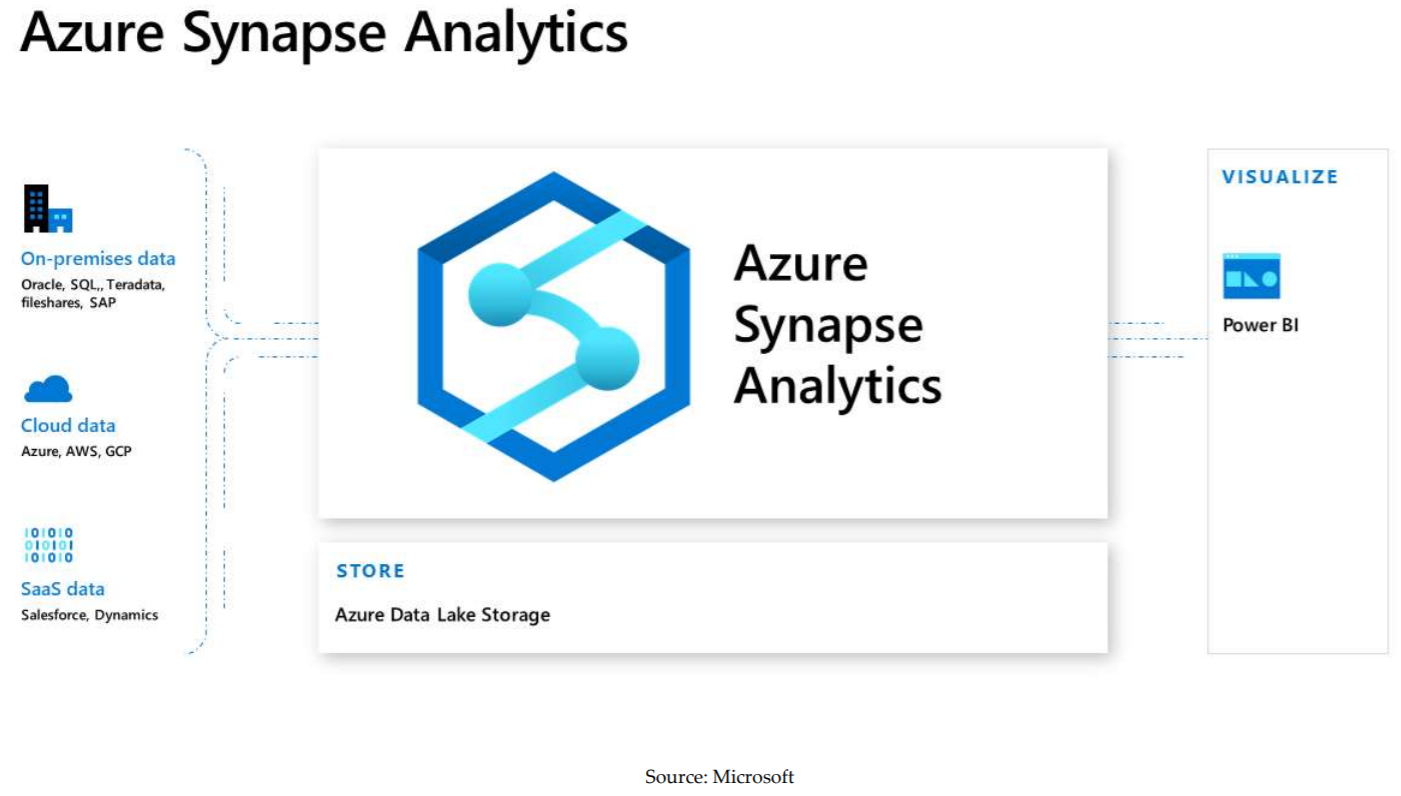
This article will delve deep into the technical landscape of Azure Synapse, exploring its core components, the problems it solves, its strategic advantages, and how it empowers organizations to unlock the full potential of their data assets.
The Evolution of Data Analytics and the Rise of Synapse
The journey to modern data analytics has been one of continuous innovation, driven by an ever-growing appetite for data-driven decision-making. For decades, organizations relied on relational databases and enterprise data warehouses (EDWs) to store and analyze structured business data. However, the explosion of unstructured and semi-structured data (from web logs, IoT devices, social media, clickstreams, etc.), coupled with the demand for real-time processing and advanced analytics, exposed significant limitations in these traditional systems.
Challenges of Traditional Data Architectures
Before the advent of unified platforms like Azure Synapse, enterprises often grappled with a multitude of challenges:
-
Data Silos and Fragmentation: Data resided in various systems – transactional databases, data warehouses, data lakes, operational stores – each requiring different tools and skillsets to access and analyze. This led to fragmented insights and a “single source of truth” that was often elusive.
-
Complex ETL Processes: Extract, Transform, Load (ETL) pipelines were notoriously complex, time-consuming, and brittle, making it difficult to integrate data from diverse sources efficiently.
-
Performance Bottlenecks at Scale: Traditional EDWs, while excellent for structured data, struggled with the scale and velocity of big data workloads, leading to slow query times and expensive infrastructure scaling.
-
Disparate Tooling for Different Workloads: Data engineers used one set of tools for big data processing (e.g., Apache Spark), while BI analysts used another for SQL-based queries, and data scientists yet another for machine learning. This increased operational overhead, collaboration challenges, and a steep learning curve.
-
Lack of Real-time Capabilities: Batch processing was the norm, hindering the ability to generate insights from streaming data or respond to rapidly changing business conditions in real-time.
-
Cost and Management Complexity: Maintaining multiple, specialized data platforms often resulted in high infrastructure costs and significant management overhead for IT teams.
The Need for a Unified Platform
The collective weight of these challenges highlighted a critical need for a more integrated, scalable, and versatile analytics solution. Businesses required a platform that could:
-
Handle all data types – structured, semi-structured, and unstructured – at petabyte scale.
-
Provide high-performance query capabilities across diverse data sources.
-
Simplify data integration and transformation processes.
-
Offer a single pane of glass for data warehousing, big data analytics, and machine learning.
-
Enable both batch and real-time processing.
-
Be cloud-native, offering elasticity, cost-effectiveness, and managed services.
Azure Synapse Analytics was conceived as Microsoft’s answer to this evolving landscape, building upon the foundations of Azure SQL Data Warehouse (now Synapse SQL Pool) and expanding significantly to encompass the full spectrum of modern data analytics. Its vision is to empower data professionals to rapidly build and deploy end-to-end analytical solutions, from data ingestion to advanced AI, all within a single, coherent environment.
Deconstructing Azure Synapse Analytics: Key Components and Capabilities
At its core, Azure Synapse Analytics is a sophisticated ecosystem of interconnected services, each playing a crucial role in enabling a unified analytics experience. Understanding these components is key to appreciating the platform’s power and flexibility.
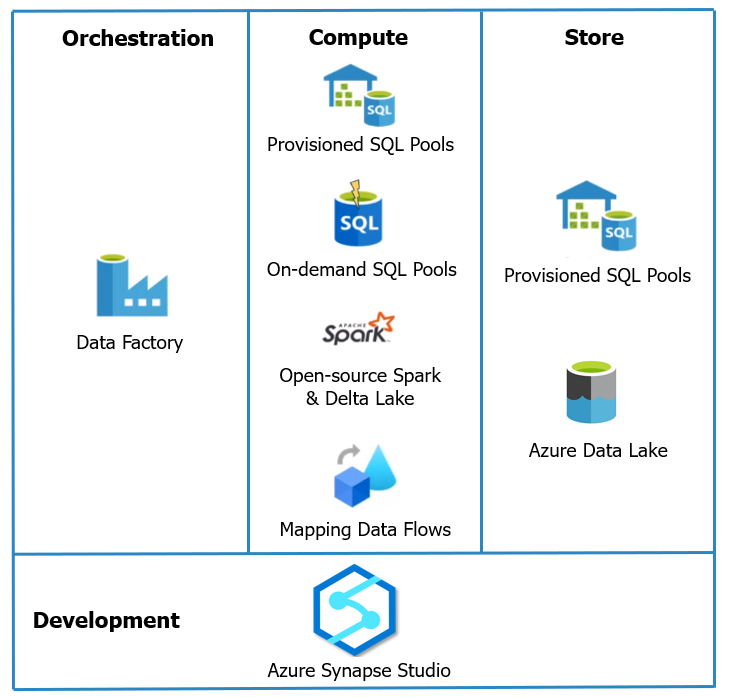
Synapse SQL
Synapse SQL is the beating heart for SQL-based analytics within Synapse, offering two distinct consumption models to cater to different needs:
-
SQL Pool (Dedicated SQL Pool): This is the evolution of Azure SQL Data Warehouse, designed for traditional enterprise data warehousing workloads requiring predictable, high-performance processing of structured data. It leverages a massively parallel processing (MPP) architecture, distributing data across multiple compute nodes to execute queries in parallel, making it ideal for complex analytical queries over large datasets. Resources are provisioned and scaled based on Data Warehouse Units (DWUs), offering guaranteed performance and dedicated capacity.
-
Serverless SQL Pool: A revolutionary addition, the serverless SQL pool enables ad-hoc data exploration and analysis over data lakes without provisioning or managing any infrastructure. You simply point it at your data (e.g., Parquet, CSV, JSON files in Azure Data Lake Storage) and query it using standard T-SQL. Billing is based on data processed per query, making it highly cost-effective for unpredictable workloads, data exploration, and serving data to downstream BI tools without having to load it into a dedicated data warehouse first.
Synapse Spark
For big data processing, data engineering, and machine learning, Azure Synapse integrates Apache Spark, a powerful open-source distributed processing framework. Synapse Spark pools provide a managed Spark environment, allowing data professionals to run large-scale data engineering jobs, prepare data for analytics, and train machine learning models using familiar languages like PySpark, Scala, C#, and R. It offers optimized runtimes for faster performance and integrates seamlessly with other Synapse components and Azure Machine Learning.
Synapse Data Explorer (Kusto)
While Synapse SQL and Spark handle structured and big data, Synapse Data Explorer (based on Azure Data Explorer, or Kusto) extends the platform’s capabilities to time-series, log, and telemetry data. It’s optimized for high-performance ingestion and querying of semi-structured and unstructured data, making it ideal for IoT analytics, application monitoring, and operational intelligence. It uses the Kusto Query Language (KQL), a powerful and intuitive language for exploring high volumes of diverse data.
Data Integration (Synapse Pipelines)
Data integration is a cornerstone of any analytics platform, and Azure Synapse provides robust capabilities through Synapse Pipelines. These pipelines are essentially a rebranded and deeply integrated version of Azure Data Factory, offering code-free ETL/ELT orchestration. They allow you to ingest data from hundreds of different sources (on-premises, other clouds, SaaS applications), transform it, and load it into Synapse SQL Pools, data lakes, or other destinations. This unified approach simplifies data movement and transformation, making it easier to build complex data workflows.
Synapse Studio
The entire Azure Synapse ecosystem is brought together within Synapse Studio, a web-based, unified workspace. This intuitive interface serves as the single pane of glass for all data professionals:
-
Develop: Write SQL queries, Spark notebooks, Data Explorer queries, and build data pipelines.
-
Orchestrate: Monitor pipeline runs, Spark jobs, and SQL queries.
-
Manage: Administer SQL pools, Spark pools, and data lake connections.
-
Monitor: Gain insights into the performance and health of your analytics workloads.
-
Collaborate: Share code, notebooks, and pipelines with team members.
Machine Learning Integration
Azure Synapse offers deep integration with Azure Machine Learning, allowing data scientists to train, deploy, and manage machine learning models directly within the Synapse environment. Data prepared in Synapse can be seamlessly fed into Azure ML for model development, and inferences can be pushed back into Synapse for real-time scoring and predictive analytics, closing the loop between data insights and actionable intelligence.
Why Choose Azure Synapse? Core Benefits and Advantages
The architectural design and comprehensive feature set of Azure Synapse Analytics translate into several compelling benefits for organizations seeking to modernize their data analytics capabilities.
Unified Experience and Simplified Architecture
Perhaps the most significant advantage of Synapse is its ability to converge multiple data analytics workloads into a single platform. This unification drastically simplifies the data architecture, reducing the need for separate tools, data movement between systems, and the operational overhead associated with managing a fragmented environment. Data engineers, scientists, and business analysts can all collaborate within the same Synapse Studio, fostering consistency and accelerating project delivery.

Unprecedented Scalability and Performance
Azure Synapse is built for scale. Its dedicated SQL pools leverage MPP architecture for lightning-fast queries on petabytes of structured data. Serverless SQL pools offer instant, on-demand query capabilities for data lakes without provisioning delays. Spark pools scale dynamically to handle massive big data processing tasks. This inherent scalability ensures that organizations can grow their data analytics capabilities without fear of hitting performance ceilings or incurring massive re-architecture costs.
Cost-Effectiveness and Flexible Pricing
Synapse offers highly flexible pricing models tailored to different workload patterns. Dedicated SQL pools allow for predictable cost management based on provisioned DWUs, with the ability to pause compute resources when not in use. Serverless SQL pools and Spark pools offer consumption-based billing, where you only pay for the resources consumed during query execution or job runs. This pay-as-you-go model, combined with optimized resource utilization, can lead to significant cost savings compared to maintaining peak capacity for intermittent workloads.
Enhanced Security and Governance
Security is paramount in data analytics, and Azure Synapse integrates deeply with Azure’s robust security features. This includes virtual network (VNet) integration for network isolation, Azure Active Directory (AAD) for identity and access management, row-level security (RLS), column-level security (CLS), dynamic data masking, and always-on encryption. Data governance is also simplified through integration with Azure Purview, enabling unified data discovery, classification, and lineage tracking across the Synapse environment and beyond.
Accelerated Time to Insight
By streamlining the entire data pipeline – from ingestion and preparation to analysis and visualization – Azure Synapse significantly reduces the time it takes to extract meaningful insights from data. The unified workspace, integrated tooling, and high-performance engines enable faster development cycles, quicker query execution, and more agile responses to business questions, ultimately driving faster and more informed decision-making.
Hybrid and Multi-Cloud Connectivity
In today’s complex enterprise environments, data often resides across on-premises systems, other cloud providers, and SaaS applications. Azure Synapse Pipelines are designed to connect to hundreds of diverse data sources, facilitating seamless data integration across hybrid and multi-cloud landscapes. This flexibility ensures that organizations can centralize and analyze all relevant data, regardless of its origin.
Common Use Cases and Real-World Applications
The versatility of Azure Synapse Analytics makes it suitable for a wide array of data-driven scenarios across various industries.
Enterprise Data Warehousing Modernization
Many organizations still rely on aging on-premises data warehouses that struggle with scalability, performance, and cost. Azure Synapse provides a compelling path for modernization, allowing businesses to migrate their existing data warehouses to a cloud-native, MPP-based solution (Synapse SQL Pool) while integrating new data sources from data lakes and streaming platforms. This creates a highly scalable and cost-effective modern data warehouse.
Big Data Analytics and Data Lake Exploration
For companies dealing with massive volumes of raw, unstructured, or semi-structured data (e.g., IoT sensor data, web logs, social media feeds), Synapse Spark pools provide a powerful environment for processing, transforming, and analyzing this data at scale. The serverless SQL pool further enables ad-hoc querying of data lake contents without the need for complex ETL, making data exploration accessible to more users.
Real-time Analytics and Operational Intelligence
By combining streaming data ingestion (via Azure Event Hubs or IoT Hub) with Synapse’s high-performance query engines and potentially Synapse Data Explorer for log analytics, organizations can build real-time analytics solutions. This allows for immediate monitoring of business operations, fraud detection, predictive maintenance, and instant dashboard updates, enabling proactive decision-making.
Machine Learning and Artificial Intelligence
Azure Synapse serves as an excellent foundation for end-to-end machine learning workflows. Data engineers can use Spark pools or Synapse SQL to prepare and featurize data, which data scientists can then leverage in Azure Machine Learning to build and train models. The trained models can then be deployed within Synapse for batch scoring or integrated into applications for real-time predictions, driving advanced analytics like customer churn prediction, recommendation engines, and predictive analytics.
Self-Service Business Intelligence and Data Reporting
With its integrated capabilities and unified Studio, Synapse empowers business users and analysts to perform self-service BI. Data can be prepared and served from Synapse SQL pools or data lakes (via serverless SQL) directly to popular BI tools like Power BI, enabling interactive dashboards and reports that provide up-to-date insights to decision-makers across the organization.
Getting Started with Azure Synapse: A Path Forward
Embarking on the Azure Synapse journey requires thoughtful planning and a strategic approach to ensure a successful implementation and maximize its value.
Planning and Design Considerations
Before diving into development, it’s crucial to define your data strategy, identify key use cases, and design your data architecture. This includes:
-
Data Governance: Establishing clear policies for data quality, security, privacy, and compliance.
-
Workload Analysis: Determining which Synapse components (SQL pool, serverless SQL, Spark, Data Explorer) are best suited for different data types and analytical needs.
-
Ingestion Strategy: Planning how data will be ingested from various sources (batch, streaming) using Synapse Pipelines or other Azure services.
-
Security Architecture: Designing robust access controls, network isolation, and encryption strategies.
Migration Strategies
For organizations looking to move from existing on-premises data warehouses or other cloud analytics platforms, Synapse offers various migration tools and methodologies. Microsoft provides guidance and tools to help assess current environments, plan data migration, and efficiently move schemas, data, and ETL processes to Azure Synapse with minimal downtime.
Skillsets and Training
Successfully leveraging Azure Synapse requires a diverse set of skills. Data engineers need expertise in SQL, Spark, and data pipeline orchestration. Data analysts benefit from T-SQL and BI tool proficiency. Data scientists require skills in Spark, Python/R, and machine learning frameworks. Investing in training and upskilling existing teams is vital to fully capitalize on Synapse’s capabilities.
Conclusion
Azure Synapse Analytics represents a paradigm shift in enterprise data analytics. By unifying the disparate worlds of data warehousing, big data processing, data integration, and machine learning into a single, comprehensive platform, it effectively addresses the complexities and challenges faced by modern data-driven organizations. Its robust architecture, flexible consumption models, high scalability, and deep integration with the broader Azure ecosystem position it as a powerful tool for accelerating insights, fostering innovation, and driving strategic business decisions. For any organization looking to unlock the true potential of their data assets and build a future-ready analytics infrastructure, understanding and embracing “what is Azure Synapse” is no longer optional – it’s a strategic imperative.
aViewFromTheCave is a participant in the Amazon Services LLC Associates Program, an affiliate advertising program designed to provide a means for sites to earn advertising fees by advertising and linking to Amazon.com. Amazon, the Amazon logo, AmazonSupply, and the AmazonSupply logo are trademarks of Amazon.com, Inc. or its affiliates. As an Amazon Associate we earn affiliate commissions from qualifying purchases.