
For many individuals, purchasing a vehicle represents one of the largest financial commitments they will make, second only to buying a home. Given the substantial cost of modern automobiles, outright cash payment is often an impractical or impossible option for the majority. This is where auto financing steps in, serving as the essential bridge that transforms the dream of vehicle ownership into a tangible reality. Auto financing is, in essence, a specialized form of credit that allows consumers to borrow money specifically for the purpose of buying a car, with the loan typically secured by the vehicle itself. Understanding the intricacies of auto financing is not merely about securing a loan; it’s about making an informed financial decision that impacts your monthly budget, credit profile, and overall financial health for years to come.
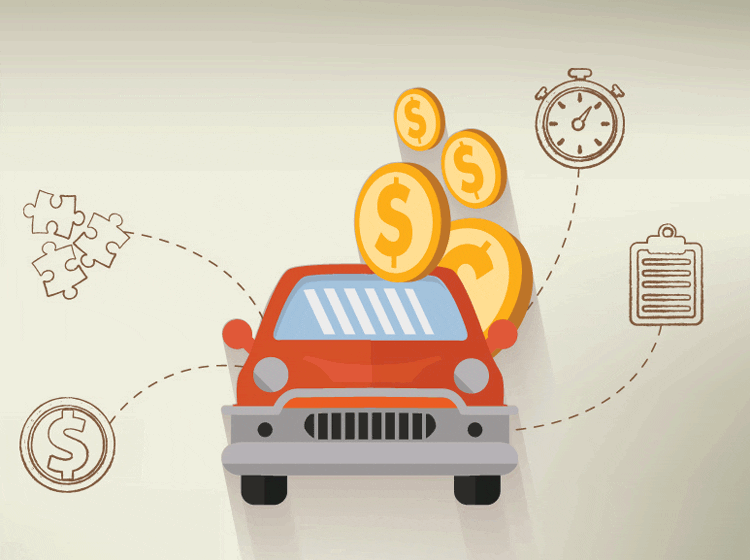
In a world where personal mobility is often a necessity rather than a luxury, reliable transportation is crucial for employment, family responsibilities, and daily life. Auto financing empowers individuals to access this critical resource without depleting their savings or waiting years to accumulate the full purchase price. However, with the convenience comes complexity. The market offers a myriad of financing options, each with its own set of terms, conditions, and implications. From interest rates and loan terms to down payments and credit scores, a multitude of factors converge to determine the true cost of your vehicle and the manageability of your monthly payments. This comprehensive guide aims to demystify auto financing, providing a foundational understanding that will enable you to navigate the process with confidence and secure a deal that aligns with your financial capabilities and objectives.
Understanding the Fundamentals of Auto Financing
At its core, auto financing is a contractual agreement between a borrower and a lender. The borrower receives a sum of money to purchase a vehicle, and in return, commits to repaying that amount, plus interest, over a predetermined period. This arrangement is foundational to how millions of vehicles are bought and sold every year, underscoring its pivotal role in both the consumer market and the broader economy.
Defining Auto Financing
Auto financing can be broadly defined as the process of borrowing money from a financial institution or dealership to fund the purchase of a motor vehicle. This borrowed sum, known as the principal, is then repaid in regular installments – typically monthly – over a specified duration, known as the loan term. The cost of borrowing this money is reflected in the interest rate, which is applied to the outstanding principal. Unlike unsecured loans (like personal loans for general expenses), an auto loan is almost always a secured loan. This means the vehicle itself acts as collateral. Should the borrower default on their payments, the lender has the right to repossess the vehicle to recover their losses, highlighting the significant commitment involved.
Why Auto Financing is Prevalent
The prevalence of auto financing stems from several practical realities. Firstly, the high sticker price of new cars, and even many used cars, places them beyond the immediate cash reach of most consumers. Financing breaks down this large cost into more manageable monthly payments. Secondly, it allows individuals to preserve their savings for other important financial goals, such as a down payment on a home, retirement investments, or emergency funds, rather than tying it all up in a depreciating asset. For businesses, auto financing facilitates fleet purchases and operational vehicle acquisition without significant upfront capital expenditure. Furthermore, for many, making regular auto loan payments is a reliable way to build a positive credit history, which can be beneficial for future borrowing needs like mortgages or business loans.
The Core Components of an Auto Loan
To truly grasp auto financing, it’s essential to understand its fundamental components:
- Principal: This is the original amount of money you borrow to purchase the vehicle. It’s the purchase price of the car minus any down payment, trade-in value, or rebates.
- Interest Rate (APR): The Annual Percentage Rate (APR) is the cost of borrowing money, expressed as a yearly percentage of the principal. A lower APR means a lower total cost of the loan. The APR includes the interest rate plus any other fees charged by the lender.
- Loan Term: This is the duration over which you agree to repay the loan, typically expressed in months (e.g., 36, 48, 60, 72, or even 84 months). A longer loan term generally results in lower monthly payments but accrues more interest over the life of the loan.
- Monthly Payment: This is the fixed amount you pay each month, comprising a portion of the principal and the accrued interest.
- Collateral: As mentioned, the vehicle itself serves as collateral. The lender holds a lien on the title of the car until the loan is fully repaid.
Understanding these components is the first step toward making an informed decision and finding an auto loan that best fits your financial situation.
Types of Auto Financing Options
The landscape of auto financing is diverse, offering various avenues for securing funds to purchase a vehicle. Each option comes with its own set of advantages, disadvantages, and suitability depending on a borrower’s financial profile, preferences, and the type of vehicle they intend to acquire.
Direct Lending vs. Dealership Financing
One of the primary distinctions in auto financing is between direct lending and dealership financing:
- Direct Lending: This involves borrowing money directly from a bank, credit union, or online lender before you even set foot in a dealership. You apply for the loan, get approved, and then walk into the dealership with a check or pre-approval letter, essentially acting as a cash buyer.
- Advantages: Often offers more competitive interest rates due to less overhead, allows you to separate the car negotiation from the financing negotiation, and provides a clear budget before shopping.
- Disadvantages: Requires proactive research and application on your part.
- Dealership Financing: This is financing arranged through the car dealership itself. While the dealership facilitates the loan, they typically work with a network of banks and financial institutions to find a lender.
- Advantages: Convenience, one-stop shopping, potential for special manufacturer-subsidized rates (e.g., 0% APR deals for well-qualified buyers), and can sometimes accommodate buyers with less-than-perfect credit.
- Disadvantages: Dealerships may mark up interest rates to earn a profit, potentially leading to higher overall costs for the buyer, and the focus on financing can distract from negotiating the vehicle’s price.
New vs. Used Car Loans
The age of the vehicle being financed also impacts loan terms:
- New Car Loans: Generally come with lower interest rates and longer terms because new cars are less risky collateral for lenders due to their higher value and predictable depreciation.
- Used Car Loans: Often have slightly higher interest rates and shorter terms. Lenders perceive used cars as higher risk due to potential mechanical issues, varying conditions, and faster depreciation rates. The maximum loan term for used cars is usually shorter than for new cars.
Leases: An Alternative Approach
While not strictly a loan to own a vehicle, leasing is a popular form of auto financing. When you lease, you essentially rent the vehicle for a fixed period (typically 2-4 years) and make monthly payments for its use. You don’t own the car, but you have the right to use it.
- Advantages: Lower monthly payments than purchasing, access to new cars more frequently, and often comes with full warranty coverage.
- Disadvantages: No ownership equity, mileage restrictions, potential for wear-and-tear charges, and you still need to pay for insurance. At the end of the lease, you typically return the car or have the option to buy it for a predetermined residual value.
Private Party Auto Loans
If you’re buying a used car from a private seller (not a dealership), you’ll need a private party auto loan. Not all lenders offer these, and they can sometimes come with specific requirements.
- Advantages: Often a lower purchase price for the vehicle compared to dealership prices.
- Disadvantages: Fewer financing options, vehicle inspection is crucial as there’s no dealer warranty, and the process can be more involved.
Each of these options caters to different needs and financial situations, emphasizing the importance of evaluating which type aligns best with your goals before committing.
Key Factors Influencing Your Auto Loan
Securing a favorable auto loan isn’t solely about finding the lowest advertised rate. A multitude of interconnected factors play a crucial role in determining the terms you’ll be offered and the ultimate cost of your vehicle. Understanding these influences empowers you to strategically position yourself for the best possible deal.
Your Credit Score: The Ultimate Determinant
Your credit score is arguably the most critical factor influencing your auto loan. It’s a numerical representation of your creditworthiness, reflecting your history of borrowing and repaying debt.
- Excellent Credit (780+): Borrowers with excellent credit are considered low risk and typically qualify for the lowest interest rates and most flexible terms.
- Good Credit (670-739): Still qualifies for very competitive rates, though perhaps not the absolute lowest.
- Fair/Average Credit (580-669): May face slightly higher interest rates but can still secure financing.
- Poor Credit (<580): Borrowers with poor credit are considered high risk, leading to significantly higher interest rates, stricter terms, and sometimes requiring a co-signer or larger down payment. Lenders may offer “subprime” loans in these cases.
Before applying, it’s wise to check your credit score and report for any errors. Improving your credit score, even slightly, can translate into substantial savings over the life of the loan.
Loan Term and its Impact on Payments and Interest
The loan term, or the length of time you have to repay the loan, directly impacts both your monthly payment and the total interest paid.
- Shorter Terms (e.g., 36-48 months): Result in higher monthly payments but significantly less interest paid over the life of the loan, leading to a lower overall cost. You own the car outright faster.
- Longer Terms (e.g., 60-84 months): Lead to lower, more affordable monthly payments, which can be attractive for budget management. However, you’ll pay substantially more in total interest, and the car’s value may depreciate faster than you pay off the loan, potentially leaving you “upside down” (owing more than the car is worth).
Striking a balance between an affordable monthly payment and minimizing total interest paid is key.
Interest Rates: Fixed vs. Variable
The interest rate is the primary cost of borrowing. Auto loans typically come with two types of interest rates:
- Fixed Interest Rate: The interest rate remains the same for the entire duration of the loan. This provides predictability, as your monthly payment (excluding insurance and taxes) will not change. Most auto loans are fixed-rate.
- Variable Interest Rate: The interest rate can fluctuate over the life of the loan, usually tied to a benchmark rate (like the prime rate). This means your monthly payments could increase or decrease. Variable rates are less common for auto loans and generally carry more risk for the borrower.
For most consumers, a fixed interest rate offers greater peace of mind and easier budgeting.
Down Payments: Reducing Risk and Costs
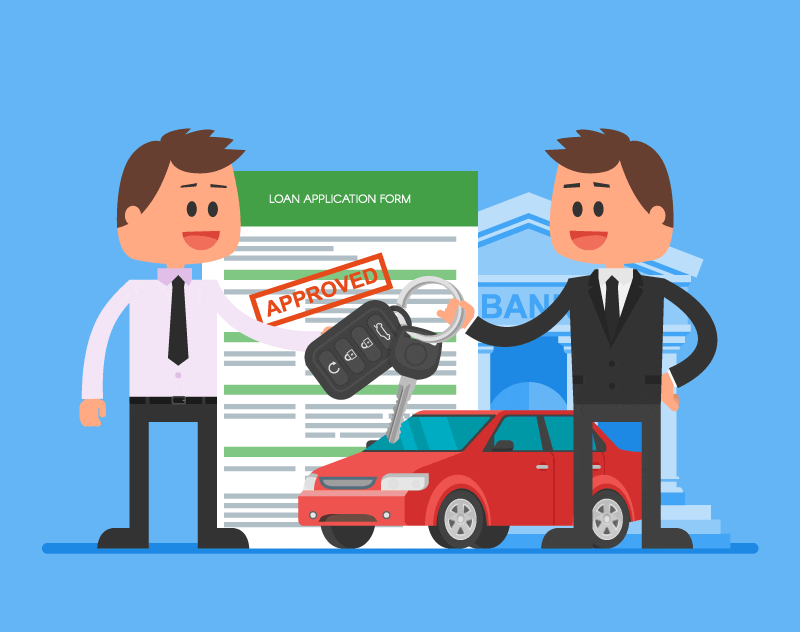
A down payment is the initial sum of money you pay towards the purchase of the car, reducing the amount you need to borrow.
- Benefits: A larger down payment reduces your principal, leading to lower monthly payments and less interest paid over the loan term. It also reduces the risk for the lender, potentially helping you qualify for better rates, especially if your credit isn’t stellar. Furthermore, a substantial down payment helps mitigate the risk of being upside down on your loan, as vehicles depreciate rapidly in their first few years.
- Recommendation: While not always required, a down payment of at least 10-20% of the vehicle’s purchase price is often recommended by financial experts.
Debt-to-Income Ratio
Lenders assess your debt-to-income (DTI) ratio, which compares your total monthly debt payments to your gross monthly income. A lower DTI indicates you have more disposable income to cover new debt and are therefore a less risky borrower. A DTI ratio below 36% is generally considered favorable.
Vehicle Depreciation and Loan-to-Value (LTV)
Vehicles begin to depreciate the moment they are driven off the lot. Lenders consider the loan-to-value (LTV) ratio – the amount you’re borrowing compared to the car’s current market value. A high LTV (e.g., financing 100% or more of the car’s value) is riskier for lenders and can result in higher interest rates or even rejection. A strong down payment helps keep your LTV in check.
By understanding and optimizing these factors, you can significantly enhance your chances of securing an auto loan with terms that are both affordable and financially sound.
Navigating the Auto Financing Process
The auto financing journey, while seemingly complex, can be streamlined and made less intimidating with a strategic approach. Preparing adequately and understanding each step will empower you to negotiate effectively and secure the best possible deal.
Pre-Approval: A Strategic First Step
Perhaps the most powerful tool in a car buyer’s arsenal is loan pre-approval. This involves applying for an auto loan with a bank, credit union, or online lender before you visit any dealerships.
- Benefits:
- Knowing Your Budget: Pre-approval gives you a concrete understanding of how much you can afford, preventing you from falling in love with a car outside your price range.
- Empowered Negotiation: You walk into the dealership with your own financing secured, allowing you to focus solely on negotiating the car’s price. You can then compare the dealership’s financing offer against your pre-approved rate, using it as leverage.
- Confidence: Reduces the pressure and anxiety often associated with car buying, putting you in the driver’s seat.
- Process: Typically involves providing personal financial information (income, employment, existing debts) and undergoing a credit check. Pre-approvals usually have an expiration date (e.g., 30-60 days).
Gathering Essential Documentation
Whether you’re pursuing direct lending or dealership financing, having your documents ready will expedite the process. Common documents include:
- Proof of Identity: Driver’s license or state-issued ID.
- Proof of Income: Recent pay stubs, W-2 forms, or tax returns (especially for self-employed individuals).
- Proof of Residence: Utility bill, lease agreement, or mortgage statement.
- Social Security Number: For credit checks.
- Trade-in Information (if applicable): Vehicle title, registration, and service records.
- Insurance Information: Lenders require proof of comprehensive and collision insurance before you drive off with the car.
Negotiating the Best Deal
With pre-approval in hand, your focus shifts to negotiating the vehicle’s price, separate from the financing.
- Research Market Value: Use online resources (e.g., Kelley Blue Book, Edmunds) to determine the fair market value of the car you’re interested in, both new and used.
- Negotiate the Out-the-Door Price: Always negotiate the total price of the car, including any fees, before discussing payments.
- Compare Financing Offers: Once you have a final car price, present your pre-approved loan offer to the dealership. See if they can beat or match it. Be wary of “payment packing,” where the dealership tries to focus only on monthly payments without disclosing the total cost.
- Review Add-ons: Be critical of optional add-ons like extended warranties, paint protection, or VIN etching. While some may be valuable, others are overpriced and can be purchased elsewhere or are unnecessary.
Understanding the Loan Agreement and Fine Print
Before signing anything, thoroughly read and understand the entire loan agreement. Don’t rush this crucial step.
- Key Items to Verify:
- Interest Rate (APR): Ensure it matches what was agreed upon.
- Loan Term: Confirm the number of months.
- Total Amount Financed: The principal amount.
- Total Cost of the Loan: This includes the principal plus all interest over the loan term.
- Monthly Payment Amount: Verify this figure.
- Prepayment Penalties: Check if there are any fees for paying off the loan early (rare for auto loans but good to confirm).
- Late Payment Penalties: Understand the consequences of missed or late payments.
- All Fees: Scrutinize any origination fees, documentation fees, or other charges.
- Ask Questions: If anything is unclear, ask for clarification. Don’t sign until you are completely comfortable with all terms.
Taking a diligent and informed approach to each stage of the financing process will not only save you money but also ensure a more satisfying and less stressful car-buying experience.
Managing Your Auto Loan Responsibly
Securing an auto loan is just the first step; managing it responsibly throughout its term is equally, if not more, important. Prudent loan management ensures you meet your financial obligations, protect your credit, and maximize your vehicle investment.
Making Timely Payments
This is the cornerstone of responsible loan management. Consistently making your monthly payments on or before their due date is critical for several reasons:
- Protect Your Credit Score: Payment history is the single largest factor in your credit score. Late payments, even by a few days, can negatively impact your score, making future borrowing more expensive or difficult.
- Avoid Late Fees: Lenders typically charge late fees, which add to your overall cost and can quickly accumulate.
- Prevent Repossession: Repeatedly missed payments can ultimately lead to the lender repossessing your vehicle, resulting in not only the loss of your car but also a severe blow to your credit report.
- Set up Auto-Pay: Many lenders offer auto-pay options, where payments are automatically deducted from your bank account. This is an excellent way to ensure payments are always on time and avoid accidental misses.
The Advantages of Early Payoff
While a longer loan term might offer lower monthly payments, paying off your auto loan early can yield significant financial benefits:
- Save on Interest: By reducing the loan term, you reduce the period over which interest accrues, leading to substantial savings on the total cost of the loan.
- Debt-Free Sooner: Eliminating an auto loan frees up a significant portion of your monthly budget, which can then be redirected towards other financial goals like savings, investments, or paying off higher-interest debt.
- Improved Debt-to-Income Ratio: A lower DTI can improve your eligibility for other loans (like a mortgage) in the future.
- Full Ownership: You gain full ownership of the vehicle, meaning the lender no longer holds a lien on the title.
Before pursuing an early payoff, always check your loan agreement for any prepayment penalties, though these are rare for auto loans. Even making small extra payments each month can shave off months and dollars from your loan.
Refinancing Your Auto Loan
Refinancing involves taking out a new loan to pay off your existing auto loan. This can be a strategic move under certain circumstances:
- Lower Interest Rates: If interest rates have dropped since you took out your original loan, or if your credit score has significantly improved, you might qualify for a lower APR, reducing your monthly payments and/or total interest paid.
- Reduced Monthly Payments: If you’re struggling with your current payments, refinancing into a new loan with a longer term (though be mindful of increased total interest) can make them more affordable.
- Remove a Co-signer: If a co-signer was needed initially, but your credit has improved, refinancing can allow you to remove them from the loan.
- Access Cash (Cash-Out Refinance): Some lenders offer cash-out refinancing, where you borrow more than you owe on the car and receive the difference in cash. This is generally not recommended unless absolutely necessary, as it increases your debt against a depreciating asset.
Always compare the new loan’s terms (APR, term, fees) against your current loan to ensure refinancing truly offers a benefit.

Protecting Your Investment: Insurance and Maintenance
While not directly part of the loan repayment, protecting your vehicle through adequate insurance and regular maintenance is crucial for responsible auto loan management.
- Comprehensive Auto Insurance: Lenders typically require full coverage (comprehensive and collision) until the loan is paid off. This protects both your investment and the lender’s collateral from damage, theft, or accidents. Skimping on insurance can lead to devastating financial consequences if something happens to the car.
- Regular Vehicle Maintenance: Following the manufacturer’s recommended maintenance schedule helps keep your vehicle in good working order, preserving its value and preventing costly repairs down the line. A well-maintained vehicle is less likely to break down, preventing additional financial strain and ensuring you can continue to meet your loan obligations.
By adhering to these responsible management practices, you not only ensure the smooth repayment of your auto loan but also safeguard your financial well-being and the longevity of your vehicle.
Auto financing is a cornerstone of modern vehicle acquisition, providing accessibility and flexibility for millions. From understanding the core components of a loan and exploring various financing types to meticulously evaluating influencing factors and navigating the application process, an informed approach is paramount. Ultimately, responsible auto loan management—marked by timely payments, strategic refinancing, and vigilant vehicle care—transforms a significant financial commitment into a manageable asset that serves your personal and financial mobility needs effectively. By empowering yourself with knowledge, you can ensure your auto financing journey is not just about getting a car, but about making a smart and sustainable financial decision.
aViewFromTheCave is a participant in the Amazon Services LLC Associates Program, an affiliate advertising program designed to provide a means for sites to earn advertising fees by advertising and linking to Amazon.com. Amazon, the Amazon logo, AmazonSupply, and the AmazonSupply logo are trademarks of Amazon.com, Inc. or its affiliates. As an Amazon Associate we earn affiliate commissions from qualifying purchases.