
The seemingly simple two-letter word “at” is a cornerstone of English grammar, a tiny but mighty preposition that underpins vast swathes of our communication. For humans, its usage often feels intuitive, effortlessly conveying spatial, temporal, or activity-related information. Yet, for artificial intelligence and natural language processing (NLP) systems, “at” presents a complex challenge, a microcosm of the hurdles machines face in truly understanding human language. Its polysemous nature and context-dependent meanings force sophisticated algorithms to perform intricate semantic and syntactic analysis, highlighting the deep interplay between fundamental linguistic structures and cutting-edge computational linguistics.

The Grammatical Role of “At”: Foundational for Human and Machine Understanding
At its core, “at” is a preposition, a word that links nouns, pronouns, or phrases to other words in a sentence, typically indicating a relationship of place, time, direction, or manner. Its simplicity belies a profound versatility, making it one of the most frequently used words in the English lexicon.
Defining “At” as a Preposition: Its Core Function
As a preposition, “at” serves multiple critical functions:
- Specific Location: It often pinpoints a precise geographical or physical location. For instance, “I am at the library” signifies a specific building, while “The car is parked at the corner” indicates an exact intersection. For navigation apps or geo-tagging software, understanding this precise spatial reference is paramount.
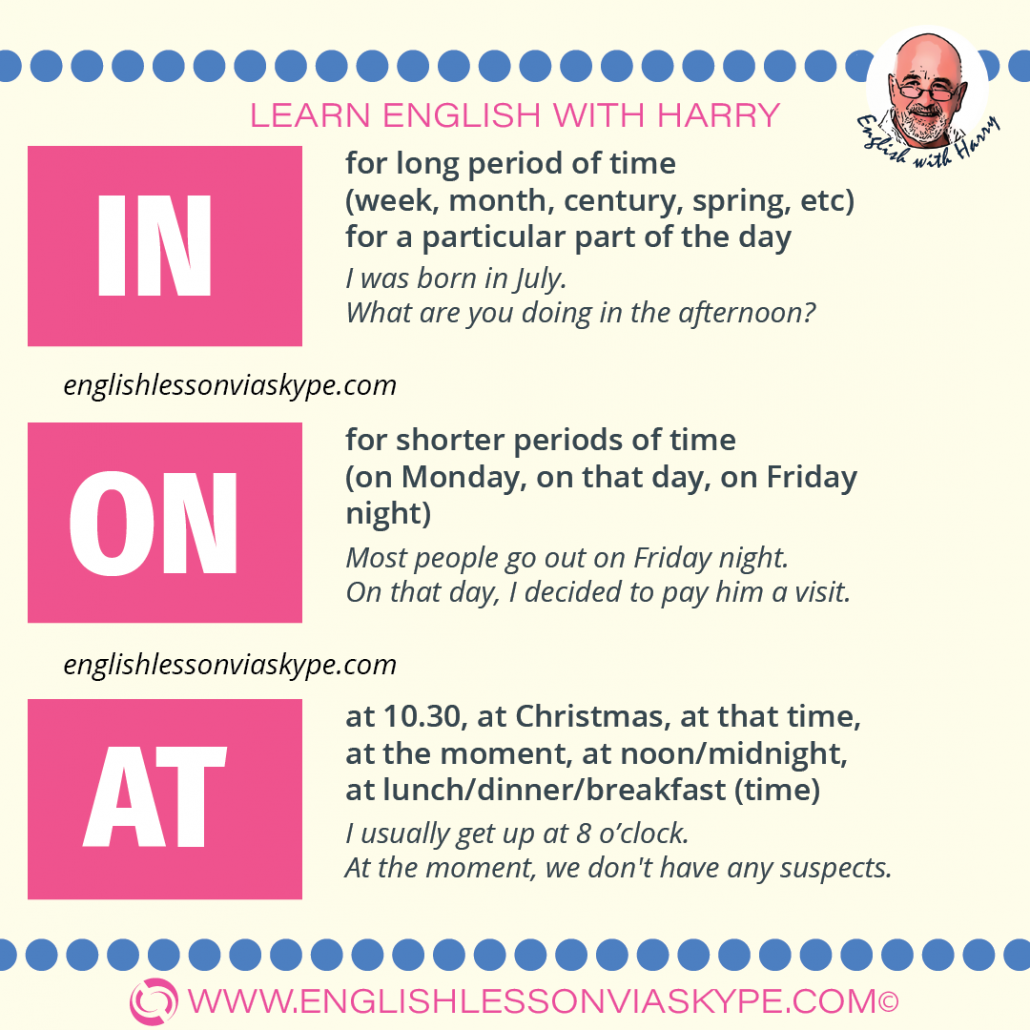
- Specific Time: “At” is used to denote an exact point in time. “The meeting starts at 9 AM” or “We’ll arrive at midnight” are common examples. Calendar applications, scheduling tools, and event management systems rely heavily on accurately parsing these temporal markers.
- Activity or State: It can indicate participation in an activity or being in a particular state. “She is at work” describes an activity, while “He is at peace” refers to a mental state. This usage requires AI to understand the broader context of human actions and emotions.
- Direction or Target: In some contexts, “at” can imply a target or direction, particularly with verbs of looking or aiming. “Look at that bird” or “He shot at the target” demonstrate this directed action. Object recognition and visual AI systems often interpret these cues when processing commands related to visual attention.
Nuances and Polysemy: How “At” Carries Multiple Meanings
One of the greatest challenges for AI in interpreting “at” is its inherent polysemy—the capacity for a word or phrase to have multiple meanings. The specific meaning of “at” is heavily dictated by the surrounding words and the broader semantic context of the sentence. Consider these examples:
- “She is at home.” (Location)
- “He is good at math.” (Skill/proficiency)
- “We are at a crossroads.” (Figurative state/situation)
- “The price is at an all-time high.” (Level/state on a scale)
Humans effortlessly switch between these interpretations, drawing on vast reservoirs of common sense and world knowledge. For AI, however, each instance requires a sophisticated process of contextual disambiguation, often relying on statistical models and intricate semantic networks.
Prepositional Phrases: The Building Blocks “At” Helps Form
“At” frequently initiates prepositional phrases, which are groups of words consisting of the preposition itself, its object (a noun or pronoun), and any modifiers of the object. These phrases act as adverbs or adjectives, adding crucial detail to sentences. “At the speed of light,” “at a moment’s notice,” or “at your convenience” are examples. For NLP, identifying and correctly parsing these phrases is vital for understanding the full meaning and relationships within a sentence, enabling more accurate information extraction and sentence generation.
“At” in the Digital Age: Challenges for Natural Language Processing (NLP)
The grammatical flexibility of “at” becomes a formidable obstacle for AI systems tasked with understanding, generating, or translating human language. Unlike rule-bound programming languages, natural language is rife with ambiguity, and “at” is a prime example of this complexity.
The Semantic Ambiguity Problem: How AI Struggles with Multiple Meanings
The core difficulty lies in mapping a single token (“at”) to its contextually appropriate semantic role. A human understands instantly that “I’m at the cinema” refers to a physical location, while “I’m good at coding” refers to a skill. An AI, without robust contextual processing, might initially treat both instances of “at” identically. This semantic ambiguity means that simply knowing the definition of “at” is insufficient; the AI must infer meaning from the surrounding words, the sentence’s overall structure, and even general world knowledge. This is a classic example of where human intuition far outstrips early rule-based AI systems.
Spatial and Temporal Reasoning: How “At” Informs AI Services
Despite the challenges, correctly interpreting “at” is crucial for many AI applications. Location-based services, such as ride-sharing apps, navigation systems, and local search engines, critically depend on understanding spatial “at.” A query like “find coffee shops at 42nd Street and Broadway” requires the AI to pinpoint a precise intersection. Similarly, scheduling assistants and event reminders must accurately parse temporal “at” to manage appointments (“meet me at 3 PM”). Misinterpreting these instances can lead to incorrect directions, missed appointments, or irrelevant search results, directly impacting user experience and the efficacy of the AI tool.
Idiomatic Expressions and Phrasal Verbs: When “At” Loses its Literal Meaning
Further complicating matters are idiomatic expressions and phrasal verbs where “at” contributes to a meaning that cannot be derived from its individual components. Consider “laugh at someone,” “at last,” “at all costs,” or “be at loggerheads.” In these cases, “at” no longer denotes a simple location or time but is an integral part of a fixed, non-literal meaning. Traditional dictionary look-ups or simple grammatical parsers would fail to capture this. Modern NLP models must learn these patterns through exposure to vast text corpora, recognizing them as distinct semantic units rather than literal combinations. This capability is essential for generating natural-sounding text and accurately interpreting informal language.
AI’s Approach to Disambiguating “At”: Techniques and Progress
Over the decades, AI research has evolved sophisticated techniques to tackle the nuanced understanding of words like “at.” From rudimentary rule-based systems to the advanced neural networks of today, the progress in contextual comprehension has been remarkable.
Rule-Based Systems and Lexical Databases: Early Attempts

Early NLP systems often relied on hand-crafted rules and lexical databases like WordNet. These systems would attempt to map specific syntactic patterns or surrounding words to known meanings of “at.” For instance, a rule might state: “If ‘at’ is followed by a time expression, it indicates time.” While effective for well-defined, limited domains, these systems struggled with scalability, handling novel contexts, and the sheer volume of exceptions and idiomatic expressions in natural language. They lacked the flexibility to adapt to the inherent creativity and ambiguity of human communication.
Machine Learning and Deep Learning: Contextual Understanding
The advent of machine learning and, more recently, deep learning has revolutionized AI’s ability to understand “at.” Models are no longer explicitly programmed with rules but are trained on massive datasets of text.
- Word Embeddings (e.g., Word2Vec, GloVe): These techniques represent words as dense vectors in a high-dimensional space, where words with similar meanings or contexts are closer together. This allows the model to learn that “at home” and “at school” are similar in their spatial usage of “at,” while “at peace” is semantically distant.
- Transformer Models (e.g., BERT, GPT): The most significant leap forward came with transformer architectures. These models use “attention mechanisms” to weigh the importance of different words in a sentence when processing a given word. For “at,” a transformer model can consider all other words in the sentence to dynamically determine its most probable meaning. For example, in “look at the screen,” the model pays attention to “look” and “screen” to infer “at” indicates direction. In “meet at noon,” it prioritizes “noon” to infer time. This contextual awareness is key to their impressive performance.
Syntactic Parsing and Dependency Trees: Analyzing Sentence Structure
Beyond individual word meanings, AI also employs syntactic parsing to understand the grammatical relationships between words. Dependency parsing, for instance, creates a tree-like structure showing how words depend on each other. By identifying that “at” is a preposition governing a noun phrase (“the park”) and that this prepositional phrase modifies a verb (“play”), the AI can deduce that “at the park” indicates the location of the action. This structural analysis provides crucial disambiguation cues, helping AI systems to correctly identify the role and scope of “at” within a complex sentence.
The Practical Impact: “At” and the Efficacy of AI Tools
The nuanced understanding of “at” directly translates into the performance and utility of a wide array of AI-powered tools and applications we use daily. From simple search queries to complex conversational agents, precise prepositional interpretation is a fundamental requirement.
Enhancing Search Engines and Information Retrieval
For search engines, correctly parsing “at” can drastically improve the relevance of results. A query like “restaurants at Fifth Avenue” requires a geographical understanding, while “news at 6 PM” demands a temporal one. If the AI confuses these, it delivers irrelevant information. Advanced search algorithms leverage deep learning models to distinguish these contexts, providing users with highly targeted and accurate information, whether they’re looking for a specific location or an event time.
Improving Conversational AI and Chatbots
Conversational AI, used in customer service chatbots, virtual assistants, and smart home devices, relies heavily on interpreting user intent, much of which is conveyed through precise language. A user asking, “What time is the flight at?” expects a time, not a gate number. If they ask, “Can you book me a table at the Italian restaurant at 7 PM?” the chatbot must accurately process both the location and time components of “at” to fulfill the request correctly. Misinterpretation here leads to frustration and breaks the conversational flow, undermining the utility of the AI.
Advanced Language Translation
Translating prepositions like “at” between languages is notoriously difficult because direct equivalents rarely exist. What is “at” in English might be expressed by a different preposition, an adverb, or even a verb conjugation in another language, depending on the context. For instance, “at school” might be “en la escuela” (in the school) in Spanish, while “at 3 PM” is “a las 3 PM.” Sophisticated neural machine translation systems are trained on vast parallel corpora to learn these complex, non-literal mappings, ensuring that the nuance conveyed by “at” is preserved across different linguistic structures.
Digital Security and Anomaly Detection
In the realm of cybersecurity, AI plays a critical role in monitoring networks and identifying suspicious activities. Detecting a login attempt “at 2 AM from a foreign IP address” requires the AI to understand both the temporal and spatial implications of “at” in the context of normal user behavior. Similarly, flagging an unusual transaction “at a specific geographic location” depends on the AI accurately parsing the “at” that denotes the unusual context. Precise interpretation of these seemingly small words can be crucial in distinguishing legitimate activity from a potential threat.
The Future of “At” in AI: Towards Human-Level Comprehension
While AI has made incredible strides in understanding complex language, the journey towards truly human-level comprehension of words like “at” continues. The future promises even more robust and context-aware systems.
Multimodal AI and Common Sense Reasoning
One promising direction is multimodal AI, which integrates information from various sources—text, images, audio, and video—to build a richer understanding of context. For example, if an AI sees an image of children playing “at the beach” while processing the text, the visual input reinforces the spatial meaning of “at,” reducing ambiguity. Furthermore, infusing AI with common sense reasoning capabilities, allowing it to understand basic facts about the world, will help it infer meanings that are currently beyond the scope of purely textual analysis.
Continued Data Collection and Annotation
The performance of deep learning models is directly tied to the quality and quantity of their training data. Continued efforts in collecting diverse, contextually rich, and accurately annotated text corpora will further refine AI’s ability to disambiguate “at” in all its forms, from formal writing to casual speech and social media interactions.
Explainable AI (XAI) for Prepositional Logic
As AI systems become more complex, understanding why they make certain decisions is increasingly important. Explainable AI (XAI) aims to shed light on the internal workings of these black-box models. For prepositions like “at,” XAI could reveal which contextual clues the model prioritized when interpreting a specific instance, helping developers fine-tune their algorithms and build more reliable, transparent NLP systems. The journey to fully replicate human linguistic intuition in machines is ongoing, with each tiny preposition like “at” representing a significant frontier in AI research and development.
aViewFromTheCave is a participant in the Amazon Services LLC Associates Program, an affiliate advertising program designed to provide a means for sites to earn advertising fees by advertising and linking to Amazon.com. Amazon, the Amazon logo, AmazonSupply, and the AmazonSupply logo are trademarks of Amazon.com, Inc. or its affiliates. As an Amazon Associate we earn affiliate commissions from qualifying purchases.